Wize University Biology Textbook > Viruses
Viral Infections & Hosts
Popular Courses
MCAT
General Course
BIOLOGY 1001A
Western University
Biology
General Course
General Biology
University Study Guides
BIOL 107
University of Alberta
DAT
General Course
General Biology
University Study Guides
BIOL 108
University of Alberta
BIOL 111
McGill University
BIOL 311
University of Calgary
BIOL 112
McGill University
BIOL 1201
Western University
MBG*2040
University of Guelph
BIOL 1P91
Brock University
BLG 144
Toronto Metropolitan University
BIOL 1020
University of Manitoba
BIOL 331
University of Calgary
BIOA01H3
University of Toronto
BISC 102
Simon Fraser University
BI110
Wilfrid Laurier University
0:00 / 0:00
Viral Infections
This is a major issue in dense populations. Issues with COVID-19 are the result of a coronavirus that has mutated and now infects humans.
- Viruses can not replicate without infecting hosts
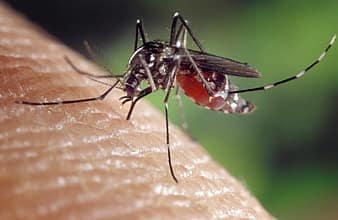
- Host: the organism infected with the virus
- Host Range: number of different species a virus can infect
- Most viruses only infect a single host species (specialist) Example: Measels Virus only infects humans
- Some viruses have a wide range of hosts (generalist) Example: West-Nile Virus can infect Mosquitos, Birds, Humans etc.
Viral Replication
- Virus attaches to the outside of host cell
- Virus injects nucleic acid into host
- Virus hijacks the cell machinery to replicate its own components
- Viral components come together to form new viruses
- Virus is ejected from cell to infect other hosts
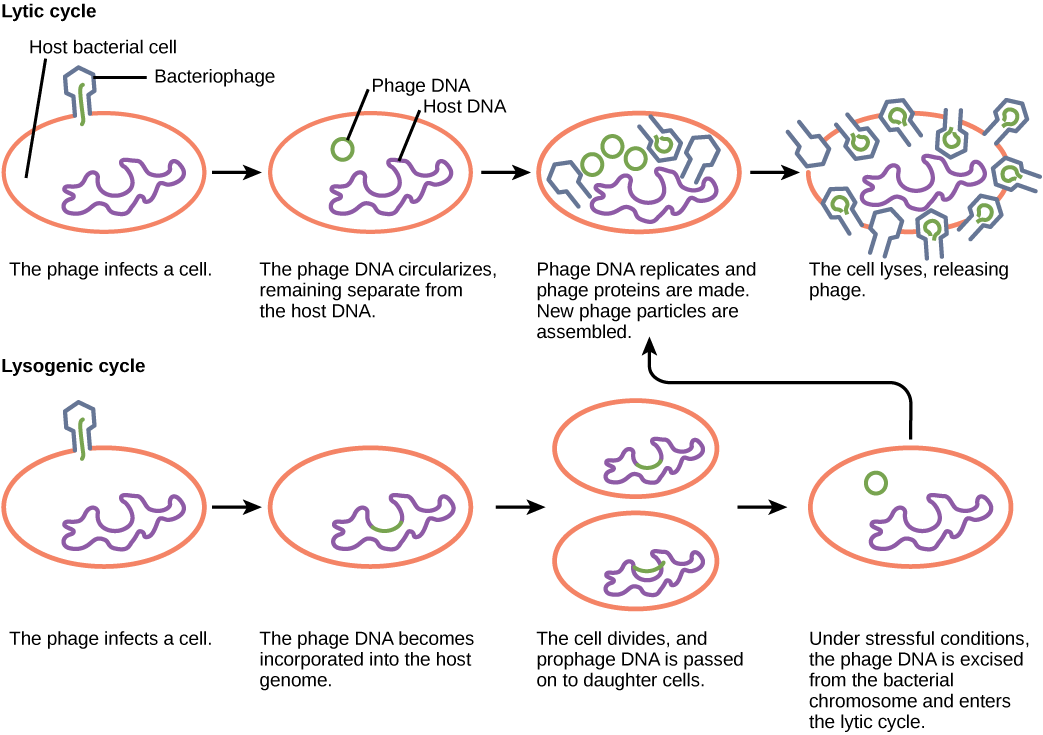
- Lytic Cycle: the final step in viral replication bursts open and kills host cell
- These types of viruses are virulent phages
- Lysogenic Cycle: viruses do not kill host cell
- Virus genes continue to be produced by host cell
- Temperate phages alternate between lytic and lysogenic cycles

Mark Yourself Question
- Grab a piece of paper and try this problem yourself.
- When you're done, check the "I have answered this question" box below.
- View the solution and report whether you got it right or wrong.
Practice: Viruses
Describe the main difference between a lytic cycle and a lysogenic cycle.
Practice: Viruses
What does a virus's host range describe?