Wize University Biology Textbook > Viruses
Prions & Viroids [Content coming soon]
Popular Courses
Biology
General Course
General Biology
University Study Guides
BIOL 107
University of Alberta
DAT
General Course
General Biology
University Study Guides
BIOL 108
University of Alberta
BIOL 111
McGill University
BIOL 311
University of Calgary
BIOL 112
McGill University
BIOL 1201
Western University
MBG*2040
University of Guelph
BIOL 1P91
Brock University
BLG 144
Toronto Metropolitan University
BIOL 331
University of Calgary
BIOL 1020
University of Manitoba
BIOA01H3
University of Toronto
BISC 102
Simon Fraser University
BI110
Wilfrid Laurier University
BIO220H1
University of Toronto
BIOL 201
University of Alberta
Prions
These interesting and deadly proteins are strikingly different from other viruses.
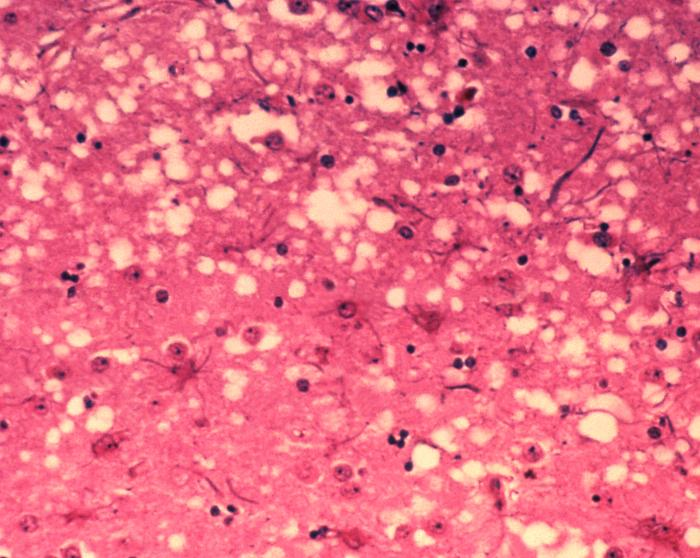
Structure
- Prions are misfolded proteins Example: Prion protein (PrP) is the most common misfolded protein
- The cause of the initial folding error is unknown
- These proteins can be transmitted, affecting other normal proteins
- This is different from all other forms of pathogens known
Prion Diseases
- Many neurodegenerative diseases in vertebrates
- Transmissible spongiform encephalopathies (TSEs)
- Improperly folded proteins create tiny holes in tissue, creating a "spongy" surface Examples: Mad-cow disease and Creutfeldt-Jakob disease in humans
Viriods
These are a unique group that contain the smallest infectious pathogens known! These really push the boundaries of what counts as "living"

Structure
- Just a short strand of RNA
- Circular
- Single-Stranded RNA
- No protein coating
- Do not code for any proteins
- Use host cells RNA polymerase II
- Continuously replicates the viriod
- May be a living relic from the "RNA world"
- May represent a critical step in the creation of life from just RNA
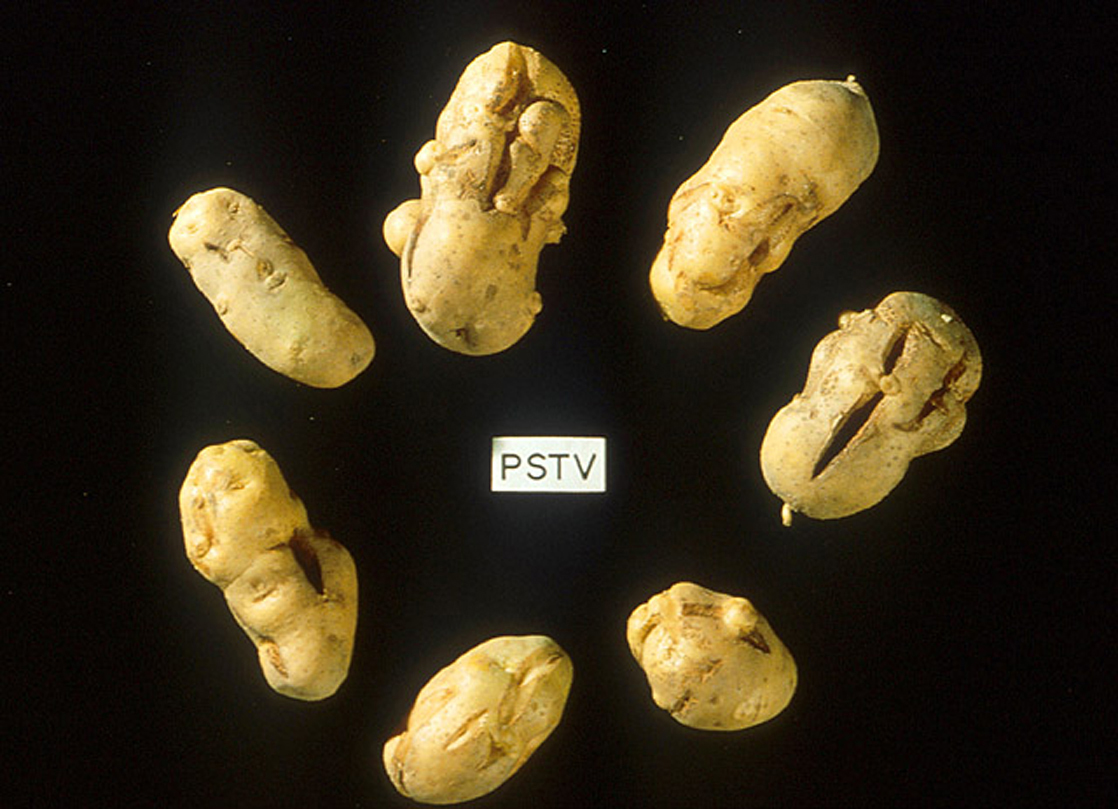
Diseases
- Potato spindle tuber disease
- Range of virulence and symptoms
- Cause leaves to elongate and become "spindle like"
- Slows the rate of sprouting
- Eventually kills the leaf
- Spread by contact or insect vectors

Mark Yourself Question
- Grab a piece of paper and try this problem yourself.
- When you're done, check the "I have answered this question" box below.
- View the solution and report whether you got it right or wrong.
Describe how viroids may represent an initial first step in the formation of life.
Which question best describes a prion disease?