Wize University Biology Textbook > Eukaryotes
Overview of Eukaryotes
Popular Courses
Biology
General Course
General Biology
University Study Guides
BIOL 107
University of Alberta
Grade 11 Biology
Ontario High School
Grade 11 Biology
Canada High School
DAT
General Course
BIO 1131
University of Ottawa
General Biology
University Study Guides
BIOL 108
University of Alberta
Biology 20
Alberta High School
BIOL 111
McGill University
BIOL 184
University of Victoria
BIOL 1010
Dalhousie University
BIOL 1201
Western University
Life Sciences 11
British Columbia High School
BIOL 1P91
Brock University
BLG 144
Toronto Metropolitan University
BIOL 331
University of Calgary
BIOL 1020
University of Manitoba
BIOA01H3
University of Toronto
0:00 / 0:00
Overview of Eukaryotes
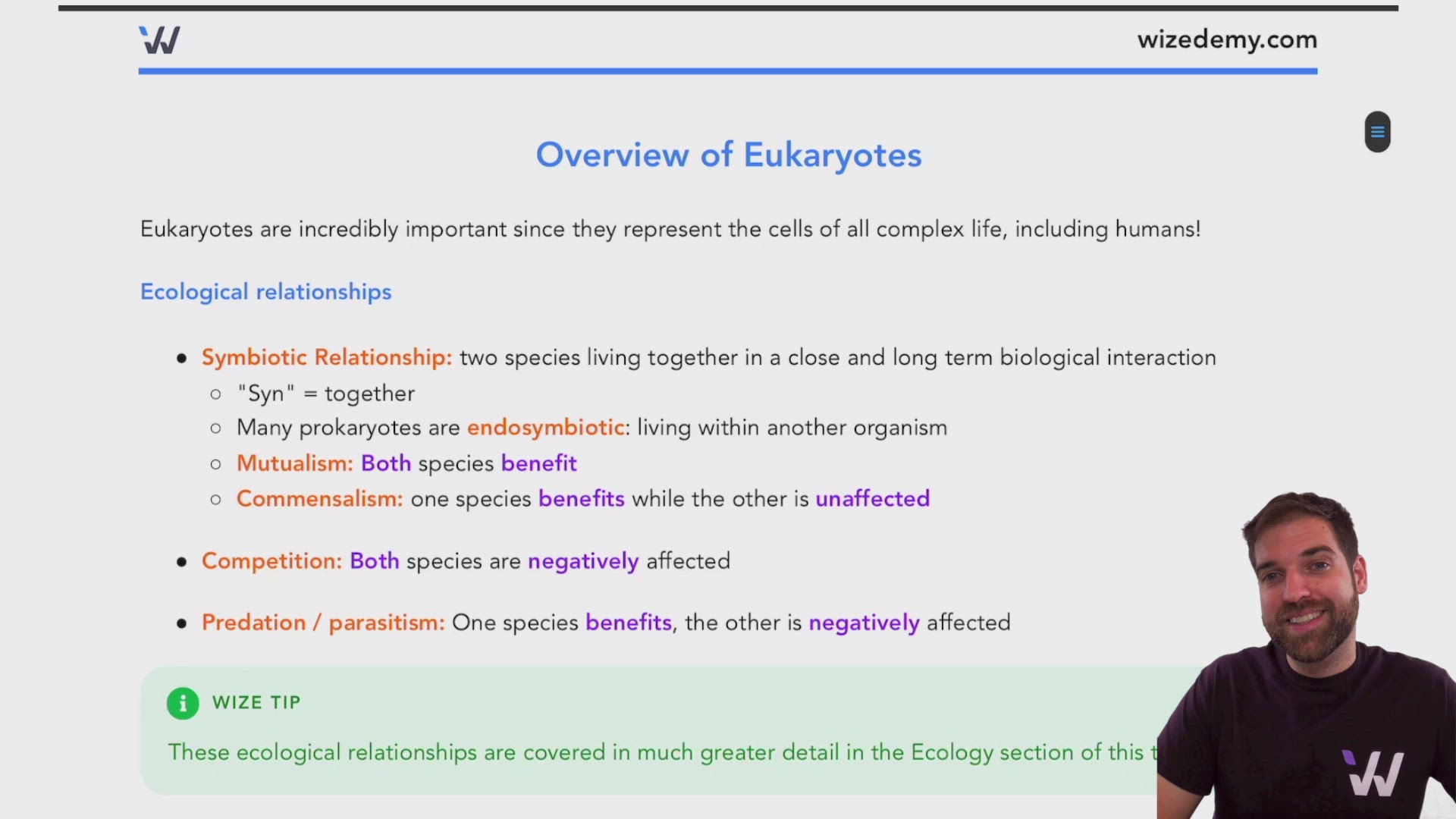
Eukaryotes are incredibly important since they represent the cells of all complex life, including humans!
Ecological relationships
- Symbiotic Relationship: two species living together in a close and long term biological interaction
- "Syn" = together
- Many prokaryotes are endosymbiotic: living within another organism
- Mutualism: Both species benefit
- Commensalism: one species benefits while the other is unaffected
- Competition: Both species are negatively affected
- Predation / parasitism: One species benefits, the other is negatively affected
Wize Tip
These ecological relationships are covered in much greater detail in the Ecology section of this textbook
Oxygen Revolution
- Cyanobacteria use photosynthesis and produce oxygen
- Oxygen accumulates in the earth atmosphere
- Oxygen was toxic to most early taxa
- Obligate anaerobes: intolerant of oxygen
- Took refuge in anaerobic environments
- Examples: Rotting substrates, animal guts
- Others adapted and began aerobic respiration
- Using oxygen to convert fuel into energy
Diversification of Eukaryotes
- 3.5 BYA Cyanobacteria began producing oxygen with photosynthesis
- 2 BYA Eukaryotes evolved and began using the oxygen
- Novel environment fueled diversification
- Metabolism changed from anaerobic to aerobic
- Led to more complex and diverse cells
- Membrane enclosed organelles appeared
Eukaryotic Features
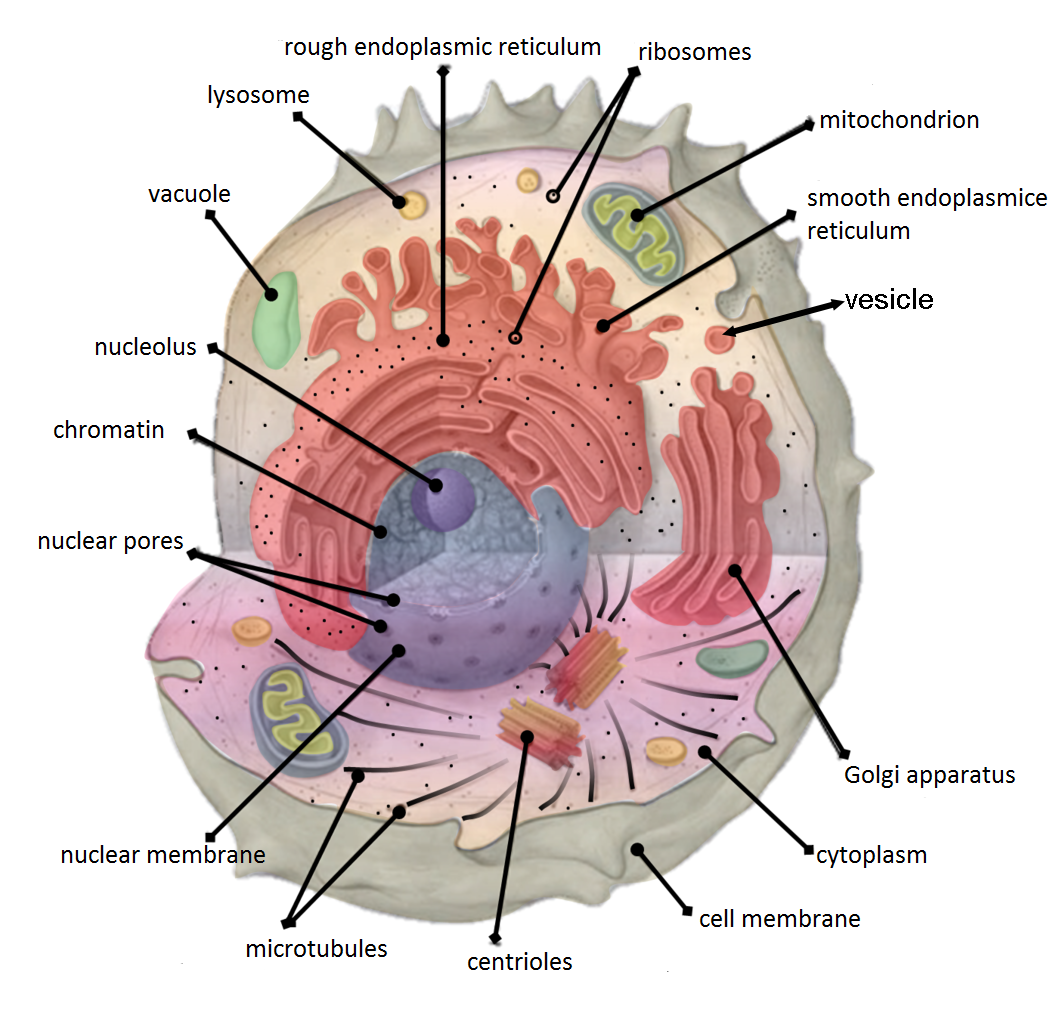
- Linear DNA
- Membrane bound nucleus
- Membrane bound organelles
- Examples: Mitochondria and Chloroplasts
- Larger size than Prokaryotes
- Cytoskeleton evolved to produce more complex morphology
Origin of Eukaryotic Cells
- Infolding of cell membrane
- Created structures in the cell Examples: Endoplasmic Reticulum, Nuclear Envelope
- Endosymbiotic Theory
- A cell absorbed an endosymbiotic aerobic heterotrophic prokaryote
- likely an Archaea
- Enabled cells to produce energy from oxygen and organic matter
- Would eventually become mitochondria
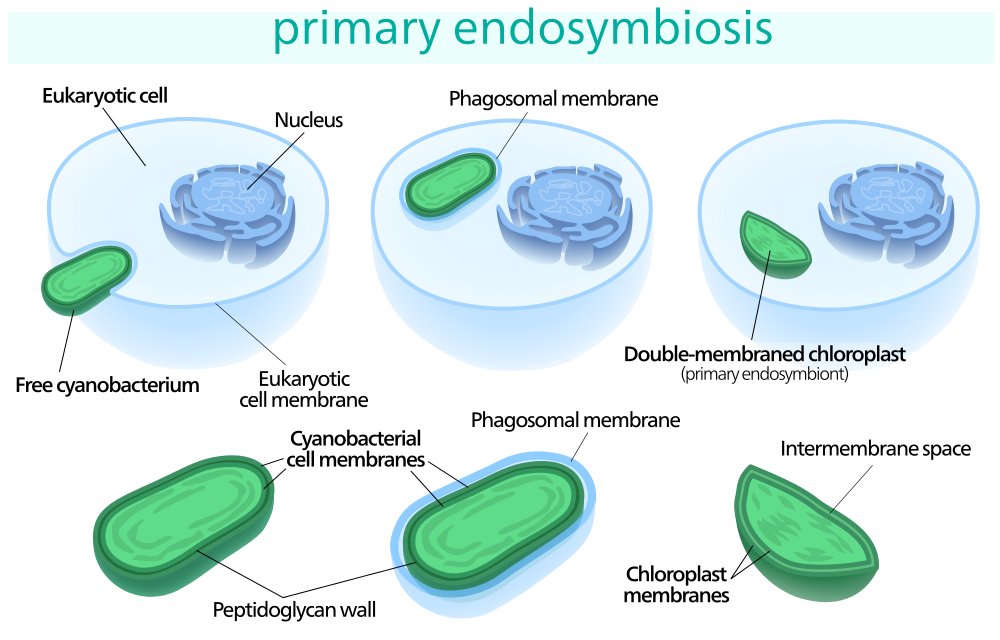
- Photosynthetic Endosymbiosis
- Other cells absorbed different prokaryotes
- Likely Cyanobacteria, enabling these lineages to use photosynthesis to produce energy
- Would become chloroplasts
- Evidence for Endosymbiosis Theory
- Both Mitochondria and Chloroplasts
- Self replicate through binary fission
- Does not require DNA of the host cell
- Their DNA is circular (like prokaryotes)
- Similar size and structure to bacteria
- Contain 2 layers of cell membrane
- inner membrane is the prokaryotes original outer membrane
- outer membrane is from the host cell when it was being engulfed
Practice: Eukaryotes
Which of the following describes an ecological relationship where both species benefit?
Practice: Eukaryotes
What happened to obligate anaerobes after the oxygen revolution?
Practice: Eukaryotes
Which of the following is true about eukaryotic cells?