Wize University Biology Textbook > Seed Plants
Gymnosperms (Non-flowering)
Popular Courses
Biology
General Course
General Biology
University Study Guides
DAT
General Course
BIO 1131
University of Ottawa
General Biology
University Study Guides
BIOL 108
University of Alberta
BIOL 111
McGill University
BIOL 184
University of Victoria
BIOL 1201
Western University
BIOL 1011
Dalhousie University
BIOL 1P91
Brock University
BIOLOGY 2601A/B
Western University
BLG 144
Toronto Metropolitan University
BIOL 331
University of Calgary
BIOL 1020
University of Manitoba
BIOA01H3
University of Toronto
BISC 102
Simon Fraser University
BI110
Wilfrid Laurier University
BIO220H1
University of Toronto
BIOL 201
University of Alberta

0:00 / 0:00
Overview of Gymnosperms
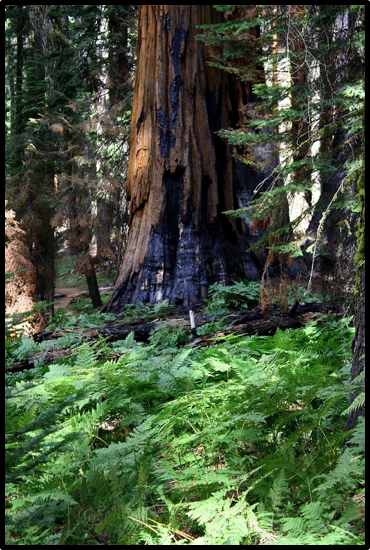
Gymnosperms include many beautiful evergreen trees including redwoods and sequoias, the largest trees in the world. Redwoods have a lifespan between 800 - 1,500 years!
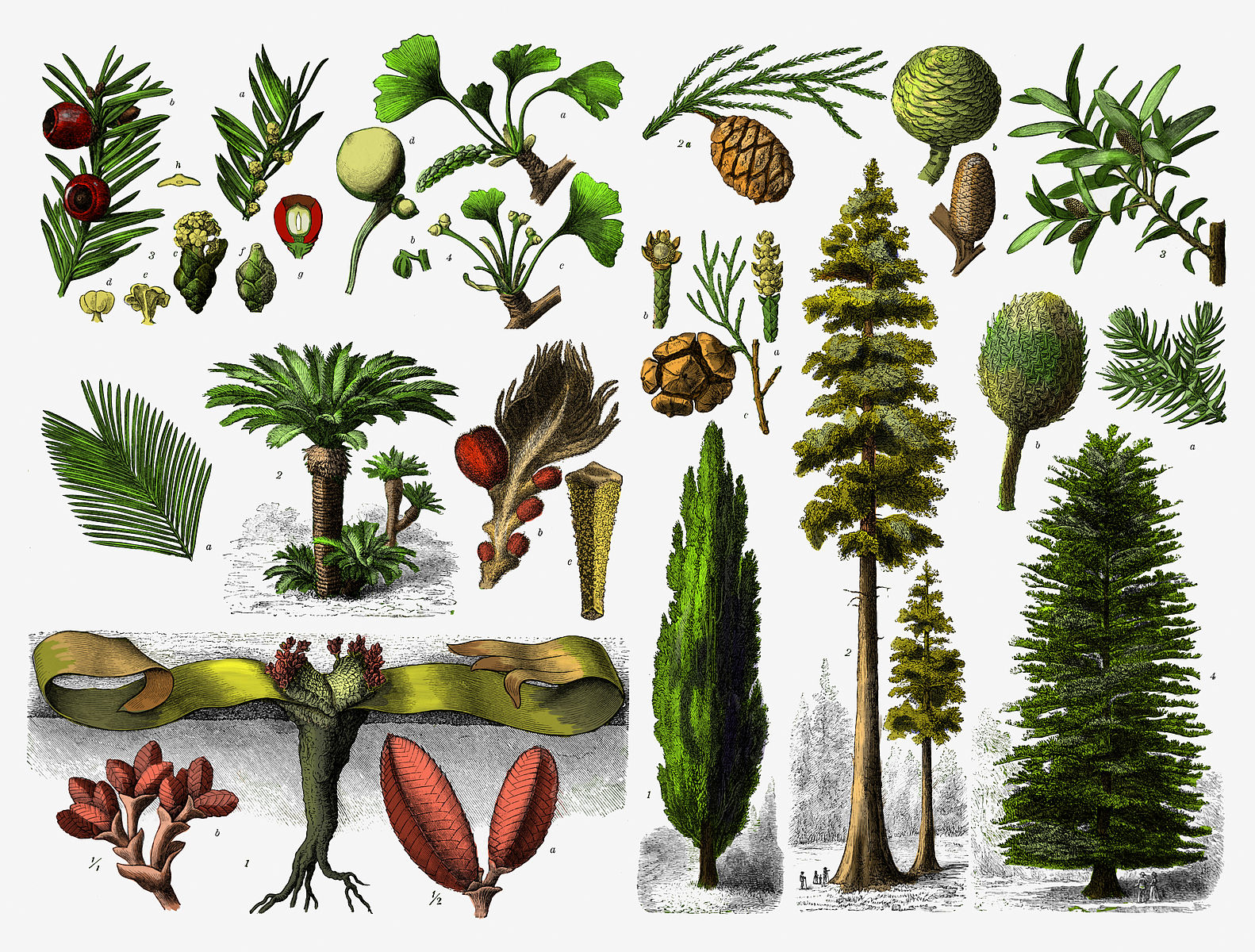

Overview of Gymnosperms
- Latin "Gymno - sperms" = naked seed
- Dominant producers on land
- Dominant Form: Sporophyte
- Same as seedless vascular plants
- Opposite of non-vascular plants
- Evolution of Pollen and Seeds
- Gametophyte dependent on Sporophyte
- Pollen: male gametophyte protected by pollen grain
- Ovule: female gametophyte, immobile
- Seeds: fertilized ovule (diploid, next generation sporophyte)
- Male Gametophyte
- Microsporangium (2N) => Microspore (1N) => Male Gametophyte (1N; pollen grains)
- Pollen tube: extends from the pollen grain to reach the egg
- Pollen: tough sporopollenin coating, protects from damage, drying and UV
- Female Gametophyte
- Ovule: Integuments + Megasporangium + Megaspore
- Integument: protective outer layer
- Megasporangium (2N) => megaspore (1N)
- Seed: Protected embryo
- Gametophyte tissue protected by parental sporophyte tissue
- Size varies

Gymnosperm Reproduction
- Pollination: when pollen meets ovule
- Major adaptation
- Before seeds: sperm needed to swim through water
- Dispersal stage: spore
- With seeds: sperm is protected in pollen grain
- Dispersal stage: seed, can travel long distances (wind or animals)
- Food for seed comes from gametophyte
- Seed Germination
- Some seeds need special conditions
- Fire/smoke
- Last frost (end of winter)
- Digestion (animal transport)
- Larger seeds: more energy stored, needs less sun
- Smaller seeds: less energy stored, needs more sun
0:00 / 0:00
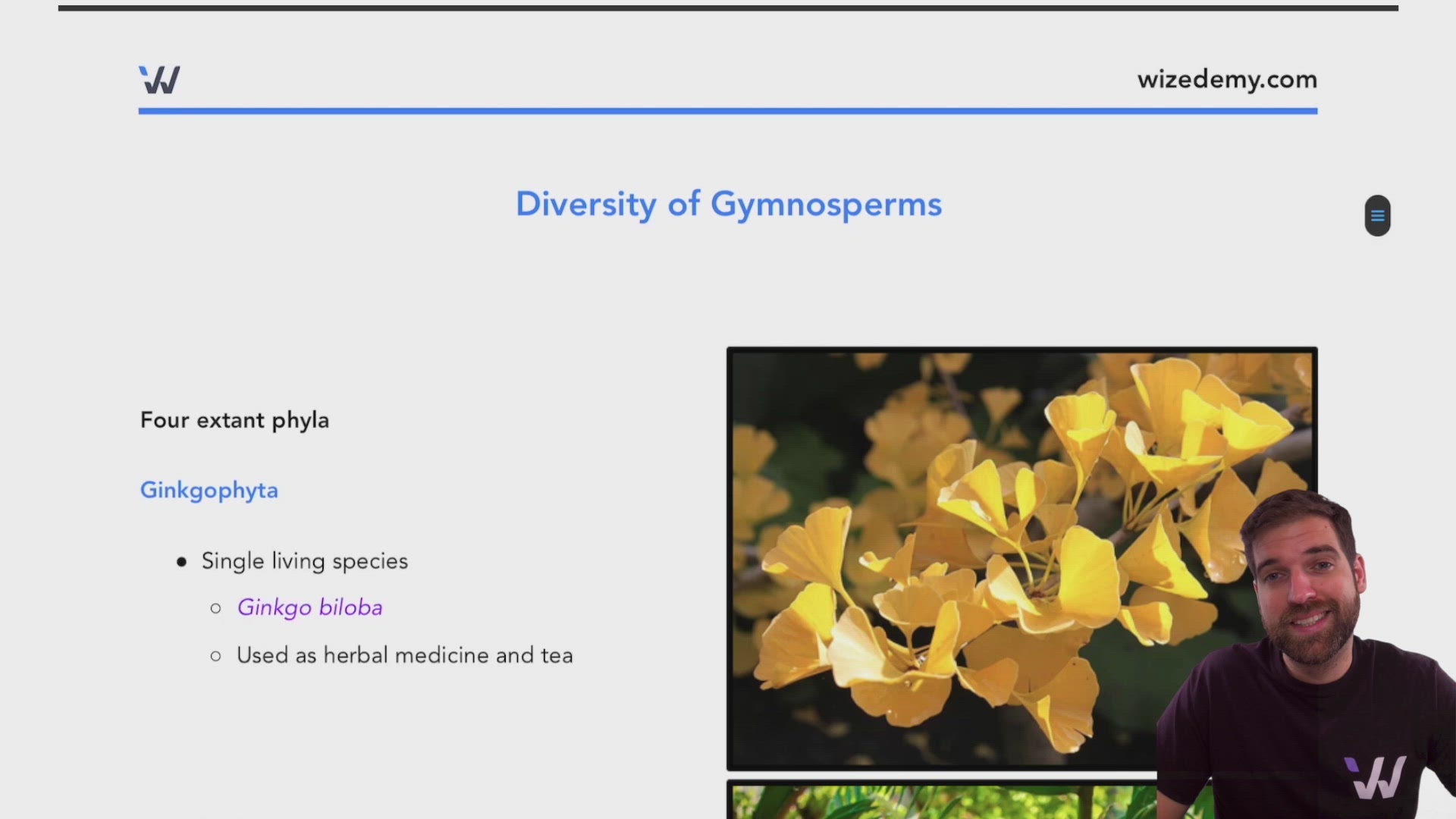
Diversity of Gymnosperms
Four extant phyla
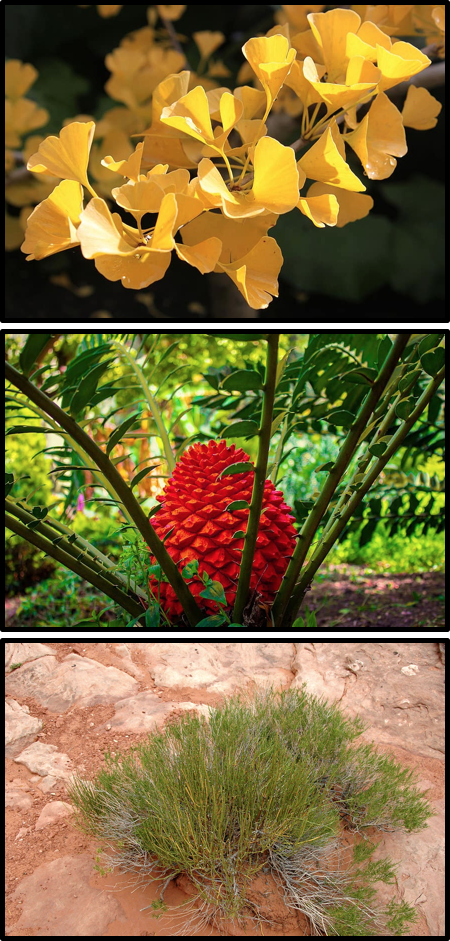
Ginkgophyta
- Single living species
- Ginkgo biloba
- Used as herbal medicine and tea
Cycadophyta
- Abundant and diverse during Mesozoic
- ~130 species left in tropics
- Large cones and palm-like leaves
- Insect pollinated Example: beetles
- Small, fragmented distribution
Gnetophyta
- Harsh environments Example: desert
- Diverse
- Grouped by DNA evidence
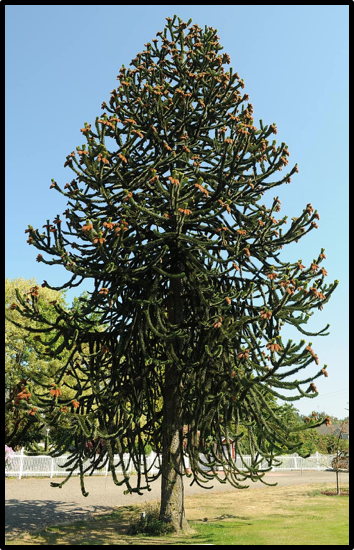
Coniferophyta
- Characterized by shape of leaf
- Scale-like Example: Junipers
- Long Needles
- Flat Leaves Example: Monkey-puzzle Tree
- Abundant in boreal and alpine regions
- Waxy coat and permanent leaves = cold and dry adapted
- Evergreen: do not loose leaves in winter
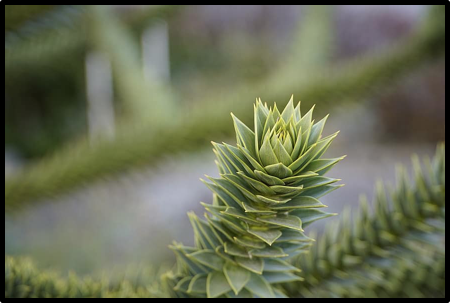
Monkey Puzzle Tree
Practice: Gymnosperms
Which of the following accurately describes gymnosperm seeds?
Practice: Gymnosperms
What is the dominant life stage of Gymnosperms?
Practice: Gymnosperms
Mark this statement True or Flase:
After the advent of the seed, sperm no longer needed to travel through a moist environment.
Practice: Gymnosperms
How many extant phyla exist in gymnosperms?
Practice: Gymnosperms
Which phyla of gymnosperms are characterized by harsh environments (such as the desert)?