Wize University Biology Textbook > Plant Physiology
Plant Tissues
Popular Courses
Biology
General Course
General Biology
University Study Guides
DAT
General Course
General Biology
University Study Guides
BIOL 111
McGill University
BIOL*1070
University of Guelph
BIOL 186
University of Victoria
BIOL 1201
Western University
BISC 101
Simon Fraser University
BIOL 1011
Dalhousie University
BIOL 1P91
Brock University
BIOLOGY 2601A/B
Western University
BLG 144
Toronto Metropolitan University
BIOL 331
University of Calgary
BIOL 1020
University of Manitoba
BIOA01H3
University of Toronto
BIOL 260
University of British Columbia
BISC 102
Simon Fraser University
BI110
Wilfrid Laurier University
BIO220H1
University of Toronto
0:00 / 0:00
Plant Tissues
Simple Tissues

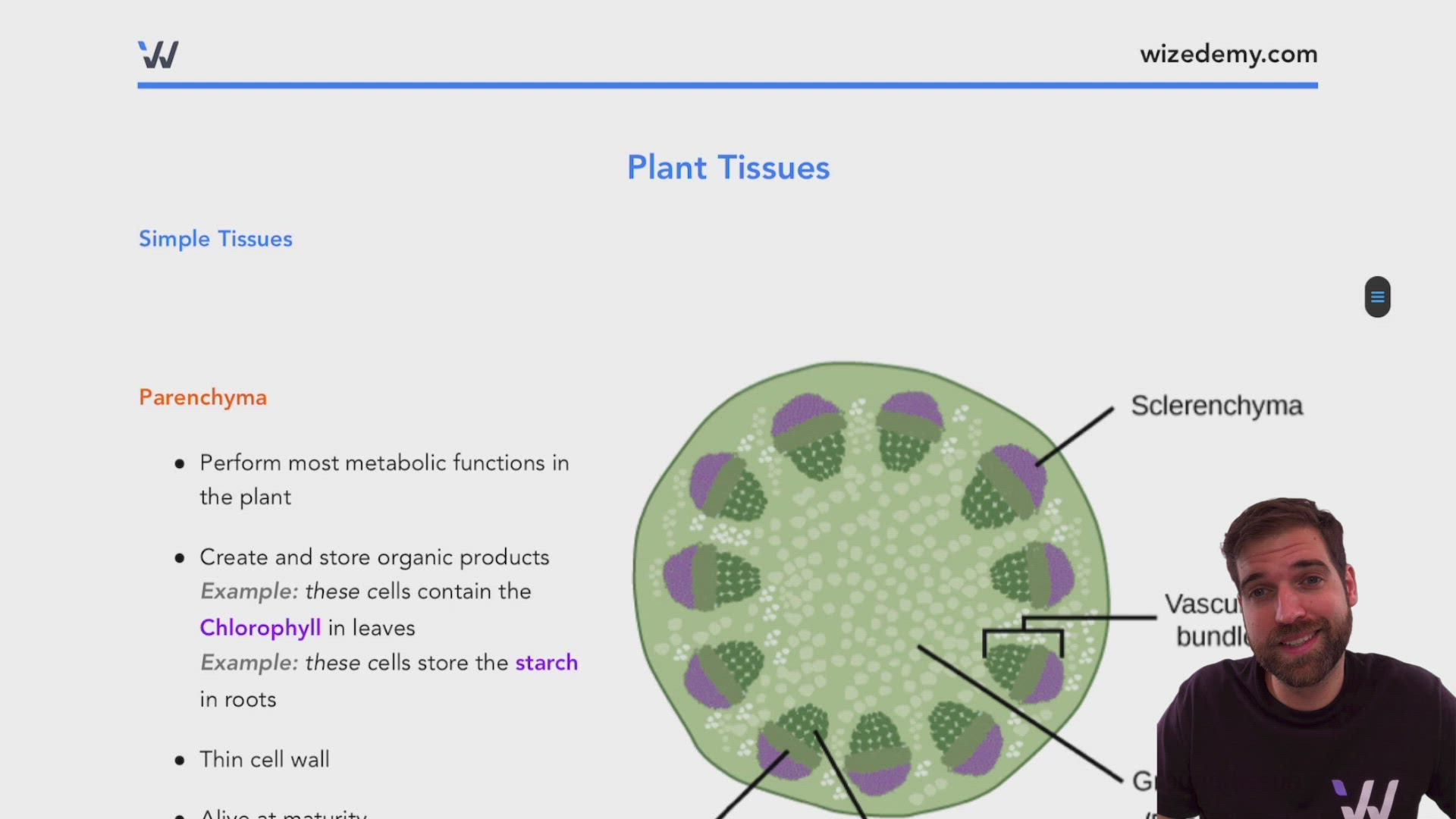
Parenchyma
- Perform most metabolic functions in the plant
- Create and store organic products Example: these cells contain the Chlorophyll in leaves Example: these cells store the starch in roots
- Thin cell wall
- Alive at maturity
- Most cells can differentiate into other types of plant cells when needed
Collenchyma
- Groups of flexible elongated cells (strands)
- Provides flexible support for young plants
Sclerenchyma
- Rigid cells that provide structural support
- Contains Lingin: strong polymer for support
- Many are dead at maturity
- Unable to grow / elongate
- Specialized cells for structural support
- Sclerids: boxy, thick and irregular
- Fibers: long slender groups of strands Example: Hemp fibers are used to make rope and clothing
Complex Tissues

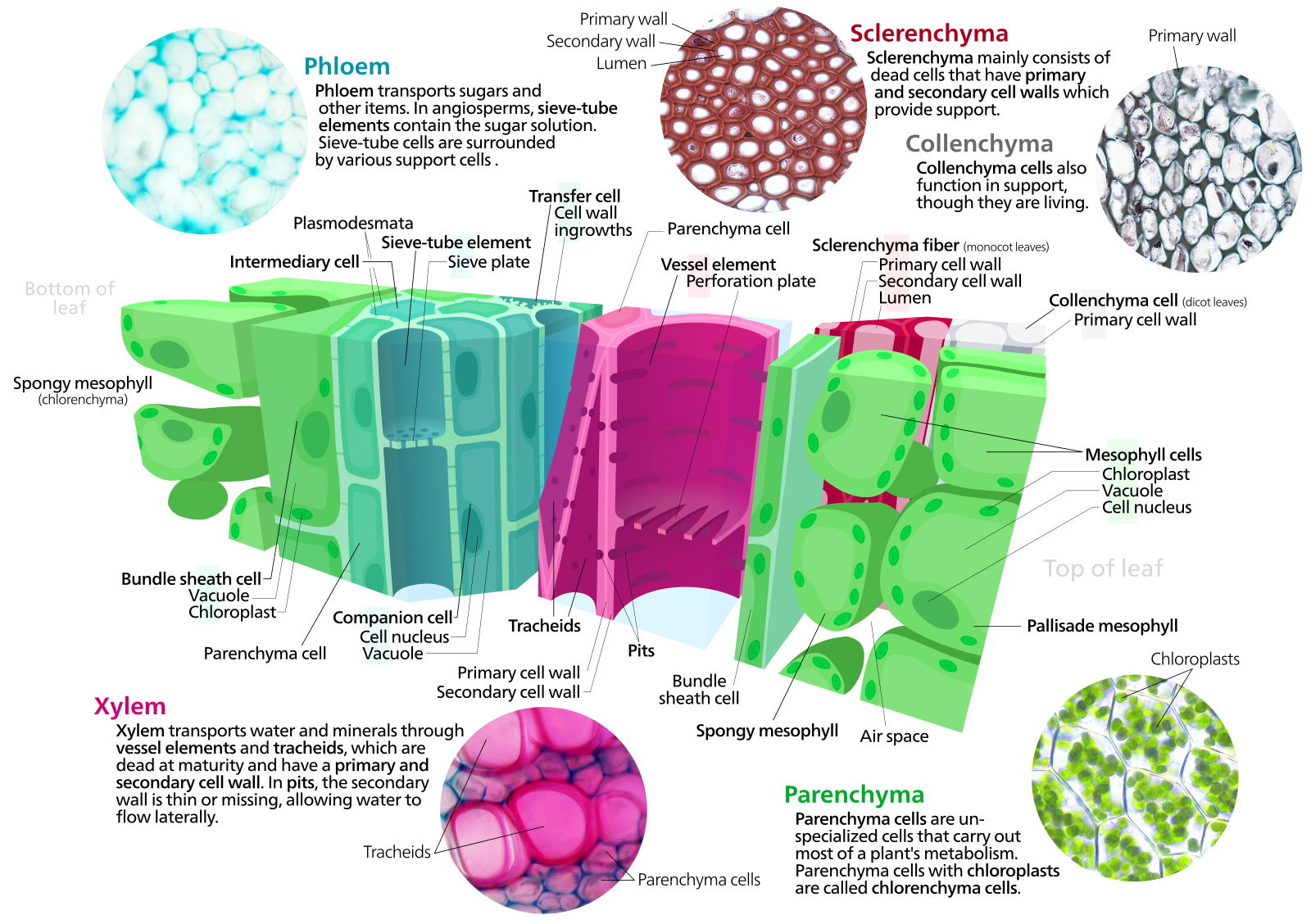
Xlyem
- Water-conducting cells
- Specialized elongated cells
- Dead at maturity
- Hollow cell walls transport water throughout plant
- Tracheids: long, thin and tapered cells with pits for water to move to other cells
- Vessel elements: wider and thicker cells for long distance water transport
Phloem
- Sugar-conducting cells
- Specialized elongated cells
- Alive at maturity
- Composed of sieve-tube elements
- lack nucleus, ribosomes, vacuole and cytoskeleton
- improves movement of sugars through cell
- Sieve Plates: ends of the cells with pores to allow fluid to pass through
- Companion Cells: surround the sieve-tube elements and facilitate sugar loading
Practice: Plant Cell Types
Sclerids and fibers are specialized ____________ cells.
Practice: Water Transport
The _____________ transports water inside the plant. These cells are ___________ at maturity.

Mark Yourself Question
- Grab a piece of paper and try this problem yourself.
- When you're done, check the "I have answered this question" box below.
- View the solution and report whether you got it right or wrong.
Practice: Phloem
Explain why phloem cells lack many essential components including nuclei, ribosomes, vacuole and cytoskeleton.
Why are xylem cells not equally bare?