Wize University Biology Textbook > Plant Physiology
Plant Tissue Systems and Organs
Popular Courses
Biology
General Course
General Biology
University Study Guides
DAT
General Course
General Biology
University Study Guides
BIOL 111
McGill University
BIOL*1070
University of Guelph
BIOL 186
University of Victoria
BIOL 1201
Western University
BISC 101
Simon Fraser University
BIOL 1011
Dalhousie University
BIOL 1P91
Brock University
BIOLOGY 2601A/B
Western University
BLG 144
Toronto Metropolitan University
BIOL 1020
University of Manitoba
BIOL 331
University of Calgary
BIOA01H3
University of Toronto
BIOL 260
University of British Columbia
BISC 102
Simon Fraser University
BI110
Wilfrid Laurier University
BIO220H1
University of Toronto

0:00 / 0:00
Tissue Systems

Dermal Tissue System
- Epidermis: outer protective layer of dense cells
- Cuticle: waxy coating on leaves and stems
- Prevents water loss
- Reduces disease transmission
- Periderm: replaces epiderm in older woody plants
- Specialized in different organs
- Example: root epidermal cells form root hairs

Vascular Tissue System
- Transport of water and nutrients through plant
- Xylem: water transport
- Phloem: nutrient transport
- Stele: vascular tissue in the roots
- Symplastic: transfer of fluids through the living cell
- Apoplastic: transfer of fluids through dead cell wall
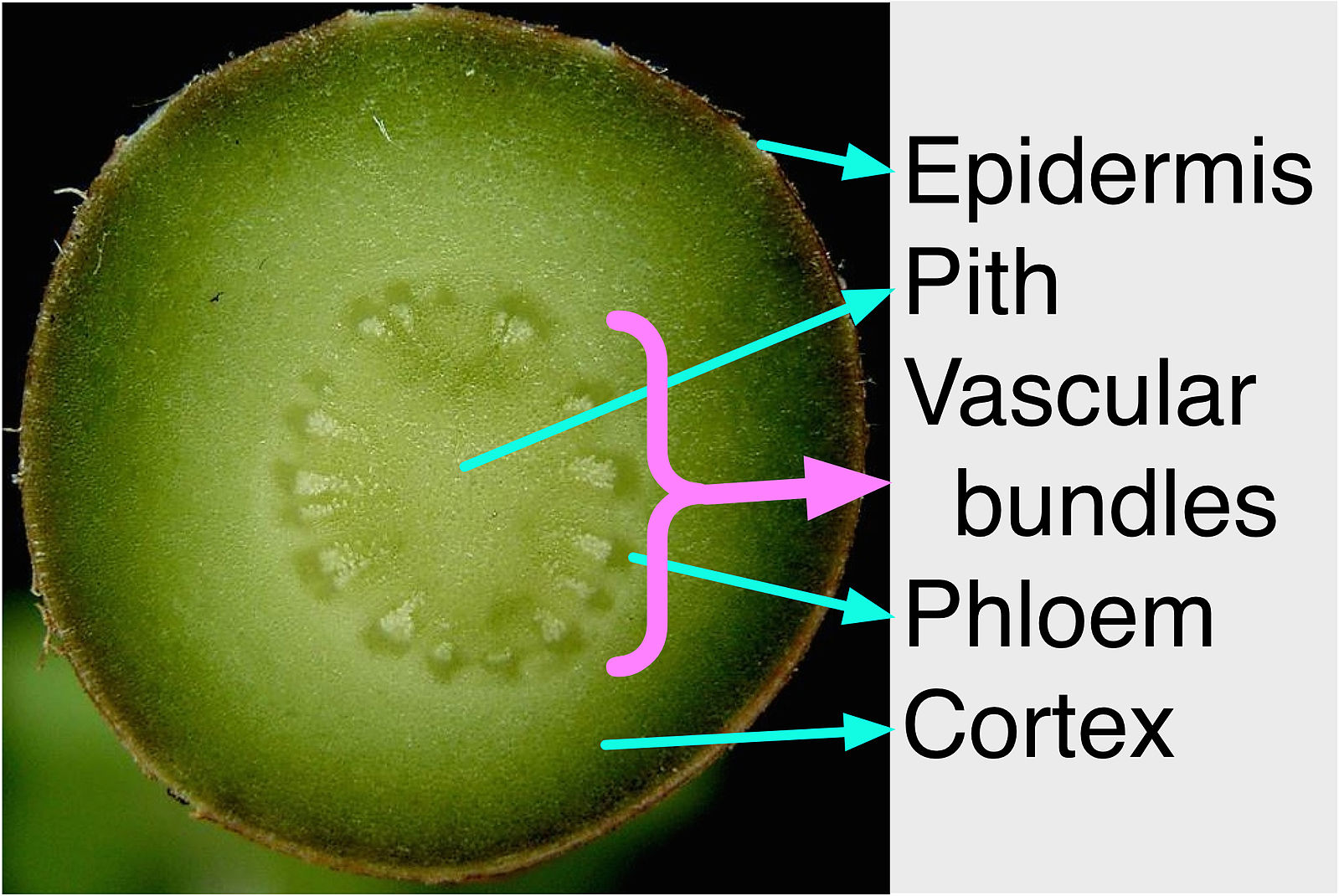
Ground Tissue System
- Tissues that are not Dermal or Vascular
- Represents most of the plant tissues
- Parenchyma, collenchyma and sclerenchyma
- Pith: ground tissue inside vascular system
- Cortex: ground tissue outside of vascular system
- Specialized for specific functions Example: photosynthesis in the leaves or nutrient storage in the roots

0:00 / 0:00
Plant Organs
Roots

- Anchors plants to the ground
- Absorbs minerals and water
- Epidermis lacks cuticle
- Helps to absorb water
- Taproot: main vertical root
- Penetrates hard soil to access water and nutrients
- Provides strong anchor for tall plants
- Lateral Roots: branch off of taproot, absorb most water and nutrients
- Root Hairs: modified epidermis increases surface area to improve absorption
Stems
- Provides structure for leaves to attach
- Positions leaves to maximize photosynthesis
- Nodes: branches where leaves attach
- Internodes: stem sections between nodes
- Apical Bud: tip of the shoot where most growth occurs

Leaves
- Main site for photosynthesis
- Highly variable depending on which function
- Exchange gases
- Control plant temperature
- Defend plant from herbivores and diseases
- Blade: flattened part of the leaf
- Petiole: leaf stalk that attaches to the stem
- Veins: vascular tissue of the leaf

Mark Yourself Question
- Grab a piece of paper and try this problem yourself.
- When you're done, check the "I have answered this question" box below.
- View the solution and report whether you got it right or wrong.
Practice: Cuticle
Describe the function of the cuticle on leaves and stems. What would happen if this were missing?
_____________ describes the movement of fluids through dead cells, whereas ______________ describes movements of fluids through living cells.