Wize University Biology Textbook > Plant Physiology
Water Transport
Popular Courses
Biology
General Course
General Biology
University Study Guides
DAT
General Course
Grade 11 Biology
Ontario High School
Grade 11 Biology
Canada High School
BIO120H1
University of Toronto
General Biology
University Study Guides
Biology 20
Alberta High School
BIOL 111
McGill University
BIOL*1070
University of Guelph
BIOL 1201
Western University
BISC 101
Simon Fraser University
Life Sciences 11
British Columbia High School
BIOL 1011
Dalhousie University
BIOL 1P91
Brock University
BIOLOGY 2601A/B
Western University
BIOLOGY 2601A/B
Western University
BLG 144
Toronto Metropolitan University
BIOL 1020
University of Manitoba
BIOL 331
University of Calgary
0:00 / 0:00
Water Transport
Short Distance Water Transport
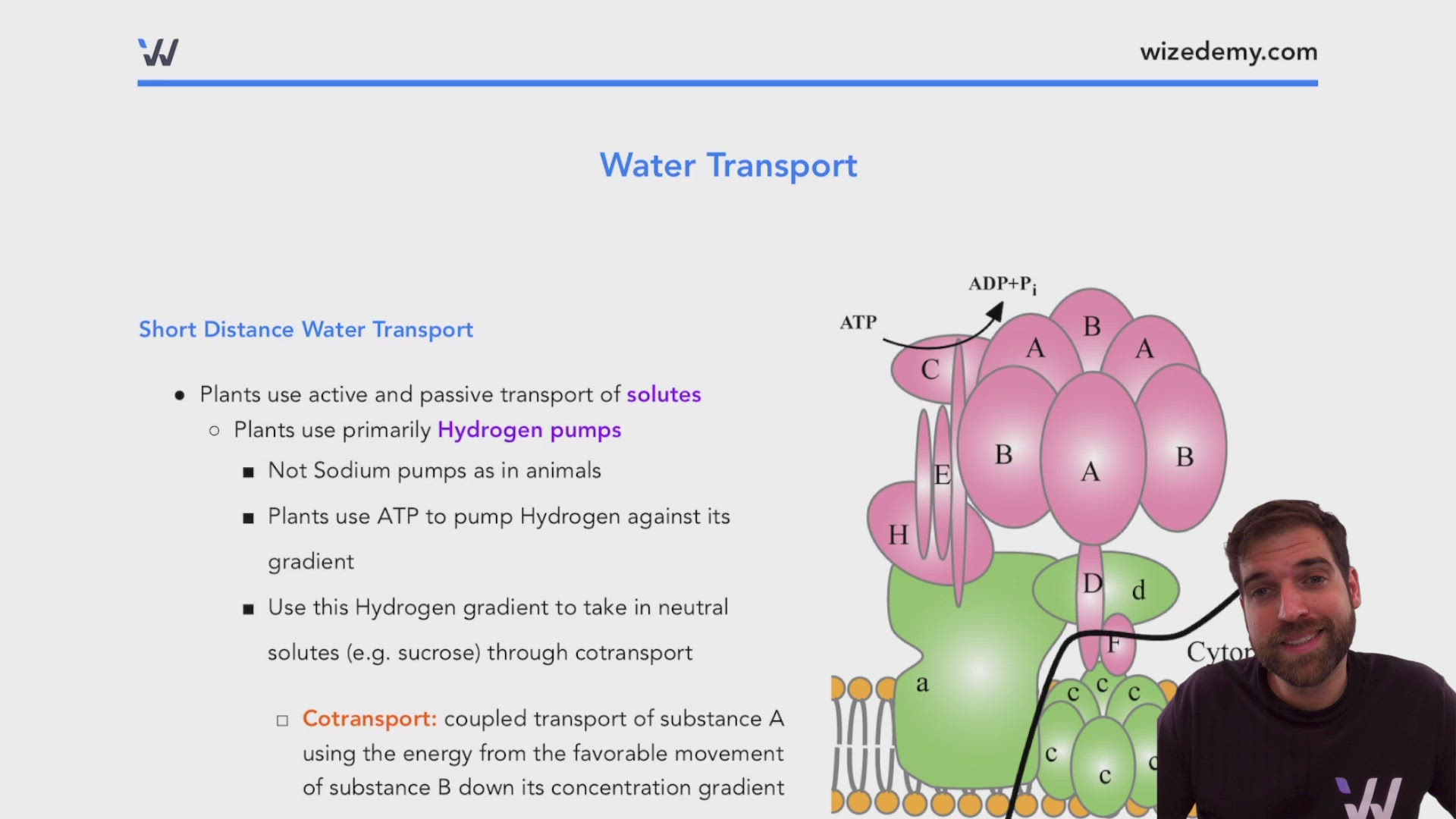
- Plants use active and passive transport of solutes
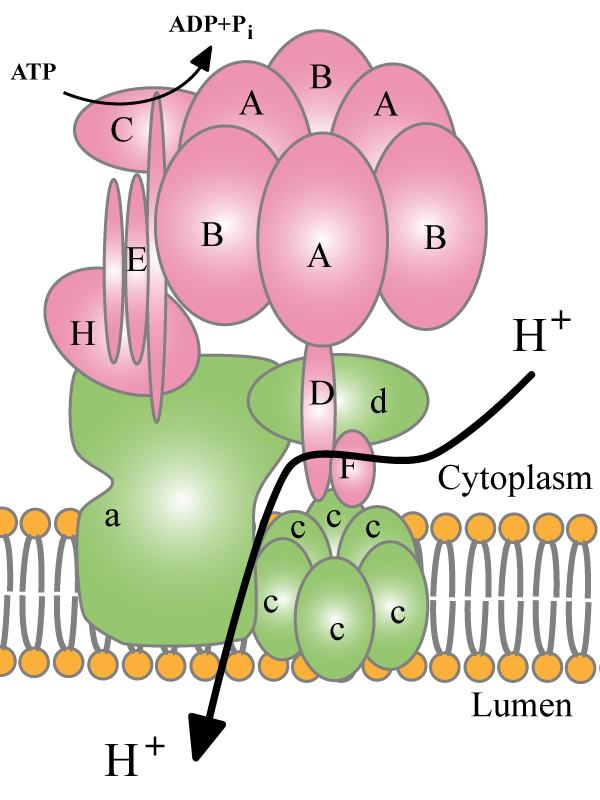
- Plants use primarily Hydrogen pumps
- Not Sodium pumps as in animals
- Plants use ATP to pump Hydrogen against its gradient
- Use this Hydrogen gradient to take in neutral solutes (e.g. sucrose) through cotransport
- Cotransport: coupled transport of substance A using the energy from the favorable movement of substance B down its concentration gradient
- Plants gain or lose water through osmosis
- Osmosis: diffusion of free water across a membrane
- Water Potential: physical property that predicts which way water will move across a membrance
- Depends on solute concentration and pressure
- Water moves from high water potential to low water potential Example: If a plant is put into a solution with a lower water potential than the plant, water will move out of the plant
- The greek letter Psi () is used to symbolize water potential
- uses the units MPa (megapascal), a unit of force
Water Potential Equation
- Water potential is determined using the water potential equation:
- = Water potential
- Describes which way the water will move
- Negative values = water leaving the cell
- Positive values = water entering the cell
- = Solute potential
- Proportional to the molarity
- Also called osmotic potential
- = Pressure potential
- Physical pressure of the water
- Can be positive or negative
Wize Tip
Water potential refers to the waters potential energy, so if a solution has HIGH water potential, that means the solution can do work (like push water into or out of a cell). This is the same as a ball on a hill, the ball has high potential energy and can use that energy to roll down the hill.
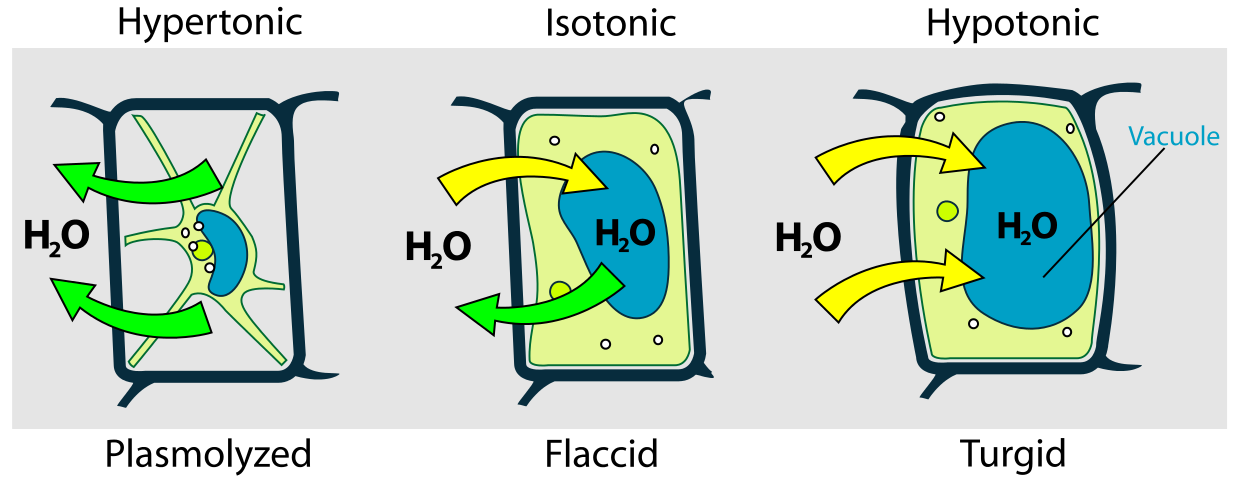
Effects of water on plant cells
- Flaccid: plant is limp, wilted
- Water has left the cell
- Occurs when you put a plant in a solution with greater solute concentration Example: when you forget to water your plants and they become wilted
- Plasmolysis: the act of the plant cell shrinking and pulling away from the rigid cell wall
- Turgid: plant is firm
- Water has entered the cell
- Occurs when you put a plant in a solution with less solute concentration Example: when you put wilted flowers in a vase with pure water and they perk up
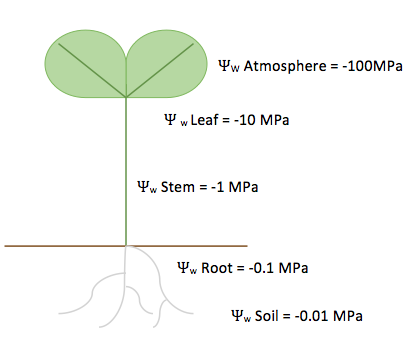
Long Distance Water Transport
- Bulk Flow: water travels long distance due to a pressure gradient
- Does not rely on solute concentration
- Moves through the Xylem and Phloem

Mark Yourself Question
- Grab a piece of paper and try this problem yourself.
- When you're done, check the "I have answered this question" box below.
- View the solution and report whether you got it right or wrong.
Calculate the water potential of a plant cell where the solute potential is -0.5 MPa and the pressure potential is -0.3MPa.
What direction will water move?
Practice: Plants
When placed into an unknown solution, a plant went from being flaccid to turgid. What was the solution?