Wize University Chemistry Textbook > Periodic Table Trends
Exceptions to the Ionization Energy Trend
Popular Courses
MCAT
General Course
CHEM 1301A/B
Western University
CHEM 201
University of Calgary
General Chemistry
University Study Guides
CHEM 1A03
McMaster University
CHEM 112
Queen's University
DAT
General Course
Chemistry
General Course
General Chemistry
University Study Guides
CHEM 110
McGill University
CHEM 1E03
McMaster University
CHM135H1
University of Toronto
CHEM 120
University of Waterloo
CHEM 205
Concordia University
CHEM 121
Simon Fraser University
SC/CHEM 1000 3.00
York University
APSC 131
Queen's University
CHEM-1100
University of Windsor
CHEM 1100
University of Manitoba
CHEM 1481
Texas A & M University

0:00 / 0:00
Exceptions to the Periodic Trends Introduction
There are a few exceptions for ionization energy and electron affinity that we should familiarize ourselves with.
Let's consider ionization energy first. Based on what we currently know, the trend for ionization energy should look like this:

However, it actually looks something like this:

The differences have to do with electron configurations. Let's take a look.

0:00 / 0:00
Exceptions to the Periodic Trends Examples
Example #1:
- Based on the periodic trend we learned so far, we would expect that Be or B would have the higher IE:B

- Recall: which orbital is higher in energy, s or p?p
- Based on the electron configurations and knowing that B would LOVE to have its high energy p electron removed so it can have its valence electrons in the more stable 2s orbital, should Be or B have the higher IE?Be
Example #2:
- Based on the periodic trend we learned so far, we would expect N or O to have the higher IE:O
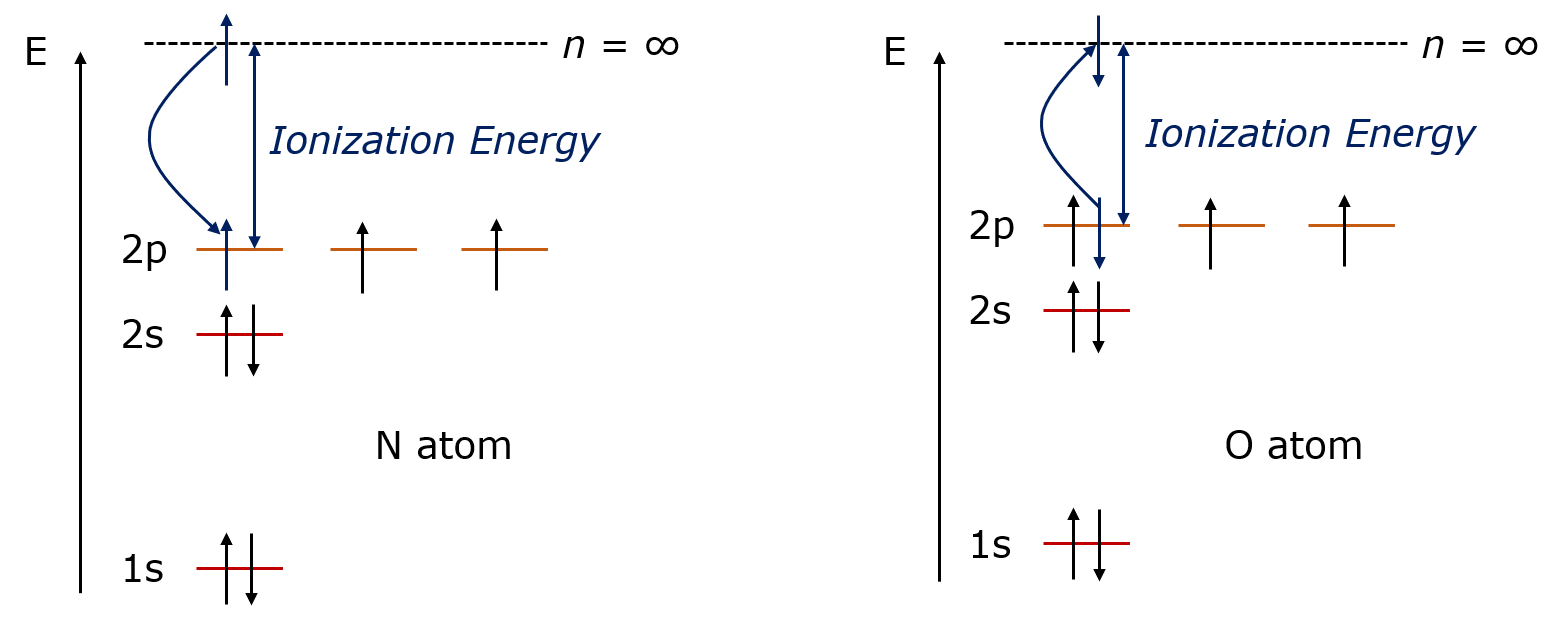
- Recall: are half-filled subshells more/less stable than partially filled subshells?More stable
- Based on the electron configurations and knowing that N would HATE to have an outermost electron removed since it is currently very stable, should N or O have the higher ionization energy?N
- In addition, O has some electron-electron repulsion that it would prefer to get rid of. Thus, it makes sense that it has a higher/lowerlowerIE
Example #3:
- Based on the periodic trend so far, we would expect C or N to have the higher negative EA:N
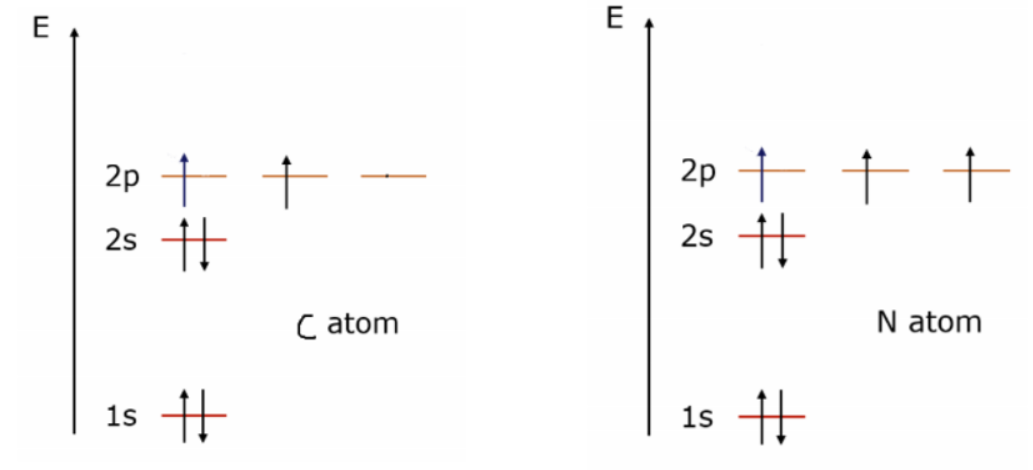
- Based on the electron configurations and knowing that N would HATE to have an electron added since it is currently very stable with a half-filled 2p subshell, should N or C have the higher electron affinity?C

0:00 / 0:00
Exceptions to the Periodic Trends Summary
Wize Tip
The exceptions specifically happen in two cases:
- When we switch from one type of orbital to another Example: 2s to 2p; (Be to B is a jump from 2s to 2p)
- When we start pairing electrons in a sub-shell Example: 2p3 to 2p4 (N vs O)
These exceptions can be explained (and remembered) using the relative energies of atomic orbitals (knowing that the p subshell is > in energy than the s subshell) and the fact that electrons repel one another and this repulsion is highest for electrons sharing an orbital (electrons would rather be half-filled in a subshell instead of having some electrons paired and others unpaired
0:00 / 0:00
Example: Ionization Energy Exceptions
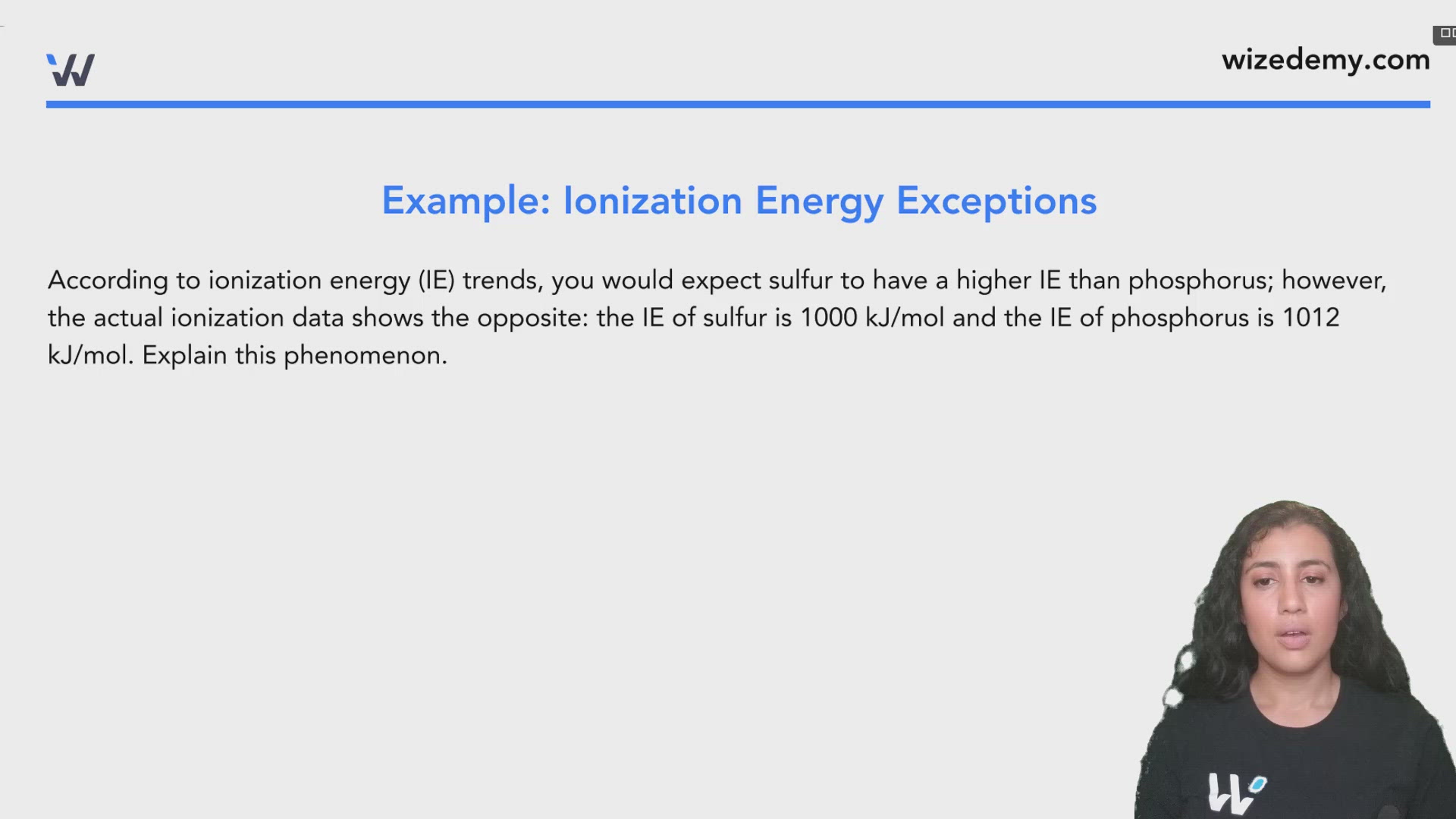
According to ionization energy (IE) trends, you would expect sulfur to have a higher IE than phosphorus; however, the actual ionization data shows the opposite: the IE of sulfur is 1000 kJ/mol and the IE of phosphorus is 1012 kJ/mol. Explain this phenomenon.
According to the periodic trends, you would expect the IE of sulfur to be larger.
The cause for the opposite observation is the pairing energy (energy required to place a second electron within the same atomic orbital).
For sulfur, it is more favourable to remove an electron so that it can have a half-filled 3p subshell, while also reducing electron-electron repulsions. This is why the ionization energy for S is less than for P.
Practice: Ionization Energy Exception
Contrary to what we would predict based on Zeff, the ionization energy of aluminum is actually less than magnesium. This is because,