Wize University Chemistry Textbook > Chemical Bonding
Properties of Covalent Bonds
Popular Courses
MCAT
General Course
CHEM 1301A/B
Western University
CHEM 201
University of Calgary
General Chemistry
University Study Guides
AP Chemistry Exam Prep Course
AP Exam Prep
CHEM 101
University of Alberta
CHEM 112
Queen's University
CHEM 121
University of British Columbia
DAT
General Course
CHM 1311
University of Ottawa
Chemistry
General Course
CHEM 103
University of Alberta
General Chemistry
University Study Guides
CHEM 110
McGill University
CHEM 1E03
McMaster University
ENGG 204
University of Calgary
CHM135H1
University of Toronto
CHEM 154
University of British Columbia
CHEM 205
Concordia University
CHEM 121
Simon Fraser University
0:00 / 0:00
Properties of Covalent Bonds
Bonds can have various bond lengths and bond energies. There can also be a different number of bonds between different atoms. We will take a look at some of these terms and properties of bonds now.
Bond Length

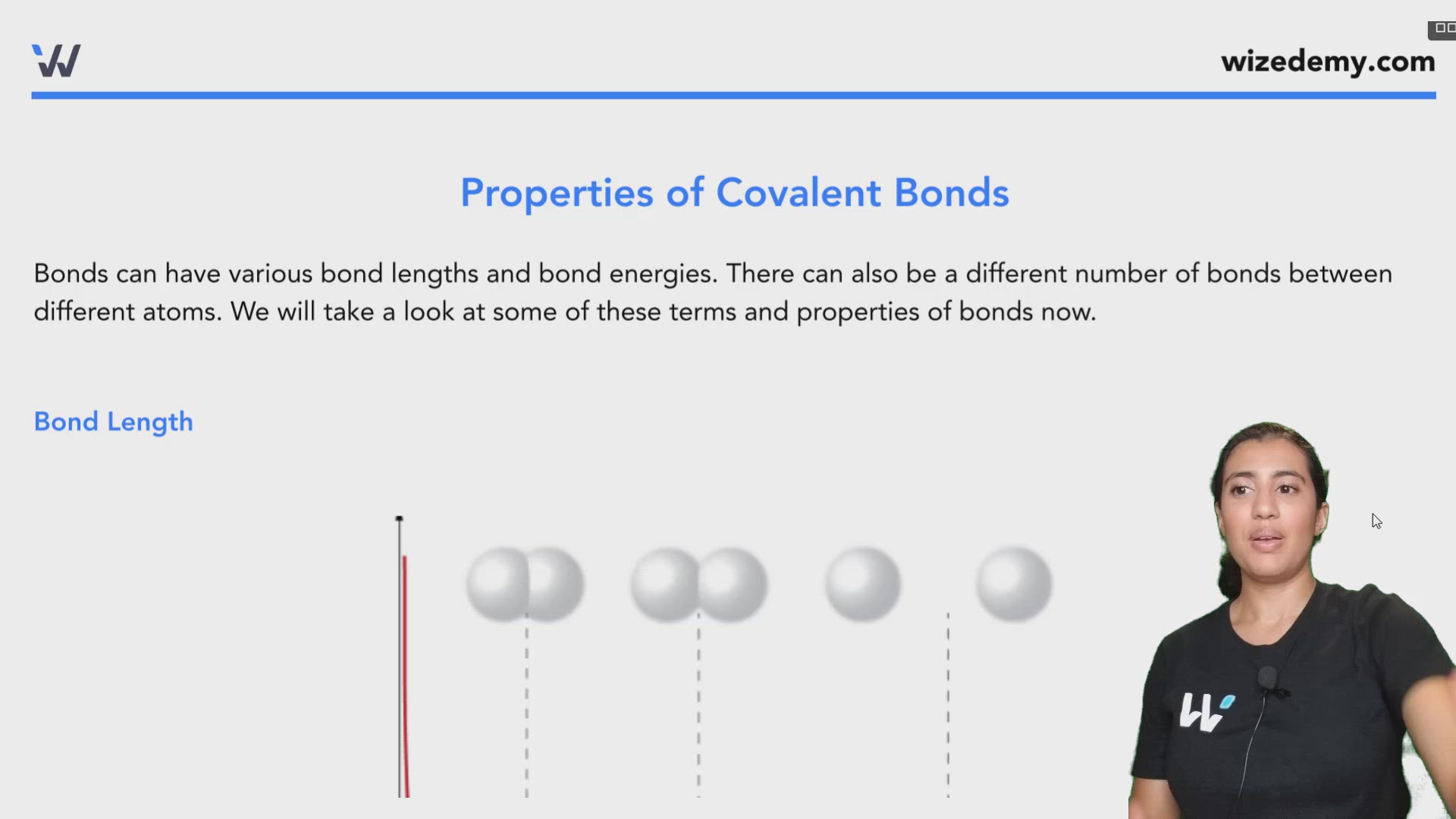
- When 2 atoms get bound together, there are repulsion forces and attractive forces
- The electrons from one atom are attracted to the other atom's nucleus (attraction)
- But the nuclei from both atoms can't get too close (repulsion because of + charges)
- When the forces balance out we form a bond!
Circle the most stable bond in the diagram above (this is how the bond will exist).
Bond length: this is the distance between two nuclei that are bound together when they are at their lowest possible energy state
- Note: In the graph, energy rises when atoms have a shorter or longer bond length than what is optimal
- When atoms with larger atomic radii bind together, the bond length (distance between their nuclei) is (shorter/longer)longer
Bond Dissociation Energy (BDE)
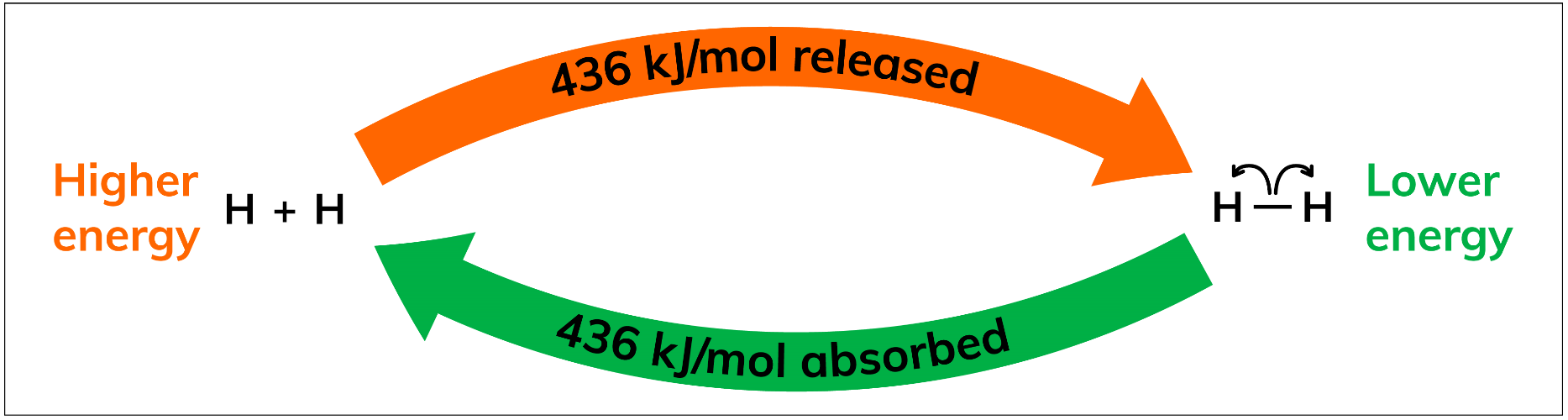
Bond dissociation energy: is the amount of energy needed to break a bond homolytically
In the diagram, this is represented by the blue arrow. Indicate where the BDE can be found on the graph above.
Wize Concept
Breaking bonds will always require energy!
Forming bonds on the other hand will release energy since bonds are stable and lower in energy!
The higher the BDE the stronger/weaker the bond:
stronger
Bond Order
Bond order: the number of bonds between adjacent atoms
Examples:
The bond order of H-F is
1
The bond order of C=O is
2
The bond order of  is
is
is 3
How are Bond Order, Bond Length, and Bond Energy Related?
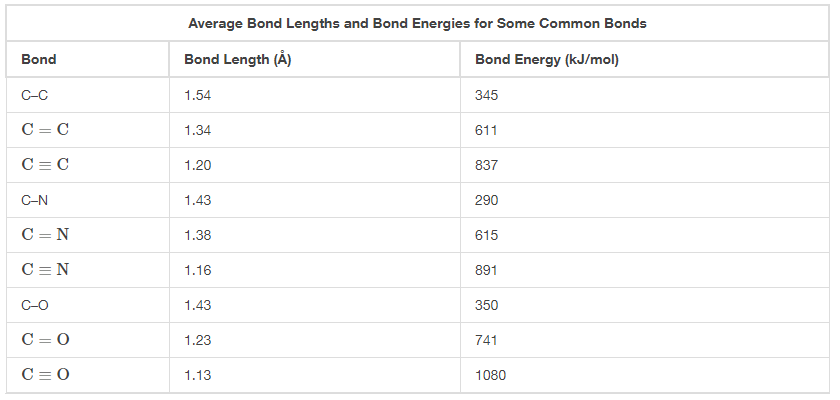
- For bonds between the same elements, the higher the bond order, the shorter the bond length and the stronger the bond (higher BDE)
- Bond length is given in units angstroms (Å) where 1 Å=10-10m
Example: Bond Order
What is the bond order of each bond in this molecule?
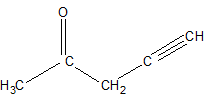
If it is a single bond, it has a bond order of 1.
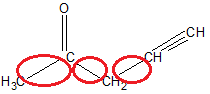
If it is a double bond, it has a bond order of 2.
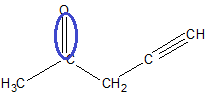
If it is a triple bond, it has a bond order of 3.
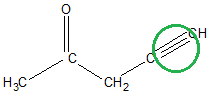
Practice: Potential Energy Diagrams
The following figure shows the potential energy diagrams for the carbon-carbon bond in ethane, ethene, and ethyne. Structures of these molecules are shown below. Identify which molecule corresponds to each potential energy curve.


A.
ethyne
B.
ethene
C.
ethane
potential energy diagram a
potential energy diagram b
potential energy diagram c