Wize University Chemistry Textbook > Equilibrium
Intro to Equilibrium + characteristics of dynamic equilibrium
Popular Courses
MCAT
General Course
CHEM 1302A/B
Western University
General Chemistry
University Study Guides
AP Chemistry Exam Prep Course
AP Exam Prep
CHEM 112
Queen's University
CHEM*1040
University of Guelph
CHEM 203
University of Calgary
DAT
General Course
Chemistry
General Course
General Chemistry
University Study Guides
CHEM 1E03
McMaster University
ENGG 204
University of Calgary
CHM135H1
University of Toronto
CHEM 154
University of British Columbia
CHEM 102
University of Alberta
CHEM 123
University of British Columbia
CHY 102
Toronto Metropolitan University
CHEM 205
Concordia University
CHEM 120
McGill University
CHE 102
University of Waterloo
0:00 / 0:00
Introduction to Equilibrium
Some chemical systems react to completion.
Example:
Ti+(aq) + Cl-(aq) → TiCl(s)
But other reactions form an equilibrium. These reactions are reversible and go in both directions.
Example:
ClNO2(g)+NO(g) ⇌ NO2(g)+ClNO(g)
Equilibrium is when the rate of the forward reaction=the rate of the reverse reaction
- Is this stationary or dynamic?dynamic
- There is no net change
0:00 / 0:00
Understanding Equilibrium
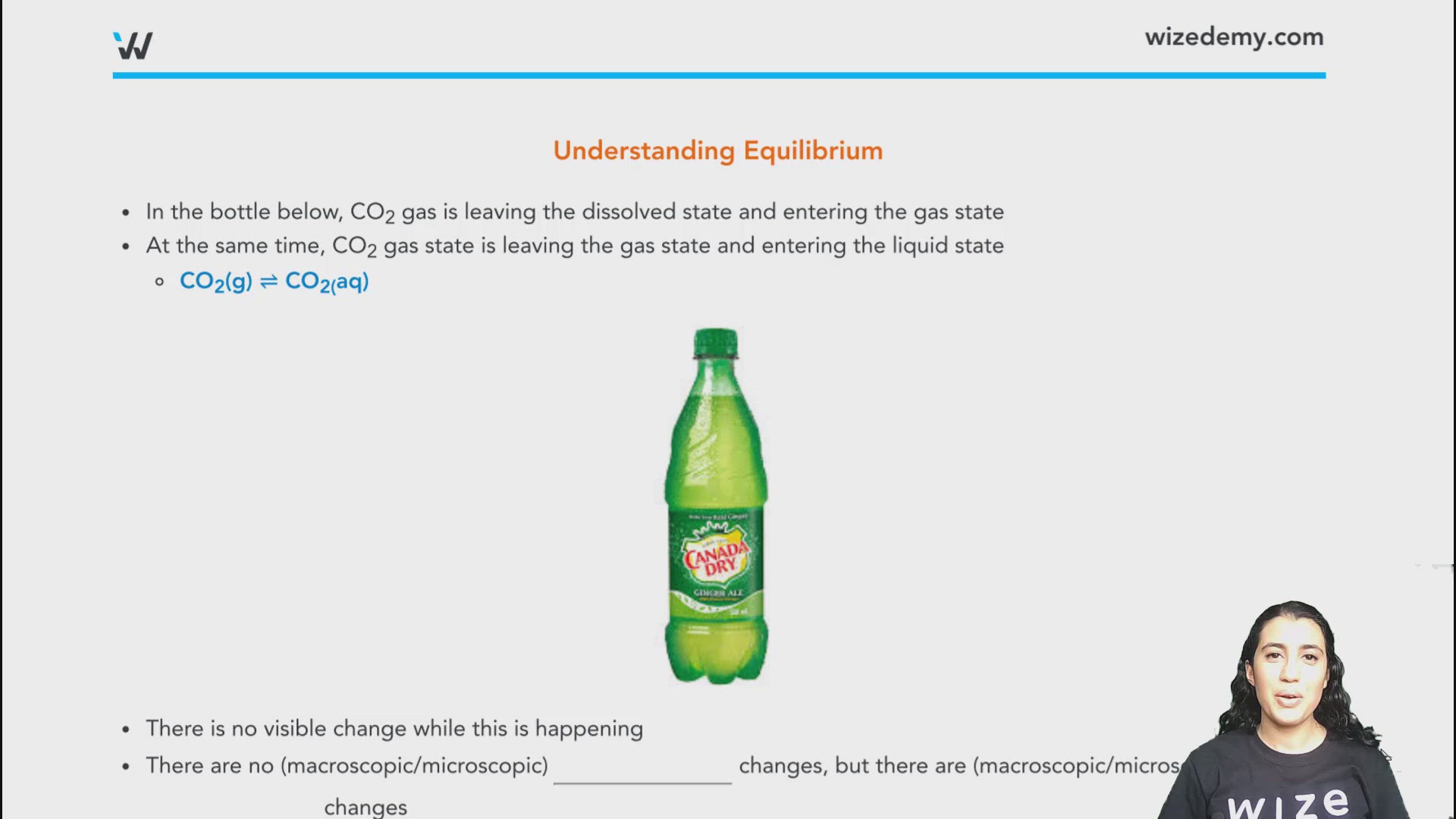
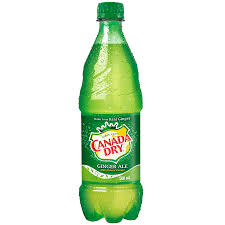
In the bottle below, CO2 gas is leaving the dissolved state and entering the gas state
CO2(aq) → CO2(g)
At the same time, CO2 gas state is leaving the gas state and entering the liquid state
CO2(g) → CO2(aq)
Since both the forward and backward reactions are occurring at the same time, we write:
CO2(g) ⇌ CO2(aq)
- There are no visible changes while this is happening
- There are no (macroscopic/microscopic)macroscopicchanges, but there are (macroscopic/microscopic)microscopicchanges