Wize University Chemistry Textbook > Chemical Bonding
Naming Compounds
Popular Courses
MCAT
General Course
General Chemistry
University Study Guides
CHEM 1A03
McMaster University
CHEM 112
Queen's University
Chemistry
General Course
DAT
General Course
General Chemistry
University Study Guides
CHEM 205
Concordia University
CHEM 121
Simon Fraser University
APSC 131
Queen's University
CHEM 1100
University of Manitoba
CHEM 1481
Texas A & M University
CHEM 1012
Dalhousie University
CHMA10H3
University of Toronto
SC/CHEM 1100 4.00
York University
CHM 2045
University of Florida
CHEM 1035
Virginia Tech
CHEM 1001
Carleton University
CHEM 6A
University of California - San Diego
CHEM 111
University of British Columbia

0:00 / 0:00
Naming Compounds
Naming Ionic Compounds
Ionic compounds are written as a cation (+) followed by an anion (-)
Example: NaCl is made up of Na+ and Cl-
Wize Tip
Name is written in this format:
[cation’s name] [space] [anion’s name with “-ide” ending]
Example:
NaCl is sodium chloride
Watch Out!
If the metal (cation) is a transition metal, it could have more than one possible oxidation state or "charge".
Indicate the charge in the name using this format:
[transition metal name] (oxidation state in roman numerals) [anion's name with "-ide" ending]
Example:
Fe2O3 is iron (III) oxide
Examples:
a) KCl
Ionic or covalent?
Ionic!
Name:
Potassium chloride
b) PbO
Ionic or Covalent?
Ionic!
Name:
lead (II) oxide
Naming Ionic Compounds With Polyatomic Ions

Wize Tip
Naming ionic compounds that contain polyatomic ions are very similar to the naming of other ionic compounds.
[Name of metal cation] [space] [name of polyatomic anion]
Example:
NaNO3 is sodium nitrate
Watch Out!
Pay attention to the number of O atoms in a polyatomic ion when naming it!
Example:
ClO- → hypochlorite
ClO2- → chlorite
ClO3- → chlorate
ClO4- → perchlorate
Note: The charge does not change, but the endings change depending on how many oxygen atoms there are!
**Tip: If you memorize the number of O atoms and charge for each polyatomic ion with the "ate" ending it will be easy to determine the names of the rest of the polyatomic ions!
Examples:
a) Sn(NO3)2 is
tin (II) nitrate
b) KNO2 is
potassium nitrite
Naming Covalent Compounds
Covalent bonds are formed between two non-metals.
Wize Tip
Covalent compounds are usually written from least to most electronegative.
[prefix][name of first element] [space] [prefix] [name of 2nd element with "-ide" ending
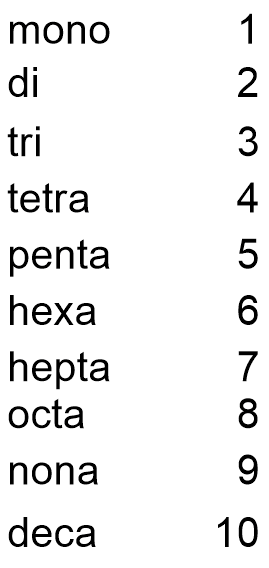
Prefixes are used to describe the number of atoms. See the prefixes in the table below :)
Note: If there is only one atom on the left, we drop the mono prefix.
Examples:
CO is carbon monoxide (the last vowel in the prefix is dropped if the next letter is also a vowel)
CO2 is carbon dioxide
Example:
N2O4 is
dinitrogen tetroxide
0:00 / 0:00
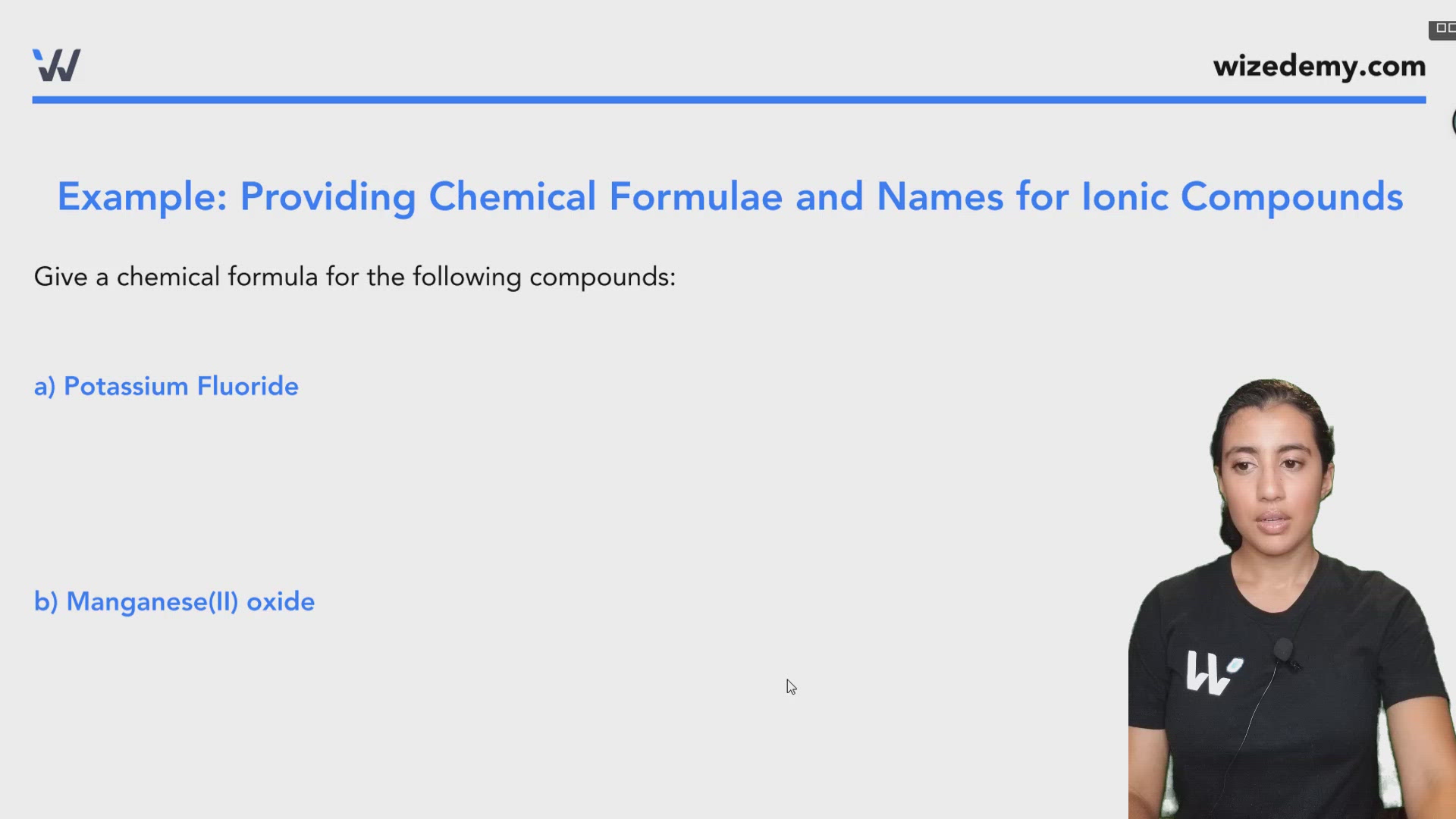
Example: Providing Chemical Formulae and Names for Ionic Compounds
Give a chemical formula for the following compounds:
a) Potassium Fluoride
KF
b) Manganese(II) oxide
MnO
c) Ammonium sulfate
(NH4)2SO4
Give a name to the following chemical compounds:
a) TiBr4
Titanium(IV) bromide
b) Na2S
Sodium sulfide
c) CuSO4
Copper(II) sulfate
0:00 / 0:00
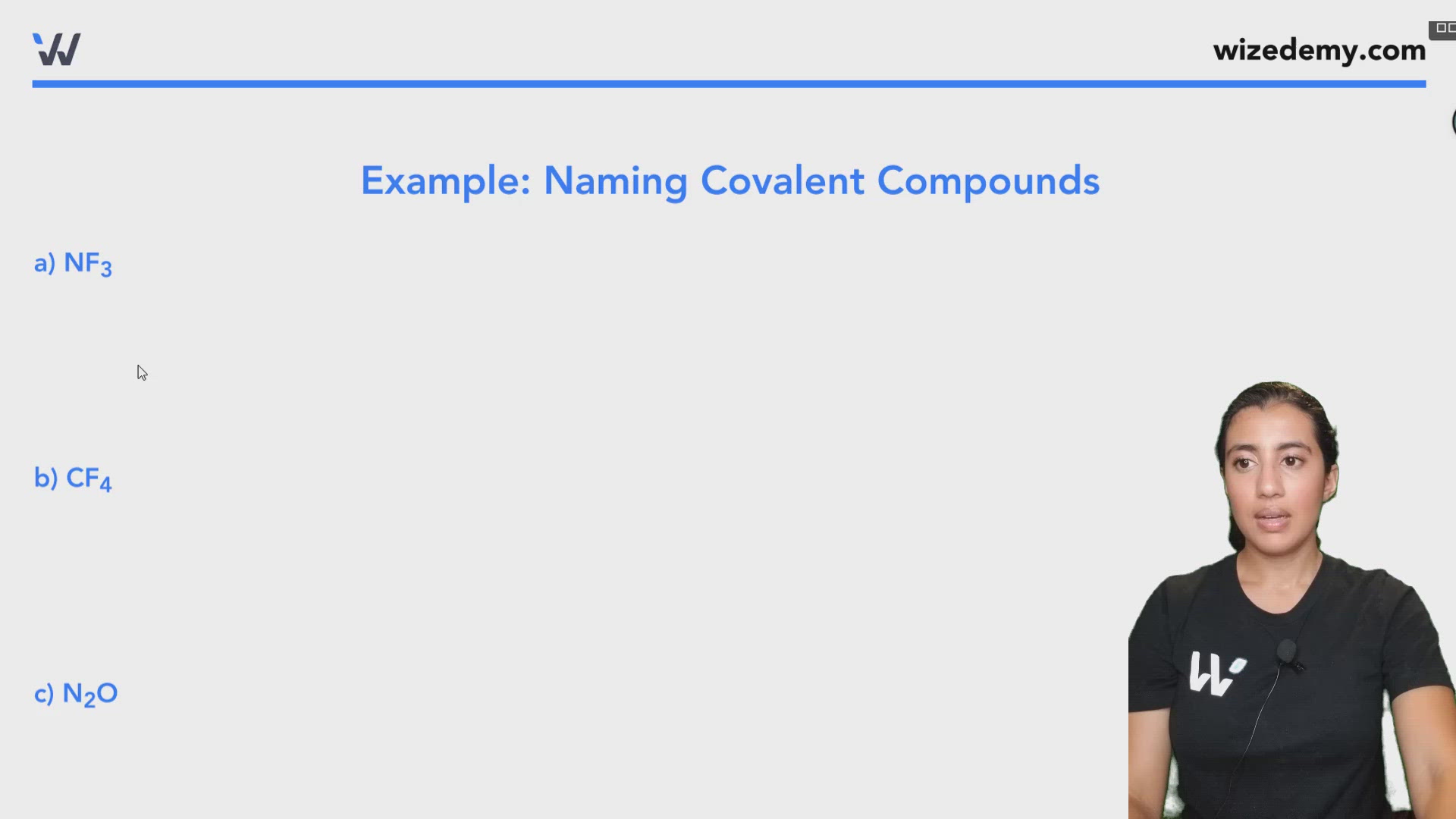
Example: Naming Covalent Compounds
a) NF3
Nitrogen trifluoride
b) CF4
Carbon tetrafluoride
c) N2O
Dinitrogen oxide
Example: Naming Ionic and Covalent Compounds
First state whether each compound is ionic or covalent then name it!
Cl2O7:
covalent
, dichlorine heptoxide
CaCl2 :
ionic
, calcium chloride
(NH4)2S:
ionic (polyatomic ion)
, ammonium sulfide
KCN:
ionic (polyatomic ion)
, potassium cyanide
PbI2:
ionic
, lead (II) iodide
KClO4:
ionic (polyatomic ion)
, potassium perchlorate
Practice: Naming
What is the name of the chemical compound: Co2(SO3)3?