Wize University Chemistry Textbook > Chemical Bonding
BDE Calculation
Popular Courses
MCAT
General Course
General Chemistry
University Study Guides
CHEM 1A03
McMaster University
CHEM 101
University of Alberta
CHEM 112
Queen's University
CHEM 121
University of British Columbia
DAT
General Course
Chemistry
General Course
CHEM 103
University of Alberta
General Chemistry
University Study Guides
CHEM 110
McGill University
CHEM 1E03
McMaster University
CHEM 205
Concordia University
CHEM 121
Simon Fraser University
SC/CHEM 1000 3.00
York University
APSC 131
Queen's University
CHEM-1100
University of Windsor
CHEM 1100
University of Manitoba
CHEM 1481
Texas A & M University
CH110
Wilfrid Laurier University
0:00 / 0:00
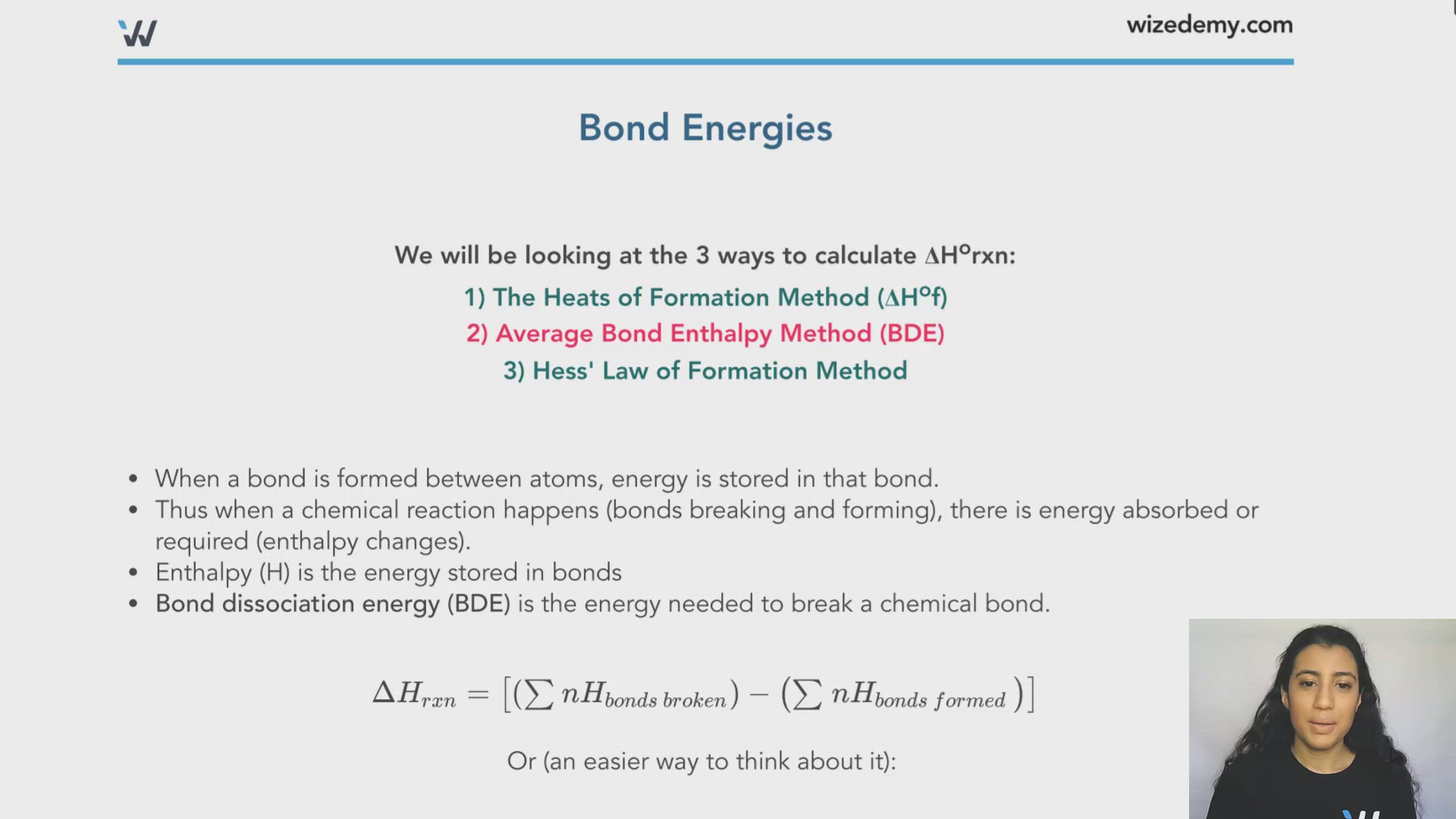
Bond Energies
Enthalpy (H) is the energy stored in bonds.
Bond dissociation energy (BDE) is the energy needed to break a chemical bond.
Or (an easier way to think about it):
enthalpy change for the reaction (kJ/mol)
BDE = bond energy per mole of bonds (kJ/mol), always positive
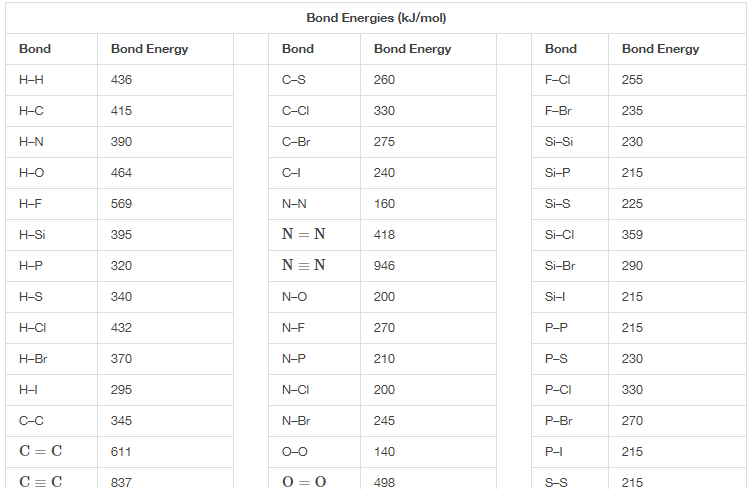
Practice: Bond Dissociation Energies
Predict the overall change in enthalpy (i.e. change in enthalpy, change in heat, ΔHrxn in kJ/mol) for the reaction:
N2 (g) + 3 H2 (g) → 2 NH3 (g)
BDE:
NN = 945 kJ/mol
H–H = 436 kJ/mol
N–H = 391 kJ/mol