Wize University Chemistry Textbook > Intermolecular Forces and Physical Properties
Vapor Pressure Cntd. (Clausius-Clapeyron Equation)
Popular Courses
MCAT
General Course
CHEM 1301A/B
Western University
General Chemistry
University Study Guides
CHEM 101
University of Alberta
CHEM 112
Queen's University
CHEM 121
University of British Columbia
DAT
General Course
Chemistry
General Course
General Chemistry
University Study Guides
CHEM 103
University of Alberta
CHM135H1
University of Toronto
CHEM 121
Simon Fraser University
CHEM 120
McGill University
APSC 132
Queen's University
APSC 131
Queen's University
CHEM 130
University of British Columbia
CHEM 1100
University of Manitoba
CHEM 1481
Texas A & M University
CHMA10H3
University of Toronto
SC/CHEM 1100 4.00
York University
Vapor Pressure Equation
Earlier we learned about vapor pressure. I've included an equation below that is sometimes tested on.
Vapor pressure: pressure exerted by the gaseous phase of a liquid that evaporated from the exposed surface of a liquid
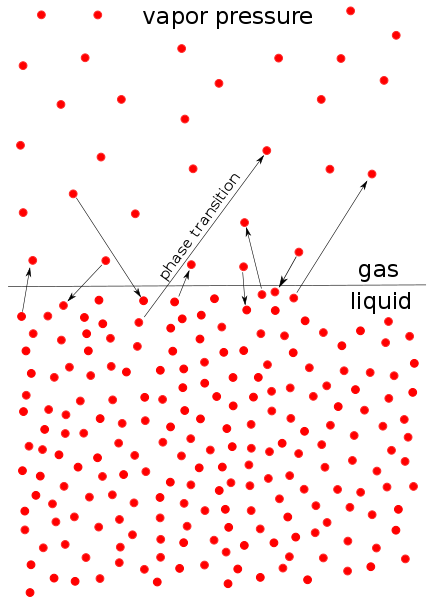
We can relate the vapor pressure of a substance at two different temperatures using the following equation.

** This equation only applies to vaporization or sublimation, it is a less general form of the Van't Hoff Equation.

Mark Yourself Question
- Grab a piece of paper and try this problem yourself.
- When you're done, check the "I have answered this question" box below.
- View the solution and report whether you got it right or wrong.
Practice: Heat of Vaporization for Hexane
Hexane is heated from 0oC to 50oC and the equilibrium vapor pressure increases from 0.06 atm to 0.53 atm.
a) Calculate the ΔvapH for hexanes.
b) The human nose can detect hexane at a partial pressure of 0.005 atm. Estimate the temperature at which we can no longer smell hexane.