Wize University Chemistry Textbook > Gases and their Properties
Phases of Matter
Popular Courses
MCAT
General Course
CHEM 1302A/B
Western University
General Chemistry
University Study Guides
AP Chemistry Exam Prep Course
AP Exam Prep
CHEM 101
University of Alberta
CHEM 112
Queen's University
CHEM 203
University of Calgary
DAT
General Course
Chemistry
General Course
CHEM 103
University of Alberta
General Chemistry
University Study Guides
CHEM 154
University of British Columbia
CHEM 120
University of Waterloo
CHEM 205
Concordia University
CHEM 121
Simon Fraser University
CHEM 120
McGill University
APSC 131
Queen's University
CHEM 205
University of British Columbia
CHEM 130
University of British Columbia
CHEM 1100
University of Manitoba
0:00 / 0:00
Phases of Matter
There are 3 phases of matter: solid, liquid, and gas. We need to have a general understanding of each one to understand how a phase change occurs. For example, for the phase change of a solid → liquid, energy is required to break apart some of the strong intermolecular forces that solids have!
Solid
- Don't fill the volume or take the shape of their container (have a fixed volume and shape)
- Hard
- Are not fluid like liquids and gases (don't flow unless extreme shearing/stretching forces)
- Has the strongest intermolecular forces

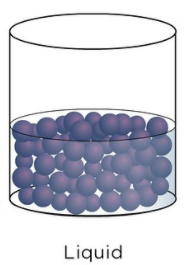
Liquid
- Don't fill the volume of the container, but take the shape of their container
- Fixed volume, not shape since if you transfer the liquid to a different container the volume of liquid will remain the same but the shape of the liquid will change depending on the shape of the container
- Fluid
- Has the weaker intermolecular forces
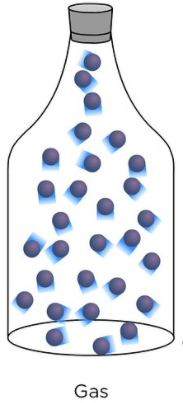
Gas
- Fill the volume and take the shape of their container
- Volume and shape is not fixed, both can change when you change the container that is holding the gas!
- Fluid
- Has the weakest intermolecular forces
- Note how the molecules are very spread apart from each other. This is because the intermolecular forces between them are very weak!