Wize University Chemistry Textbook > Equilibrium
Le Chatelier's Principle [more detail]
Popular Courses
MCAT
General Course
General Chemistry
University Study Guides
AP Chemistry Exam Prep Course
AP Exam Prep
DAT
General Course
Chemistry
General Course
General Chemistry
University Study Guides
ENGG 204
University of Calgary
CHEM 112B
Queen's University
CHEM 130
University of British Columbia
CHEM 1100
University of Manitoba
CHEM 1481
Texas A & M University
CHEM 122
Simon Fraser University
CHMA10H3
University of Toronto
SC/CHEM 1100 4.00
York University
CHEM 1035
Virginia Tech
CHM 2045
University of Florida
CHEM 1001
Carleton University
CHEM 111
University of British Columbia
CHEM 112
University of Saskatchewan
CHEM 1P91
Brock University
0:00 / 0:00
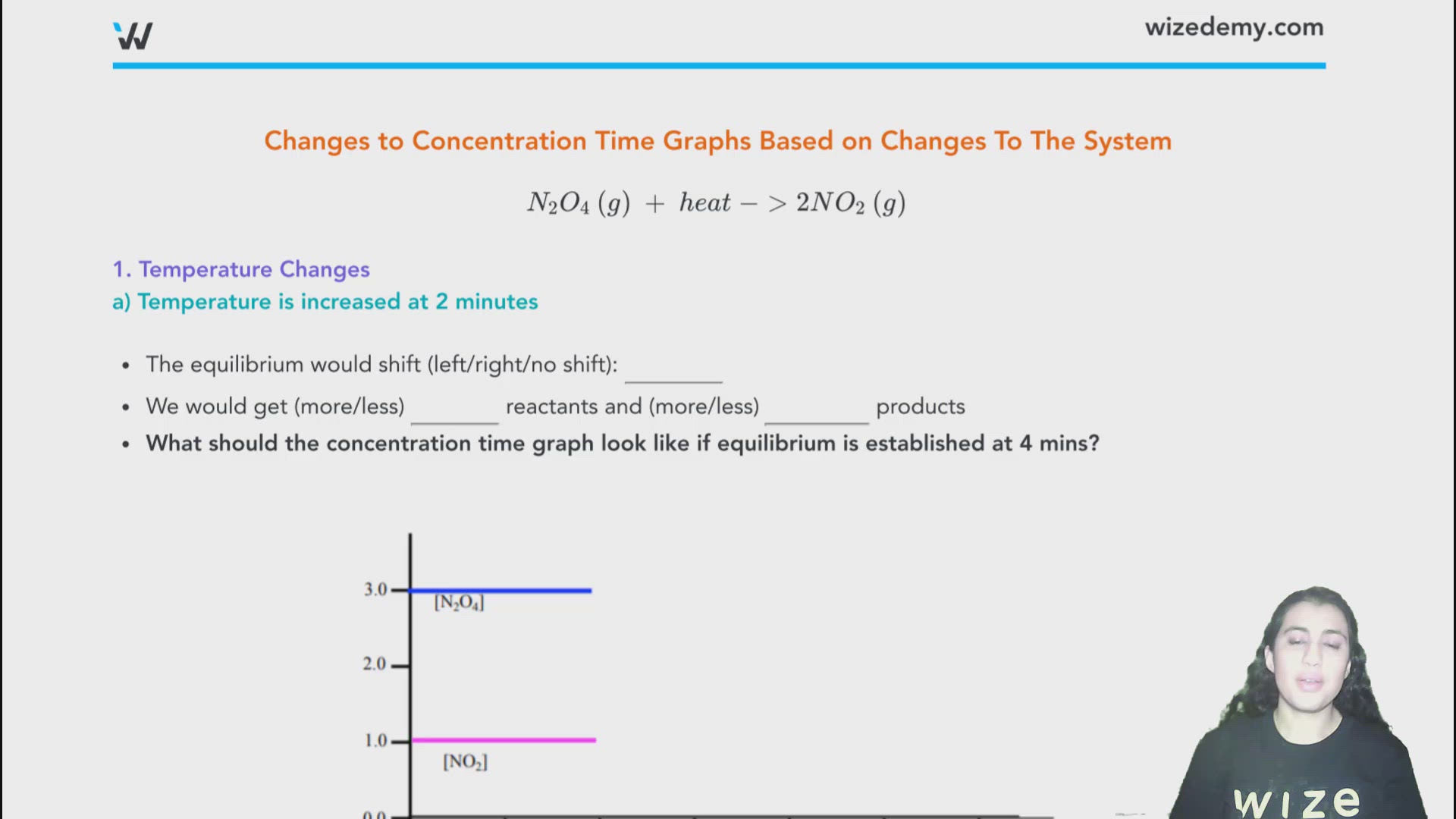
Changes to Concentration Time Graphs Based on Changes To The System
1. Temperature Changes
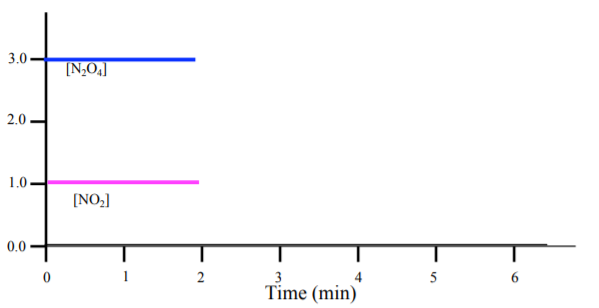
a) Temperature is increased at 2 minutes
- The equilibrium would shift (left/right/no shift):right
- We would get (more/less)lessreactants and (more/less)moreproducts
- What should the concentration time graph look like if equilibrium is established at 4 mins?

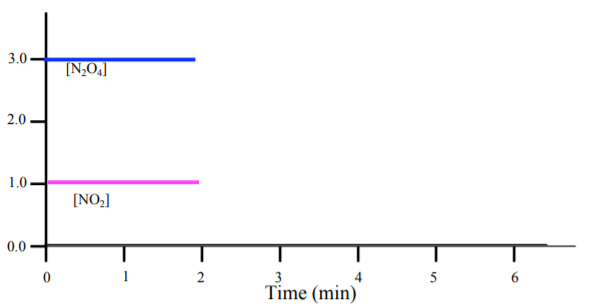
b) Temperature is decreased at 2 minutes
- The equilibrium would shift (left/right/no shift):left
- We would get (more/less)morereactants and (more/less)lessproducts
- What should the concentration time graph look like if equilibrium is established at 4 mins?

2. Concentration Changes
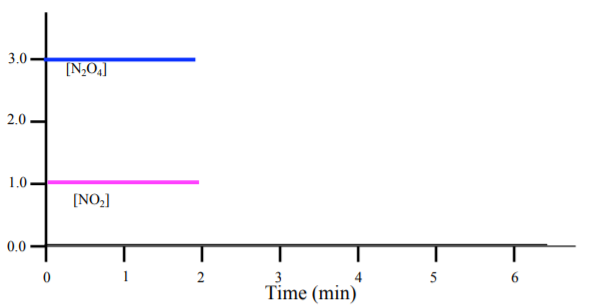
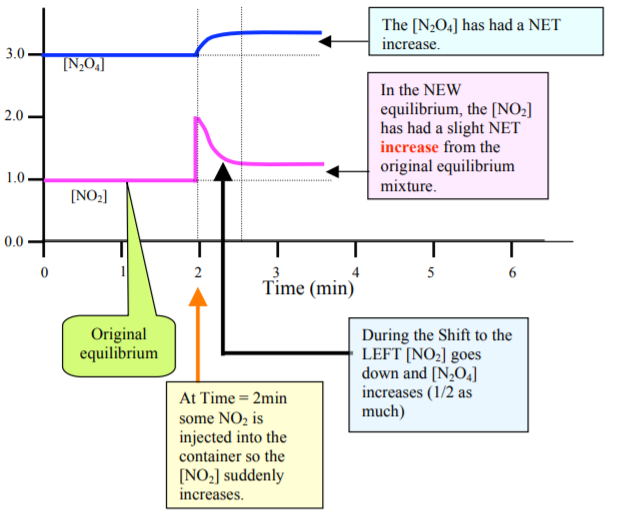
- What will an increase or decrease look like on the concentration time graph?
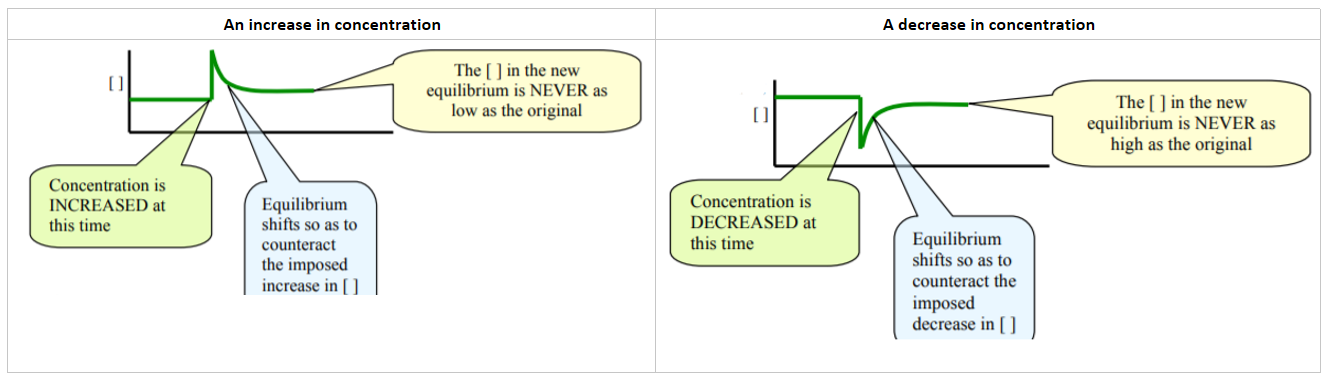
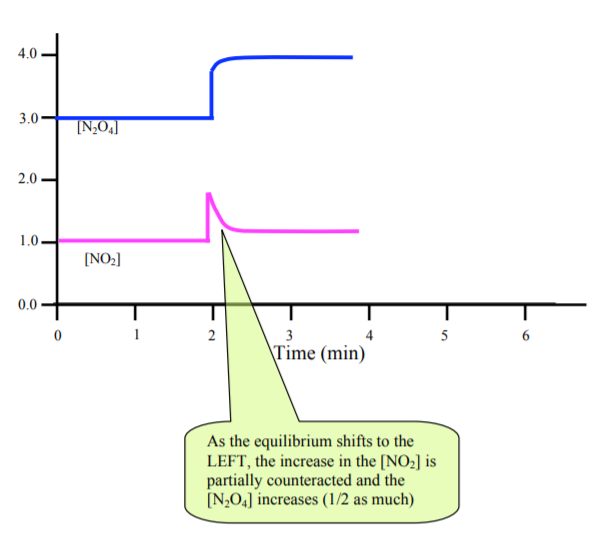
- What should the concentration time graph look like if [NO2] was increased and the new equilibrium is established at 4 mins?
- The equilibrium would shift (left/right/no shift):left
3. Changes in Total Pressure
- What will an increase in pressure or decrease in volume look like on the concentration time graph?
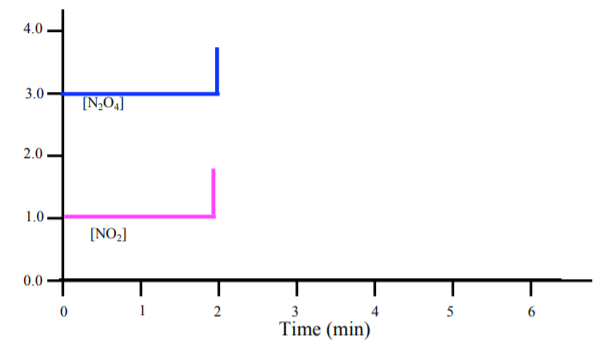
- When total pressure increases, the concentration of every gas in the container initially increases at that moment (since the # of moles/unit volume increases), then the equilibrium will shift whichever way it needs to to counteract the stress
- **Pressure or volume changes will result in vertical lines on the concentration time graphs
- If we increase the pressure at time 2 minutes, it would look like this:
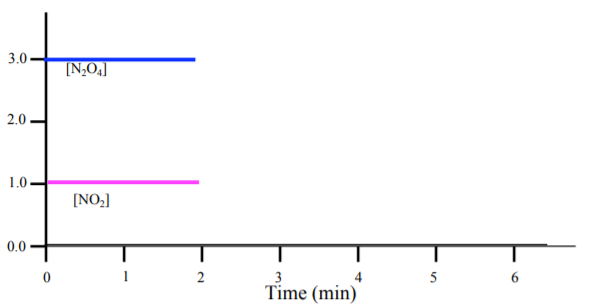
- Fill in the rest of the concentration time graph after the pressure was increased:
- When pressure is increased, eqm shift to side with (more/less)lessmoles, which is left.
4. Adding a catalyst
- results in no changes to equilibrium concentrations so you wouldnt see any changes to the concentration graph!
0:00 / 0:00
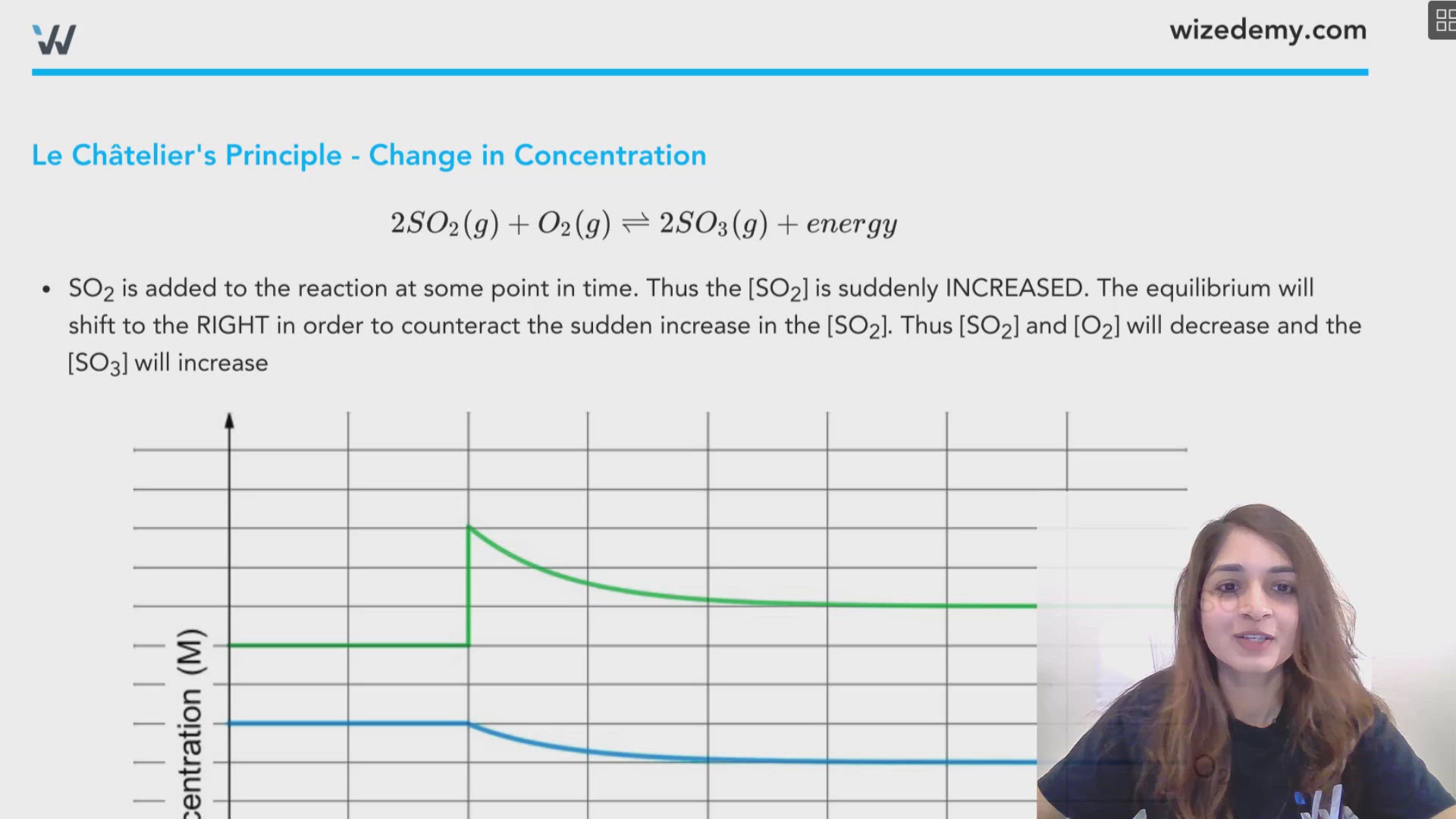
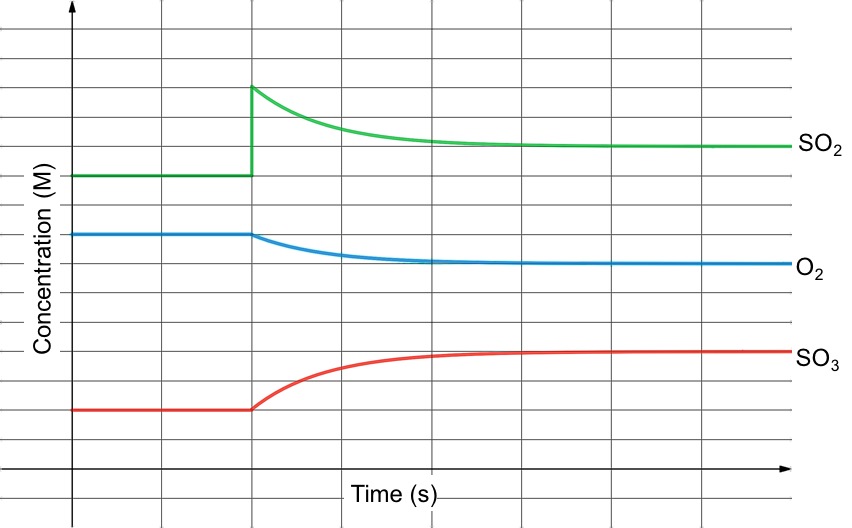
Le Châtelier's Principle - Change in Concentration
- SO2 is added to the reaction at some point in time. Thus the [SO2] is suddenly INCREASED. The equilibrium will shift to the RIGHT in order to counteract the sudden increase in the [SO2]. Thus [SO2] and [O2] will decrease and the [SO3] will increase
0:00 / 0:00
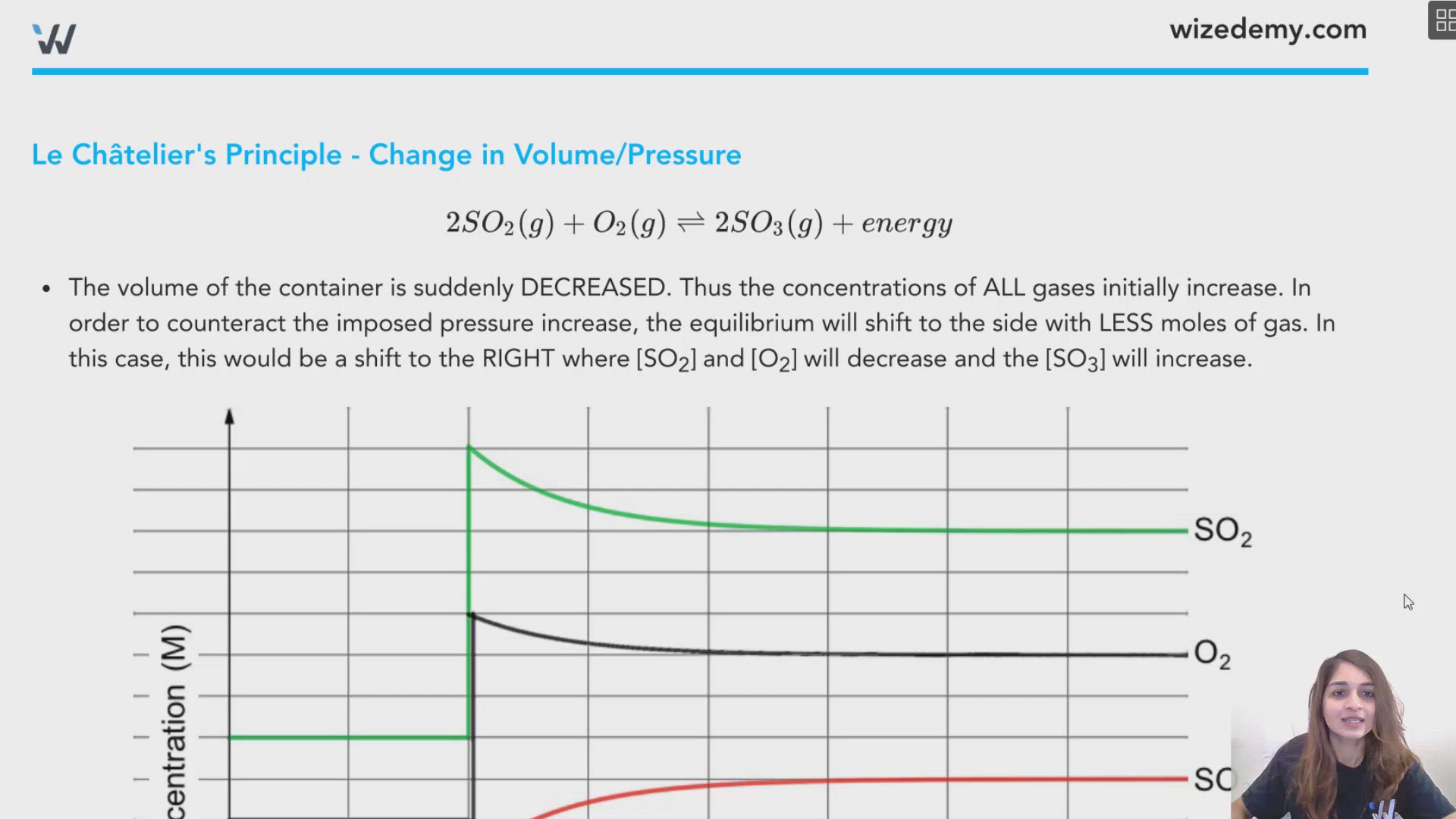
Le Châtelier's Principle - Change in Volume/Pressure
- The volume of the container is suddenly DECREASED. Thus the concentrations of ALL gases initially increase. In order to counteract the imposed pressure increase, the equilibrium will shift to the side with LESS moles of gas. In this case, this would be a shift to the RIGHT where [SO2] and [O2] will decrease and the [SO3] will increase.

0:00 / 0:00
Le Châtelier's Principle - Change in Temperature
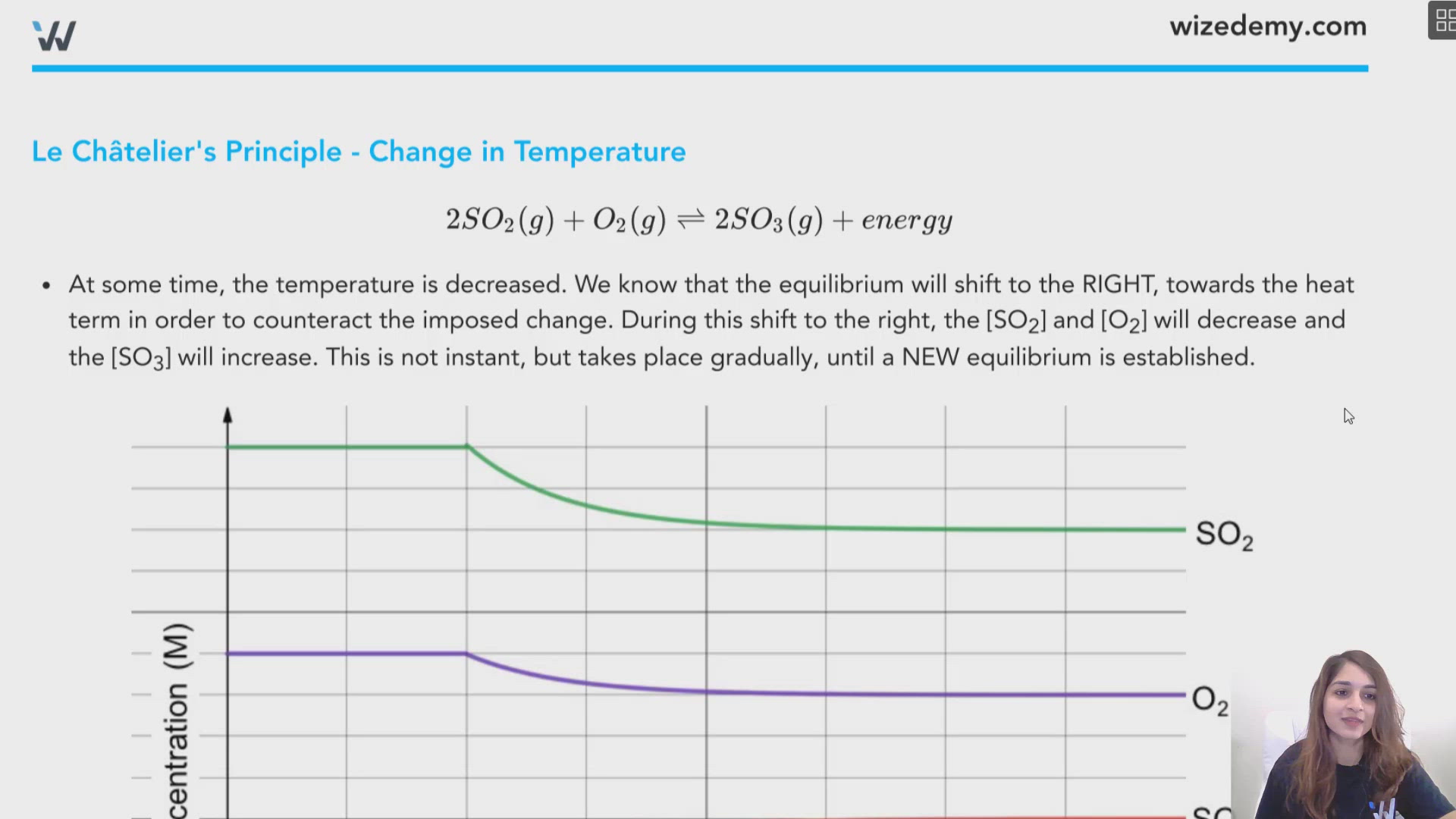
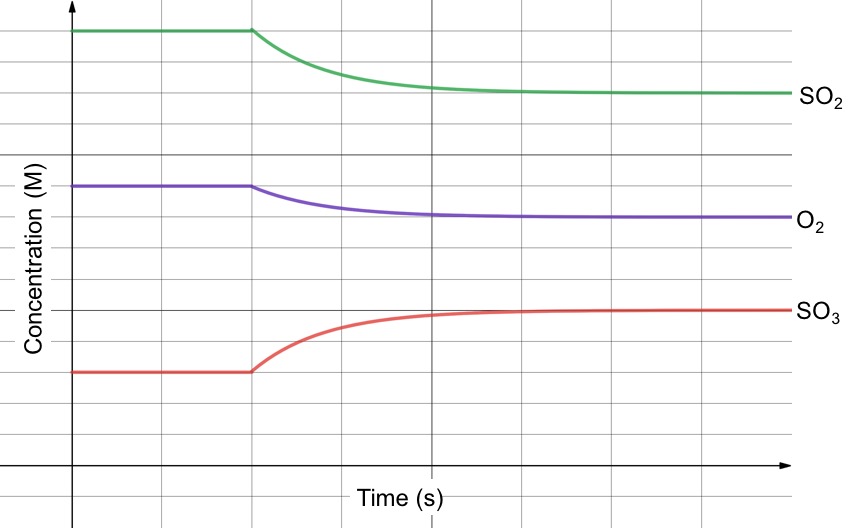
- At some time, the temperature is decreased. We know that the equilibrium will shift to the RIGHT, towards the heat term in order to counteract the imposed change. During this shift to the right, the [SO2] and [O2] will decrease and the [SO3] will increase. This is not instant, but takes place gradually, until a NEW equilibrium is established.
- A change in temperature will cause a change in the value of K!
- For exothermic reactions, the equilibrium constant decreases with increasing temperature
- For endothermic reactions, the equilibrium constant increases with increasing temperature
0:00 / 0:00
Le Châtelier's Principle - Other
Addition of an inert gas
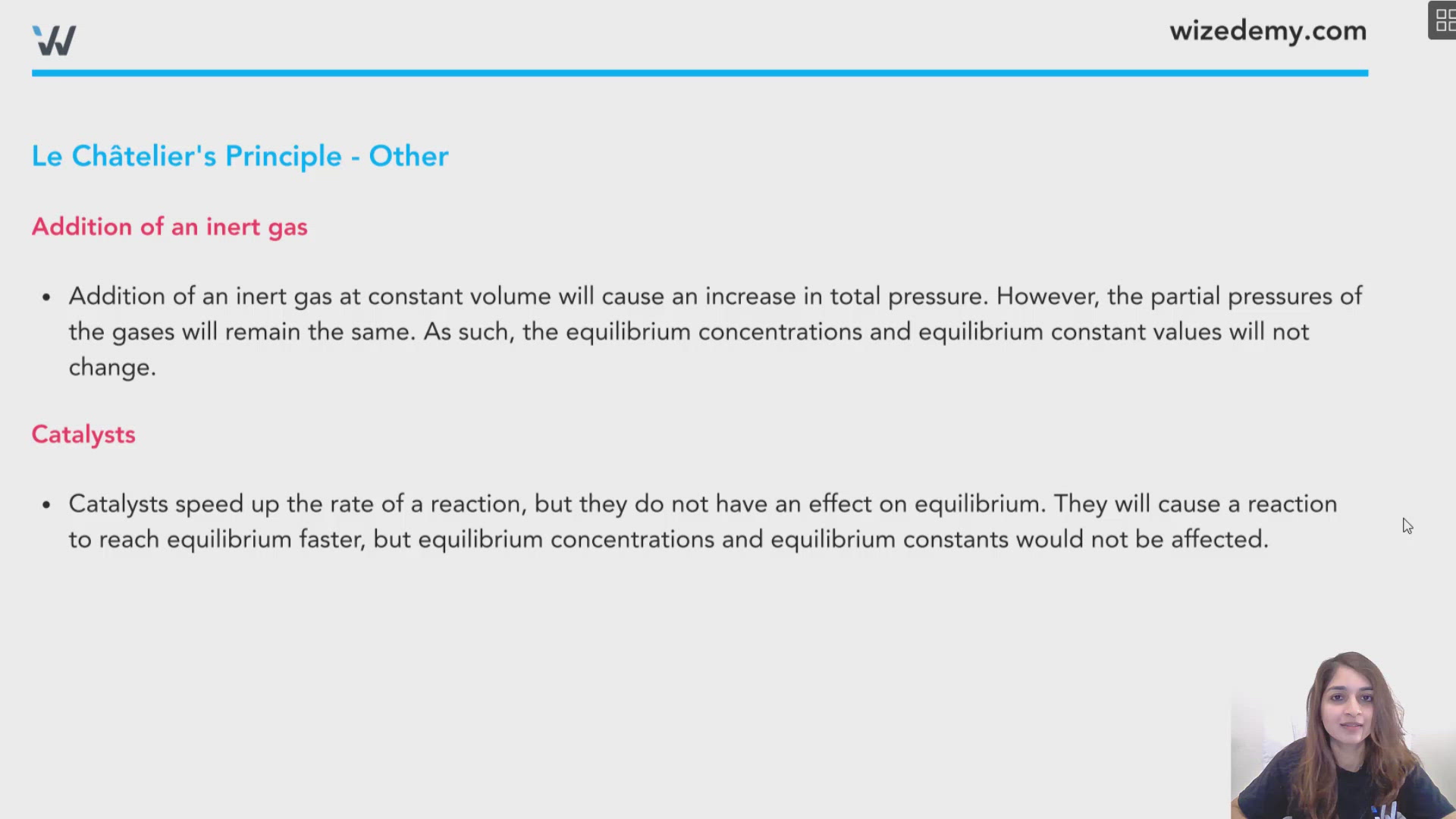
- Addition of an inert gas at constant volume will cause an increase in total pressure. However, the partial pressures of the gases will remain the same. As such, the equilibrium concentrations and equilibrium constant values will not change.
Catalysts
- Catalysts speed up the rate of a reaction, but they do not have an effect on equilibrium. They will cause a reaction to reach equilibrium faster, but equilibrium concentrations and equilibrium constants would not be affected.