Popular Courses
MCAT
General Course
DAT
General Course
CHEM 121
Simon Fraser University
CHEM 205
University of British Columbia
CHEM 130
University of British Columbia
CHEM 1481
Texas A & M University
CHEM 1012
Dalhousie University
CHEM 1001
Carleton University
CHM 2045
University of Florida
CHEM 1P91
Brock University
CHMA11H3
University of Toronto
CHEM 1110
University of Manitoba
CHEM 1300
University of Manitoba
CHEM 151
University of Arizona
CHM 1045
Florida State University
CHEM 124
California Polytechnic State University-San Luis Obispo
NE 121
University of Waterloo
CHEM 161
Rutgers University
CHM220H1
University of Toronto
CHM220H1
University of Toronto

0:00 / 0:00
Nuclear Magnetic Resonance (NMR) Spectroscopy

NMR Spectroscopy works by introducing a sample into a very strong magnet, tuned to a particular ‘spin-active’ atom isotope, and scanning with variable radio frequency waves. Different chemical environments (i.e. functional groups or multiple bonds) will result in different ‘chemical shifts’ which NMR will reveal.
The two atoms of particular interest to organic chemists are hydrogen (1H, 100% abundant) and carbon (13C, 1% abundant).
The scanning radio frequency results in ‘peaks’ that will be in a particular region (measured in ppm) of a NMR spectrum:

Downfield = Deshielded; Upfield = Shielded
Factors that Influence Chemical Shift
1. Proximity to Electronegative Atoms
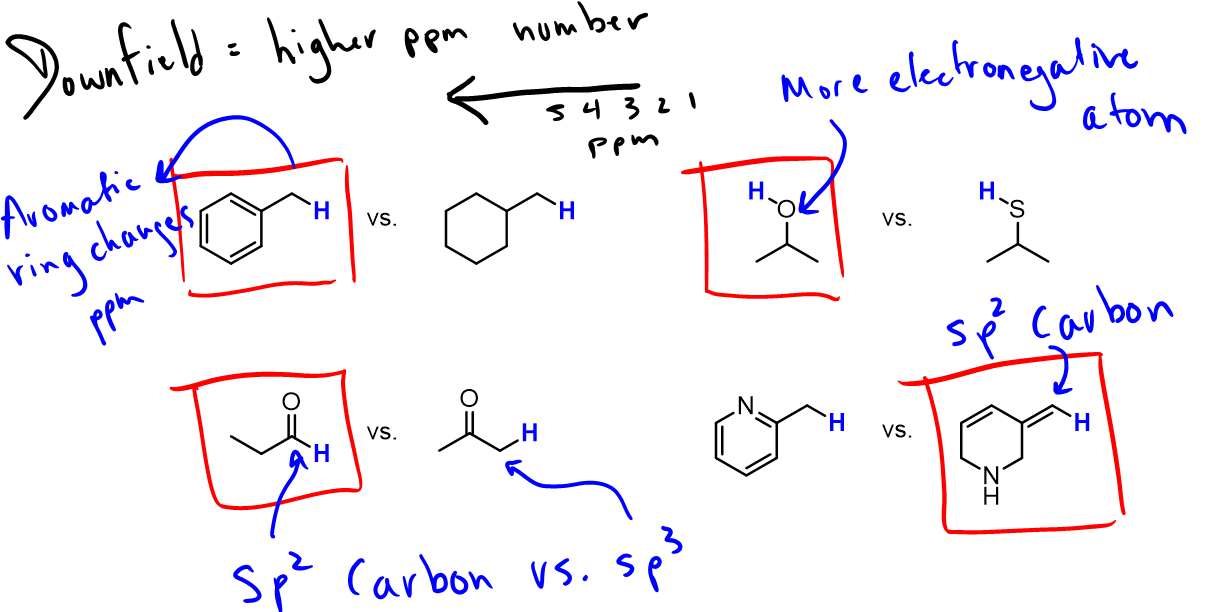
Electronegative atoms will produce downfield shifts in 1H spectra. The closer the atom is to the electronegative atom, the more pronounced the shift will be:
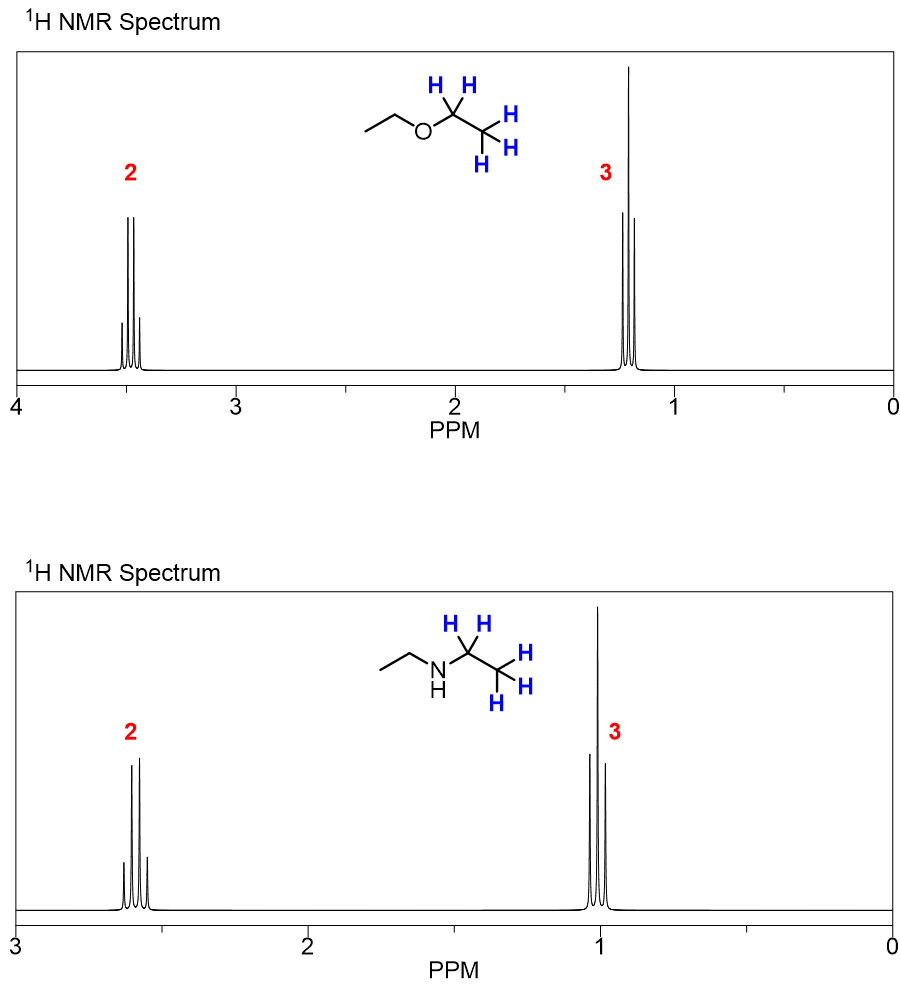
Integration of peaks in 1H NMR spectra is related to number of hydrogens and is often given as the lowest whole number ratio - more on this later!
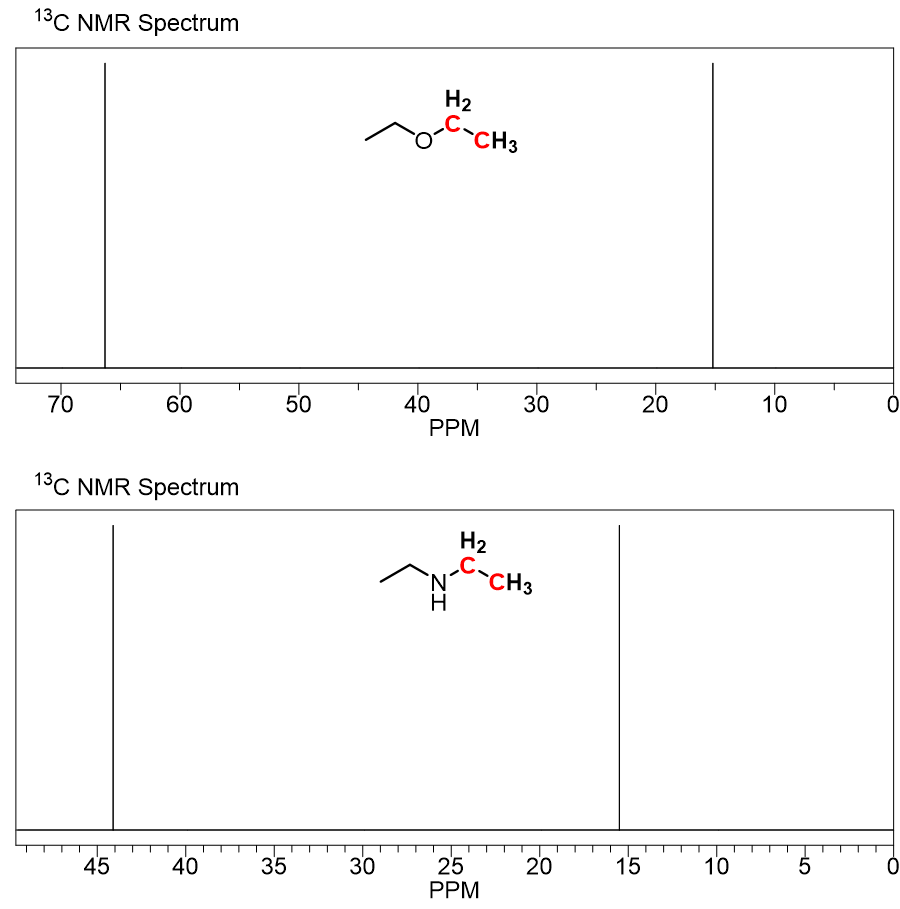
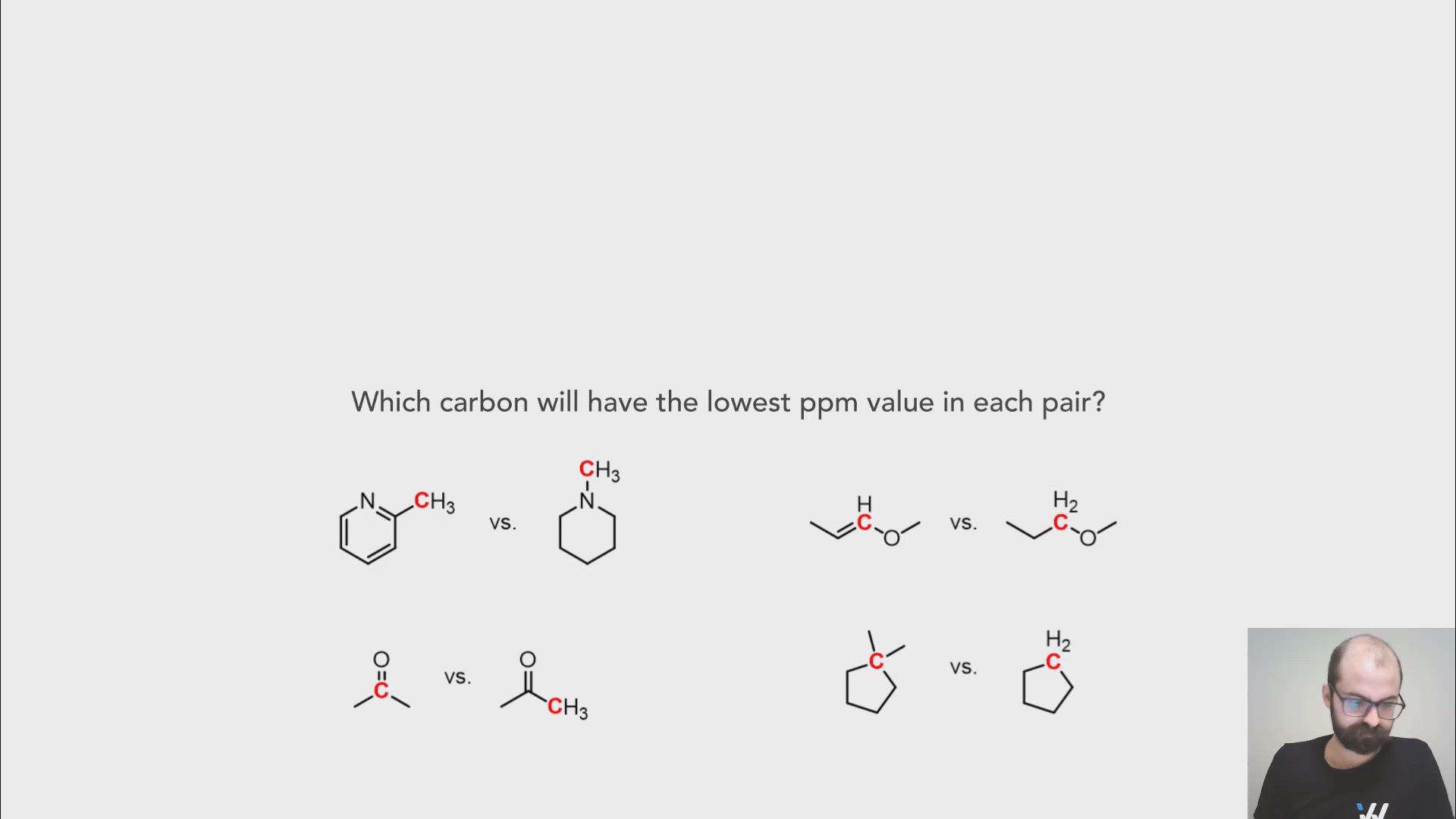
Carbon (13C) NMR signals will also shift downfield due to the presence of electronegative atoms. More electronegative atoms will result in a more downfield signal.
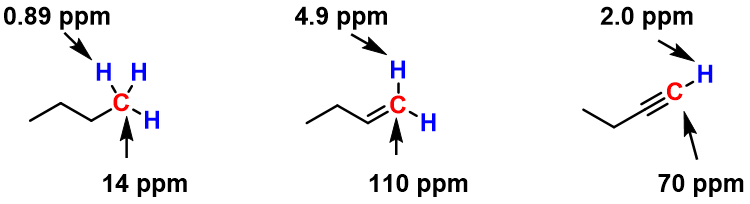
2. Hybridization of Atoms
The hybridization of atoms also has an influence on chemical shift. The most downfield shifts are observed with sp2 carbon atoms, and the hydrogens bound to them.
3. Aromaticity
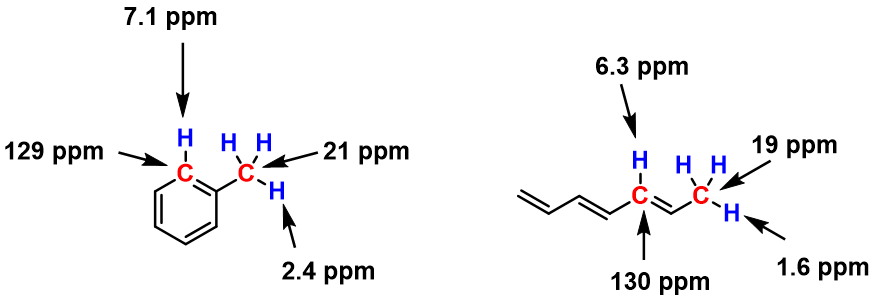
Aromaticity creates an electron cloud that is reflected in the chemical shifts of the atoms. Take for example the cyclic and acylic molecules shown below:
0:00 / 0:00
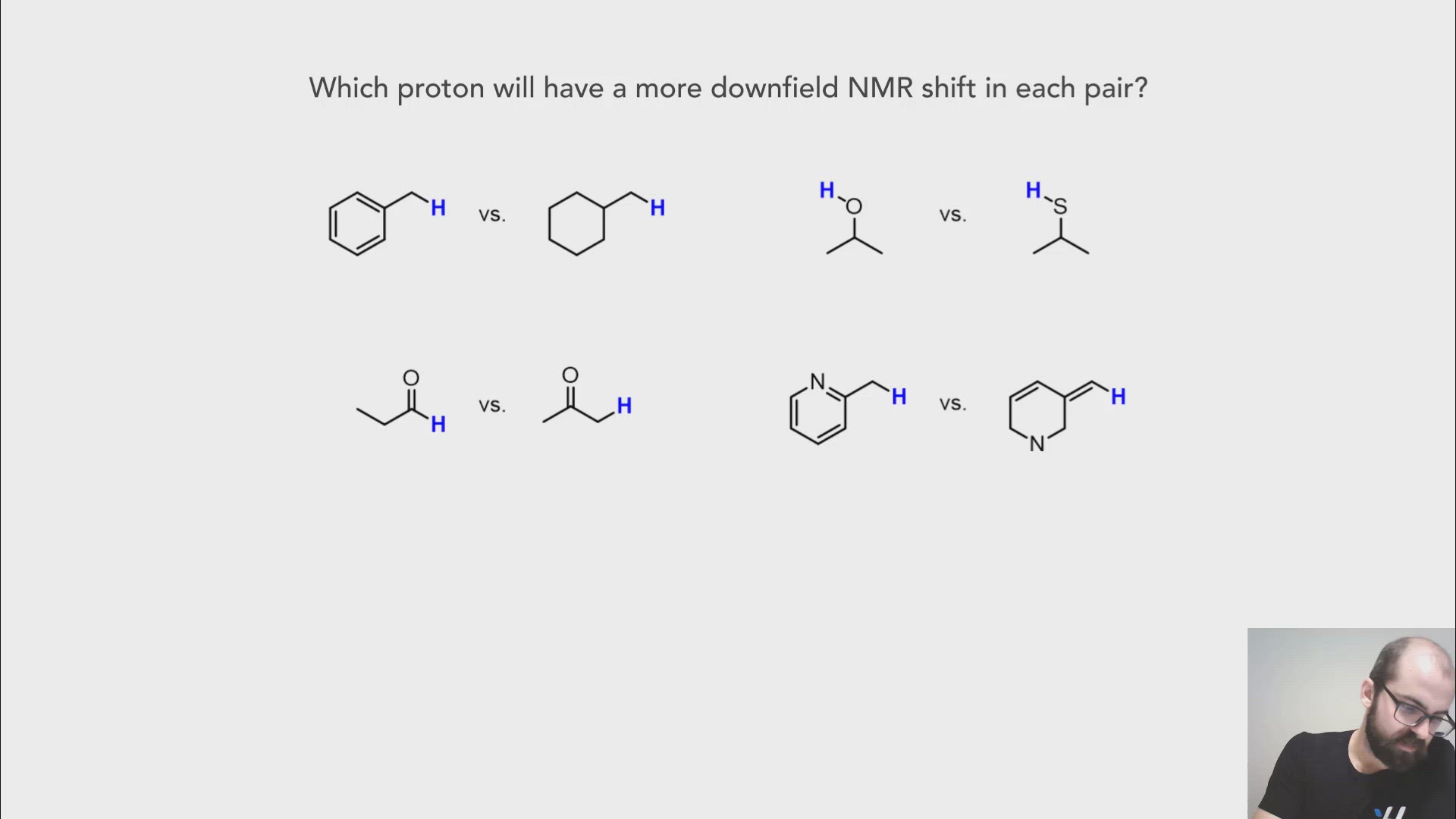
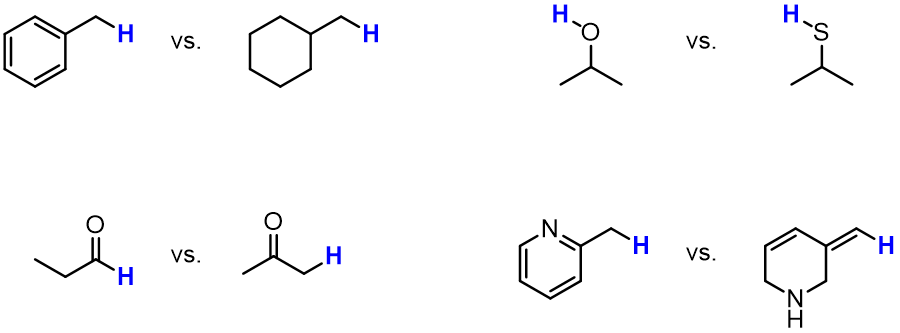
Which proton will have a more downfield NMR shift in each pair?
0:00 / 0:00
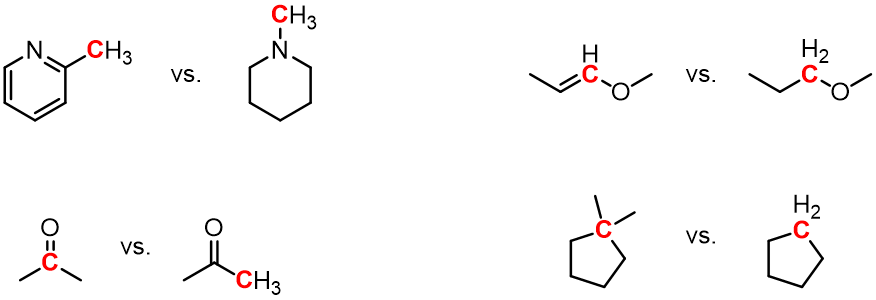
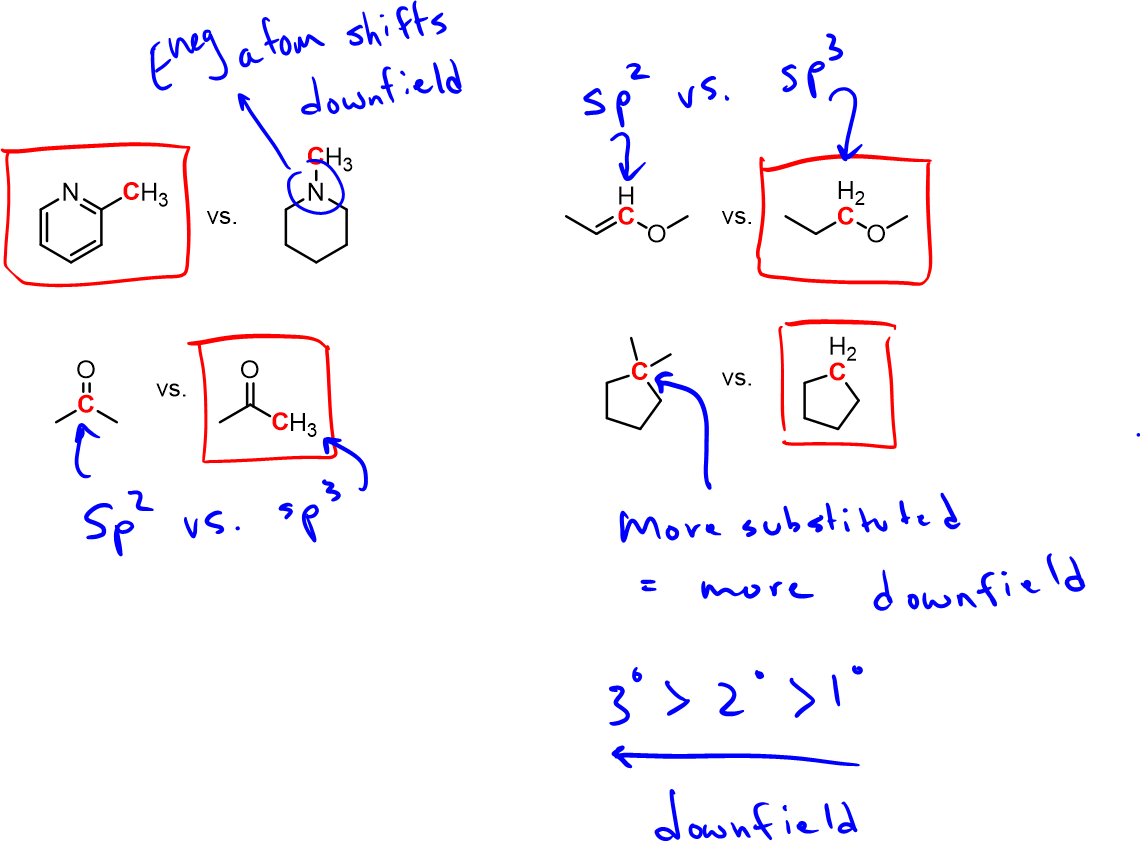
Which carbon will have the lowest ppm value in each pair?