Popular Courses
MCAT
General Course
DAT
General Course
CHEM 121
Simon Fraser University
CHEM 205
University of British Columbia
CHEM 130
University of British Columbia
CHEM 1481
Texas A & M University
CHEM 1012
Dalhousie University
CHM 2045
University of Florida
CHEM 1001
Carleton University
CHEM 1P91
Brock University
CHMA11H3
University of Toronto
CHEM 1110
University of Manitoba
CHEM 1300
University of Manitoba
CHEM 151
University of Arizona
CHM 1045
Florida State University
CHEM 124
California Polytechnic State University-San Luis Obispo
NE 121
University of Waterloo
CHEM 161
Rutgers University
CHEM 1002
Carleton University
CHM220H1
University of Toronto
0:00 / 0:00
Proton (1H) NMR
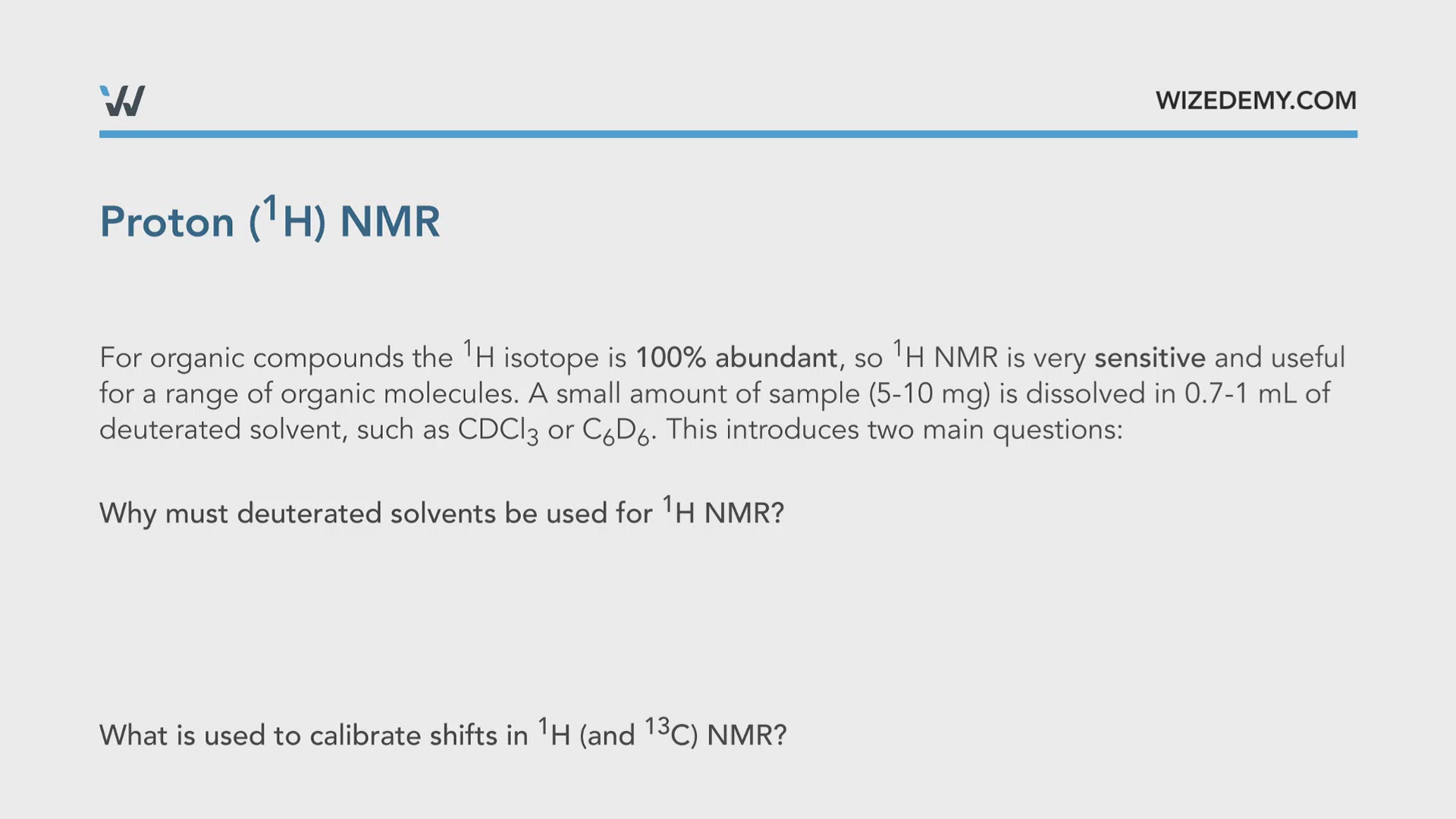
For organic compounds the 1H isotope is 100% abundant, so 1H NMR is very sensitive and useful for a range of organic molecules. A small amount of sample (5-10 mg) is dissolved in 0.7-1 mL of deuterated solvent, such as CDCl3 or C6D6. This introduces two main questions:
Why must deuterated solvents be used for 1H NMR?
What is used to calibrate shifts in 1H (and 13C) NMR?
Common 1H NMR Shifts

Downfield = Deshielded; Upfield = Shielded
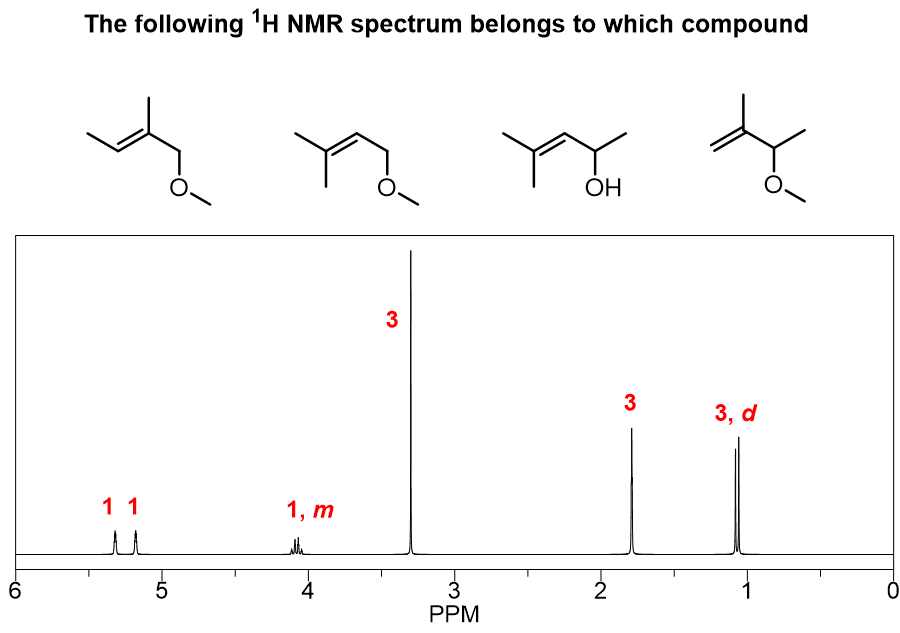
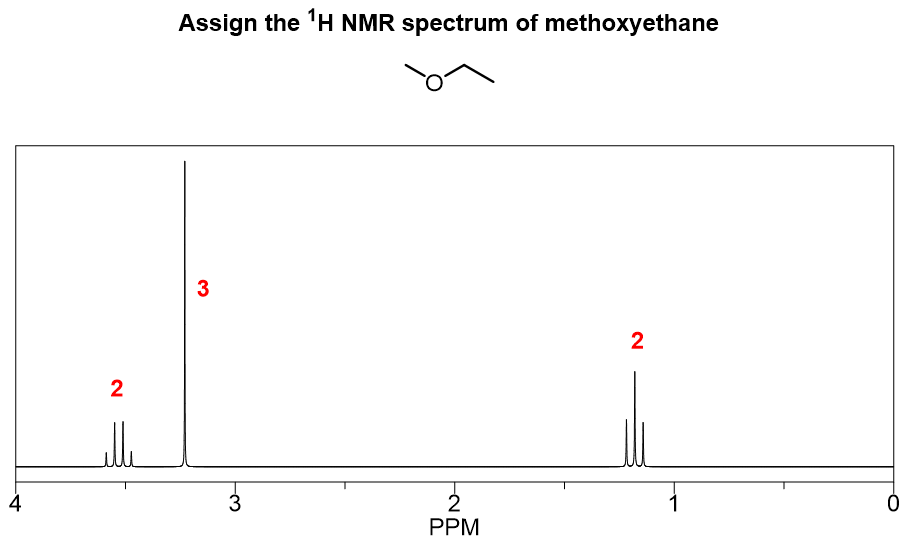
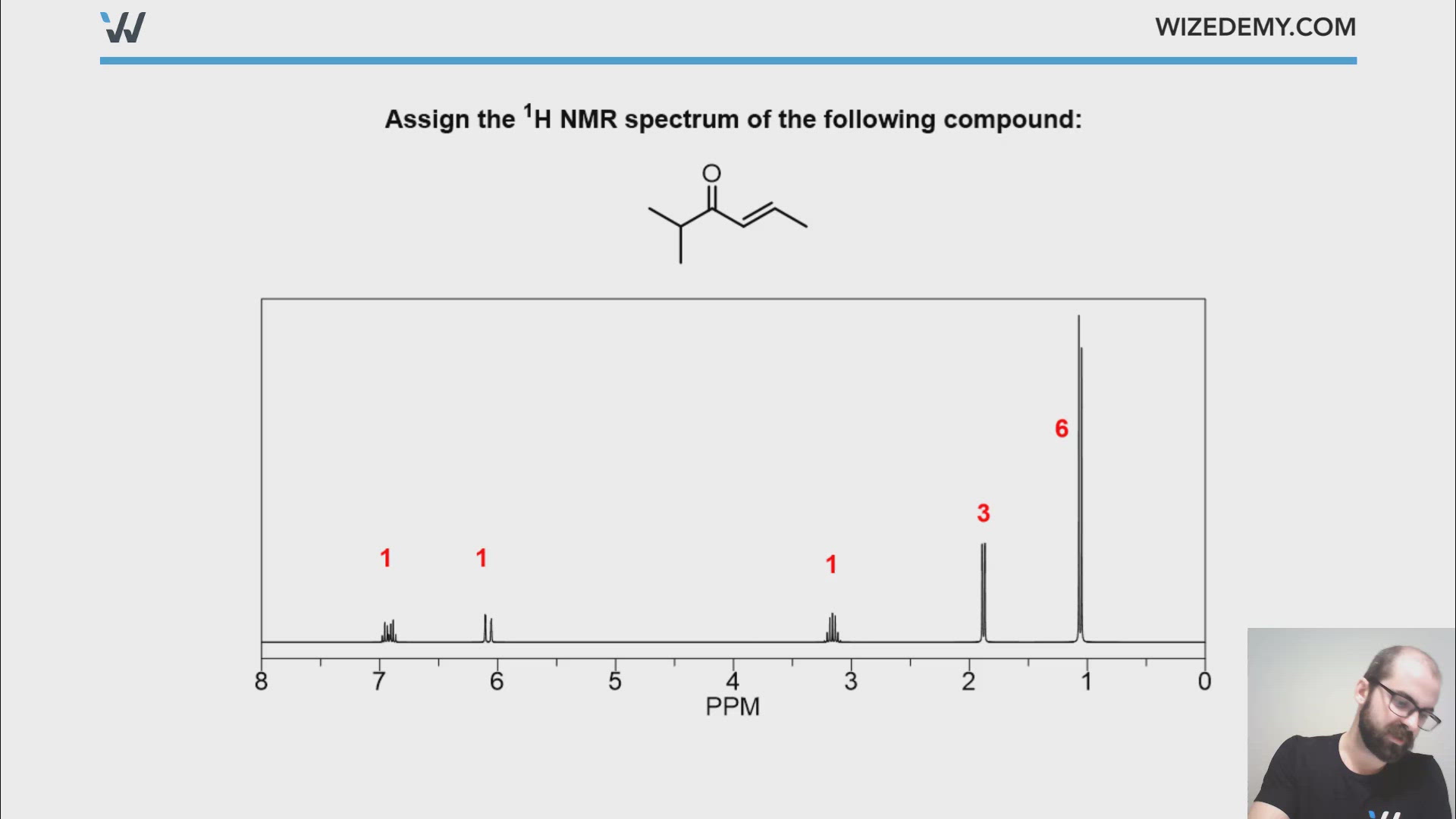
Multiplicity of signals (coupling) in 1H NMR is related to number of hydrogens on neighbouring atoms (3 bonds or less). The number of peaks per signal is counted and assigned an abbreviation: 1 = s (singlet); 2 = d (doublet); 3 = t (triplet); 4 = q (quartet); more = m (multiplet)
Multiplicity = 2nI + 1
Where n = number of atoms
I = atom spin (1/2 for 1H and 13C)

0:00 / 0:00
0:00 / 0:00
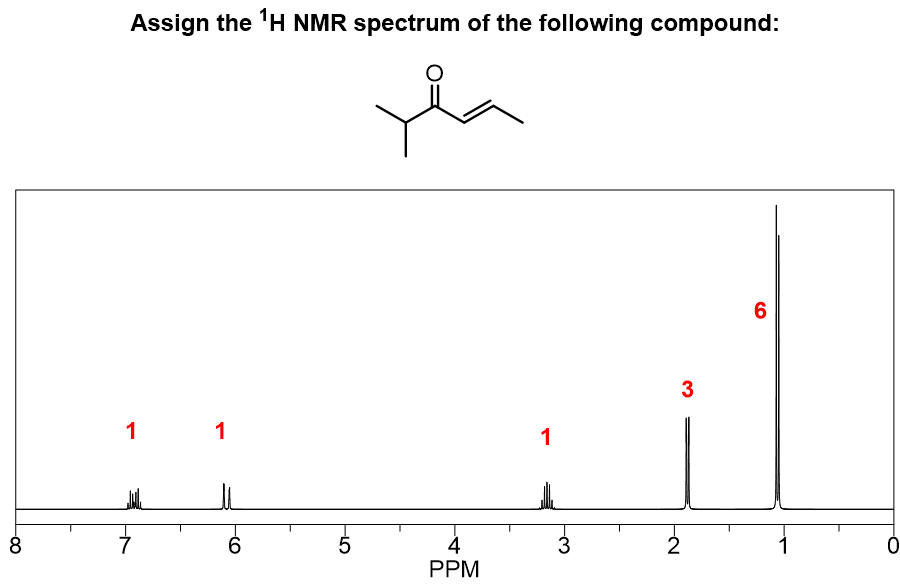

Mark Yourself Question
- Grab a piece of paper and try this problem yourself.
- When you're done, check the "I have answered this question" box below.
- View the solution and report whether you got it right or wrong.
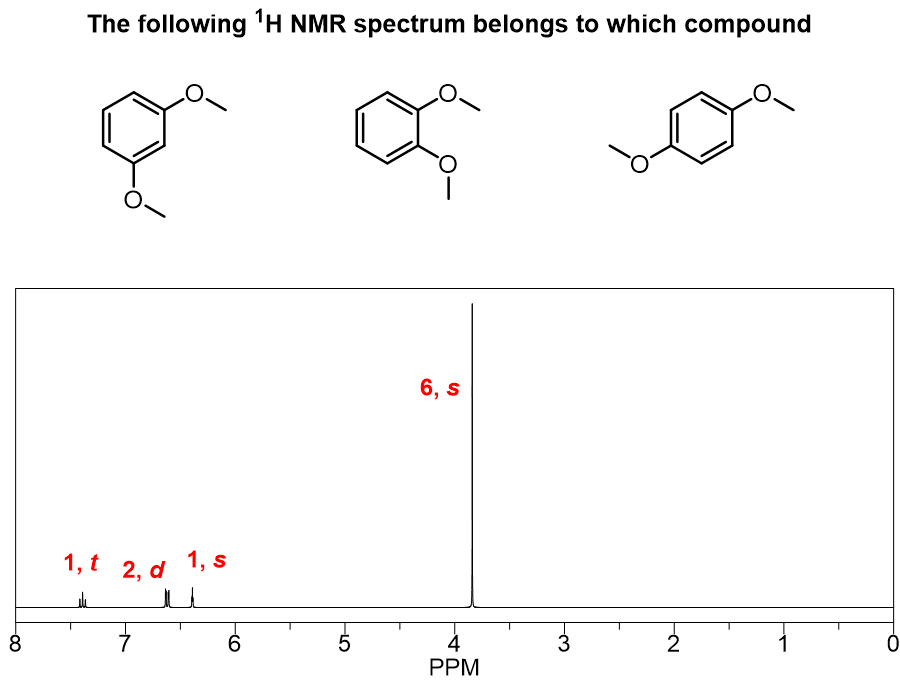
Mark Yourself Question
- Grab a piece of paper and try this problem yourself.
- When you're done, check the "I have answered this question" box below.
- View the solution and report whether you got it right or wrong.
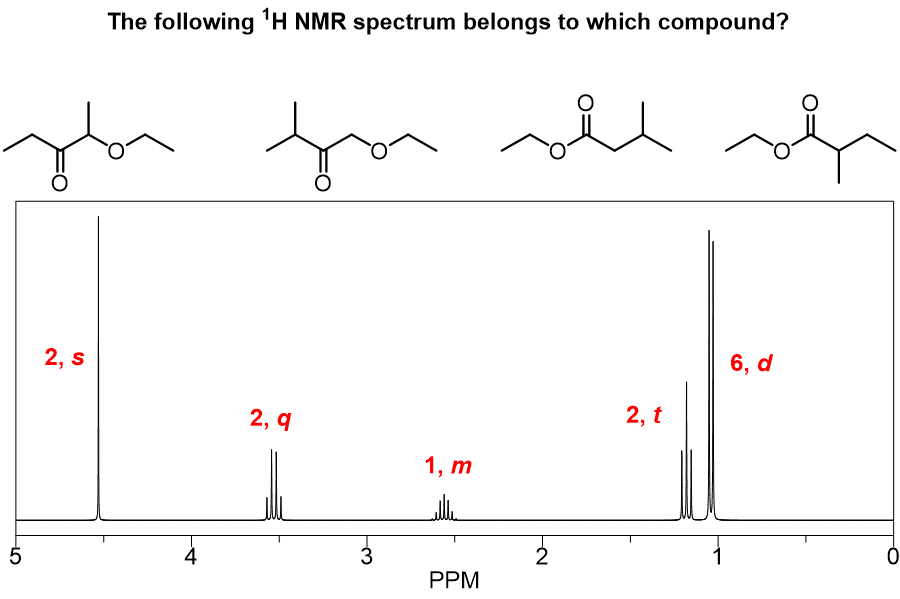
Mark Yourself Question
- Grab a piece of paper and try this problem yourself.
- When you're done, check the "I have answered this question" box below.
- View the solution and report whether you got it right or wrong.