Method of Sections (MOS)
Example 1: Method of Sections
Example 2 - Part 1: Combo of Method of Joints and Method of Sections
Example 2 - Part 2: Combo of Method of Joints and Method of Sections
Practice 1: Method of Sections
Practice 2: Method of Sections
Practice 3: Method of Sections
Quiz: Method of Sections Practice
Quiz: Method of Sections Practice
Popular Courses
ENGG 130
University of Alberta
CIV100H1
University of Toronto
ENGG 202
University of Calgary
ENGSCI 1022A/B/Y
Western University
GNG 1105
University of Ottawa
ENGR 242
Concordia University
ENGR 141
University of Victoria
CE 221
Michigan State University
GENG-1110
University of Windsor
ESM 2104
Virginia Tech
APS160H1
University of Toronto
0:00 / 0:00
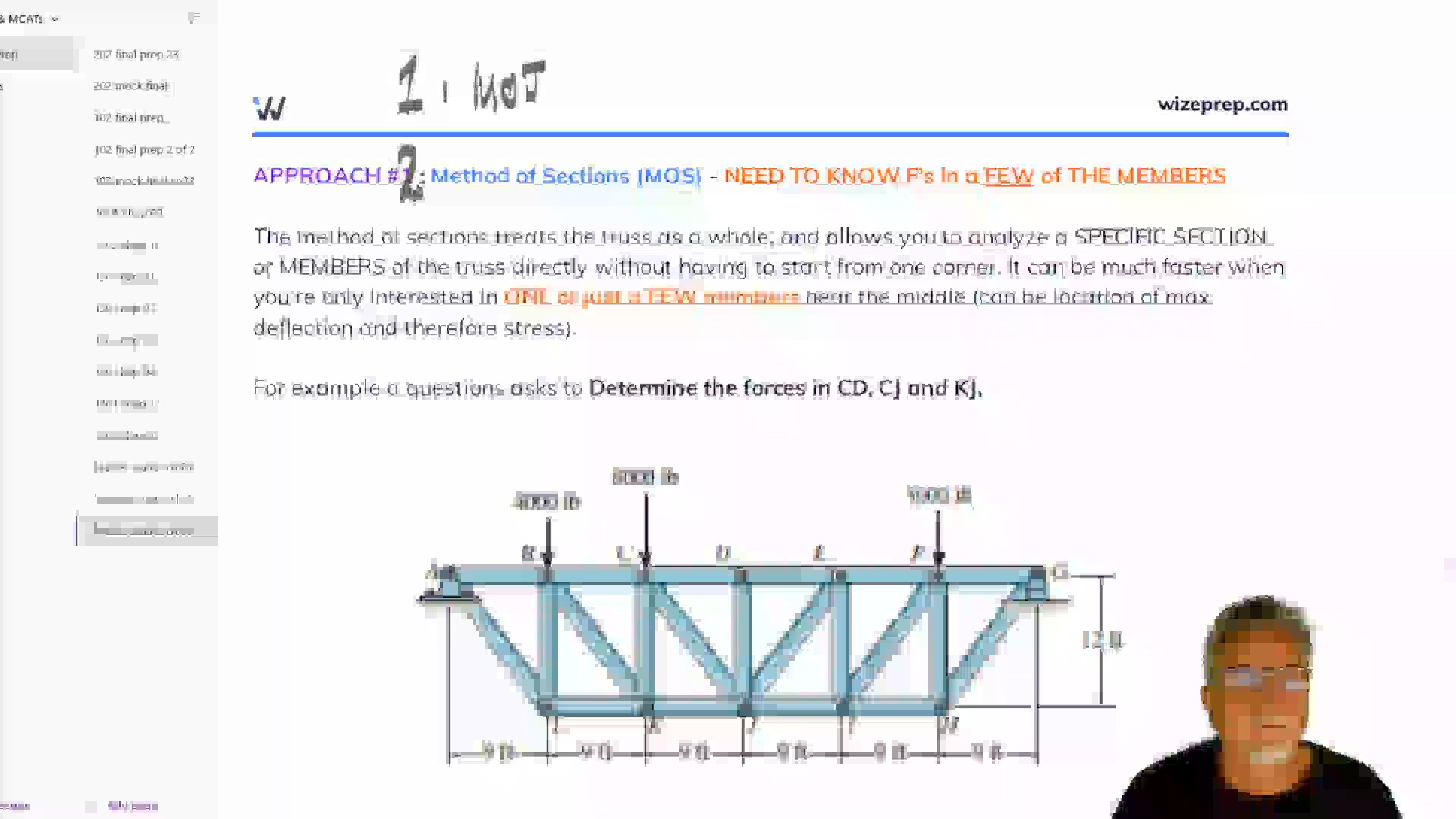
APPROACH #2 : Method of Sections (MOS) - NEED TO KNOW F's in a FEW of THE MEMBERS
The method of sections treats the truss as a whole, and allows you to analyze a SPECIFIC SECTION or MEMBERS of the truss directly without having to start from one corner. It can be much faster when you’re only interested in ONE or just a FEW members near the middle (can be location of max deflection and therefore stress).
For example a questions asks to Determine the forces in CD, CJ and KJ,
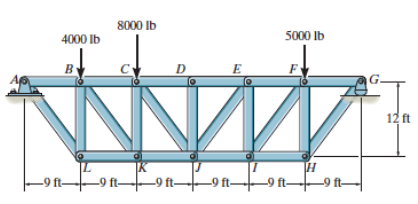
General Procedure:
- Find SUPPORT Reactions.
- Identify all zero-force members.
- Cut your truss into two parts "CROSSING" the member(s) of INTEREST. Assume all cut members to be in tension. Note: the cut doesn’t necessarily have to be a straight line, but you can only cut each member once.
- Draw the Free Body Diagram (FBD) of the easiest side, assume all cut members are in tension.
- Solve your cut section using equations of equilibrium (sum F's & M's)
0:00 / 0:00
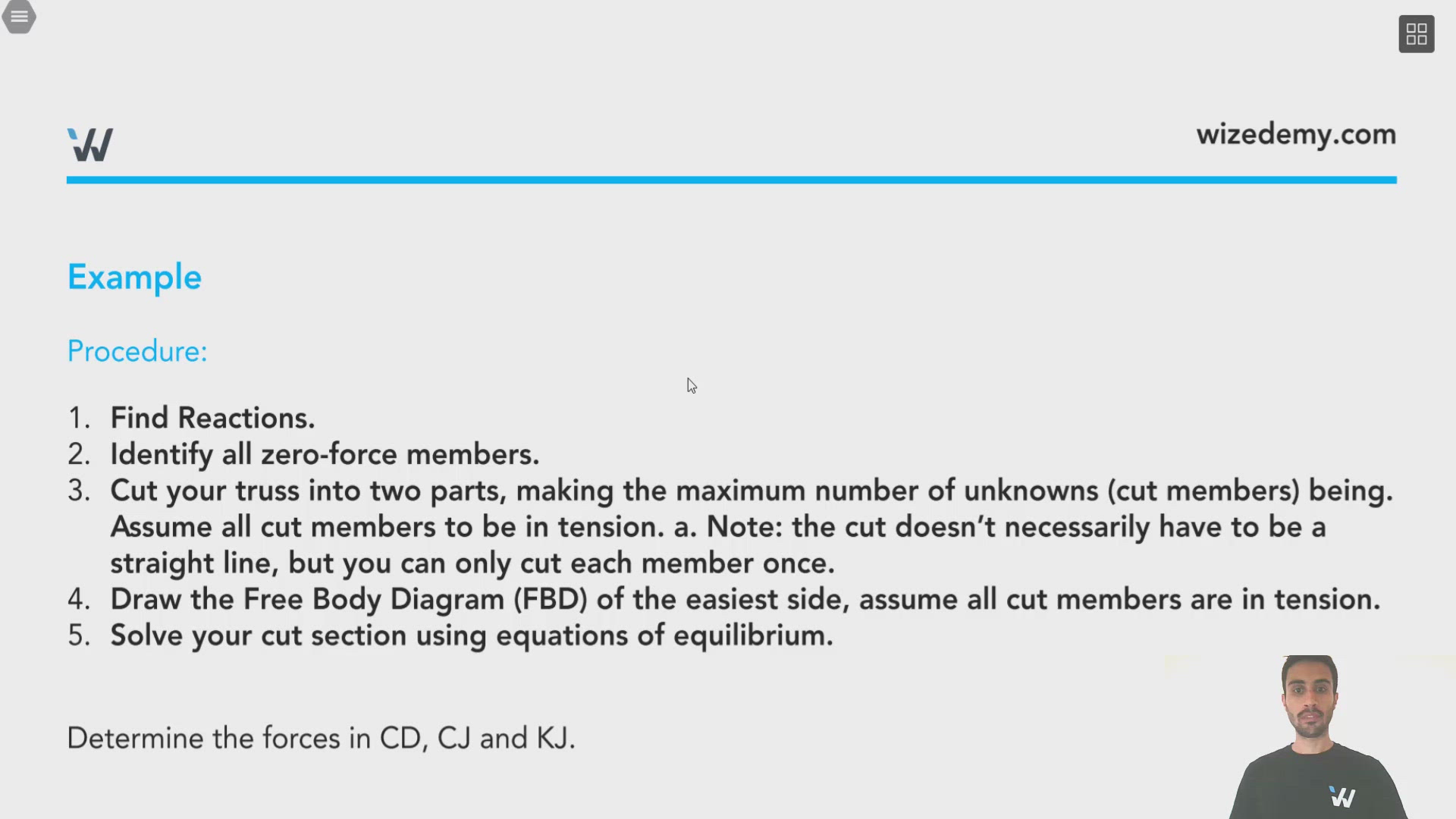
Example
Procedure:
- Find Reactions.
- Identify all zero-force members.
- Cut your truss into two parts, making the maximum number of unknowns (cut members) being. Assume all cut members to be in tension. a. Note: the cut doesn’t necessarily have to be a straight line, but you can only cut each member once.
- Draw the Free Body Diagram (FBD) of the easiest side, assume all cut members are in tension.
- Solve your cut section using equations of equilibrium.
Determine the forces in CD, CJ and KJ.
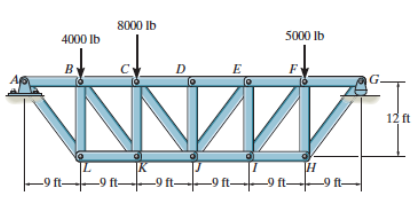
1. Find Reactions.
2. Identify all zero-force members.
None in this case.
3,4. Cut your truss into two parts, making the maximum number of unknowns (cut members) being. Assume all cut members to be in tension.
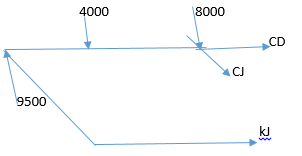
5. Solve your cut section using equations of equilibrium.
0:00 / 0:00
Example
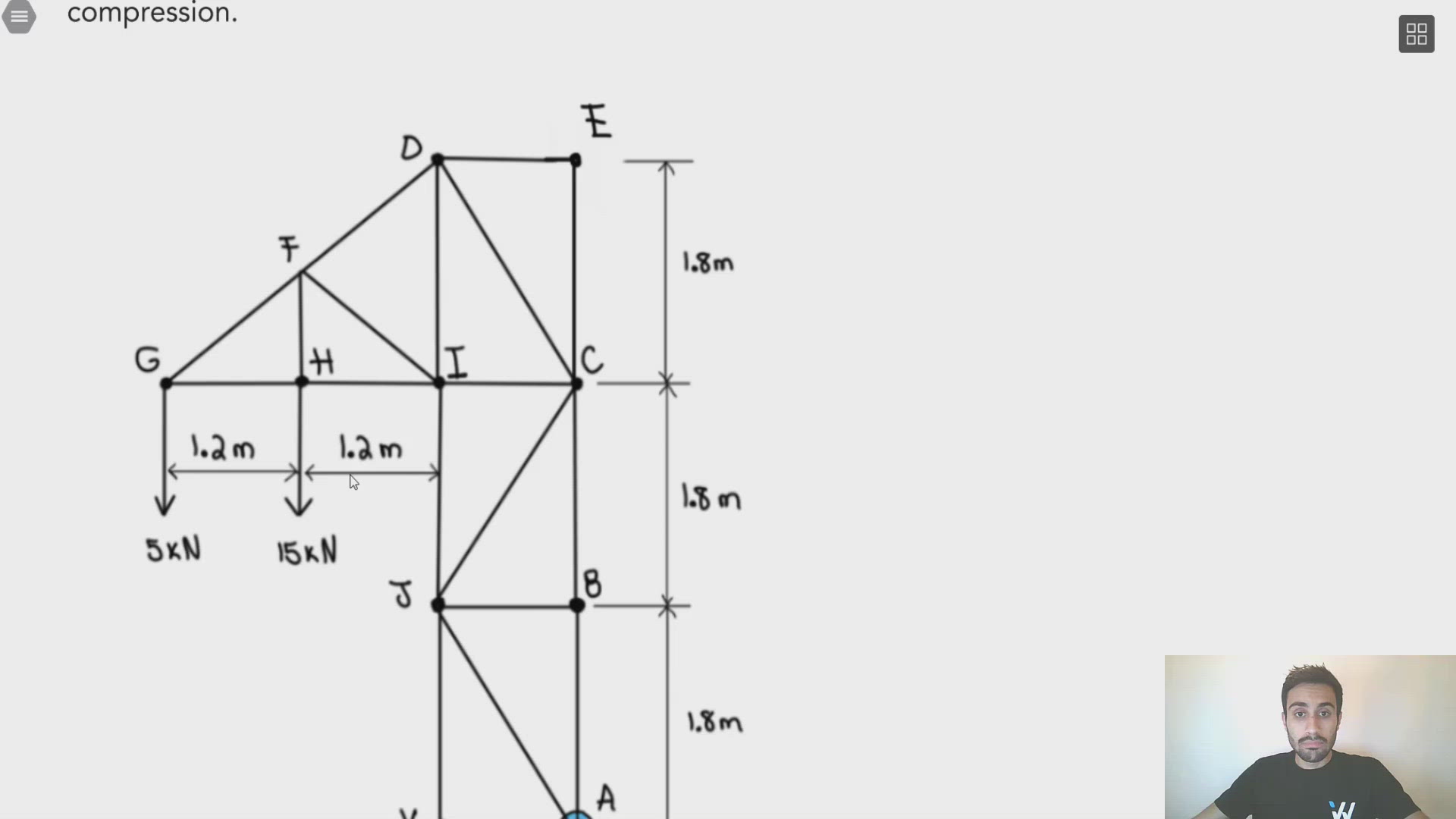
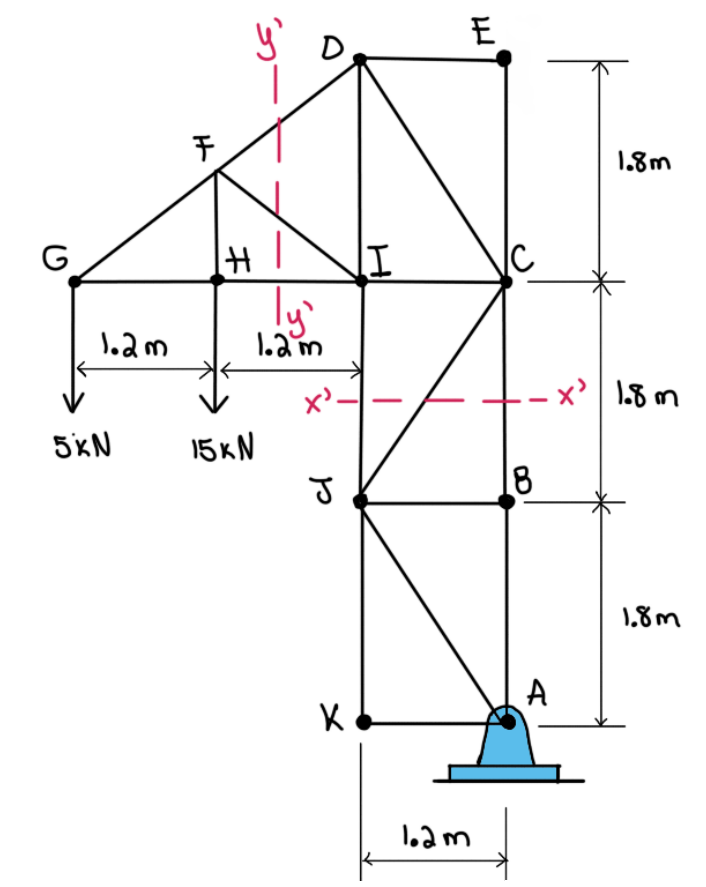
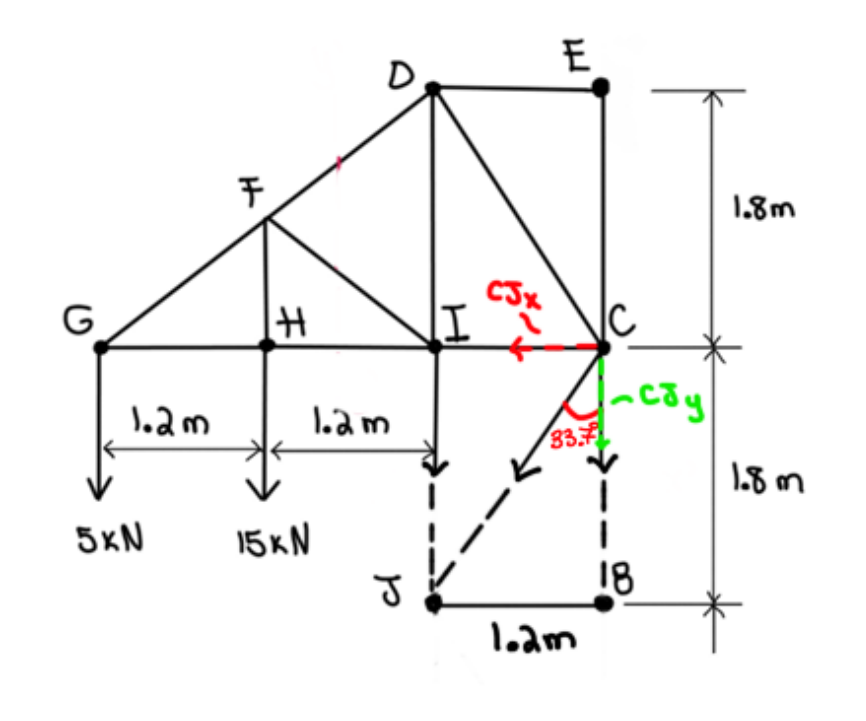
Determine the forces in members BC, CJ, DF, FH, and HI and state if the members are in tension or compression.
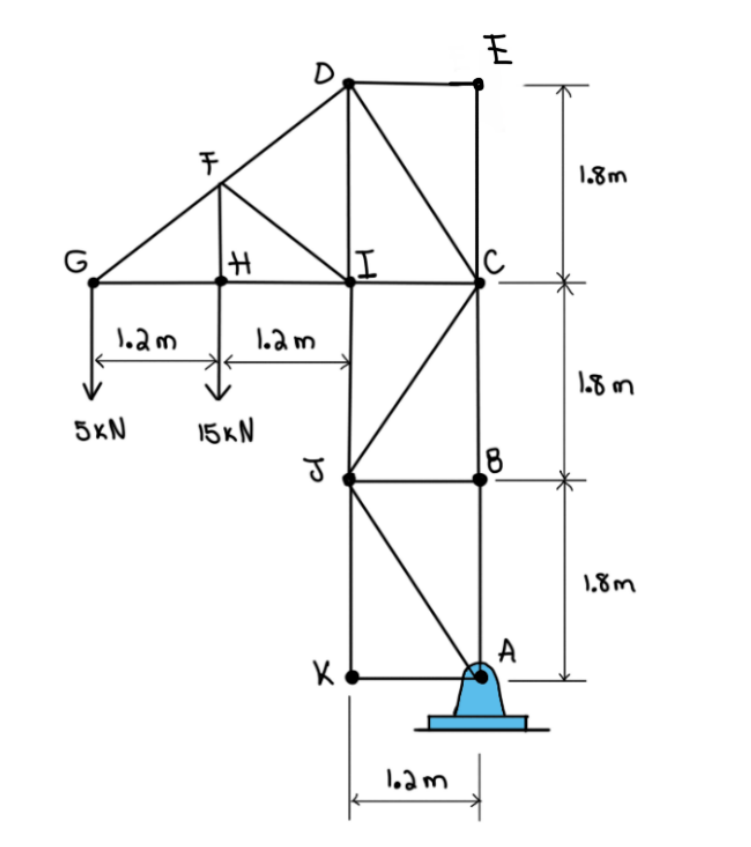
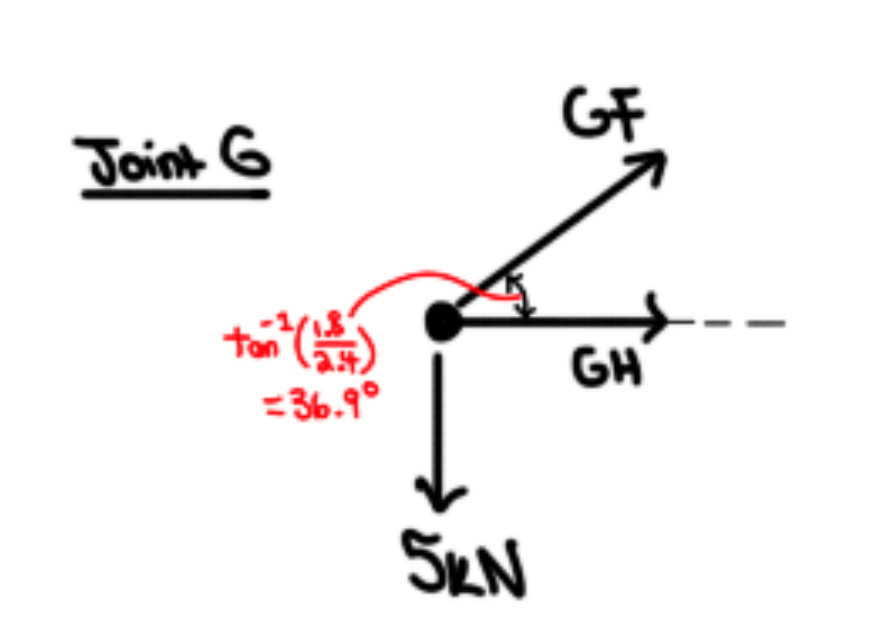
Start at a joint that has a maximum of 2 unknowns. This would be joint G.
Moving to Joint H, we can find HI and FH.
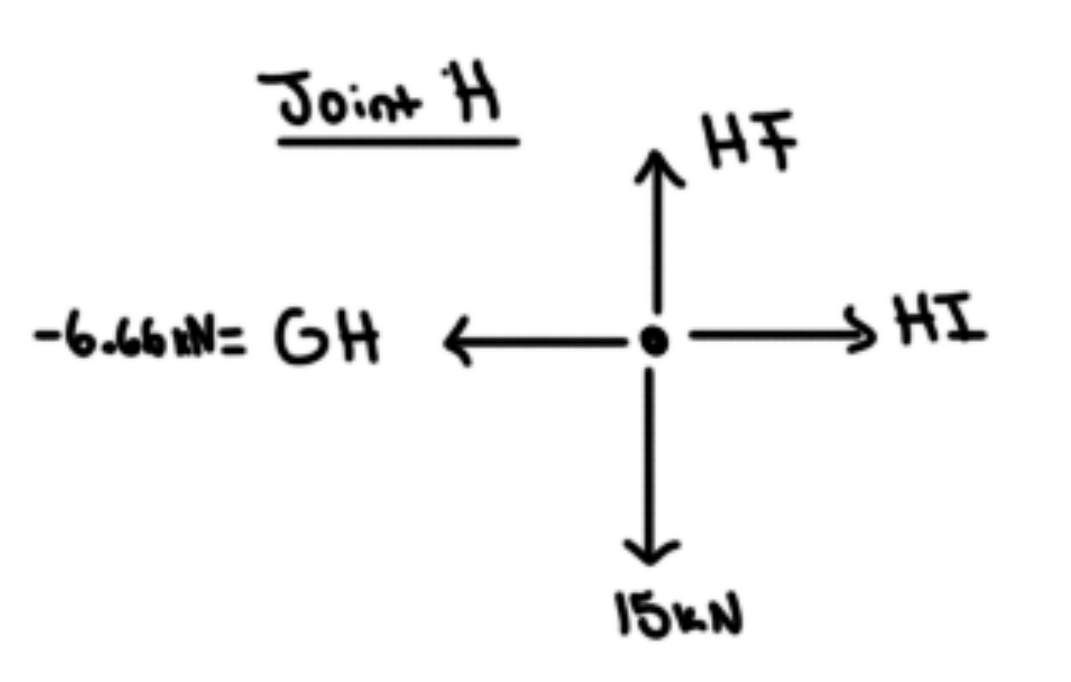
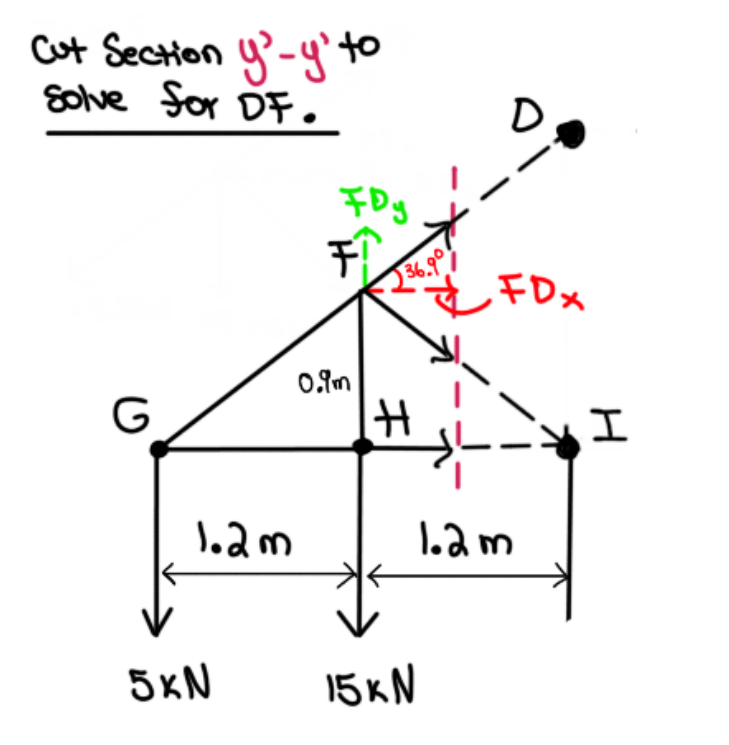
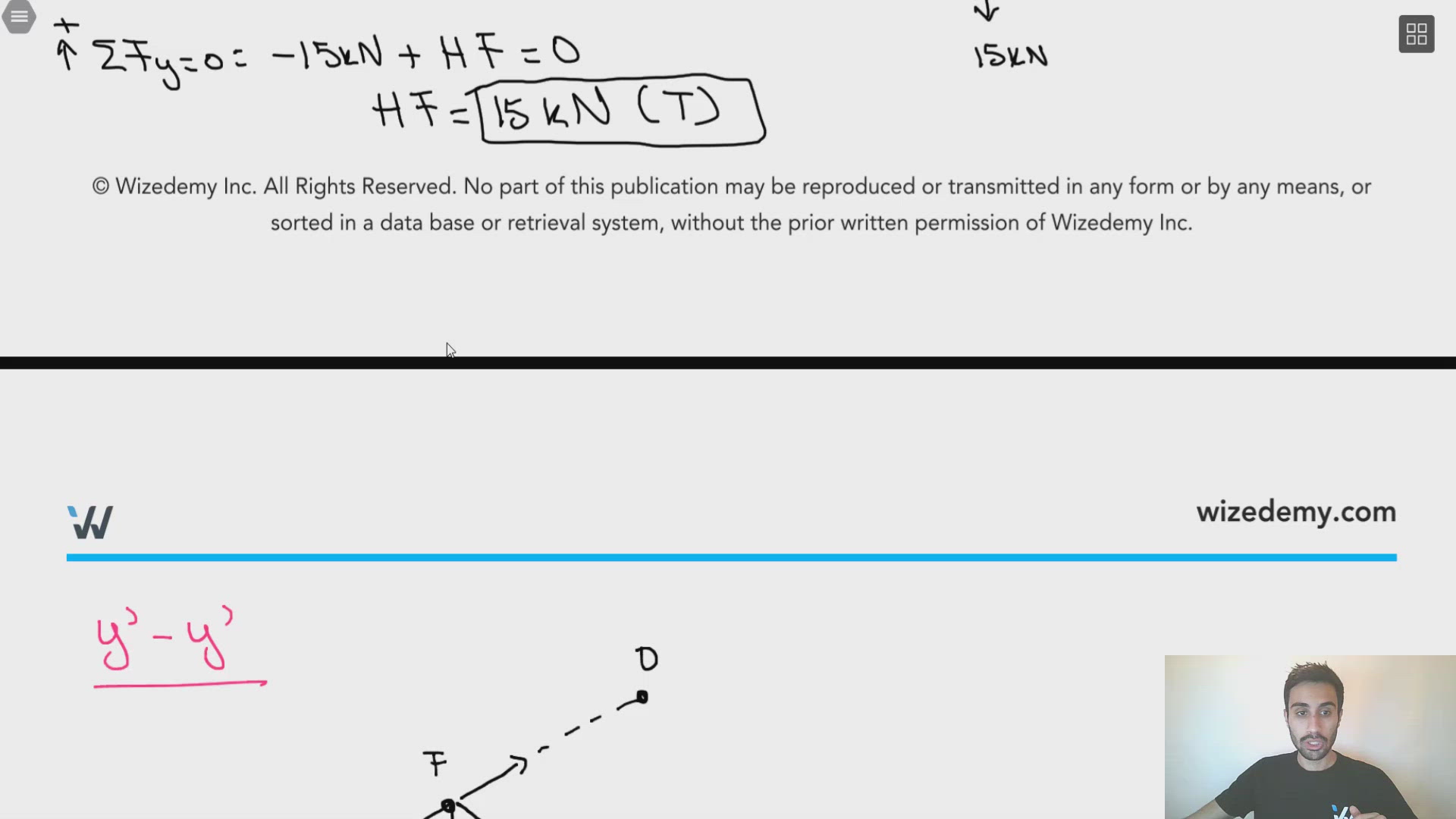
It is much easier to just make a section cut through FD, FH, and HI (y'-y') to solve for FD by simply taking the moment about point I.
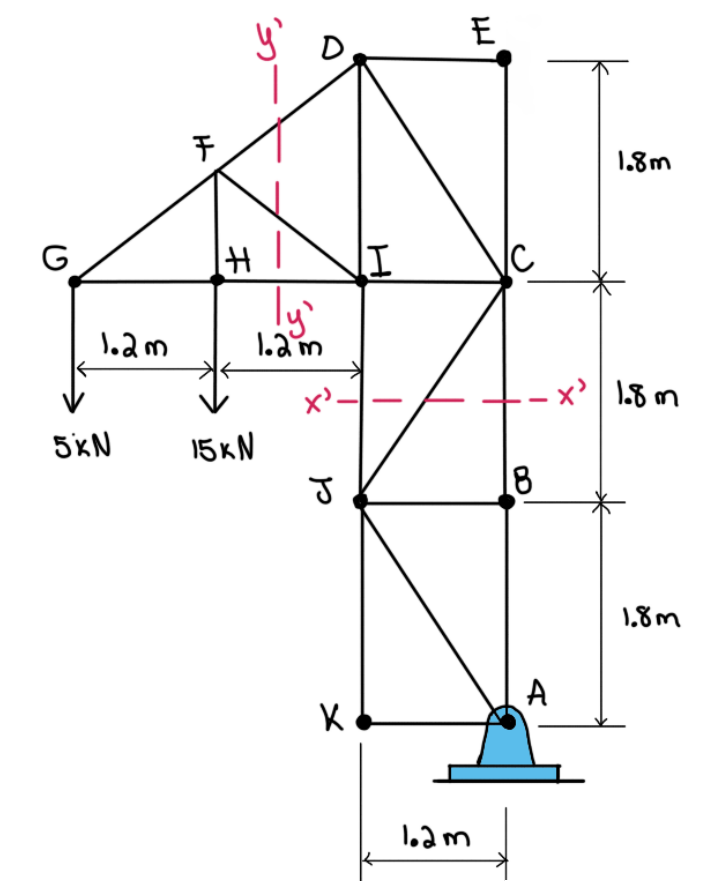
To find CJ and BC let’s make a section cut through those members (x'-x'), and apply equilibrium to the top section,
0:00 / 0:00
Example
Determine the forces in members BC, CJ, DF, FH, and HI and state if the members are in tension or compression.
Start at a joint that has a maximum of 2 unknowns. This would be joint G.
Moving to Joint H, we can find HI and FH.
It is much easier to just make a section cut through FD, FH, and HI (y'-y') to solve for FD by simply taking the moment about point I.
To find CJ and BC let’s make a section cut through those members (x'-x'), and apply equilibrium to the top section,
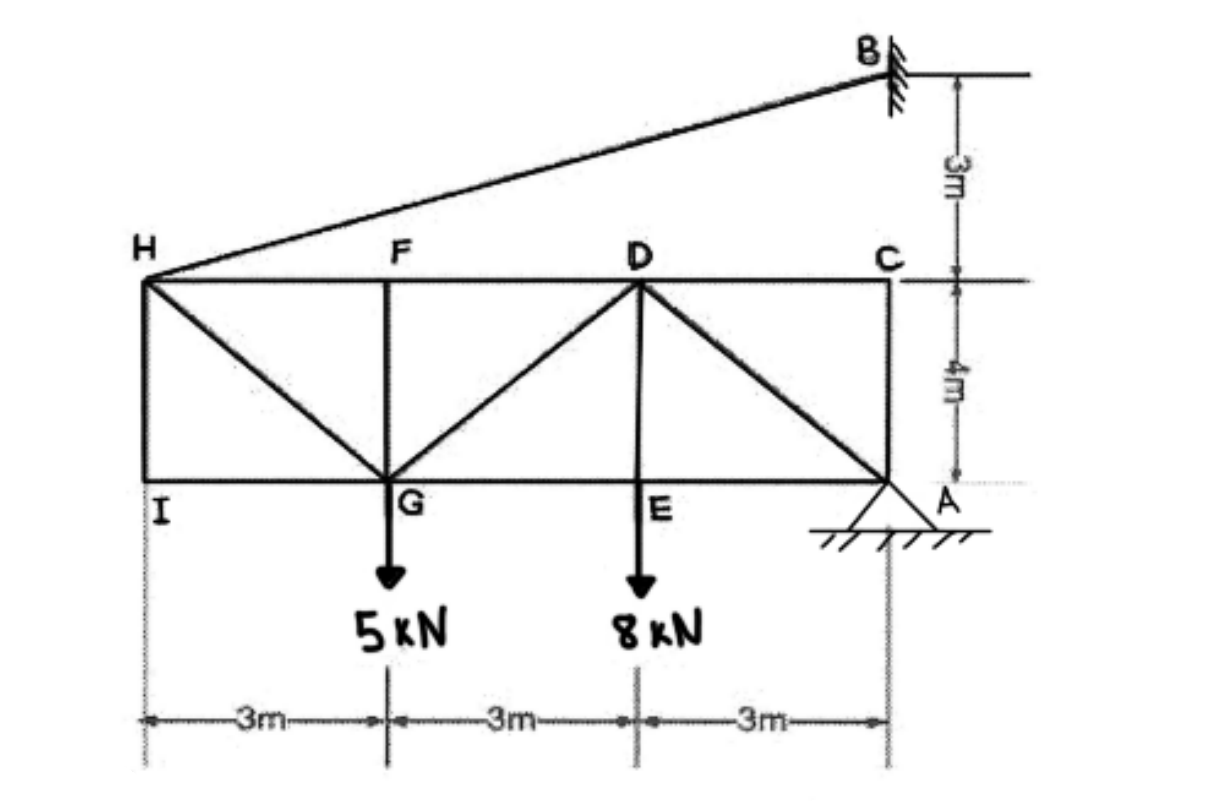
The truss shown below is supported by a pin at joint A and a cable at point B. a) Identify all zero-force members. b) Find the reaction at A and the tension in BH. c) Find force members FD, GD, and GE state whether each member is in compression or tension.
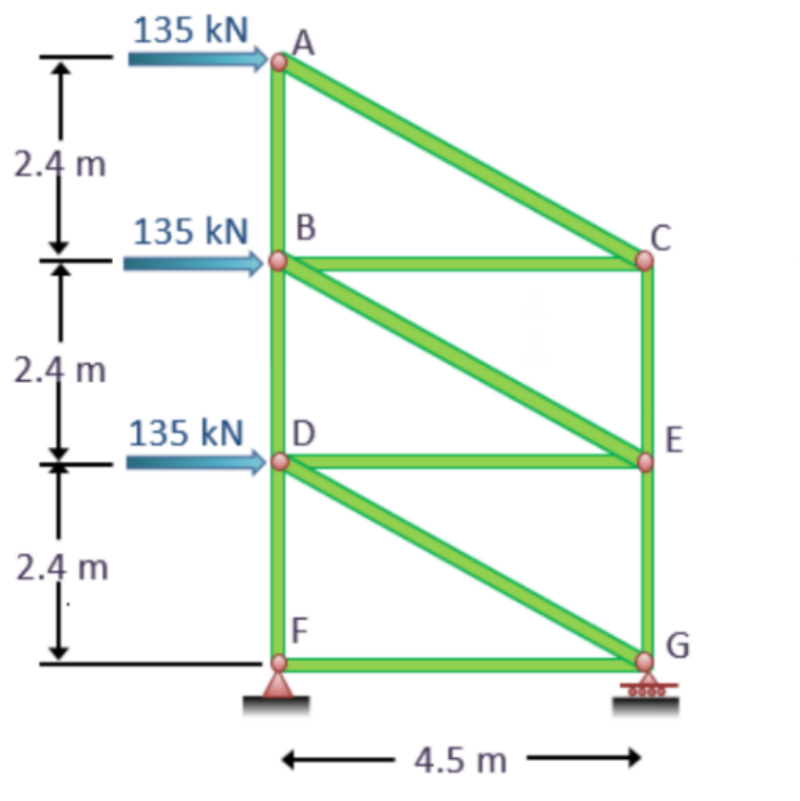
The sketch shows a truss that has three 135 kN applied loads at joints A, B, and D. All the joints are pinned.
a) Determine the reactions at the supports F and G.
b) Using the method of sections, determine the forces in members BD, BE, and CE and indicate if they are in tension or compression.
NOTE: Your solution must be the method of sections or you will get zero points.
Practice
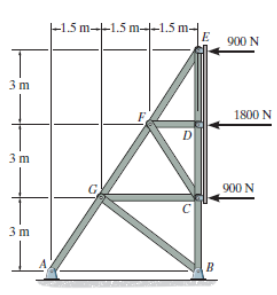
Determine the force in members BD, BE and EG.
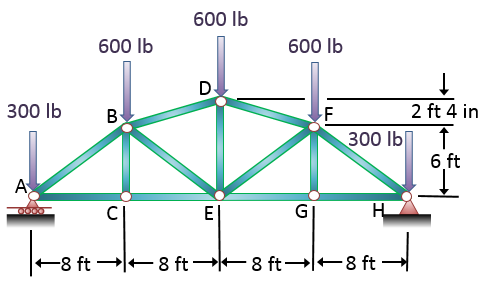
Quiz: Method of Sections Practice
Determine the force in HG, BG and BC
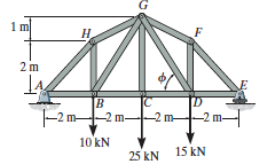
Determine the force in HJ, DJ, IJ and CJ. Hint: use the cut sections provided.
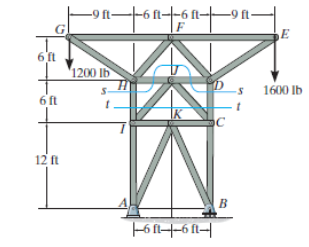
Determine the force in members HG, HE and DE
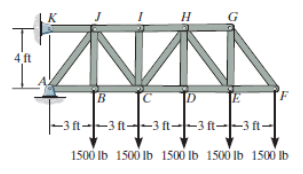
Determine the forces in GF, CF and CD
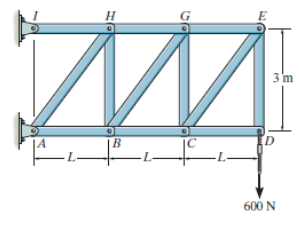
Determine the forces in GH, GB and BC. Assume L = 1.5m
Quiz: Method of Sections Practice
Determine the force in HG, BG and BC
Determine the force in HJ, DJ, IJ and CJ. Hint: use the cut sections provided.
Determine the force in members HG, HE and DE
Determine the forces in GF, CF and CD
Determine the forces in GH, GB and BC. Assume L = 1.5m