Frames and Machines
Example 1 - Part 1: Frames and Machines (IMPORTANT-EXAM LIKE!)
Example 1 - Part 2: Frames and Machines (IMPORTANT - EXAM LIKE!)
Example 2: Frames and Machines (IMPORTANT - EXAM LIKE!)
Example - Frames and Machines - Multiple Pulleys
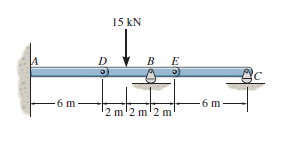
Example - compound beam
Practice 1: Frames and Machines (IMPORTANT - EXAM LIKE!)
Practice 2: Frames and Machines Practice (IMPORTANT - EXAM LIKE!)
Practice 2: Frames and Machines (IMPORTANT-EXAM LIKE!)
Practice 3: Frames and Machines Practice (OPTIONAL)
Quiz: Frames and Machines Quiz
Popular Courses
ENGG 130
University of Alberta
CIV100H1
University of Toronto
ENGG 202
University of Calgary
ENGSCI 1022A/B/Y
Western University
GNG 1105
University of Ottawa
ENGR 242
Concordia University
ENGR 141
University of Victoria
CE 221
Michigan State University
GENG-1110
University of Windsor
ESM 2104
Virginia Tech
APS160H1
University of Toronto

0:00 / 0:00
The Frames & Machines section of the course is nothing new, but an application of what you’ve learned so far. The idea of this section is that rather than analyzing structures as a whole, we analyze them one piece at a time, and all sub-sections must be in equilibrium for the overall structure to remain in equilibrium.
Frames and Machines are composed of pin-connected multi-force members (members subjected to two or more forces.) Remember that TRUSS members are all TWO-FORCE members.
Frames - Stationary, Support Loads
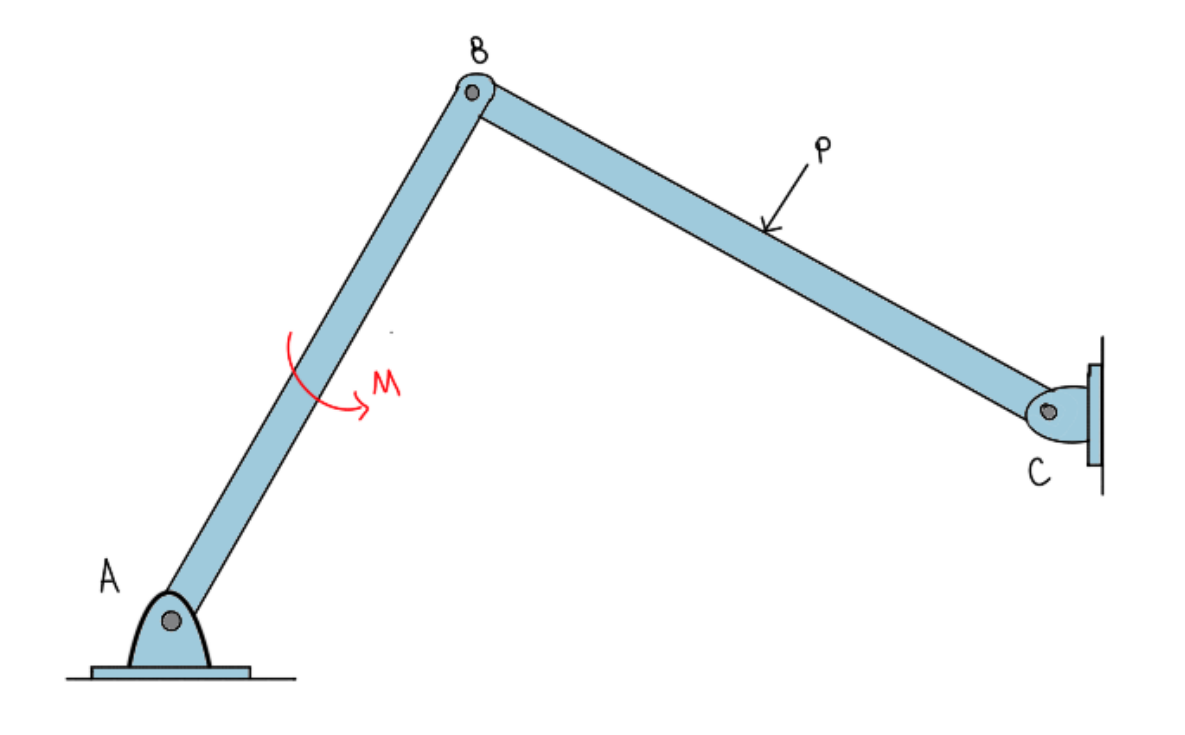
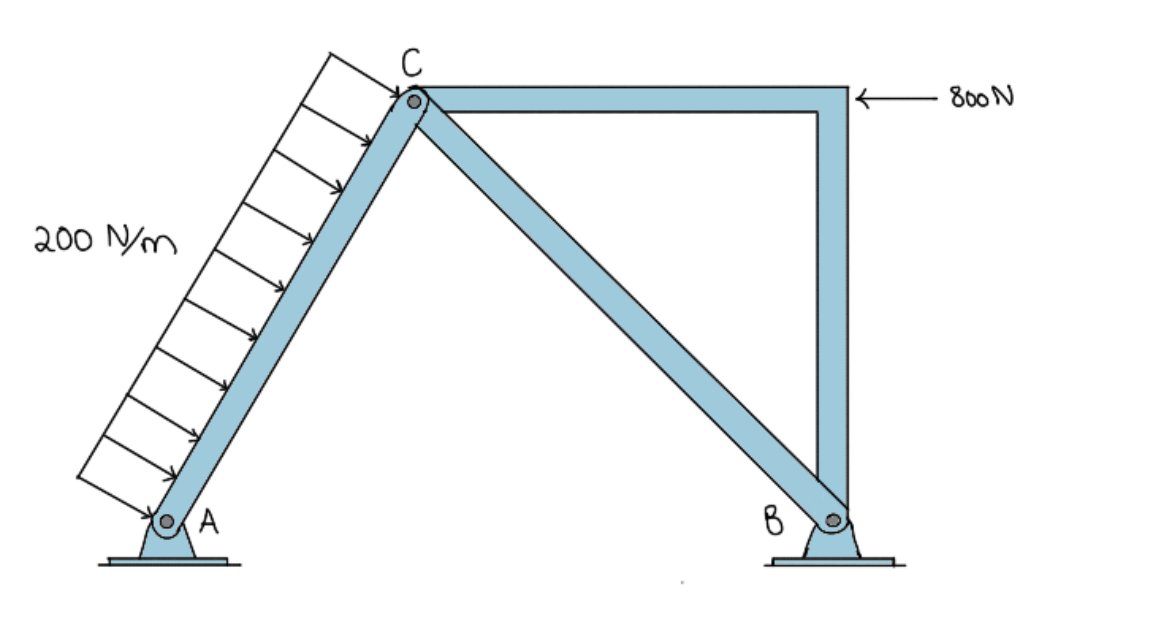
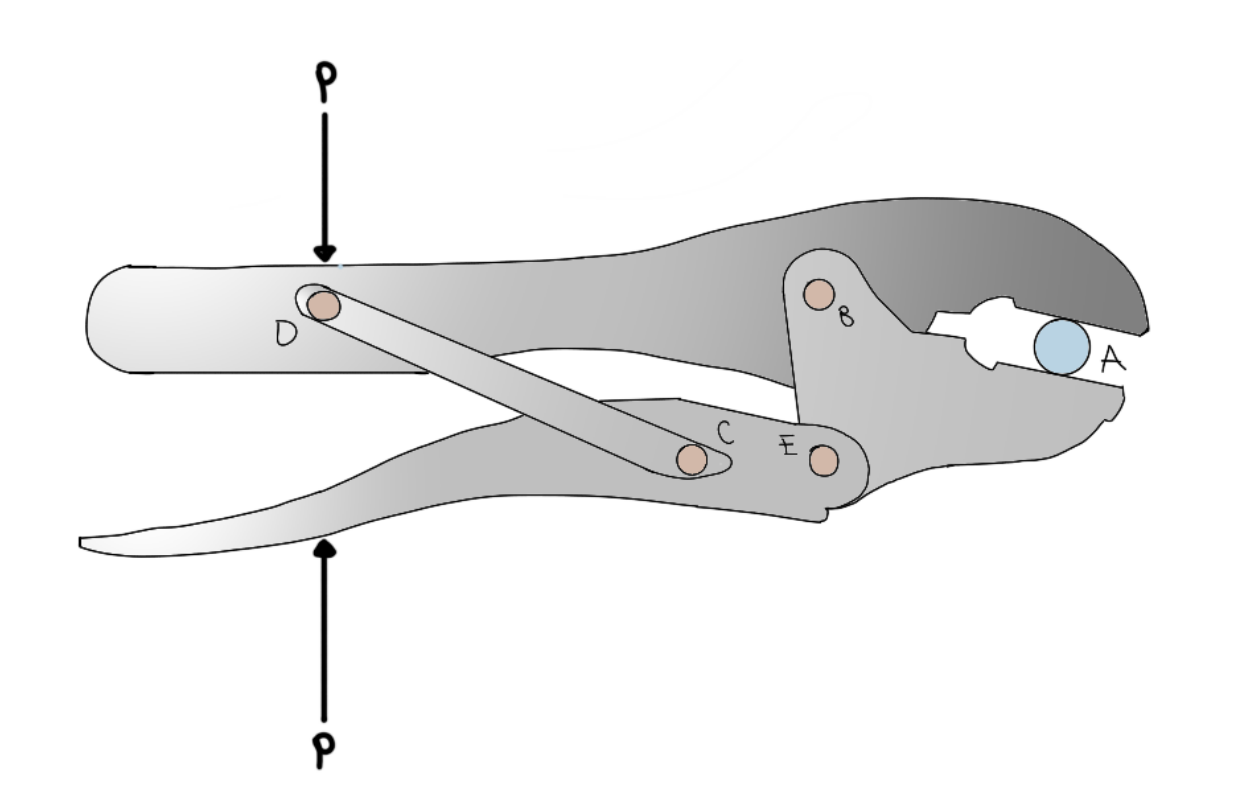
Machines - Contain Moving parts that are designed to transfer/transmit or alter the effect of forces
Steps for solving Frames & Machines Questions:
1) Solve for External Equilibrium Reactions where possible (sometimes we will not find all of the reactions.)
2) Identify 2 Force Members (Members that are pin connected with no forces acting on the member. )
3) Break Apart / Disassemble the structure & Draw the Free Body Diagram of Each Piece Except the 2 Force Members.
4) Solve using the three Equations of Equilibrium (, , ).
There are some key points to keep in mind:
- Do not break down the structure more than you need to.
- Everywhere you take things apart, the internal force are equal and opposite. For example.......
- It’s always beneficial to consider if you have 2 or 3 force members, and whether they simplify the setup.
- Remember that every FBD in 2D allows you to solve for a maximum of 3 unknowns.
You may see pulleys in this section. Remember that any continuous rope around a pulley has the same tension, and that the pulley is typically pin connected at its center unless told otherwise.
0:00 / 0:00
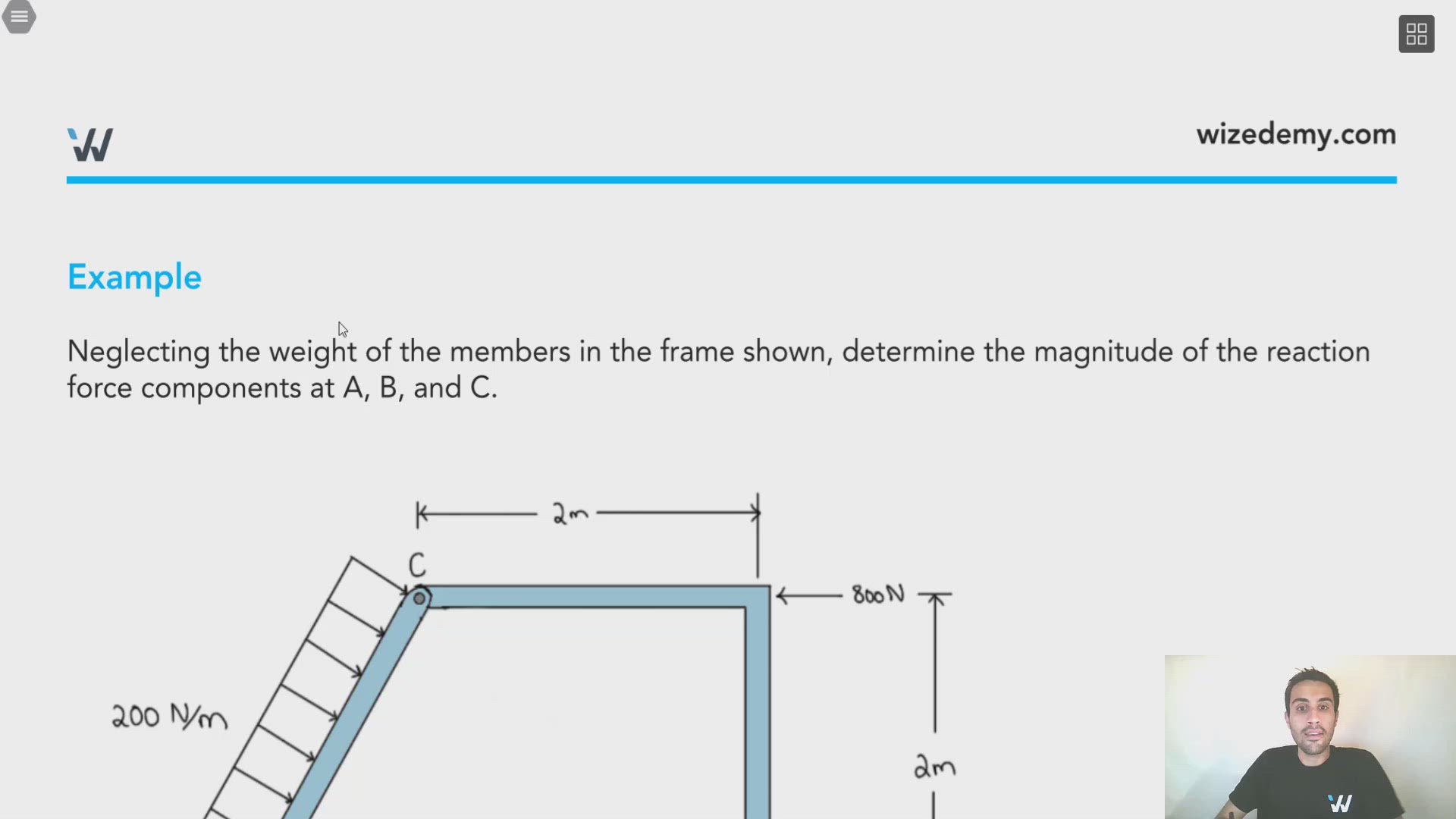
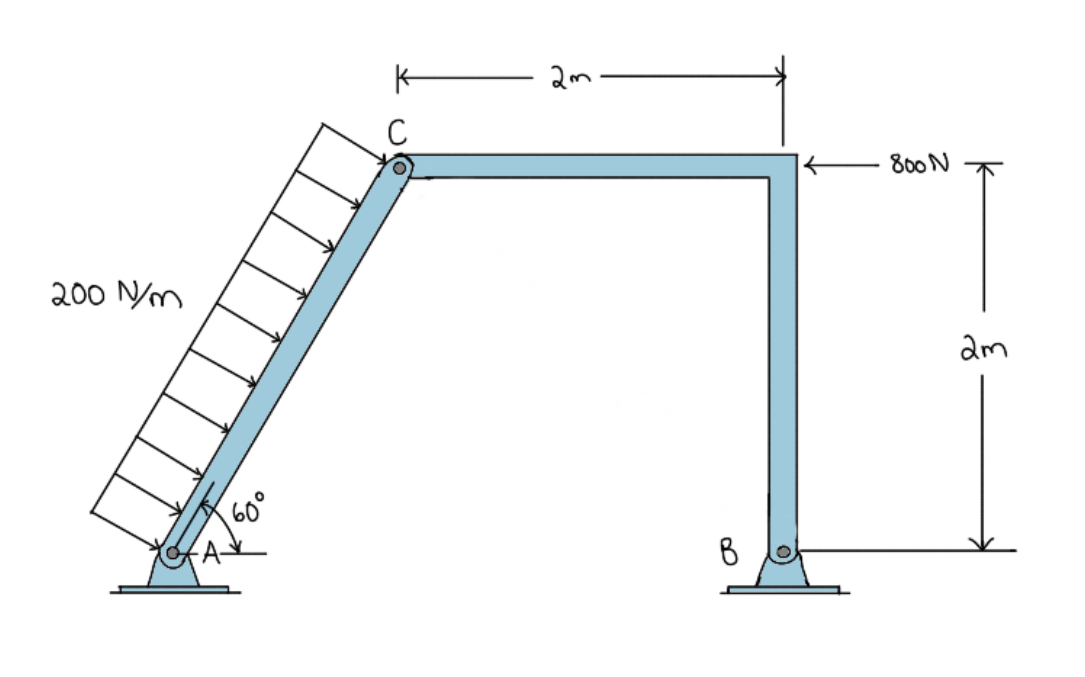
Example
Neglecting the weight of the members in the frame shown, determine the magnitude of the reaction force components at A, B, and C.
1) Solve for Global Equilibrium Reactions where possible.
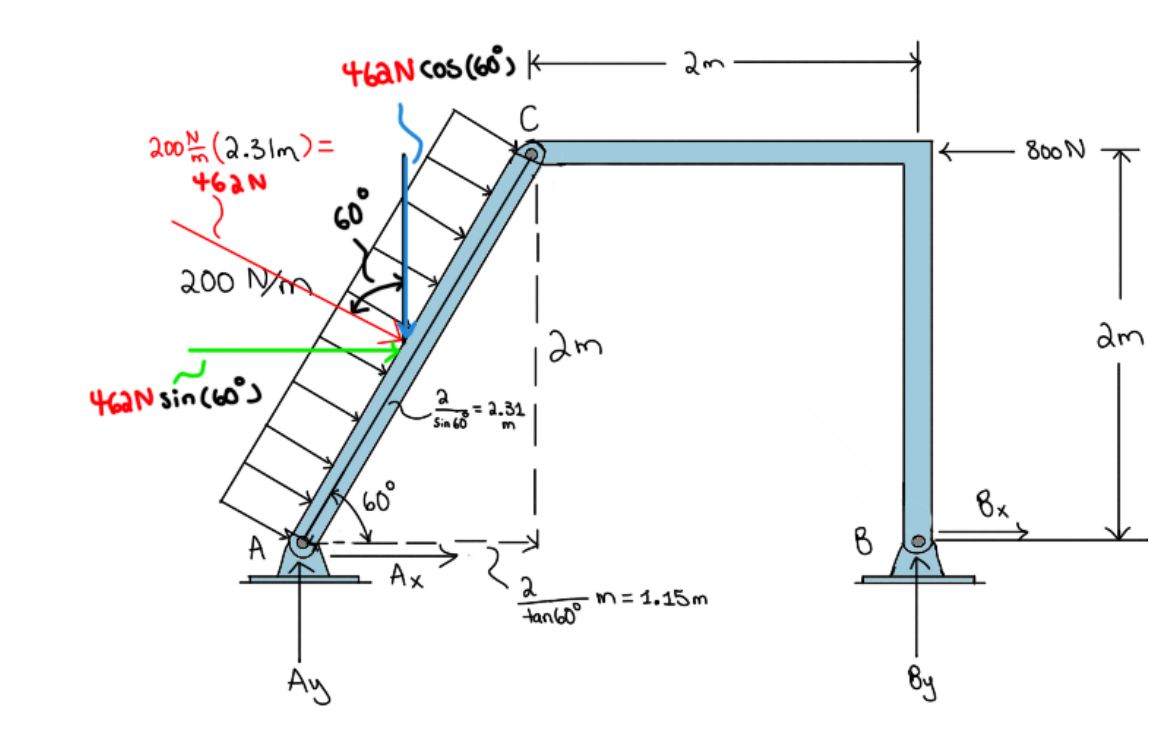
** By = -338 (as drawn, 'up') which is the same as 338 'down'.
** Ay = +569 'up'
2) Identify 2 Force Members.
-There is none in this case!
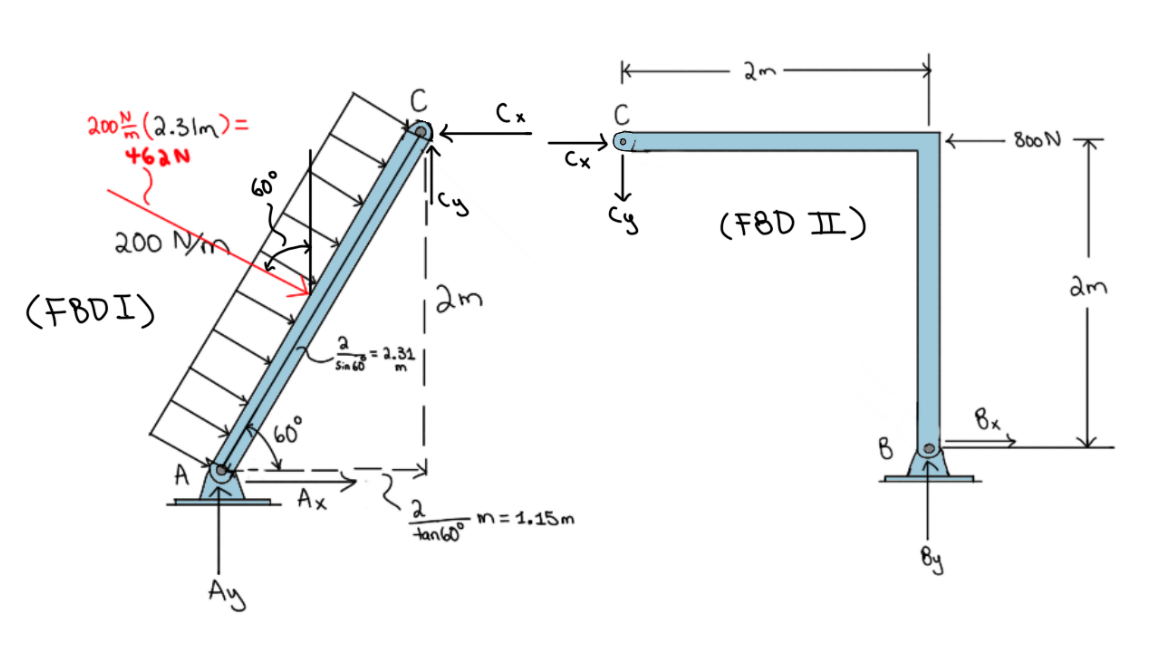
3) Break Apart the Assembly and Draw the Free Body Diagram of Each Piece Except the 2 Force Members.
4) Solve using the Three Equations of Equilibrium.
From FBD II (assembly on the right),
** Cy = -338 means it is actually 338 'up', opposite to how it was drawn in the FBD.
** the direction is 'to the right' as drawn in the FBD
From FBD I,
Magnitude Reactions at A,
Magnitude Reactions at B,
Magnitude Force at C,

0:00 / 0:00
Example
Neglecting the weight of the members in the frame shown, determine the magnitude of the reaction force components at A, B, and C.
1) Solve for Global Equilibrium Reactions where possible.
2) Identify 2 Force Members.
-There is none in this case!
3) Break Apart the Assembly and Draw the Free Body Diagram of Each Piece Except the 2 Force Members.
4) Solve using the Three Equations of Equilibrium.
From FBD II (assembly on the right),
From FBD I,
Magnitude Reactions at A,
Magnitude Reactions at B,
Magnitude Force at C,
0:00 / 0:00
Example
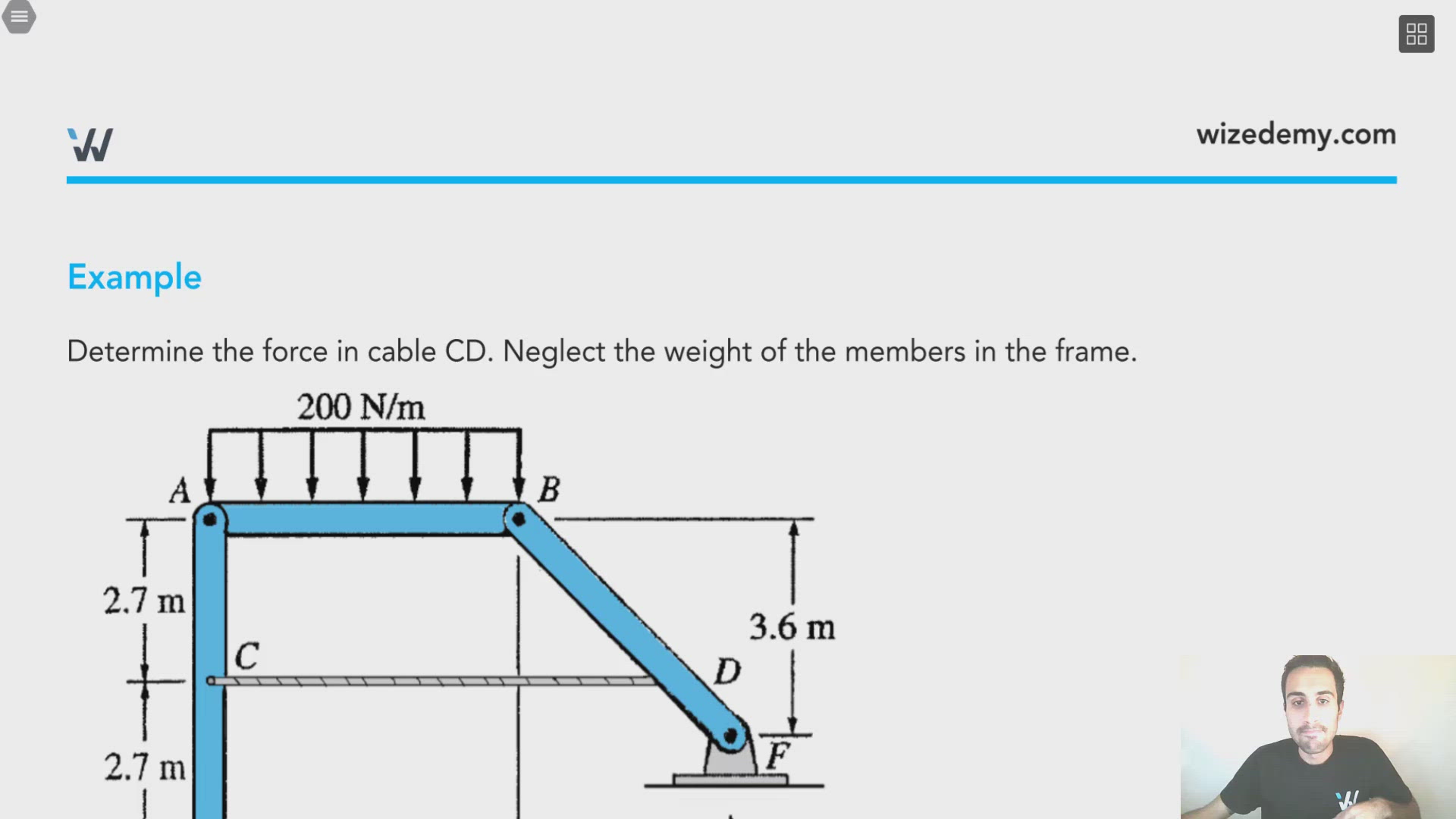
Determine the force in cable CD. Neglect the weight of the members in the frame.
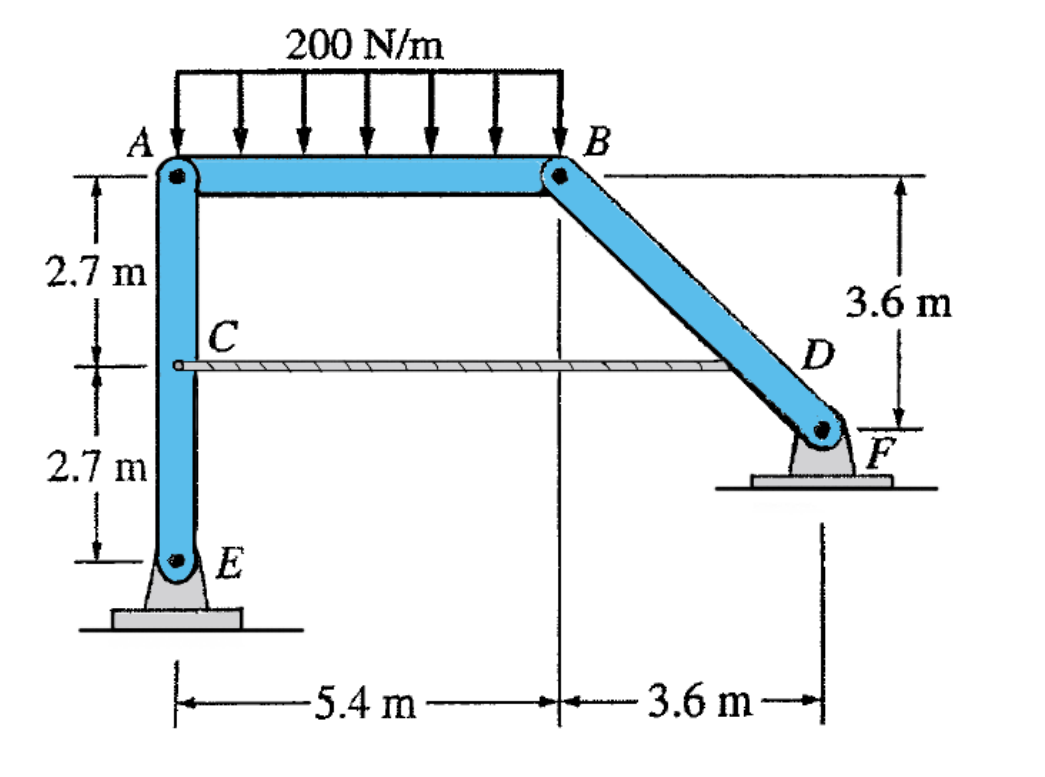
1) Solve for Global Equilibrium Reactions where possible.
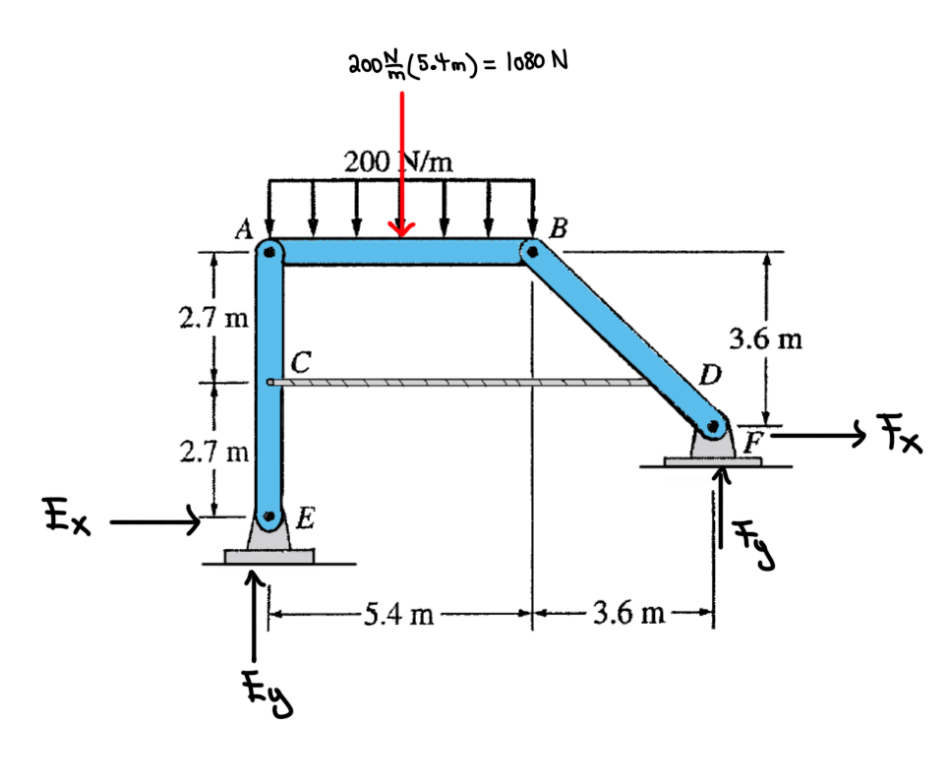
- Not possible in this case.
2) Identify 2 Force Members.
-There is none in this case!
3) Break Apart the Assembly and Draw the Free Body Diagram of Each Piece Except the 2 Force Members.
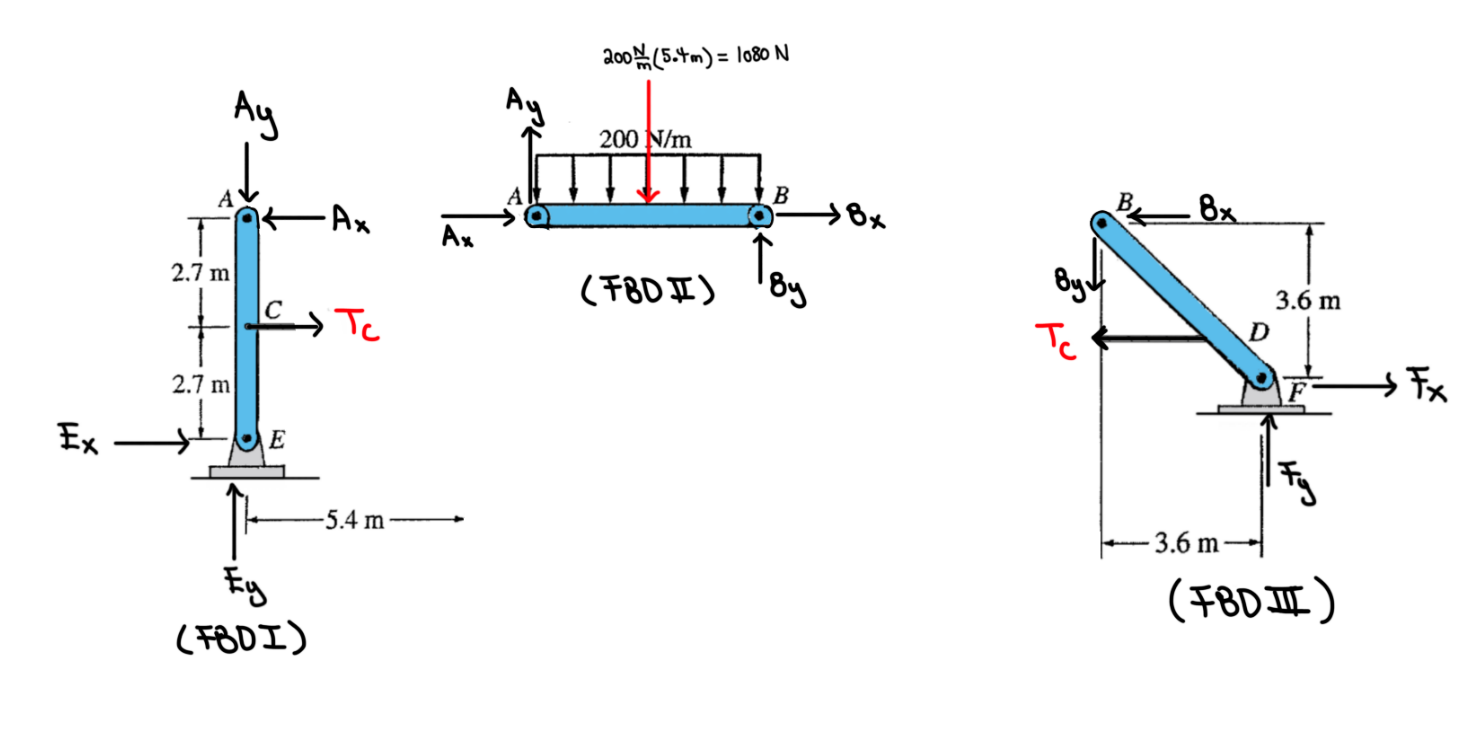
4) Solve using the Three Equations of Equilibrium.
From FBD II,
From FBD III,
From FBD II,
Since Ax = -Bx from above,
Solve for Tc from Eqs (1) and (2) by using substitution or elimination,
Using Elimination Method,
Determine the force P requires to carry the 100N load.
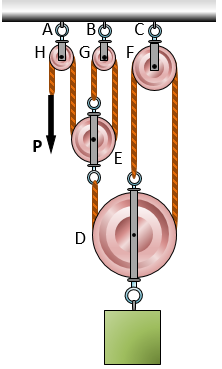
Looking at pulley D:
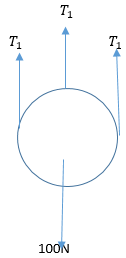
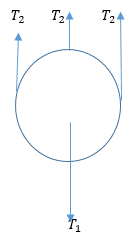
Looking @ pulley E:
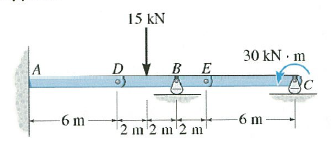
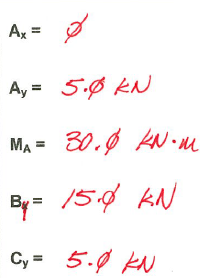
The compound beam is fixed at A and supported by a rock at B and C. There are hinges (pins) at D and E.
Determine the reactions at the supports (A & C).
-------------------------------------------------------------------
SOLUTION:
THIS IS A COMPOUND BEAM!!! You MUST separate it at the pins, and apply the equations of equilibrium to EACH section (AD, DE, EC).
1) draw FBD of each section.
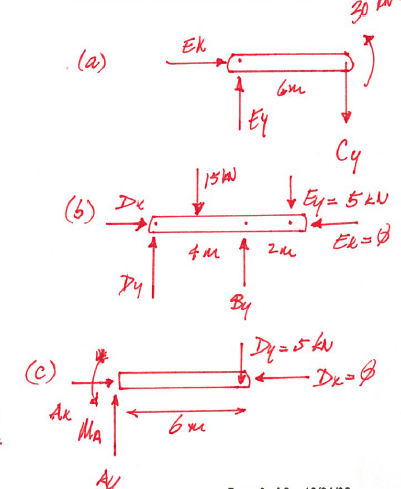
2) apply equations of equilibrium to EACH member.
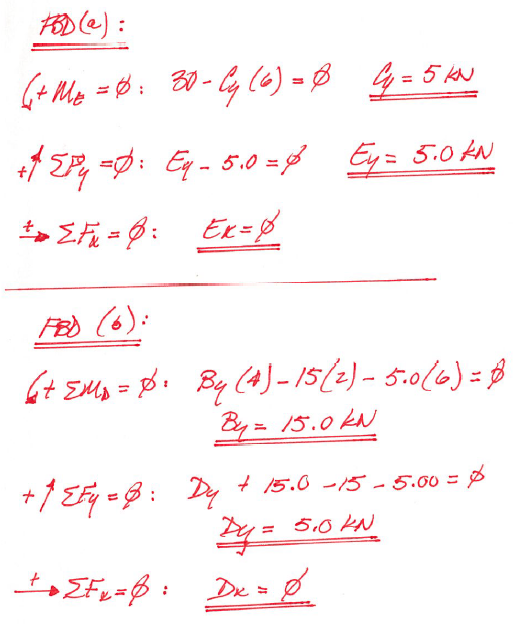
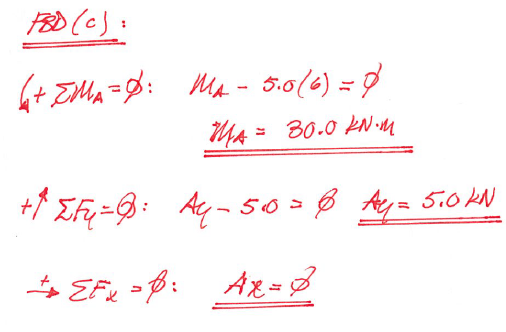
ANSWERS:
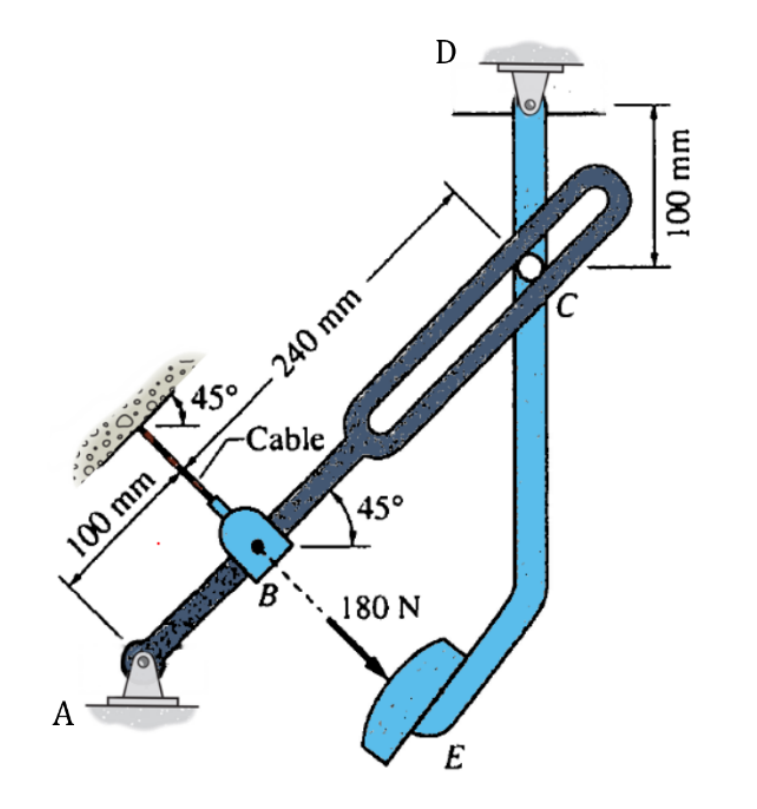
Practice
Determine the tension in the cable at B when the 180 N force is applied to the pedal at E. Also, calculate the reaction force components at D. If the cable at B has a diameter of 7 .0 mm and the yield stress of the cable material is 70 MPa, determine the actual load (safety) factor for the cable. In your opinion, is this a 'safe' design? Neglect friction and mass of the components.
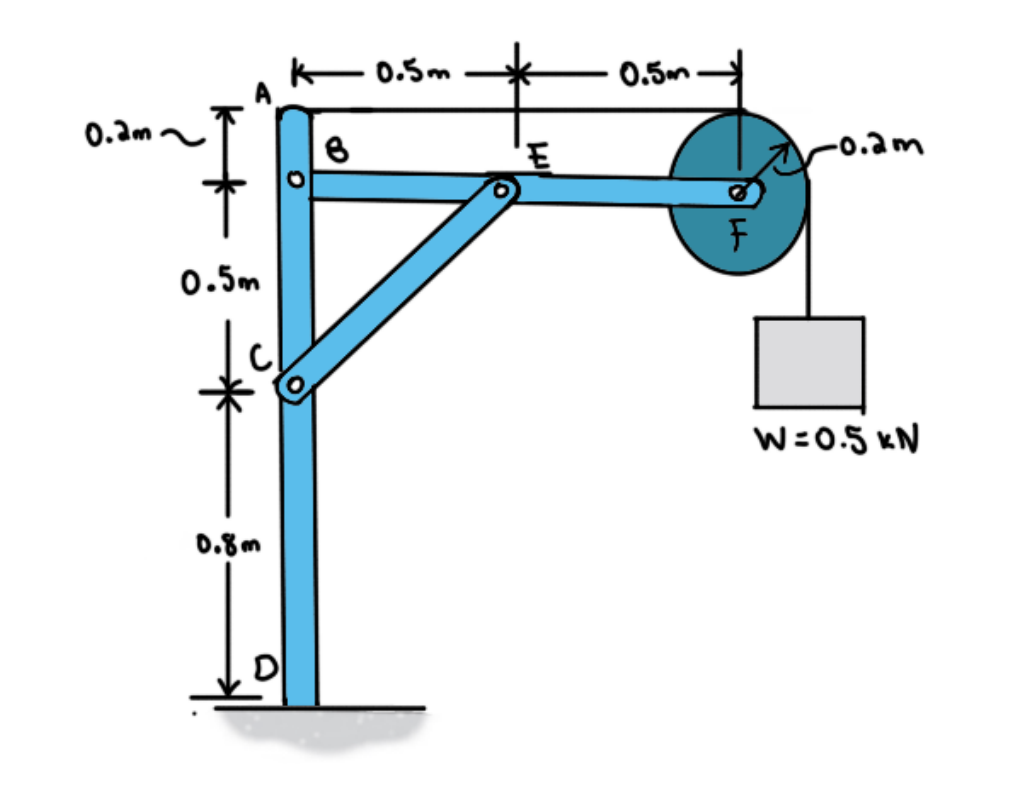
Practice
For the frame shown below joints B, E, and C are pinned connections. Determine the components of the reactions at the fixed support at D and find the components of the forces at joints B, C, and E.
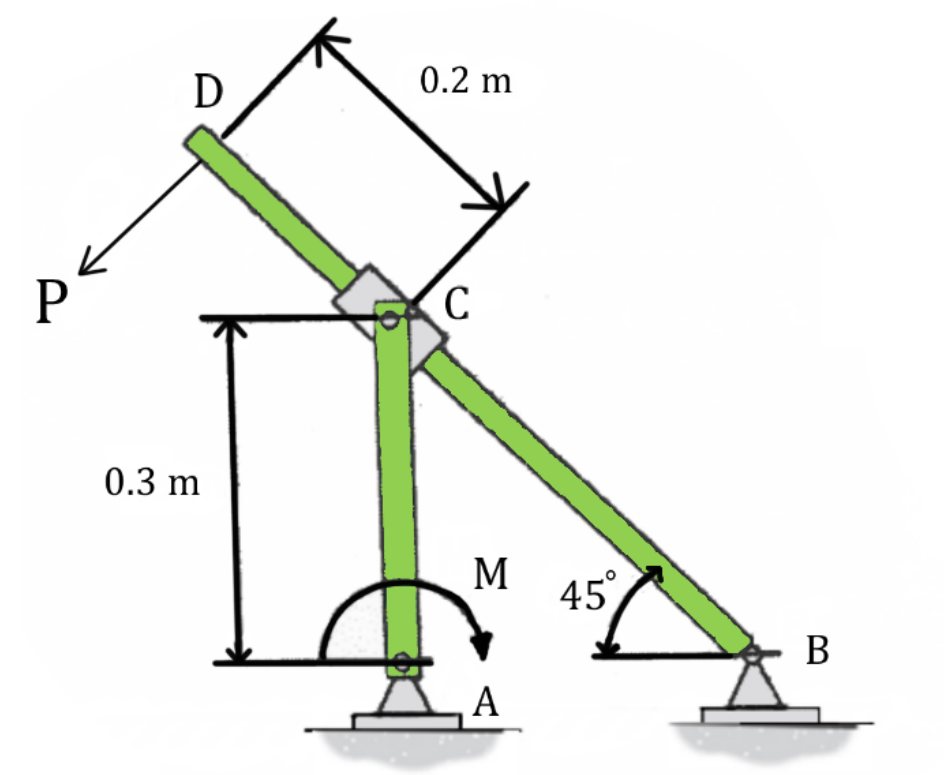
The mechanism below has pin joints at A and B is driven by a couple moment M = 200 N-m at A. Joint C is a frictionless slider which is attached to member AC by a frictionless pin.
a) Calculate the force P required to maintain the system in equilibrium. P acts at a right angle to BD, and AC is vertical.
b) Determine the reactions at A and B.
Practice
Determine the forces in each of the hydraulic pistons connected at C and E.
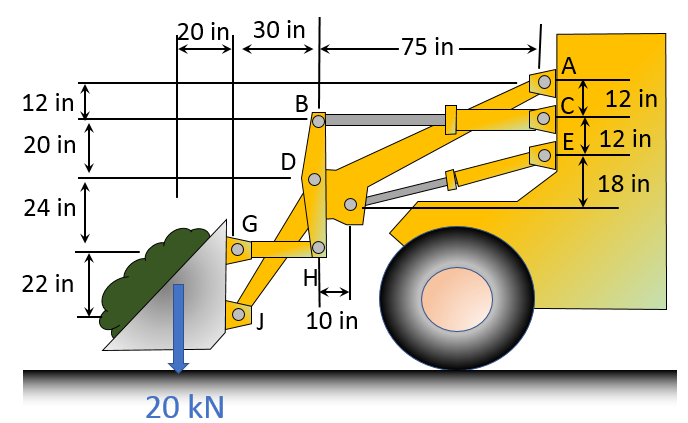
Quiz: Frames and Machines Quiz
Determine the force P needed to lift the 800N load. Determine where the hook must be place (x) for the bar AB to remain horizontal.
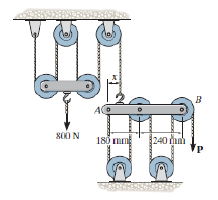
Note: This is a frames and machines question
Determine the support forces at pins A, B and C when the load is 200lbs.
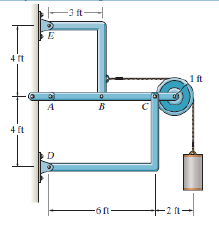
Enter only the magnitudes in lb
Determine the support reactions at D (which’s a fixed connection).
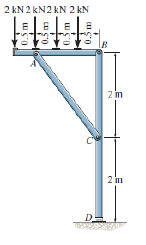
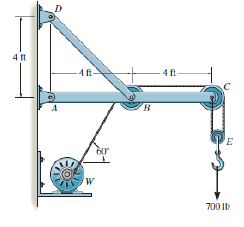
Determine the tension that must be applied at the winch (w) to support the 700lb force. Determine the force through member BD.
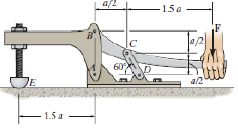
Determine the clamping force at E, if a force F = 50 N is applied.
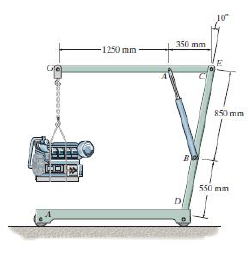
Determine the force in the piston AB when a 2 kN engine is carried.