Wize University Statics Textbook (Master) > Internal Forces
Internal Forces
Internal Forces
Example: Internal Force (at a point) Simple Beam
Example: Internal Forces (at a point) bar with pulleys
Example 1: Internal Forces at a Point (OPTIONAL)
Example: Internal Forces
Practice: Internal Forces
Practice 1: Internal Forces at a Point (OPTIONAL)
Practice 2: Internal Forces at a Point (OPTIONAL)
Popular Courses
ENGG 130
University of Alberta
CIV100H1
University of Toronto
ENGG 202
University of Calgary
ENGSCI 1022A/B/Y
Western University
GNG 1105
University of Ottawa
ENGR 242
Concordia University
ENGR 141
University of Victoria
CE 221
Michigan State University
GENG-1110
University of Windsor
ESM 2104
Virginia Tech
APS160H1
University of Toronto
0:00 / 0:00
So far we have been looking at external forces applied to structural and mechanical members. Now we will look at the loading acting within the member (called INTERNAL FORCES) in order to make sure the material can resist this loading. This information is then used by Strength of Materials courses to design the size/dimensions of the member so it doesn't fail.
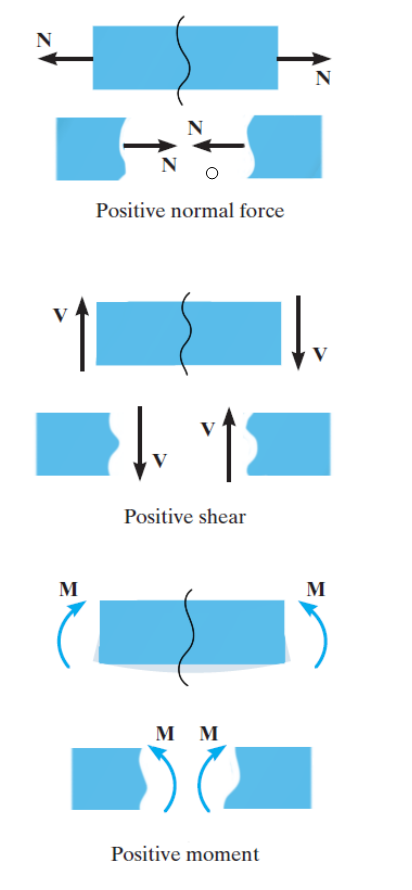
Internal forces include the normal (aka axial) force (N), shear force (V), and bending moment (M).
- Axial (or normal) forces act perpendicular to the cut section. The positive convention is that the force is positive if it causes the object to be in tension
- A shear force acts parallel to the cut. The positive convention is that the shear force is positive if it causes a clockwise rotation of the cut section
- A bending moment is positive if it causes a positive concavity of the object
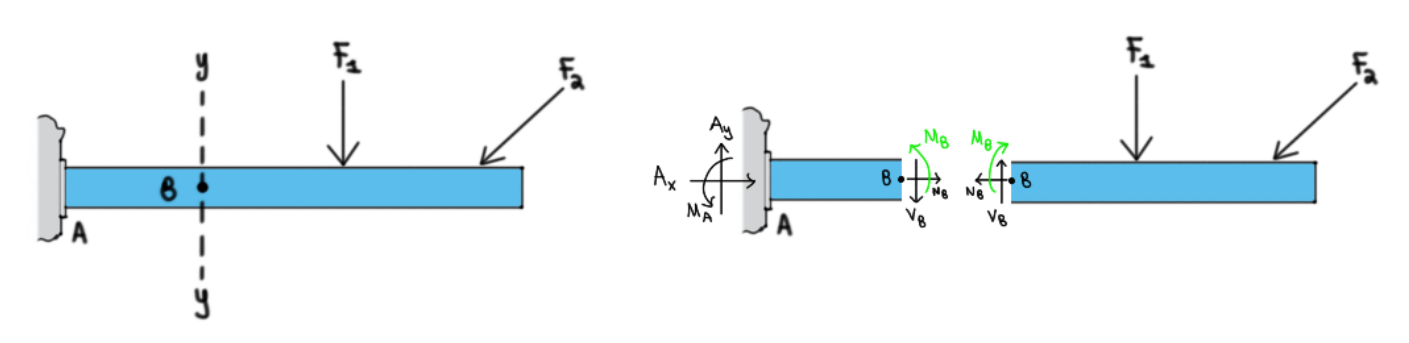
In the figure below, we can make a section cut y-y at point B, we can expose the internal forces.
Positive Sign Convention:
Procedure For Solving Questions:
1) Solve for Support Reactions
2) Cut through ("Section") at the point of interest where the internal forces are to be determined to create TWO SECTIONS - LEFT & RIGHT (or TOP & BOTTOM if vertical).
3) Select the side with the least number of loads on it and draw internal forces according to positive sign convention. Personally, unless the RIGHT side is much simpler, I use the LEFT section for the analysis.
4) Solve using Equations of Equilibrium. *** SUM MOMENTS "at / about" THE CUT
Determine the internal forces at point C, which is "just to the right" of the 8 kip load.
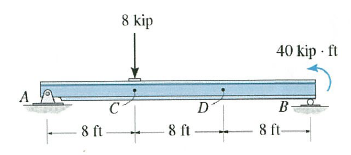
1) find the support reactions at A and B by applying the equ's of equilibrium to the FBD of the beam.
sum MA= 0: By(24) + 40 - 8(8) = 0 By = 1 kip
sum Fx = 0: Ax = 0
sum Fy = 0: Ay + By - 8 = 0 Ay = 7 kip
2) section at "C" keeping the concentrated 8 kip point load as part of the section from A>C.
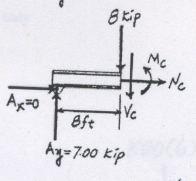
3) now apply the equations of equilibrium to this section AC:
sum Fx = 0: Nc = 0
sum Fy = 0: Ay - 8 - Vc = 0 Vc = -1 kip
sum MC= 0: Mc - 7(8) = 0 Mc = 56 kip-ft. remember to ALWAYS sum M's about the CUT end!!!
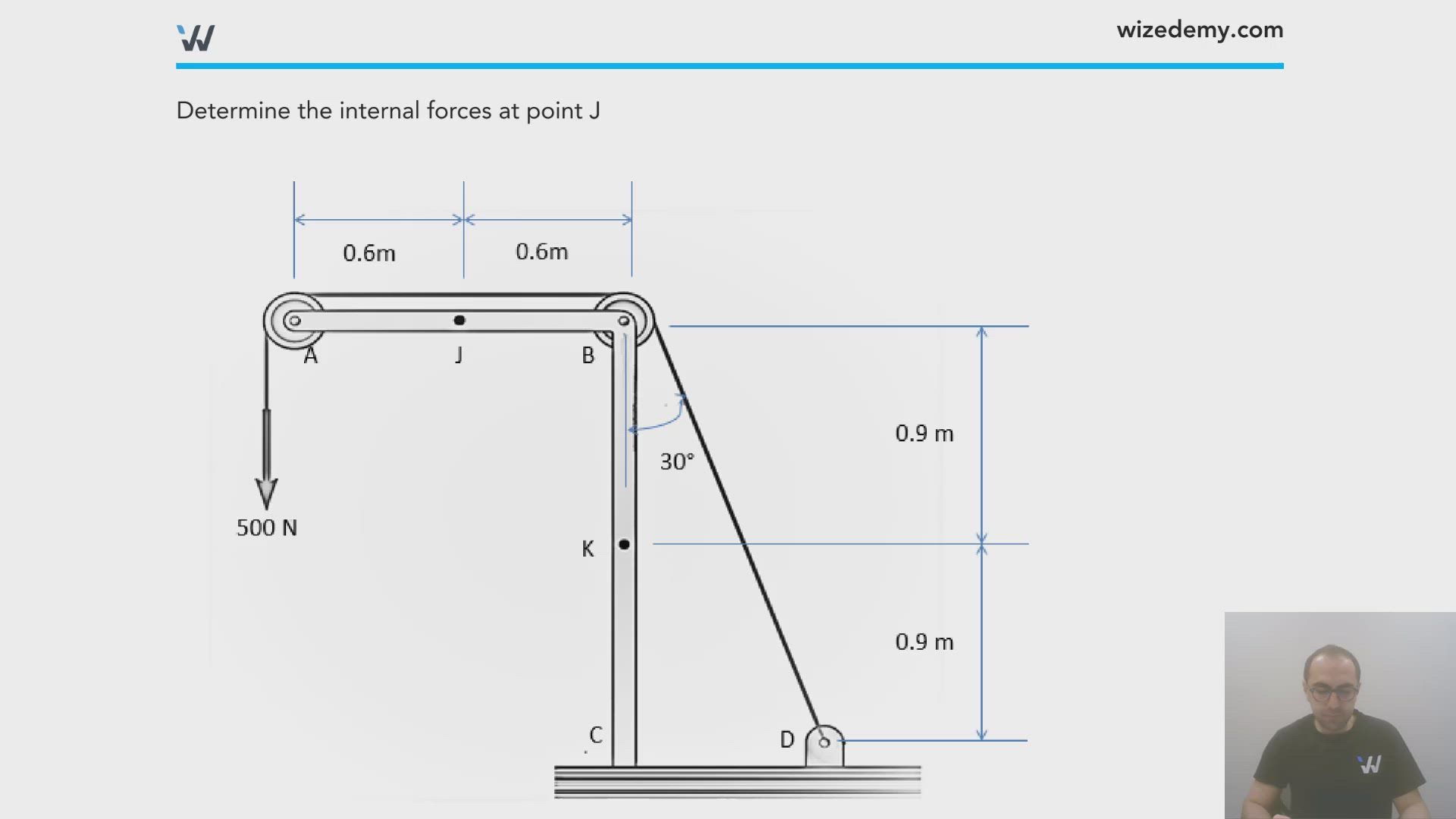
Determine the internal forces at point J
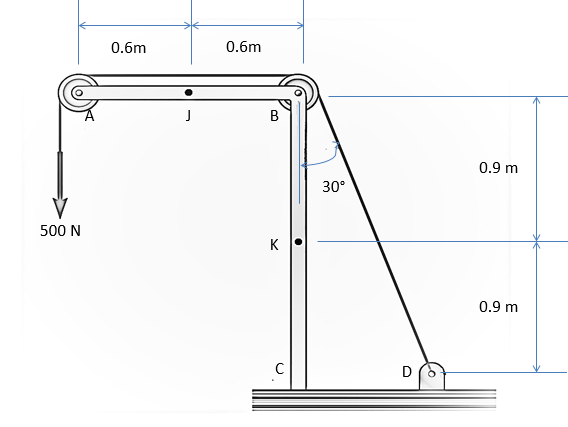
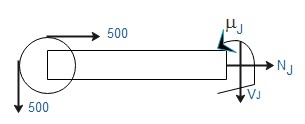
NJ= -500 N
VJ= -500N
0:00 / 0:00
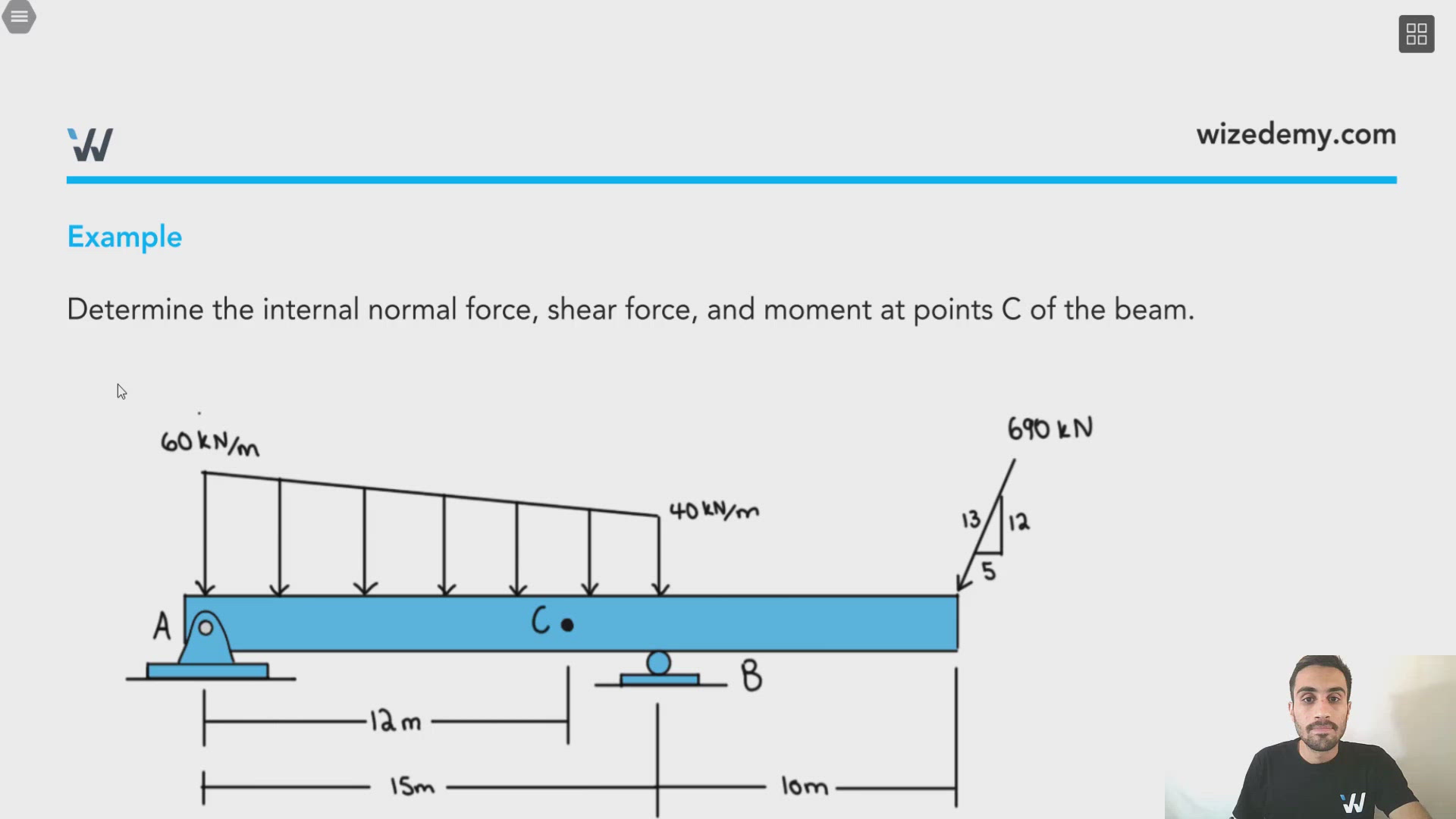
Example
Determine the internal normal force, shear force, and moment at points C of the beam.
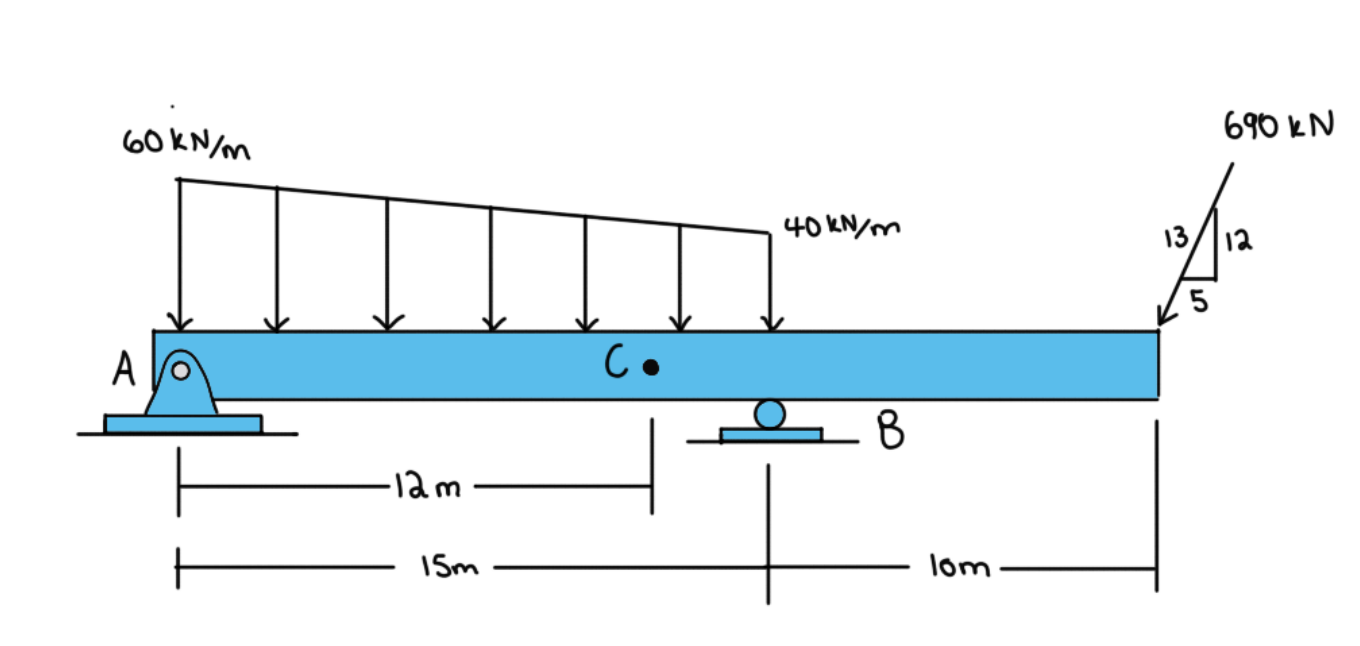
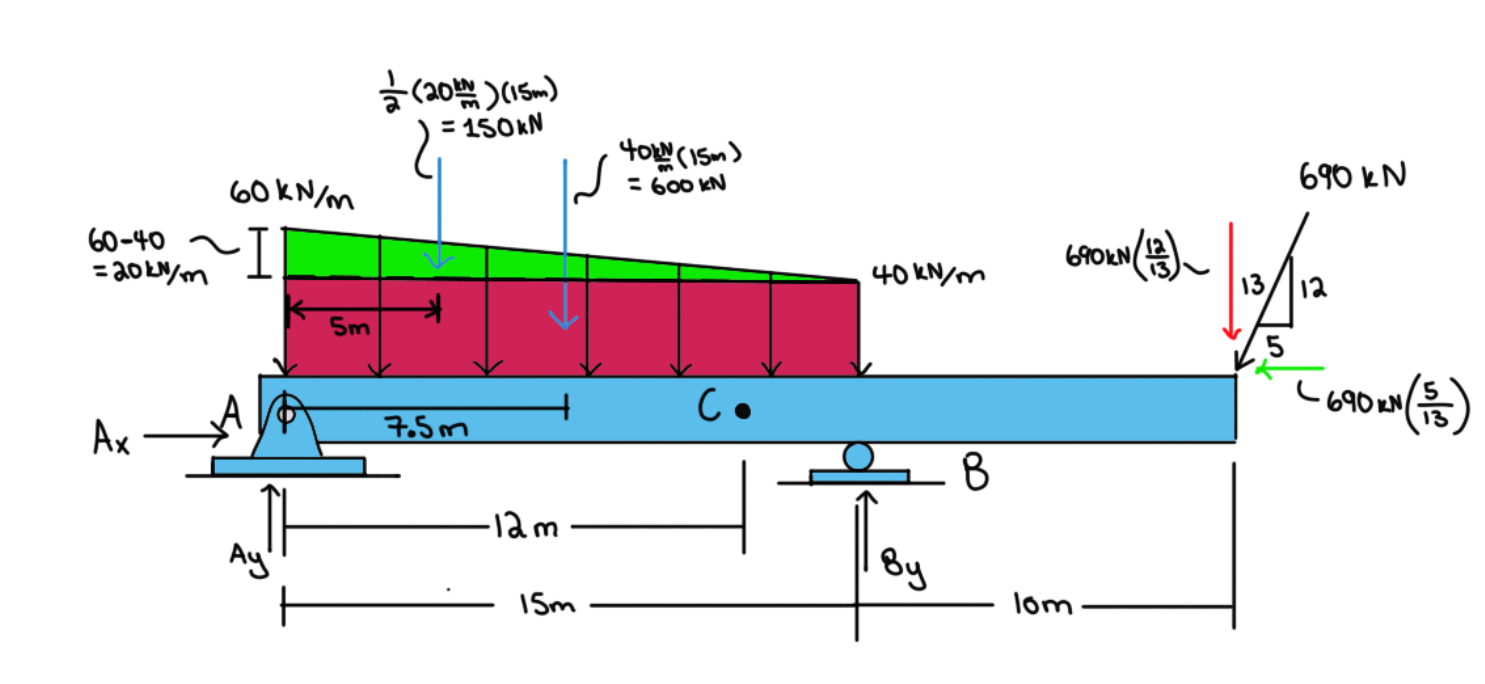
1) Solve for Global Equilibrium Reactions,
2) Cut through point C to expose N, V, and M at point C.
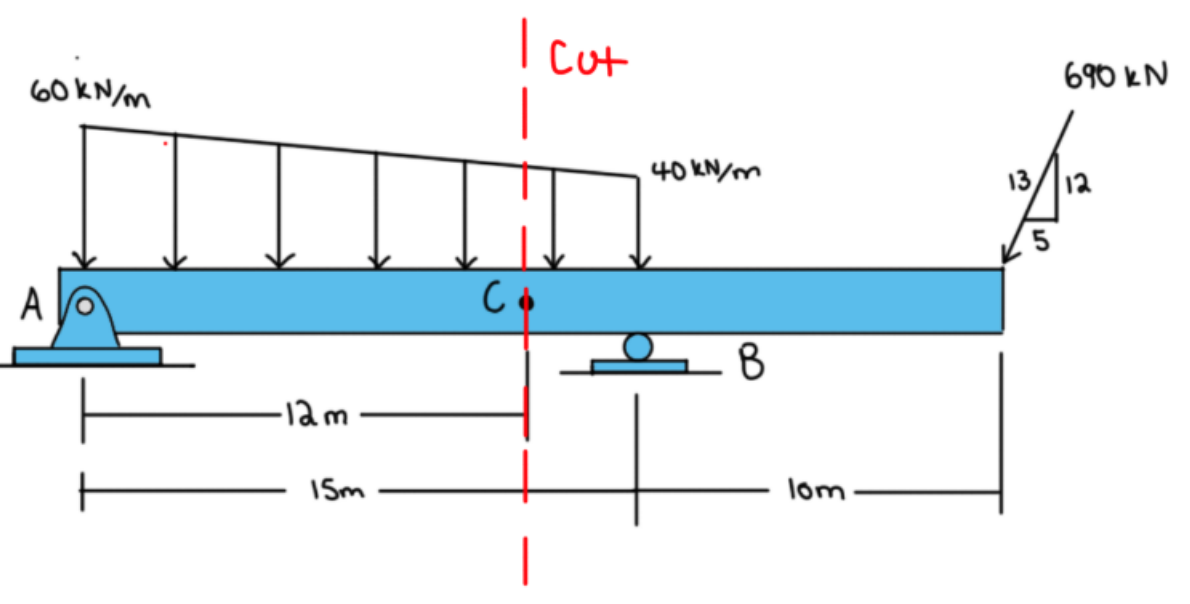
3) We have a value for By we do not necessarily need Ay because we could just look at the right section of the beam where all of the forces are known.
Therefore if we consider the right segment CBD,
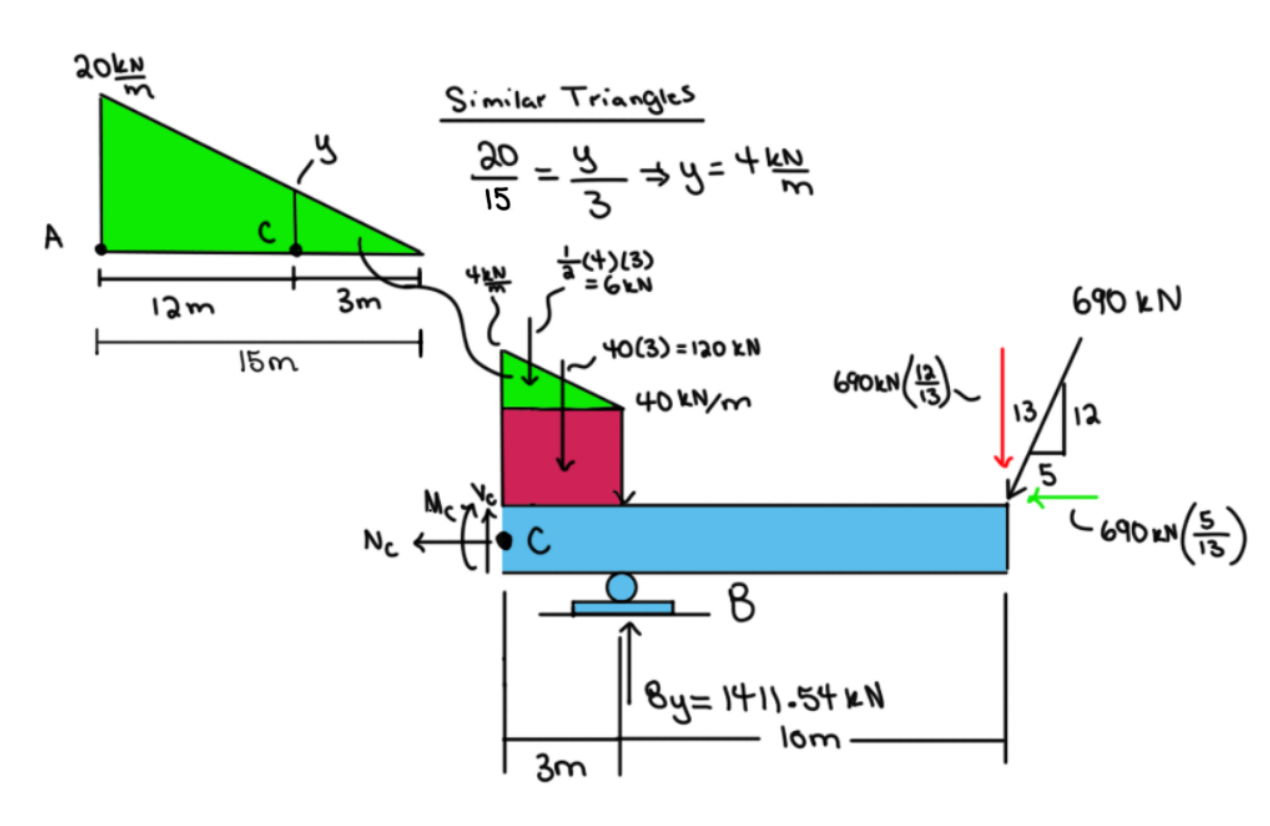
4) Solve using Equation of Equilibrium,
0:00 / 0:00
Determine the internal forces at point J
NJ= -500 N
VJ= -500N

Mark Yourself Question
- Grab a piece of paper and try this problem yourself.
- When you're done, check the "I have answered this question" box below.
- View the solution and report whether you got it right or wrong.
Determine the internal forces at point J
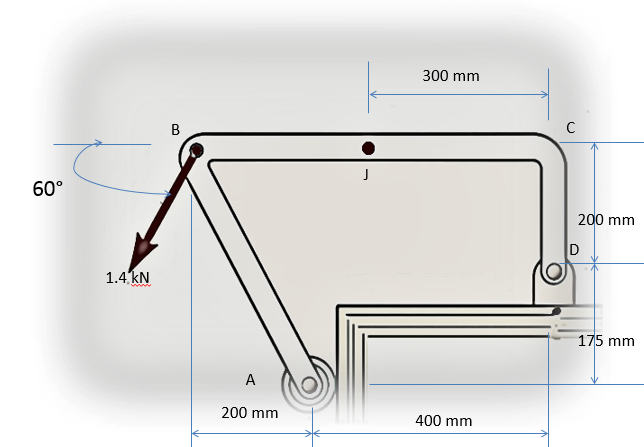
Practice
Determine the internal normal force, shear force, and moment at point C.
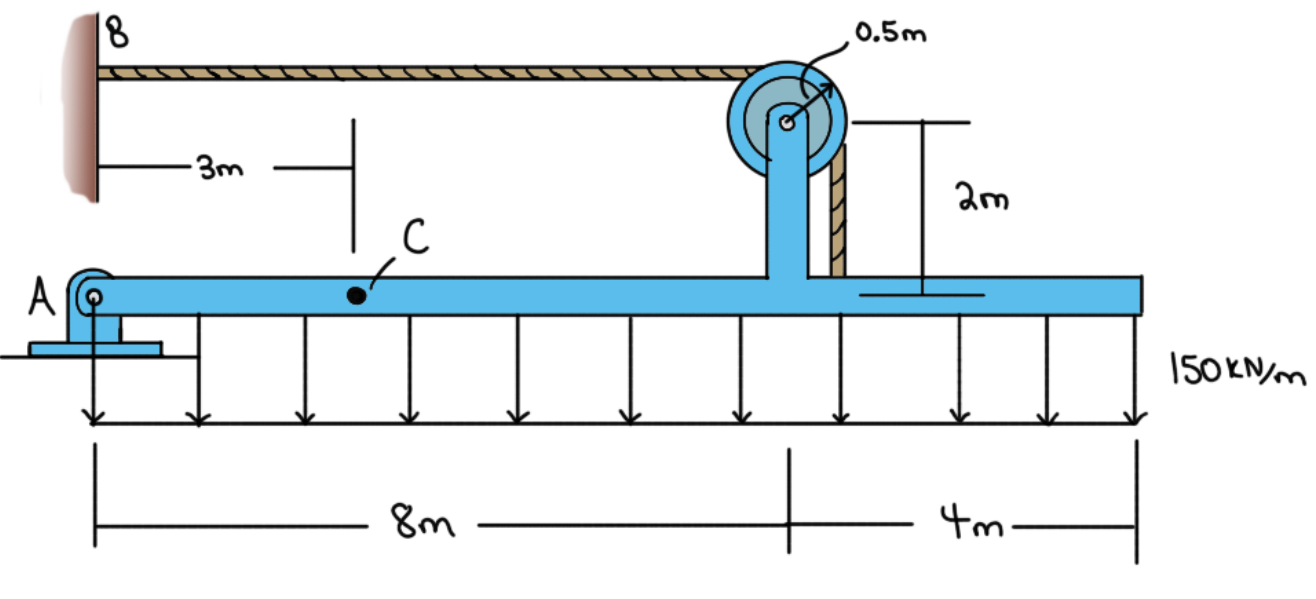
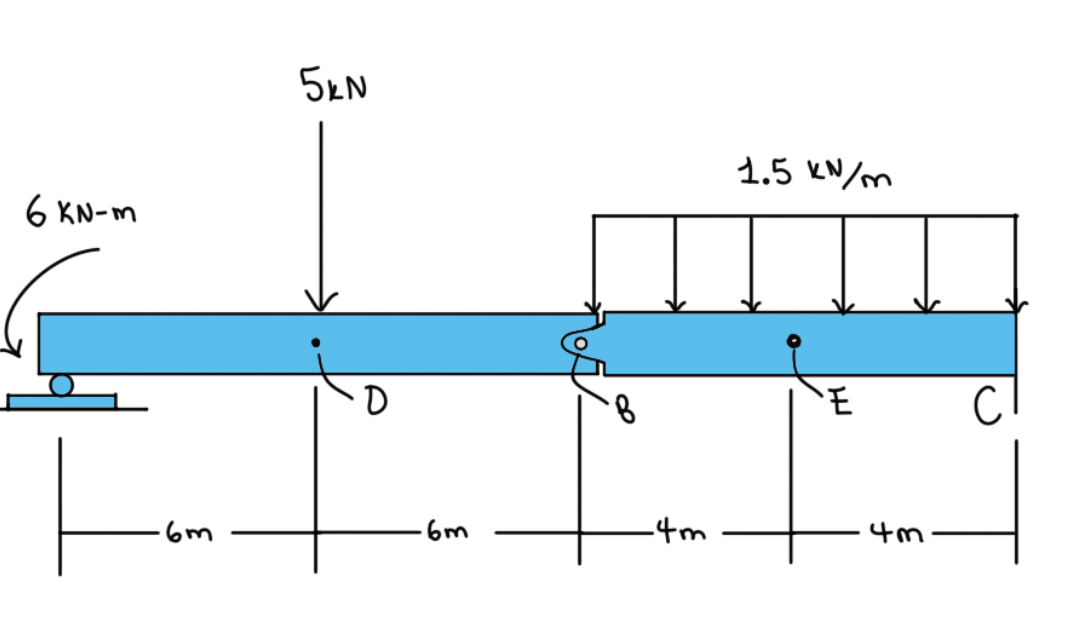
Determine the internal normal force, shear force, and moment in the beam at sections passing through points D and E.