0:00 / 0:00
Dry Friction
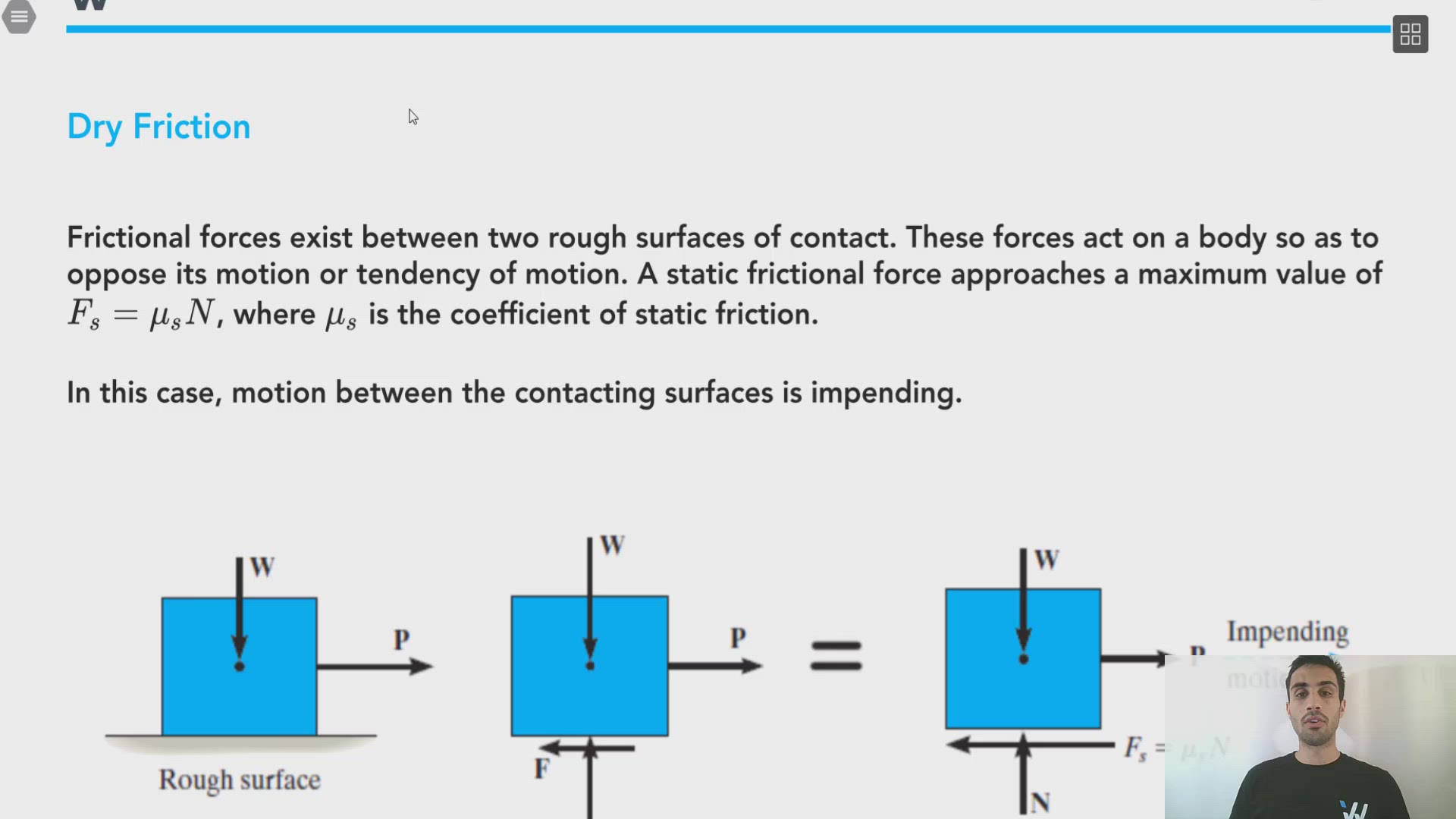
Frictional forces exist between two rough surfaces of contact. These forces act on a body so as to oppose its motion or tendency of motion. A static frictional force approaches a maximum value of , where is the coefficient of static friction.
In this case, motion between the contacting surfaces is impending.
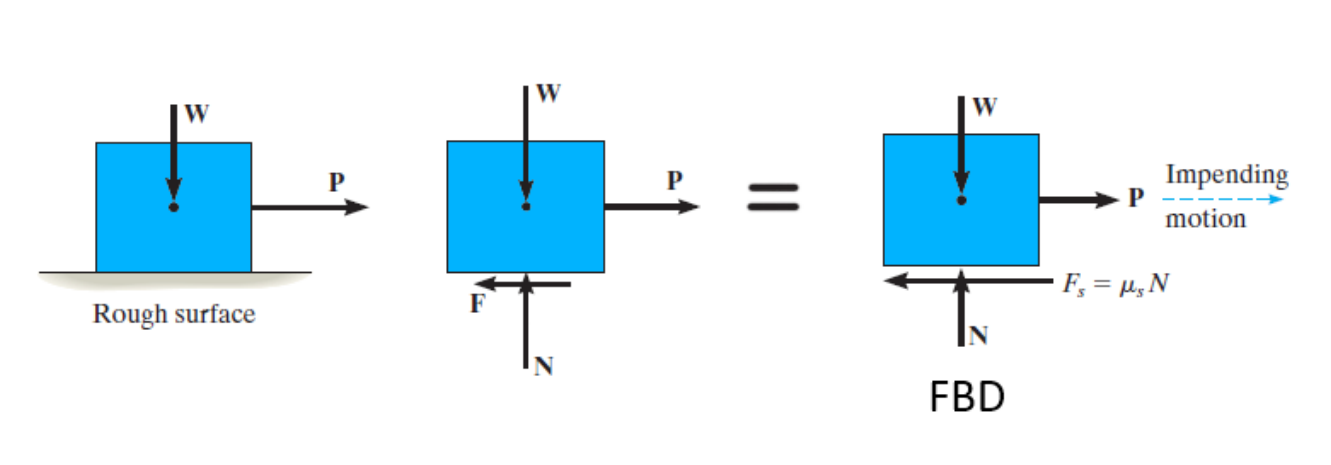
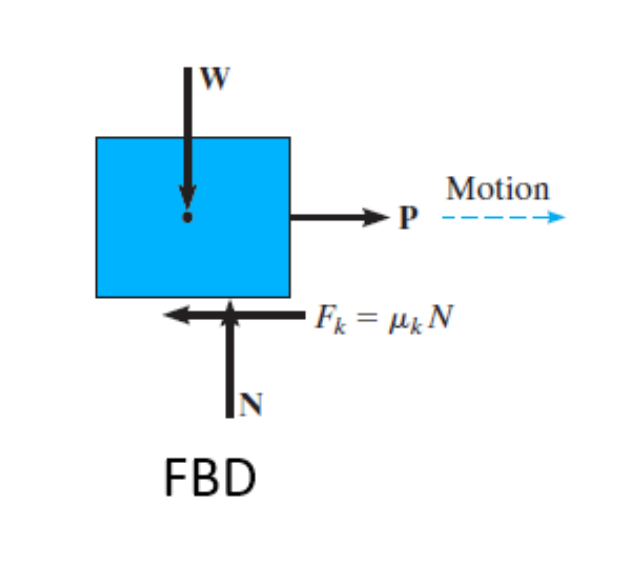
If slipping occurs, then the friction force remains essentially constant and equal to . Here is the coefficient of kinetic friction.
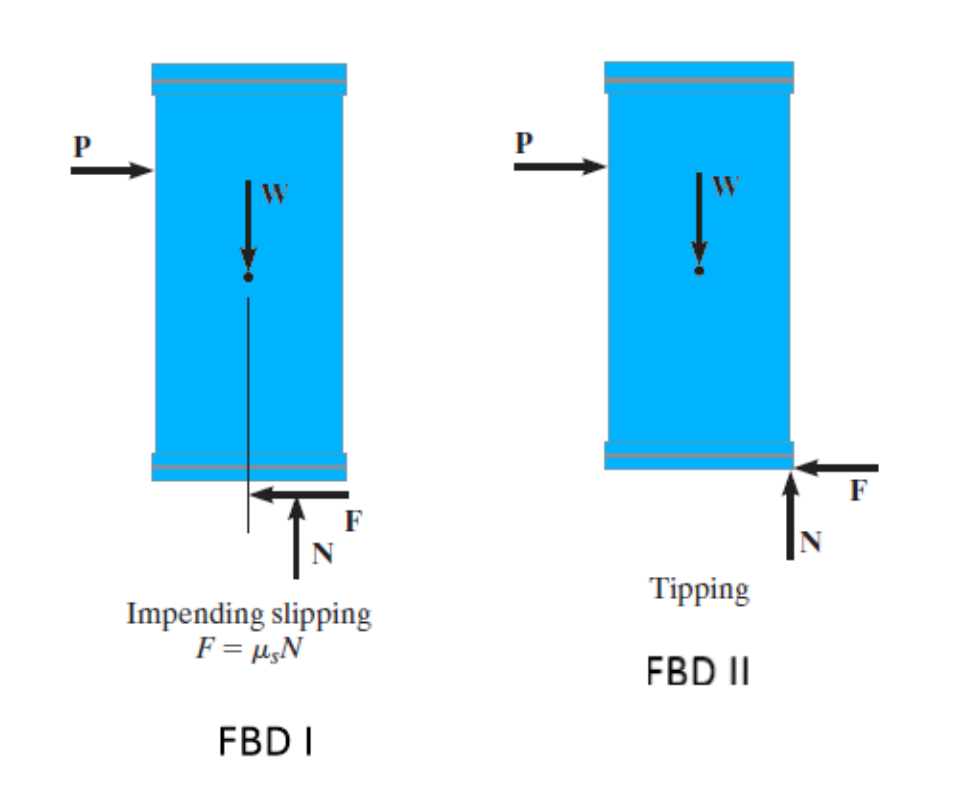
Sometimes we need two or more free body diagrams that describe possible cases of motion. For example, the figure below shows a tall crate. In this case, we would need to draw FBD I (assuming the crate moves to the right) and FBD II (assuming the crate tips).
Wedges
In the figure below, an applied force P must push on the wedge to move it to the right.

If the coefficients of friction between the surfaces are large enough, then P can be removed, and the wedge will be self-locking and remain in place.
0:00 / 0:00
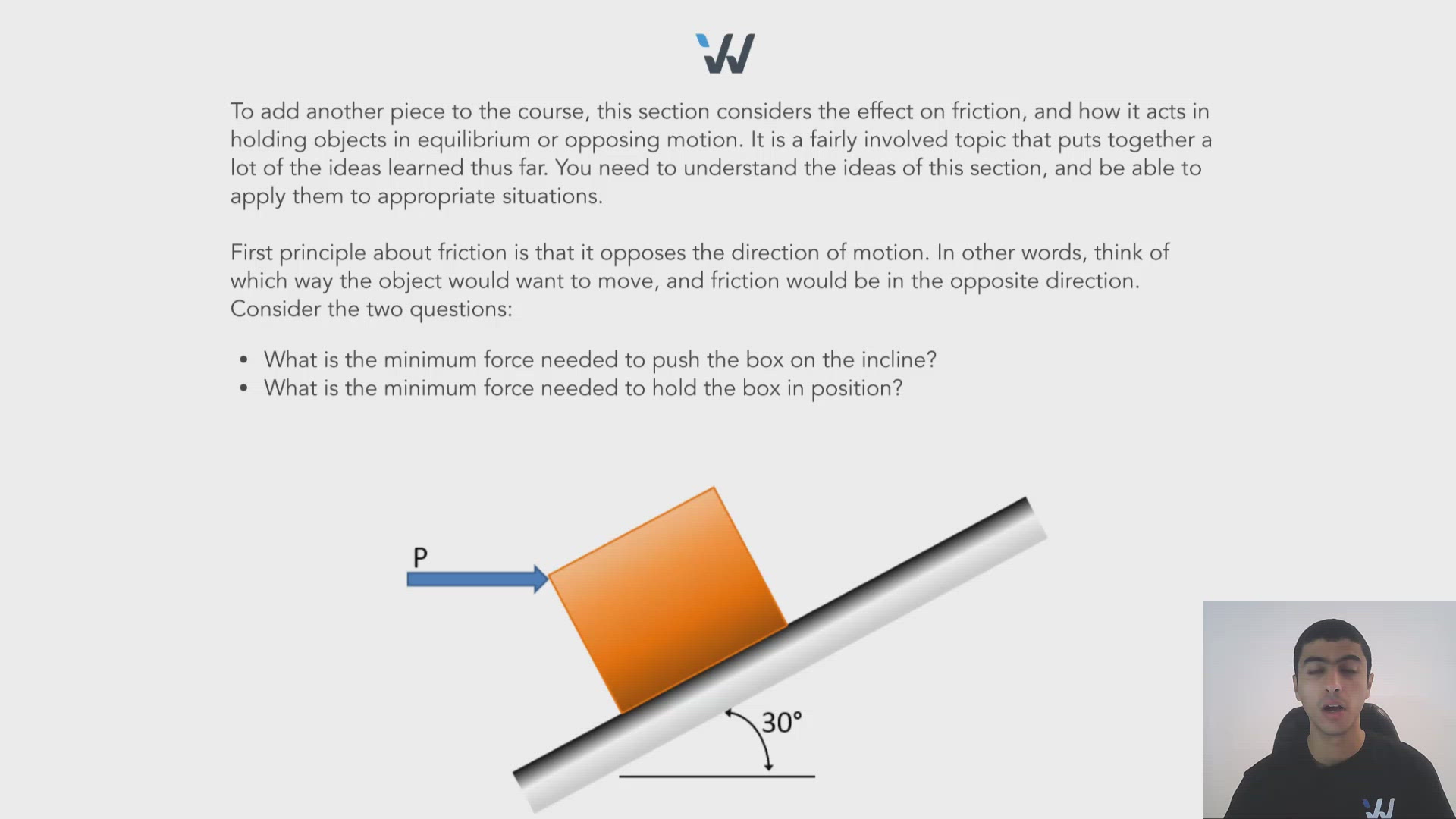
To add another piece to the course, this section considers the effect on friction, and how it acts in holding objects in equilibrium or opposing motion. It is a fairly involved topic that puts together a lot of the ideas learned thus far. You need to understand the ideas of this section, and be able to apply them to appropriate situations.
First principle about friction is that it opposes the direction of motion. In other words, think of which way the object would want to move, and friction would be in the opposite direction. Consider the two questions:
- What is the minimum force needed to push the box on the incline?
- What is the minimum force needed to hold the box in position?
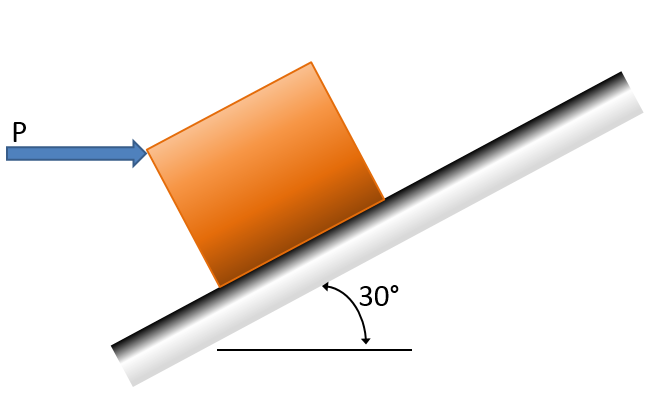
The two questions may seem to be asking the same thing, but its important to make the distinction between the two. In the first question, we’re trying to push the box on the incline. Without friction, the motion should be up the incline. Therefore friction points down the incline.
In the second question, we just want to hold the box in place. Without friction, the box would slip down the incline. Therefore friction must be acting up the incline. Notice how the direction of friction has flipped between the two scenarios. Keep this in mind as you solve problems.
In considering problems that involve friction, you must know some properties about friction.
- Friction opposes the direction of motion
- Friction increases linearly with applied force up to a maximum. After this maximum the object begins to move and friction decreases (we don’t deal with moving objects in this course)
- The maximum value of friction depends on the normal force and the coefficient of static friction (μs) and can be calculated as:
• Once the friction force reaches its maximum, the object is said to be ‘impending motion’
Wedges are a special case of objects that are used for mechanical purposes. Recall that the frictional force exerted by wedge on an object will oppose the direction of the motion of the object. On the other hand, the force on wedge will be equal and opposite.
In systems where multiple things can occur, or in other words, where different blocks may move while others may not: make a list of all possibilities, and the one requiring the lowest applied force will be the one that occurs first. Alternatively, assume one of the possibilities and validate that the other possibilities haven't occurred yet.
0:00 / 0:00
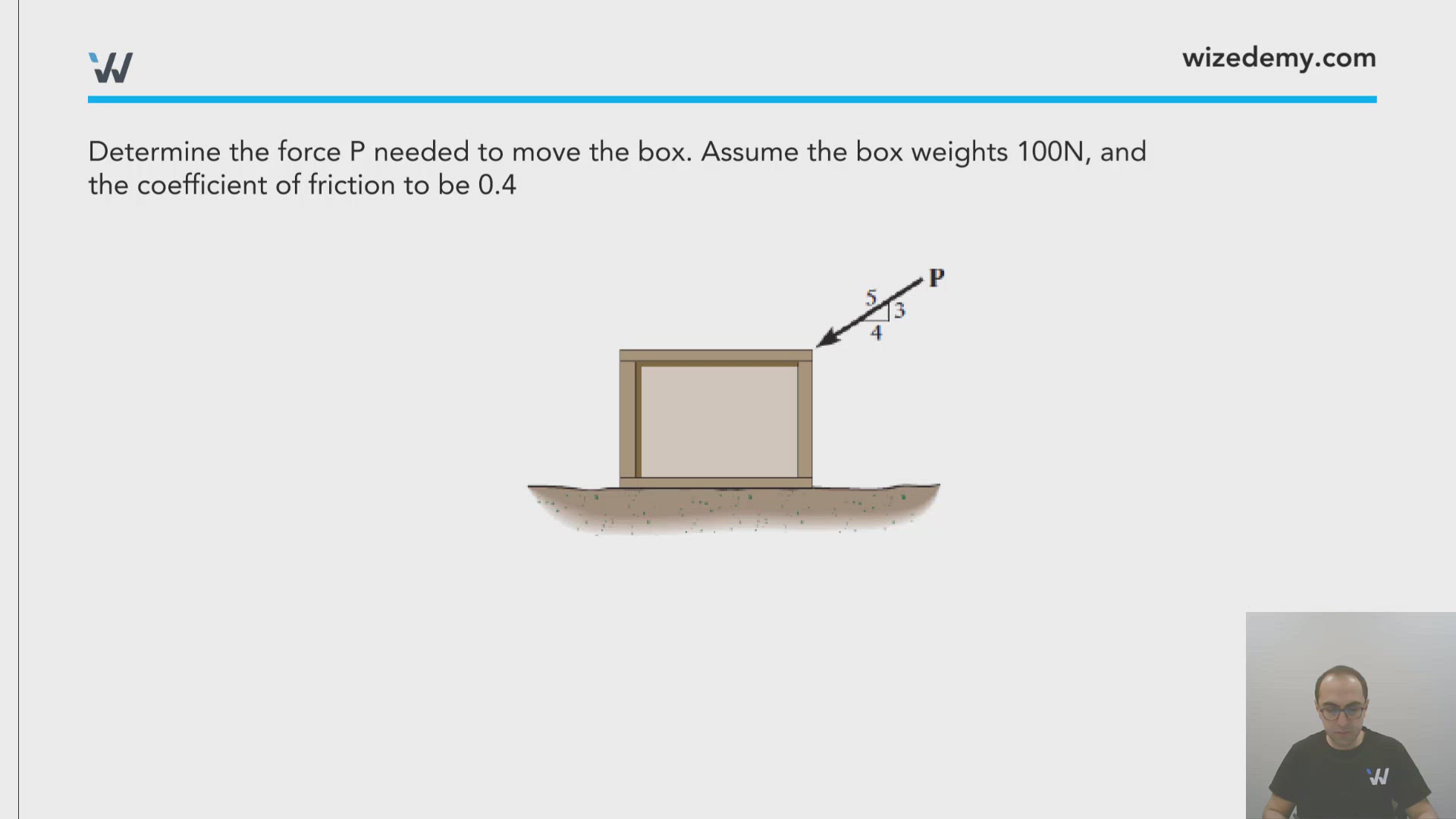
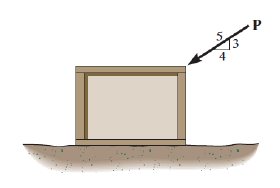
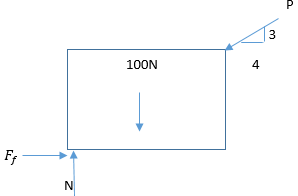
Determine the force P needed to move the box. Assume the box weights 100N, and
the coefficient of friction to be 0.4
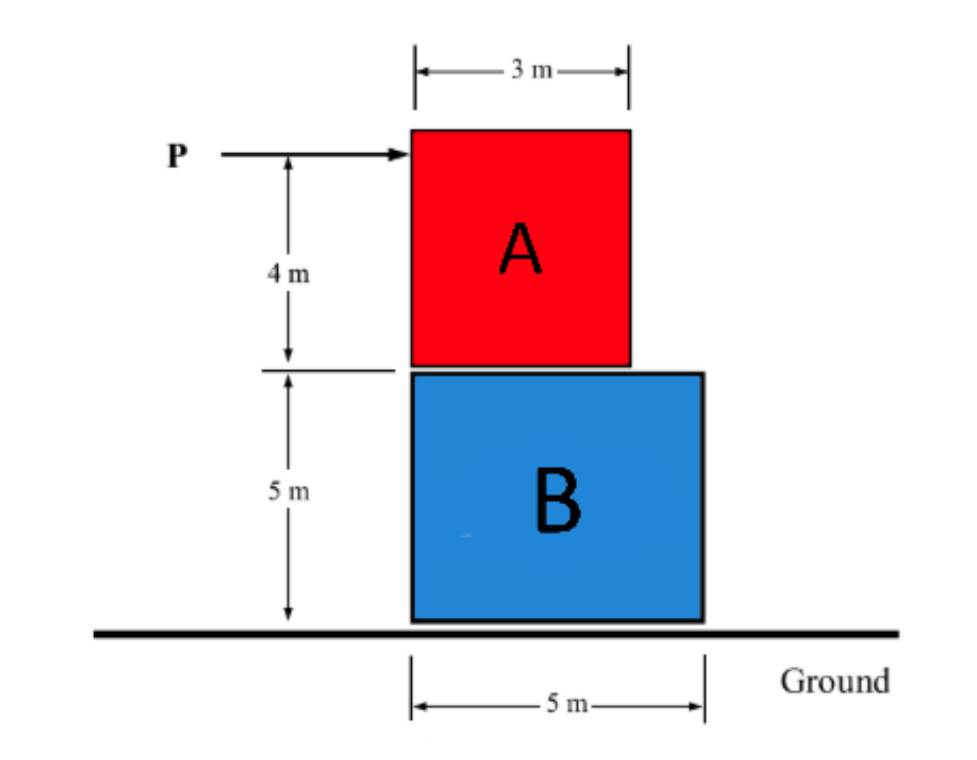
Two boxes, A and B, have uniform weights of 350kN and 250kN, respectively. They are stacked on the ground as shown. The coefficients of static and kinetic frictions between the boxes are and , respectively. The coefficient of static and kinetic frictions between box B and the ground is and . A horizontal force P is being applied at box A at the location shown and increases gradually in value. What is going to happen to the box? Show all the relevant calculations.
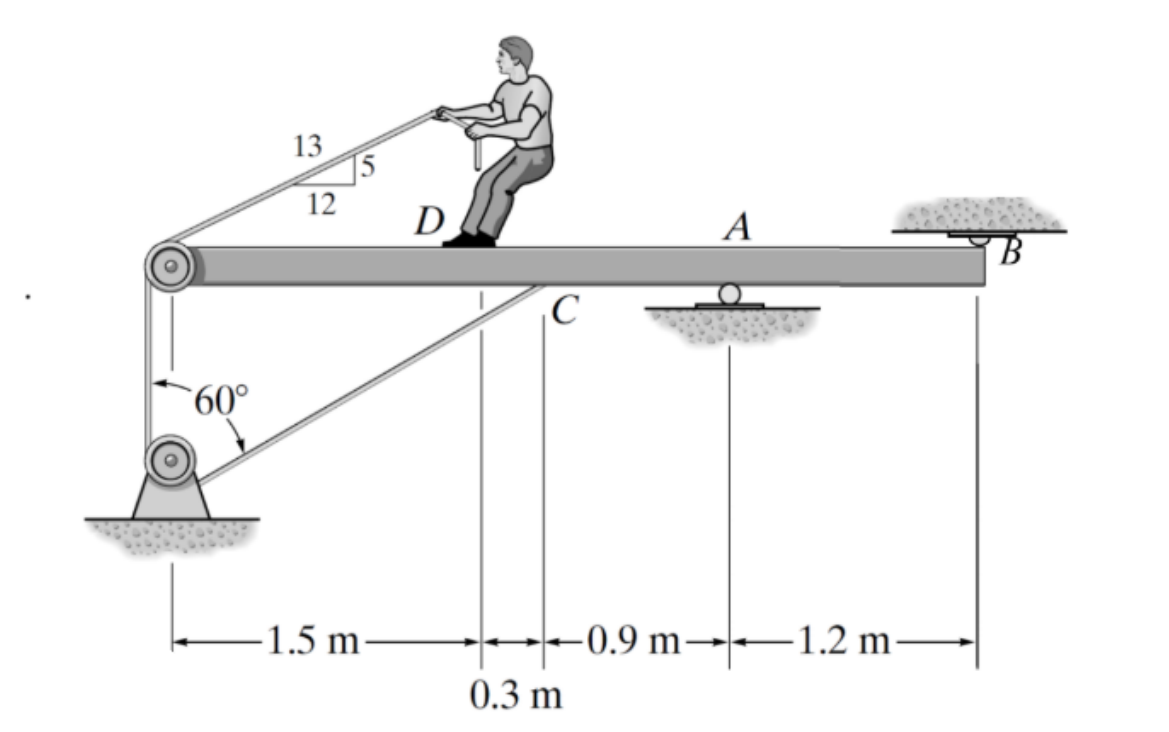
A 40 kg boy stand on the beam and pulls with a force of 150 N. If the friction coefficient between the boy's shoes and the beam is 0.5, i.e. , determine the reactions at A and B. There is no friction between the roller and the beam at point A. The friction coefficient between the semi-circular support and the beam at B is . The beam is uniform and has a weight of 500 N. Neglect the size of the pulleys and the thickness of the beam.
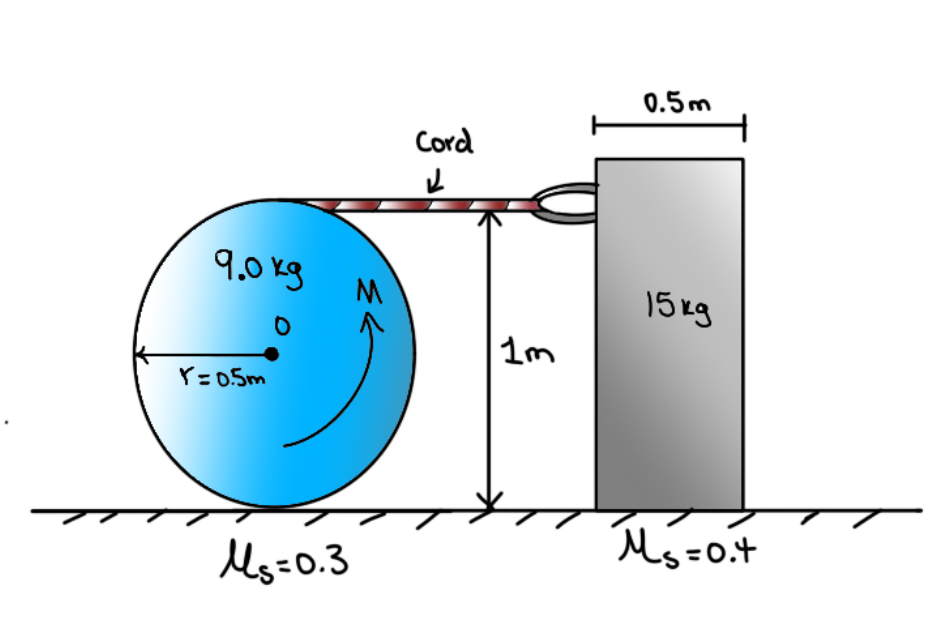
The figure below shows a cylinder with a radius of 0.5 m attached to a block by a horizontal cord. A couple moment M is applied to the cylinder in the direction shown.
(a) Draw the free-body diagrams for the cylinder and the block.
(b) List the potential types of motion that may occur. For each case, state the surface or surfaces at which the impending motion should be assumed.
(c) Calculate the minimum M required to cause motion given the masses of the block and the cylinder, static coefficients, and dimensions shown in the figure.
(d) Describe in word the motion that occurs with this minimum M.
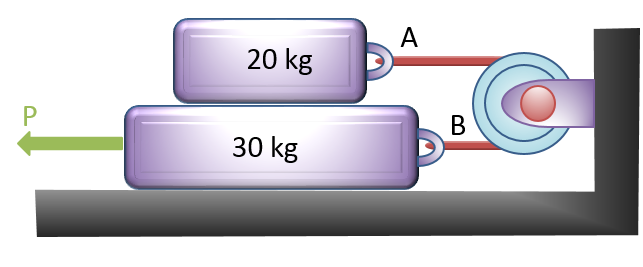
Determine the force P needed to move the system. The coefficient of static friction at all contacts is 0.2
(answer in N)
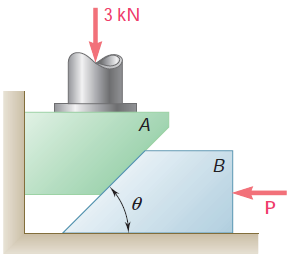
The coefficient of friction between all contacts is 0.20, and the angle is 30°. Determine (a) The force P needed to lift the load on block A; and (b) The force P needed to hold everything in place.
Quiz: Friction Practice Questions
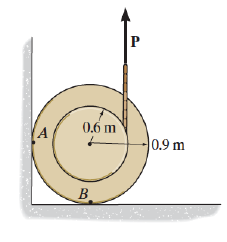
Determine the maximum force P that can be applied without moving the spool. Assume the coefficient of friction at all surfaces is 0.2, and the spool weights 300 N.
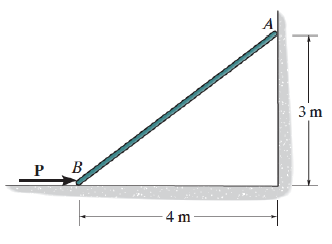
Assume a smooth wall at A. Determine the minimum force P needed to hold the 100kg ladder in place if the coefficient of friction is 0.4
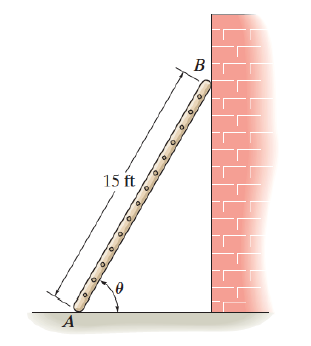
Assume the wall at B is smooth. Determine the smallest angle for which the ladder won’t slip. The mass of the ladder is 10kg, and the coefficient of friction with the ground is 0.35
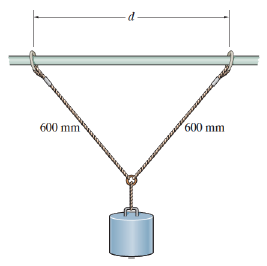
The metal cylinder has a mass of 5kg. If the hooks have a coefficient of static friction of 0.25, determine the smallest distance d for which the hooks won’t slip.
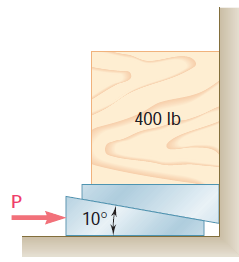
Determine the force P needed to hold the 400 lb block in place. The coefficient of static friction at all surfaces is 0.05.
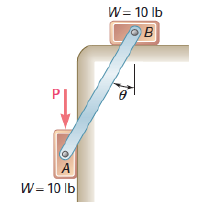
Two 10-lb blocks A and B are connected by a slender rod of negligible weight. The coefficient of static friction is 0.30 between all surfaces of contact, and the rod forms an angle with the vertical. (a) Show that the system is in equilibrium when (b) Determine the largest value of P for which equilibrium is maintained.