Wize University Statics Textbook (Master) > Friction
Tipping vs. Slipping
0:00 / 0:00
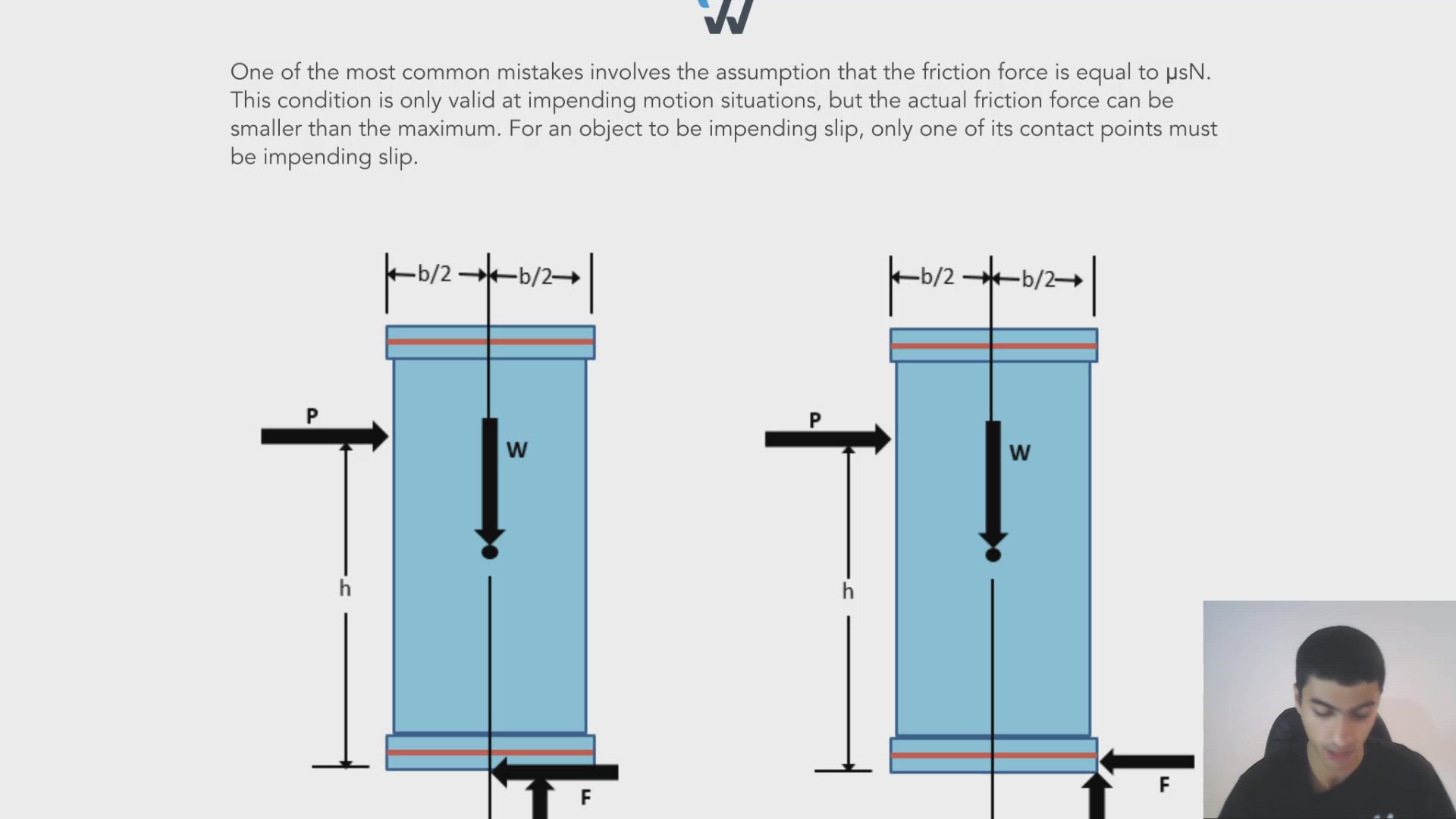
One of the most common mistakes involves the assumption that the friction force is equal to μsN. This condition is only valid at impending motion situations, but the actual friction force can be smaller than the maximum. For an object to be impending slip, only one of its contact points must be impending slip.

Common questions may also ask for whether an object will tip or slip. As you see in the figure above, as a force is applied on the object, the position of the normal force shifts so that it produces a couple moment to counteract that caused by the friction and applied force. At some point, the applied force will overcome the frictional force and slip may occur. However, if the moment balance requires the normal force to be off the body, then tipping will occur first. In general, you can assume one of the two (impending slip, or tip) and then check your assumption (normal force is still on object, or friction force still less than maximum).

0:00 / 0:00
Determine the minimum force P that will cause movement. Will it slip or tip?
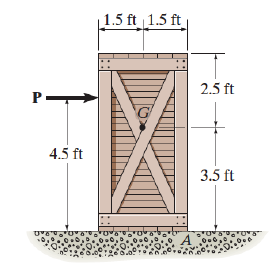
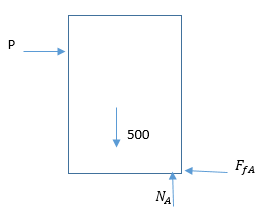
Assume slip Given

check x:
so box will tip first,
tipping:
Re-solve assuming tipping:
Determine the value of P needed to move the cabinet, and the maximum value of 'h' that will allow for movement without tipping if the coefficient of static friction between the wheels and the ground is 0.25 and all wheels are locked. The cabinet weights 230 N, and the weight acts at its center.

Quiz: Tipping vs. Slipping Practice Questions
Blocks A,B, and C have weights of 50N ,25N and 15N, respectively. Determine the smallest horizontal force P that will cause impending motion. The coefficient of static friction between A and B is between B and C, and between block C and the ground,
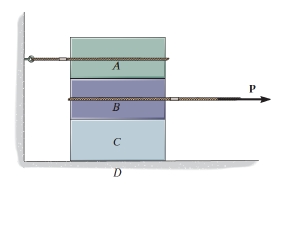
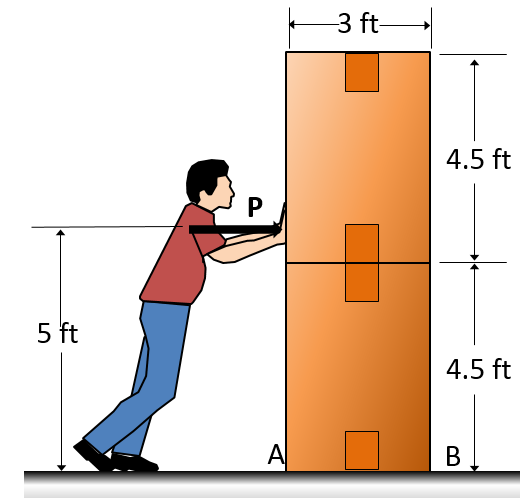
If each box weights 150 lb, determine the least horizontal force P that the man must exert on the top box in order to cause motion. The coefficient of static friction between the boxes is and the coefficient of static friction between the box and the floor is
A 120-lb cabinet is mounted on casters that can be locked to prevent their rotation. The coefficient of static friction between the floor and each of the casters is 0.30. If h = 43 in., determine the magnitude of the force P required to move the cabinet to the right if:
a) All the casters are locked
b) If the casters at B are locked and the casters at A are free to rotate
c) If the casters at A are locked and the casters at B are free to rotate