Wize University Dynamics Textbook (Master) > Work and Energy
Conservation of Mechanical Energy for a Particle
0:00 / 0:00
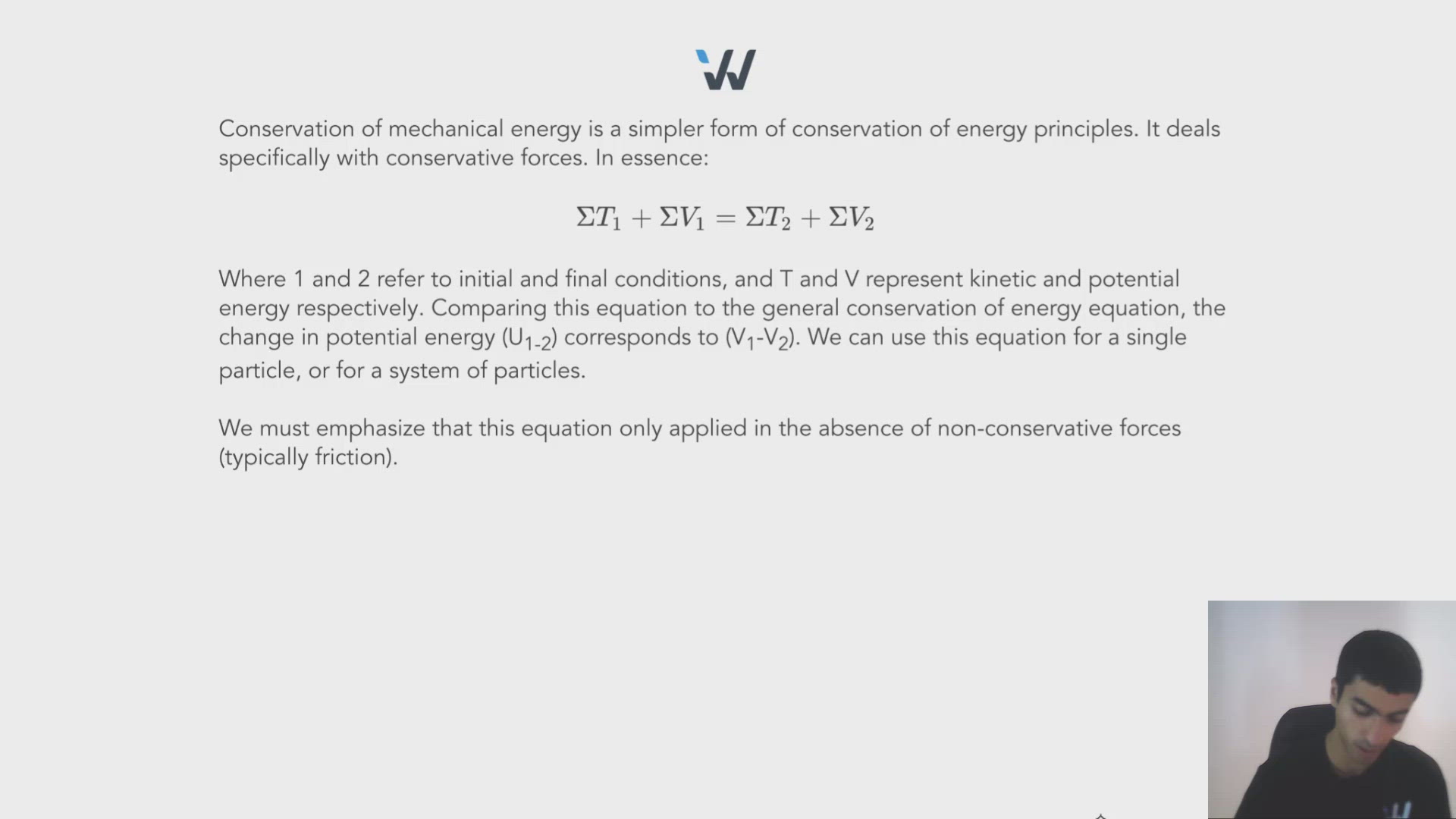
Conservation of mechanical energy is a simpler form of conservation of energy principles. It deals specifically with conservative forces. In essence:
Where 1 and 2 refer to initial and final conditions, and T and V represent kinetic and potential energy respectively. Comparing this equation to the general conservation of energy equation, the change in potential energy (U1-2) corresponds to (V1-V2). We can use this equation for a single particle, or for a system of particles.
We must emphasize that this equation only applied in the absence of non-conservative forces (typically friction).
0:00 / 0:00
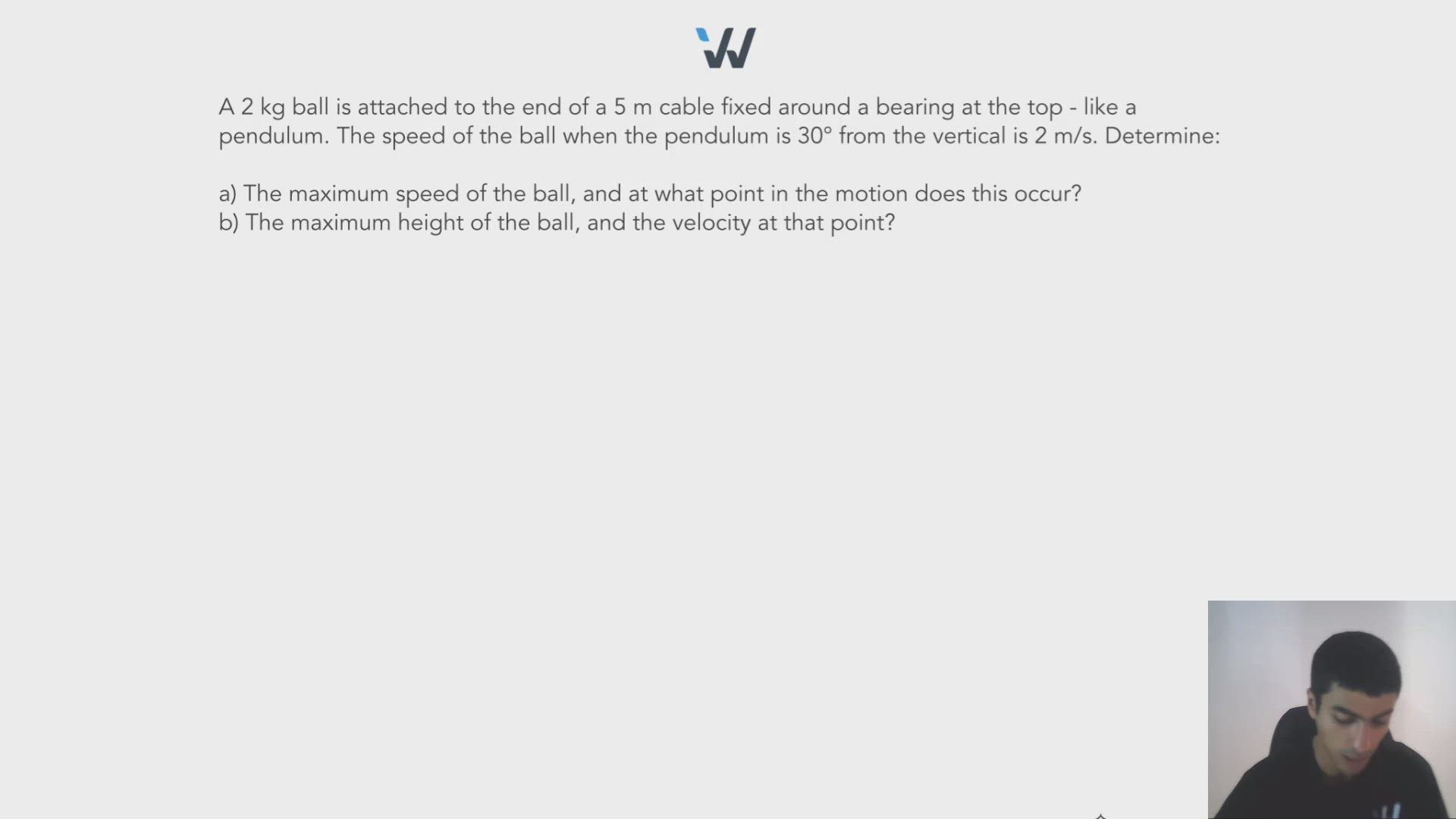
A 2 kg ball is attached to the end of a 5 m cable fixed around a bearing at the top - like a pendulum. The speed of the ball when the pendulum is 30° from the vertical is 2 m/s. Determine:
a) The maximum speed of the ball, and at what point in the motion does this occur?
b) The maximum height of the ball, and the velocity at that point?
m= 2kg
l = 5m
set potential energy reference @ full cable length
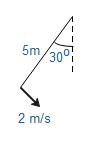
a)
v2 = 0
@ h=0

Mark Yourself Question
- Grab a piece of paper and try this problem yourself.
- When you're done, check the "I have answered this question" box below.
- View the solution and report whether you got it right or wrong.
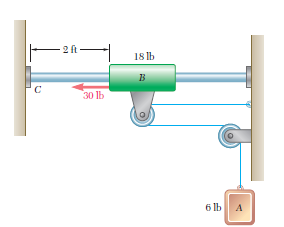
The system shown below was released from rest with block B at point C. In the position shown, a 30 lb force is applied to bring the system back to point C.
What is the velocity of blocks A and B in the position shown (right before the 30 lb force is applied)?