Wize University Introduction to Finance Textbook > Risk, Return & Portfolio Theory
Covariance and Correlation
Popular Courses
COMM 308
Concordia University
Intro to Finance
University Study Guides
Intro to Finance
University Study Guides
FINA 230
Concordia University
MGCR 341
McGill University
FIN 301
University of Alberta
FIN 300
Toronto Metropolitan University
COMM 121
Queen's University
FIN*2000
University of Guelph
FINC 341
Texas A&M University
COMM 2202
Dalhousie University
BU283
Wilfrid Laurier University
FIN 300
Arizona State University - Tempe
BUSFIN 3220
Ohio State University
SB/FINE 2000 3.00
York University
FIN 301
Pennsylvania State University
BUS-F 255
Indiana University - Bloomington
FIN 3403
University of Central Florida
FIN 3403
University of Florida
FIN 320
California State University - Fullerton

0:00 / 0:00
Covariance and Correlation
The covariance and correlation coefficient measure the joint variability of two stocks. They measure whether the stocks move in the same direction, or if they tend to move opposite to one another.
- If both stocks move in the same direction (up and down at the same time) the covariance and correlation are positive and it is said that the stocks have a positive (or direct) relationship.
- If the stocks move in opposite directions (one stock goes up when the other goes down), the covariance and correlation are negative and it is said that the stocks have a negative (or inverse) relationship.

Wize Concept
The magnitude of the covariance is not easily interpreted, we therefore only interpret the sign to know if the stocks are positively or negatively correlated.
0:00 / 0:00
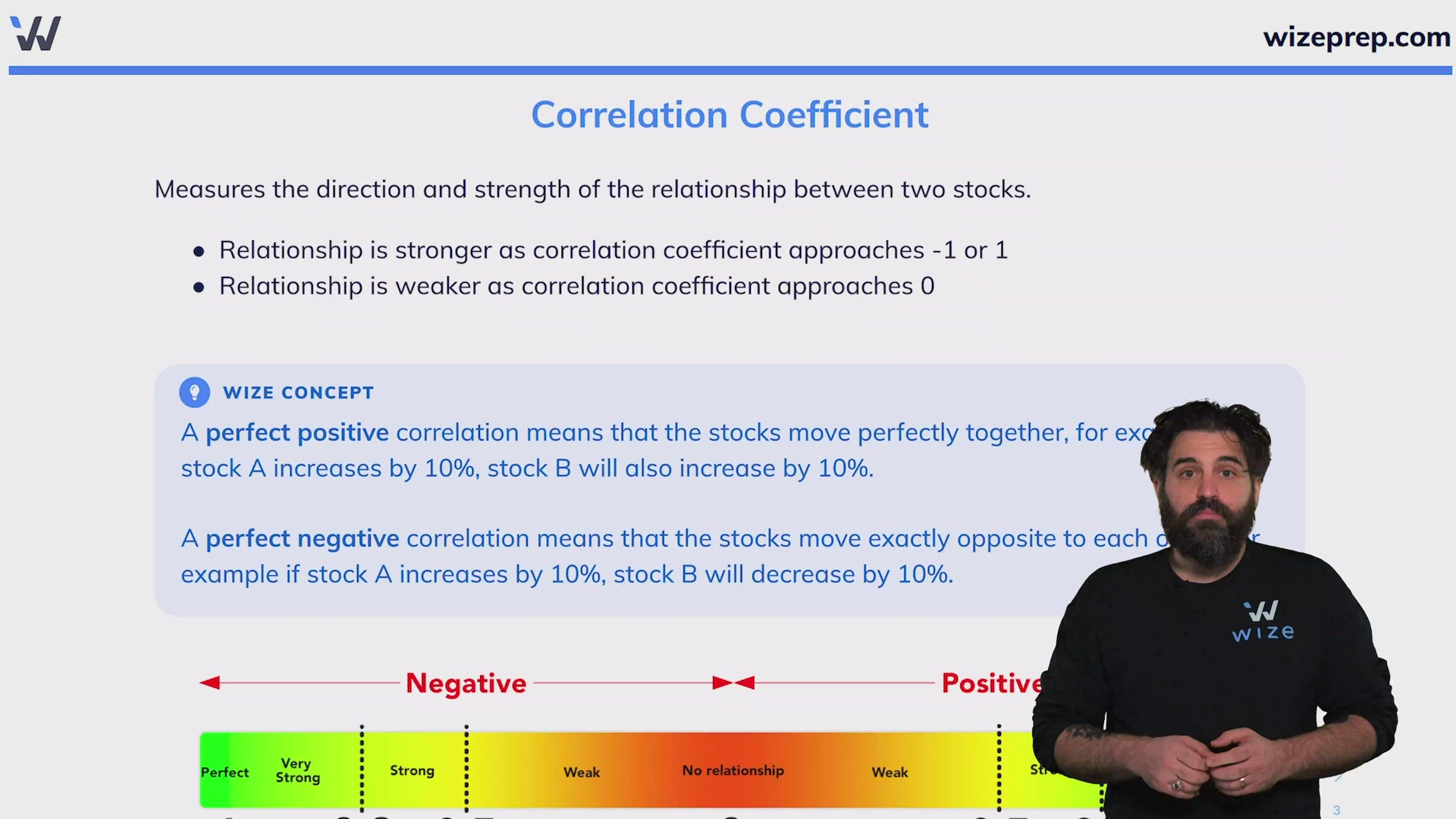
Correlation Coefficient
Measures the direction and strength of the relationship between two stocks.
- Relationship is stronger as correlation coefficient approaches -1 or 1
- Relationship is weaker as correlation coefficient approaches 0
Wize Concept
A perfect positive correlation means that the stocks move perfectly together, for example if stock A increases by 10%, stock B will also increase by 10%.
A perfect negative correlation means that the stocks move exactly opposite to each other, for example if stock A increases by 10%, stock B will decrease by 10%.


Correlation and Diversification
- Investing in multiple stocks with a positive correlation increases risk, and investing in stocks with a negative correlation decreases risk.
- Investing in stocks with a perfect positive correlation does not reduce risk because there is no benefit of diversification since the stocks move in exactly the same way.
- To decrease risk and benefit from diversification, correlation should be less than 1.
0:00 / 0:00
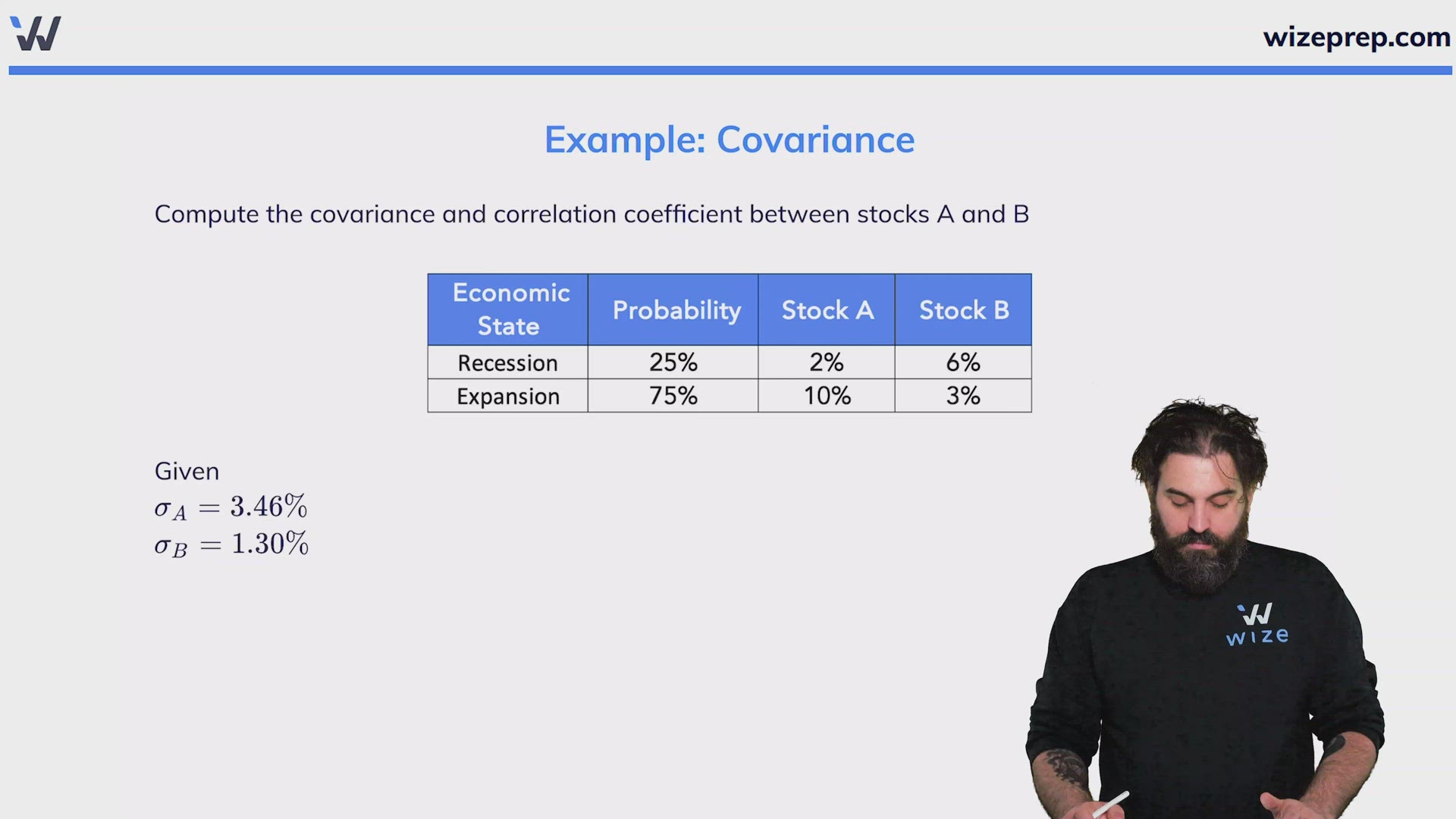
Example: Covariance
Compute the covariance and correlation coefficient between stocks A and B
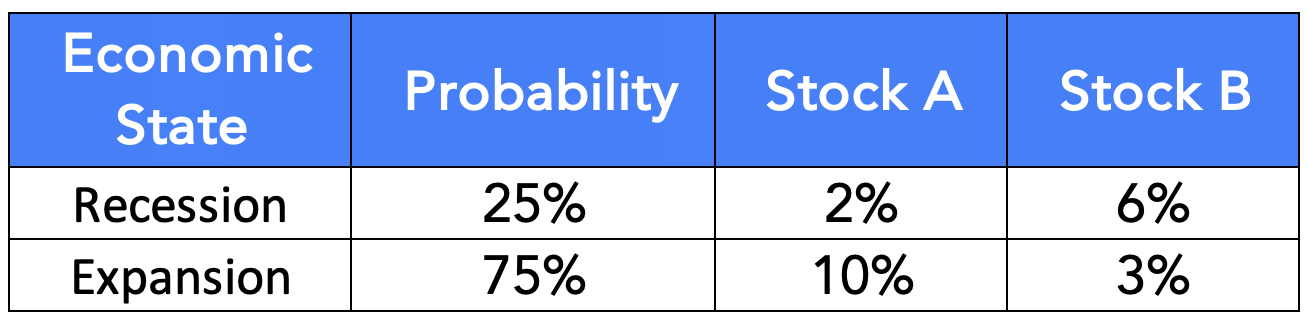
Given
Practice: Covariance
The following information is available for stocks A and B
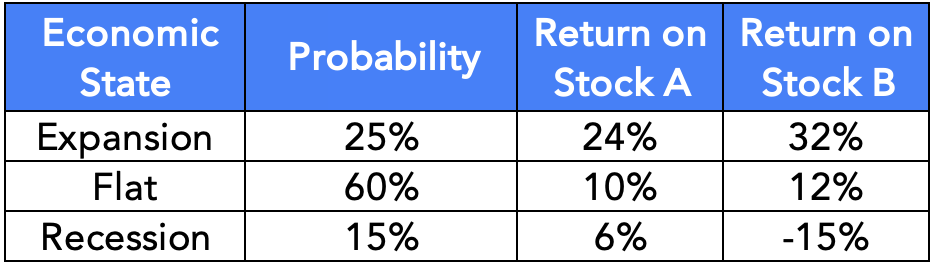
Standard Deviations:
Stock A: 6.5567%
Stock B: 14.4377%
Compute the covariance and correlation coefficient between the stocks and interpret your result.
What is the covariance?
Round your final answer to 4 decimal places and enter your answer in decimal form.
0:00 / 0:00
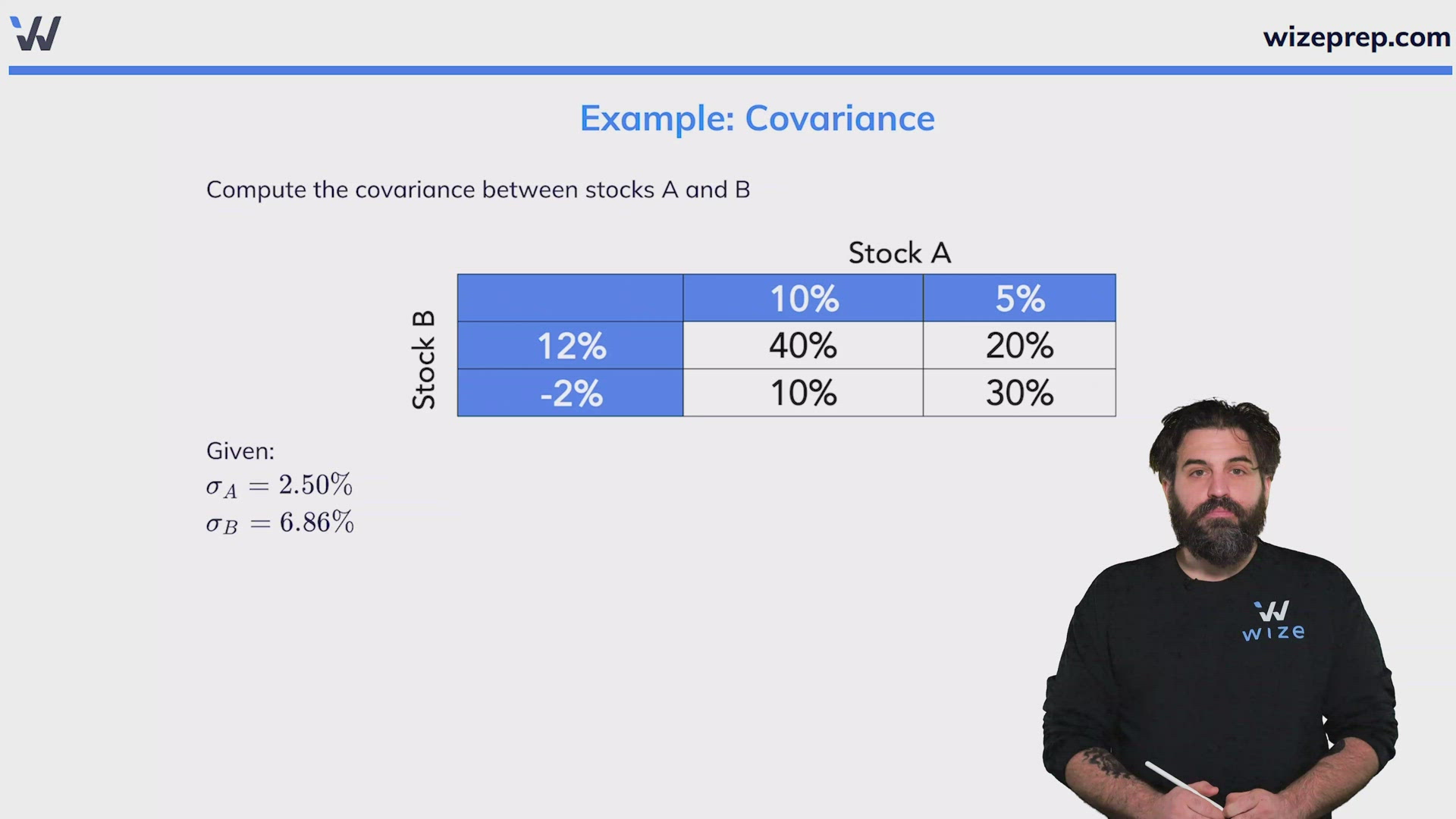
Example: Covariance
Compute the covariance between stocks A and B
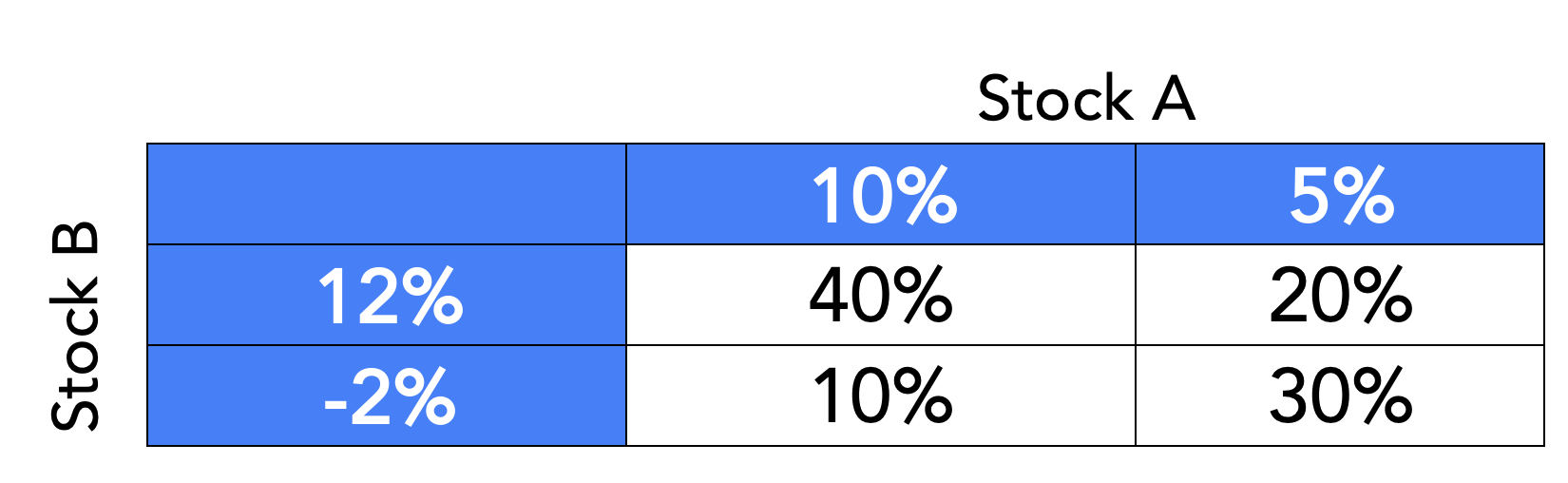
Given:
Practice: Covariance
Compute the covariance and correlation coefficient between stocks X and Y
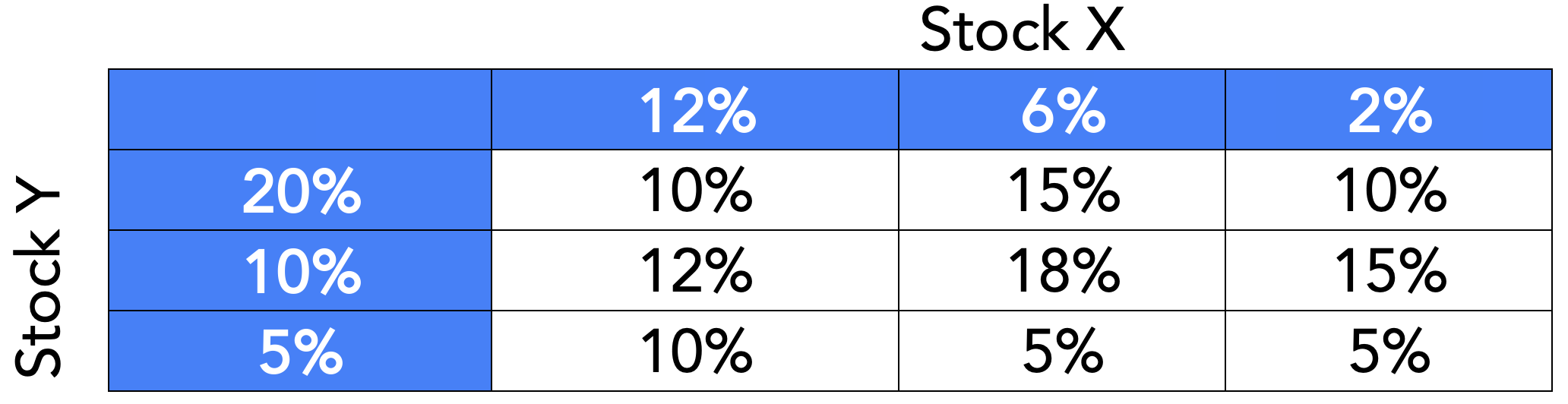
Given the following information:
Round your final answer to 5 decimal places and enter in decimal form.