Wize University Introduction to Finance Textbook > Risk, Return & Portfolio Theory
Portfolio Risk and Return
Popular Courses
COMM 308
Concordia University
Intro to Finance
University Study Guides
Intro to Finance
University Study Guides
FINA 230
Concordia University
MGCR 341
McGill University
FIN 301
University of Alberta
FIN 300
Toronto Metropolitan University
COMM 121
Queen's University
FIN*2000
University of Guelph
FINC 341
Texas A&M University
COMM 2202
Dalhousie University
BU283
Wilfrid Laurier University
FIN 300
Arizona State University - Tempe
BUSFIN 3220
Ohio State University
SB/FINE 2000 3.00
York University
FIN 301
Pennsylvania State University
BUS-F 255
Indiana University - Bloomington
FIN 3403
University of Central Florida
FIN 3403
University of Florida
FIN 320
California State University - Fullerton
0:00 / 0:00
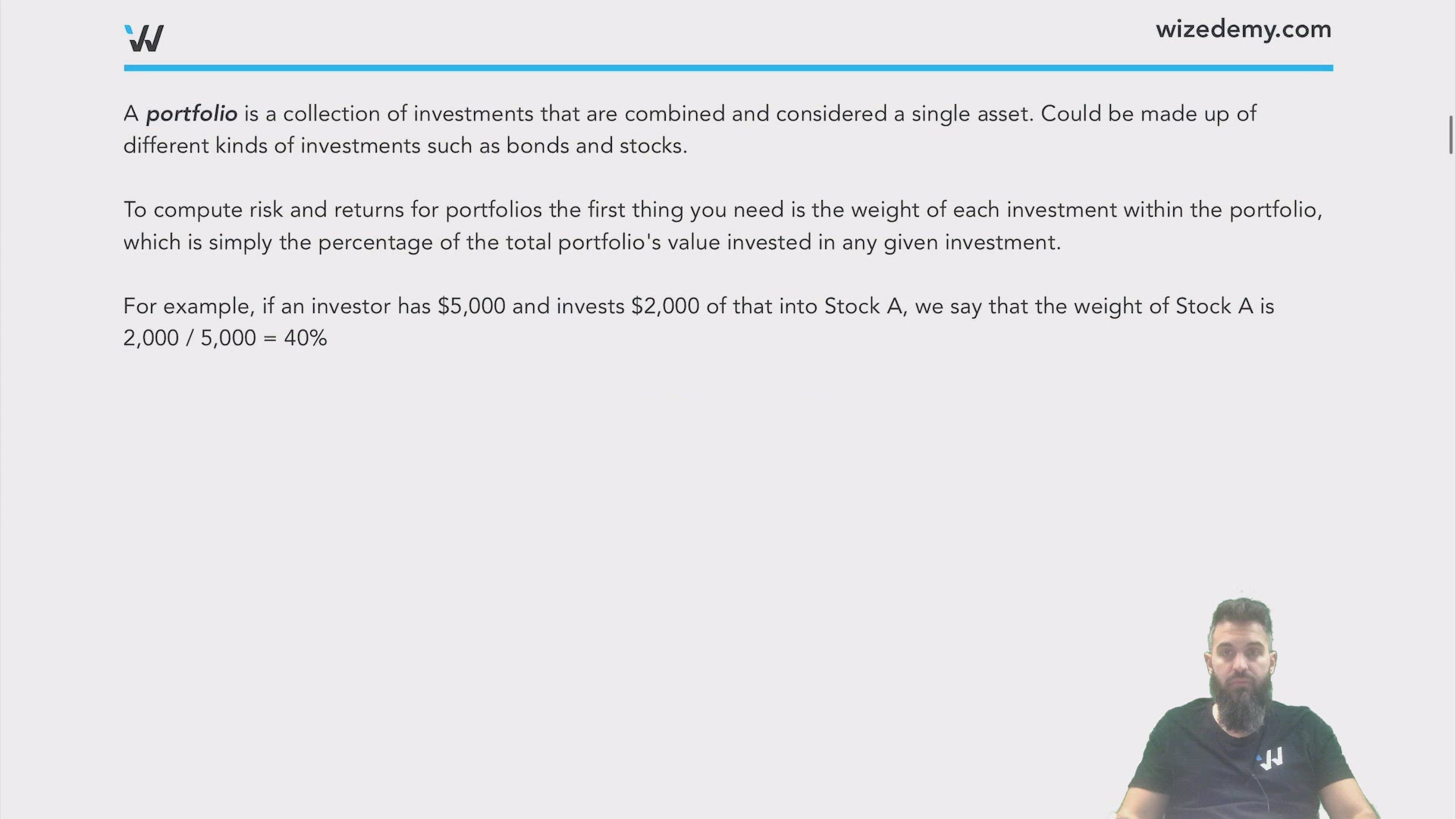
What is a Portfolio?
A portfolio is a collection of investments that are combined and considered a single asset. Could be made up of different kinds of investments such as bonds and stocks.
The Weights of the Portfolio
- The weight of an asset is the proportion of the portfolio that is invested in that asset.
- Can be any value, including negative values and values over 100%.
- Weights are negative and over 100% when the investor is shorting or borrowing
- Found by dividing the dollars invested in an asset by the total value of the portfolio.
Example:
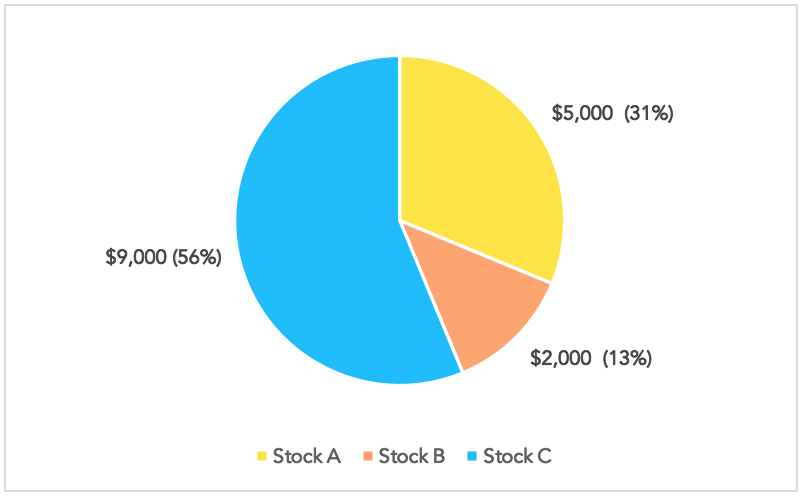
An investor constructs the following portfolio: $5,000 into Stock A, $2,000 into Stock B, and $9,000 into Stock C.
0:00 / 0:00
Expected Return
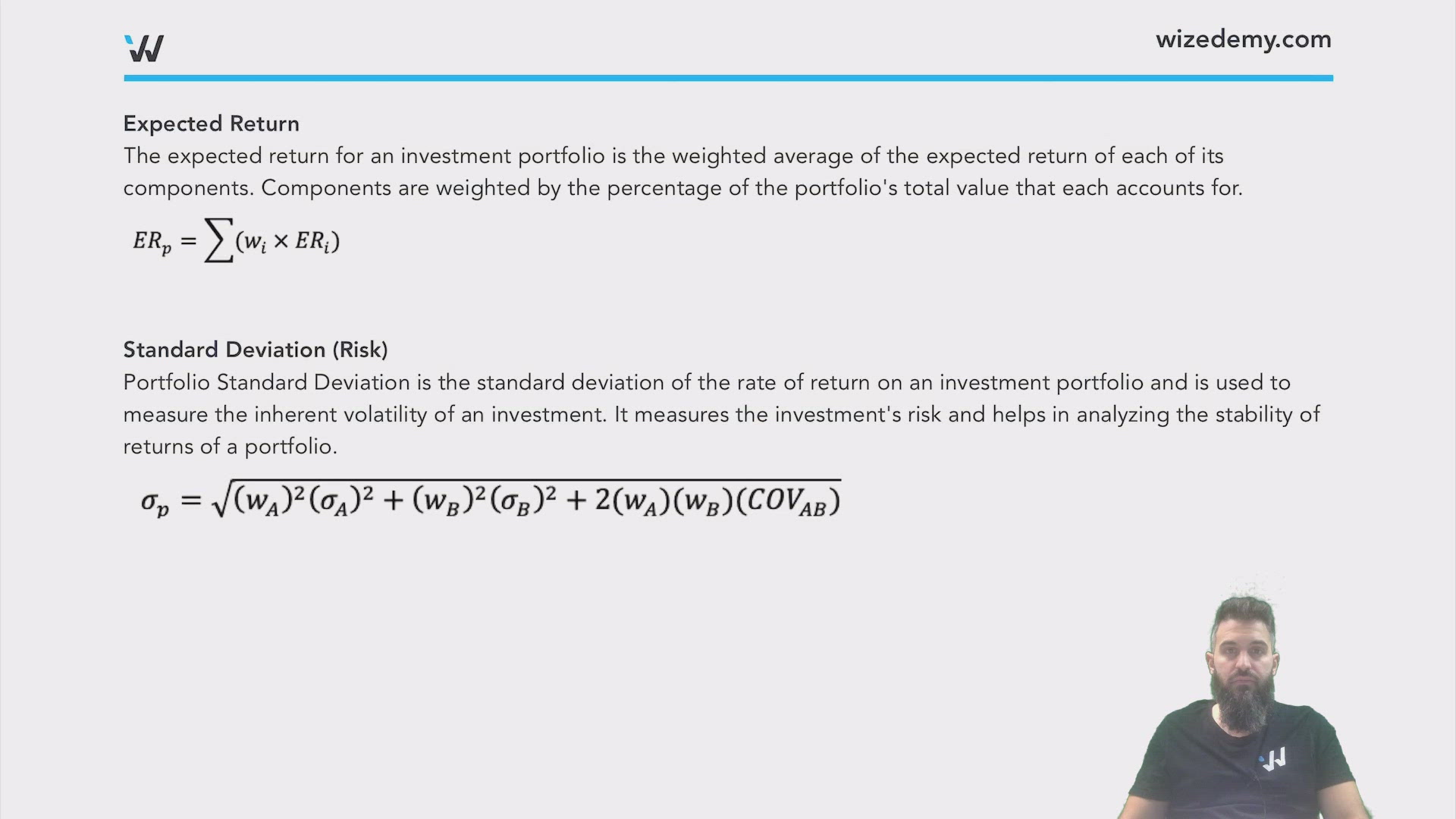
The expected return for an investment portfolio is the weighted average of the expected return of each of its components. Components are weighted by the percentage of the portfolio's total value that each accounts for.

Standard Deviation (Risk)
- The standard deviation of the rate of return on an investment portfolio.
- Used to measure the inherent volatility of an investment.
- It measures the investment's risk and helps in analyzing the stability of returns of a portfolio.
Standard Deviation of a 2 Asset Portfolio


0:00 / 0:00
Example: Expected Return and Risk of a Portfolio
Suppose you are given the following information for two stocks, A and B, where the return on each varies with the state of the economy. An investor invests $2,000 into Stock A and $3,000 into Stock B.
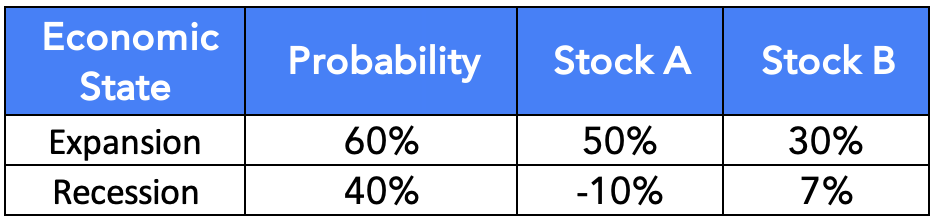
a) Compute the expected return for each stock
b) Compute the standard deviation for each stock
c) Compute the covariance between the two stocks
d) Compute the expected return of the portfolio
e) Compute the standard deviation of the portfolio
Practice: Expected Return and Risk of a Portfolio
You have $5,000 to invest and are considering investing $3,000 into Stock A and the rest into Stock B.
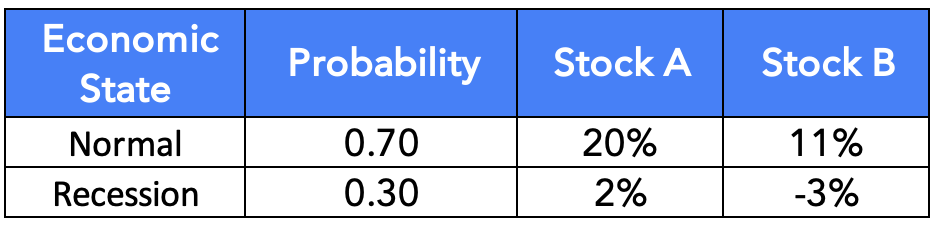
What is the expected return of the portfolio?
0:00 / 0:00
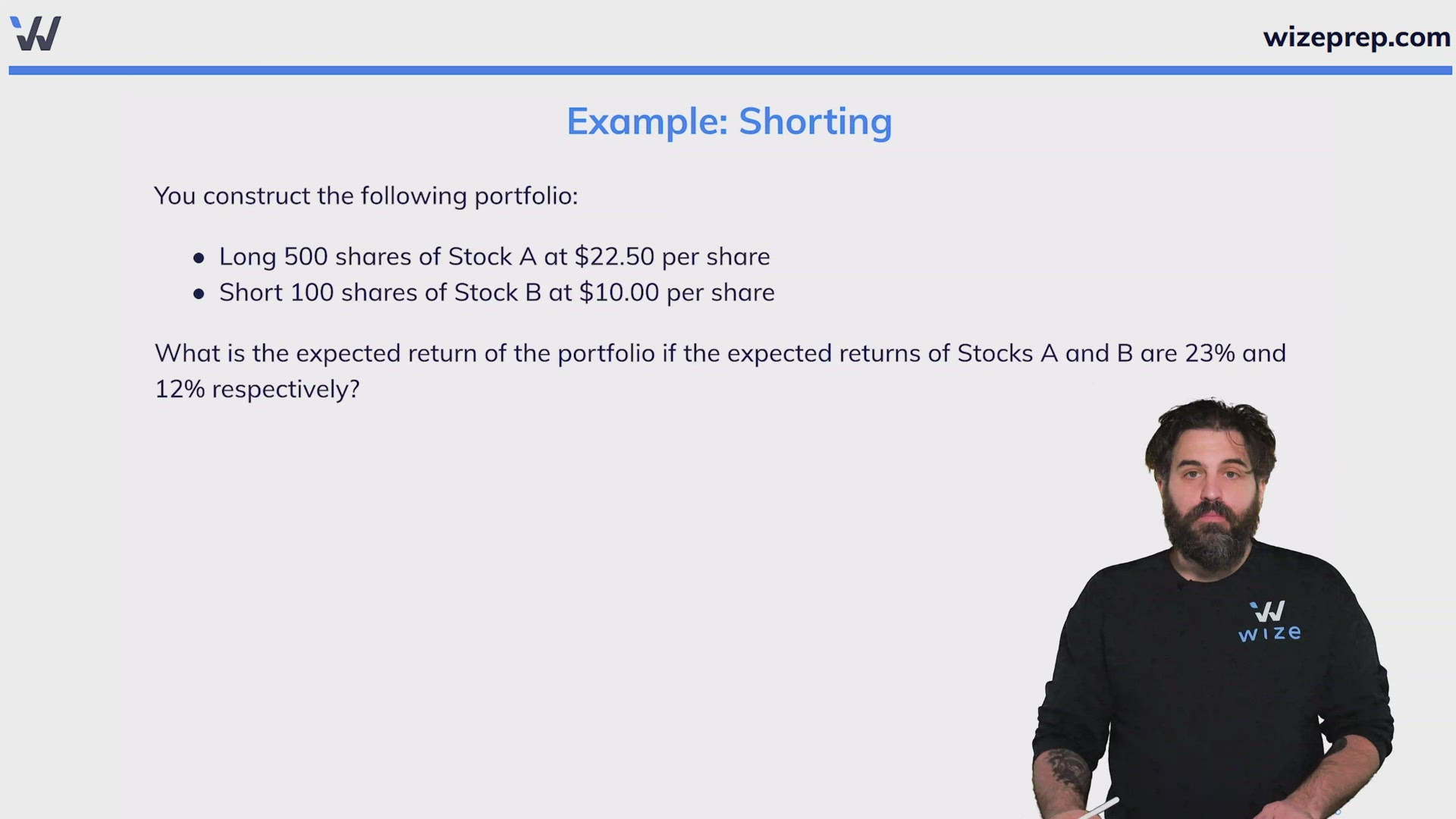
Example: Shorting
You construct the following portfolio:
- Long 500 shares of Stock A at $22.50 per share
- Short 100 shares of Stock B at $10.00 per share
What is the expected return of the portfolio if the expected returns of Stocks A and B are 23% and 12% respectively?
Practice: Shorting
Using this information, answer the following questions:
You construct a portfolio by investing $10,000 into stock Y, and shorting $5,000 of stock X.
Round your final answers to 2 decimal places and enter a percentage.