Wize University Introduction to Finance Textbook > CAPM
Risk-Free Borrowing
Popular Courses
COMM 308
Concordia University
Intro to Finance
University Study Guides
Intro to Finance
University Study Guides
FINA 230
Concordia University
MGCR 341
McGill University
FIN 301
University of Alberta
FIN 300
Toronto Metropolitan University
COMM 121
Queen's University
FIN*2000
University of Guelph
FINC 341
Texas A&M University
COMM 2202
Dalhousie University
BU283
Wilfrid Laurier University
FIN 300
Arizona State University - Tempe
BUSFIN 3220
Ohio State University
SB/FINE 2000 3.00
York University
FIN 301
Pennsylvania State University
BUS-F 255
Indiana University - Bloomington
FIN 3403
University of Central Florida
FIN 3403
University of Florida
FIN 320
California State University - Fullerton
0:00 / 0:00
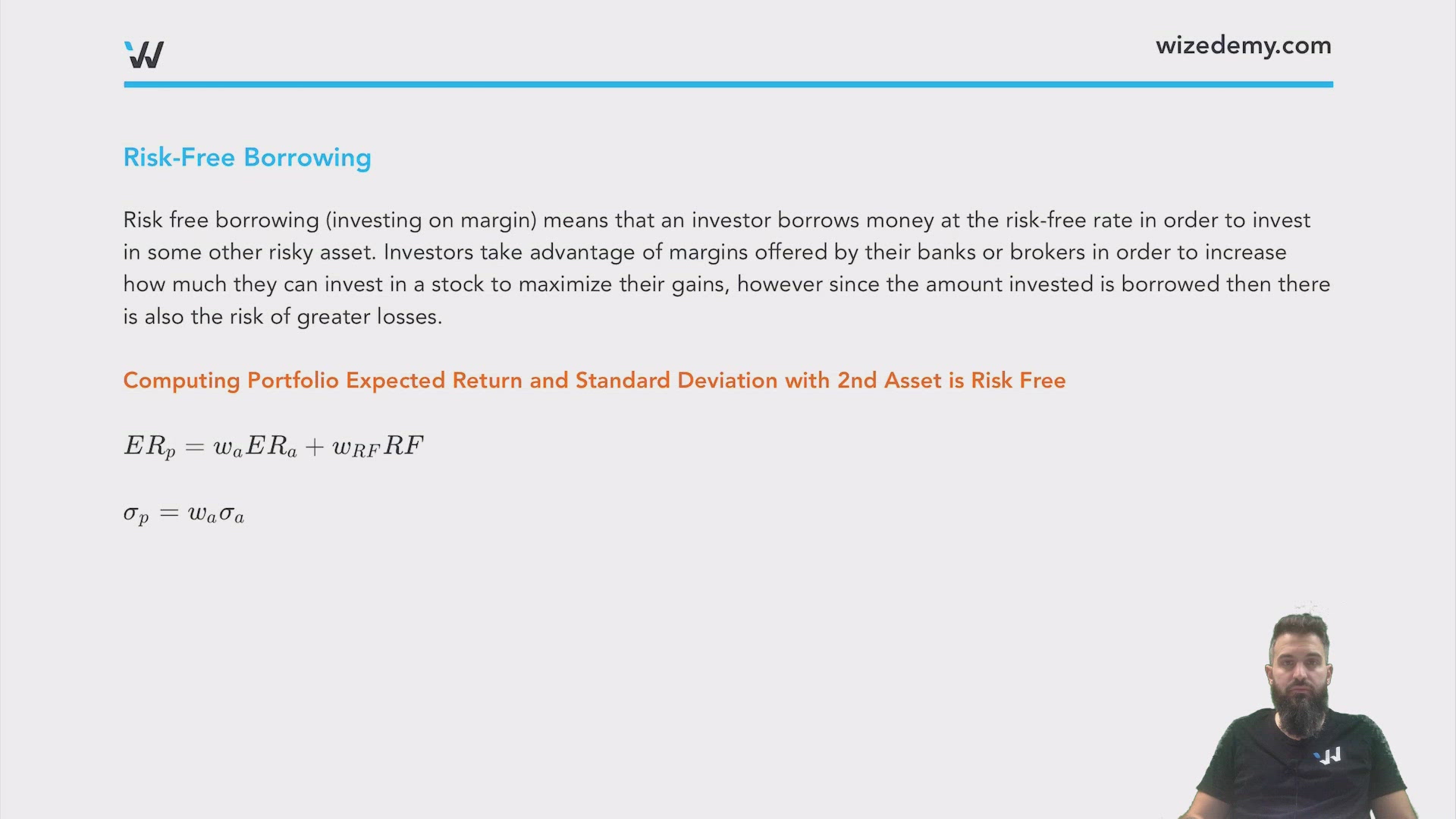
Risk-Free Borrowing
Risk-free borrowing (investing on margin) means that an investor borrows money at a risk-free rate in order to invest in some other risky asset.
Investors take advantage of margins offered by their banks or brokers in order to increase how much they can invest in stock to maximize their gains, however, since the amount invested is borrowed then there is also the risk of greater losses.
Computing Portfolio Expected Return and Standard Deviation with 2nd Asset is Risk-Free


0:00 / 0:00
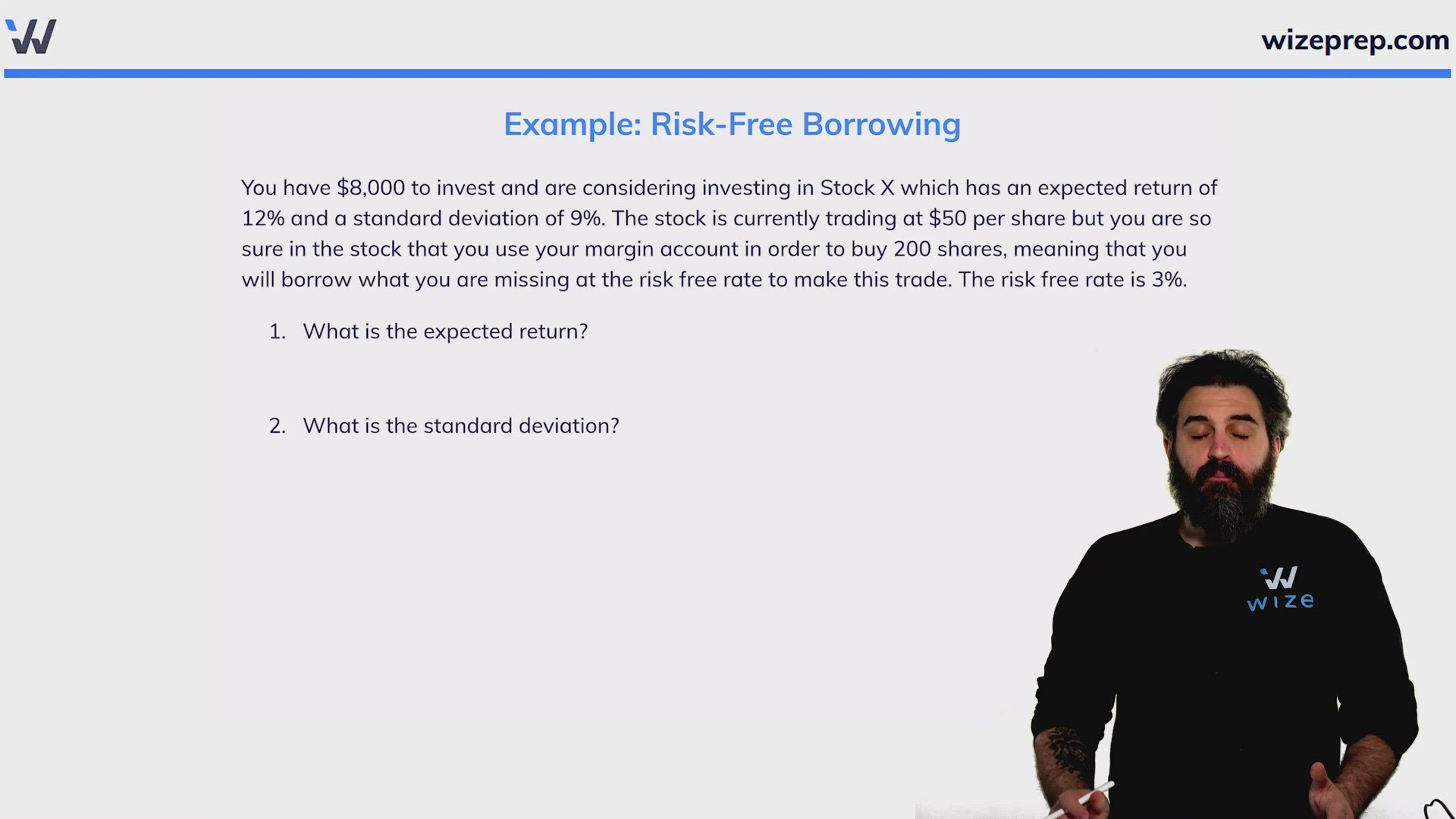
Example: Risk-Free Borrowing
You have $8,000 to invest and are considering investing in Stock X which has an expected return of 12% and a standard deviation of 9%. The stock is currently trading at $50 per share but you are so sure in the stock that you use your margin account in order to buy 200 shares, meaning that you will borrow what you are missing at the risk free rate to make this trade. The risk free rate is 3%.
- What is the expected return?
- What is the standard deviation?
Practice: Risk-Free Borrowing
You have $10,000 to invest and decide to put it all in Apple's stock which is trading at $177.57. You buy 80 shares by borrowing the amount you're missing from your broker at a risk-free rate of 4%. Apple has an expected return of 20% and a standard deviation of 15%.
What is the expected return of this portfolio?
| The expected return is | % |