Wize University Calculus 3 Textbook > Multiple Integrals
Double Integrals in Polar Coordinates
Popular Courses
MATH 200
University of British Columbia
MATH 253
University of British Columbia
MATH 222
McGill University
MATH 262
McGill University
MATH 209
University of Alberta
SC/MATH 2015 3.00
York University
MAT 2322
University of Ottawa
MATH 237
University of Waterloo
MAT235Y1
University of Toronto
MAT 2384
University of Ottawa
MATH 200
University of Victoria
MATH 251
Simon Fraser University
MATH 20C
University of California - San Diego
MAT237Y1
University of Toronto
MAT 2122
University of Ottawa
MATH 2214
Virginia Tech
MATH 10C
University of California - San Diego
SC/MATH 2310 3.00
York University
MATH 20E
University of California - San Diego
0:00 / 0:00
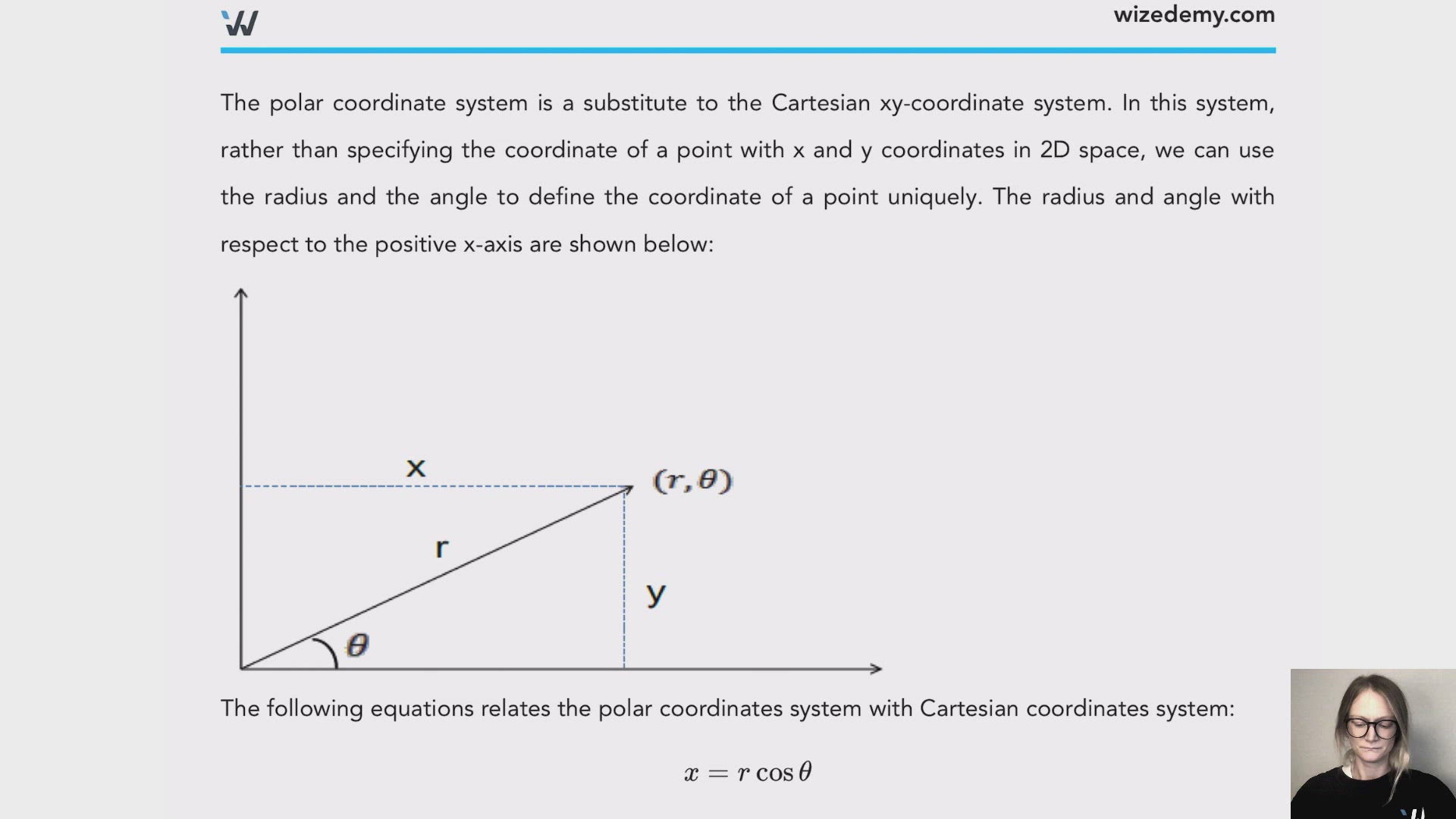
The polar coordinate system is a substitute to the Cartesian xy-coordinate system. In this system, rather than specifying the coordinate of a point with x and y coordinates in 2D space, we can use the radius and the angle to define the coordinate of a point uniquely. The radius and angle with respect to the positive x-axis are shown below:
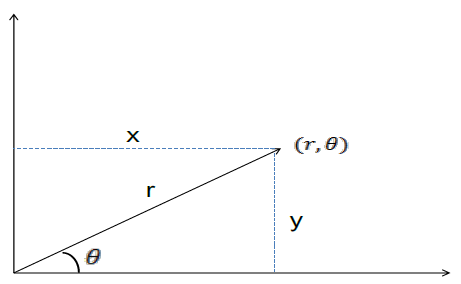
The following equations relates the polar coordinates system with Cartesian coordinates system:
Wize Concept
When we convert the area to polar coordinates, we will have
The general form of a double integral from rectangular coordinates to polar coordinates is in the form of:
where r changes from a to b and changes from to .
0:00 / 0:00
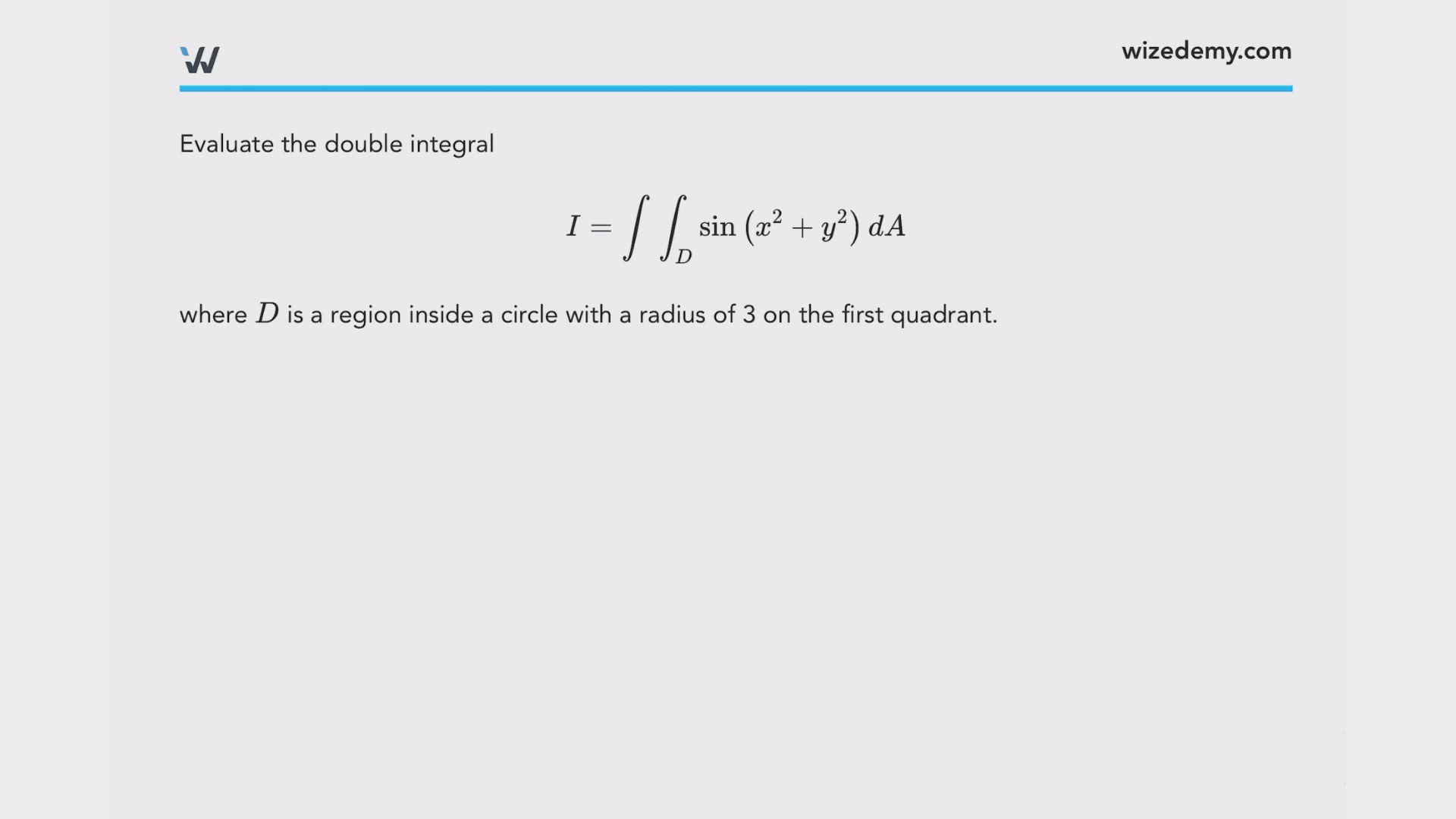
Evaluate the double integral
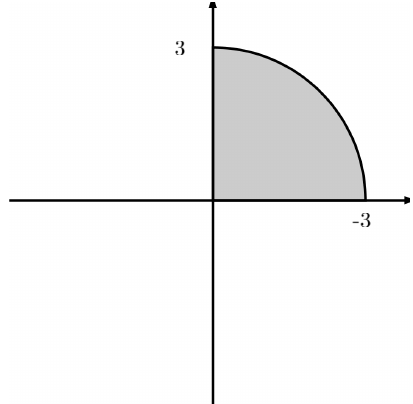
where is a region inside a circle with a radius of 3 in the first quadrant.
0:00 / 0:00
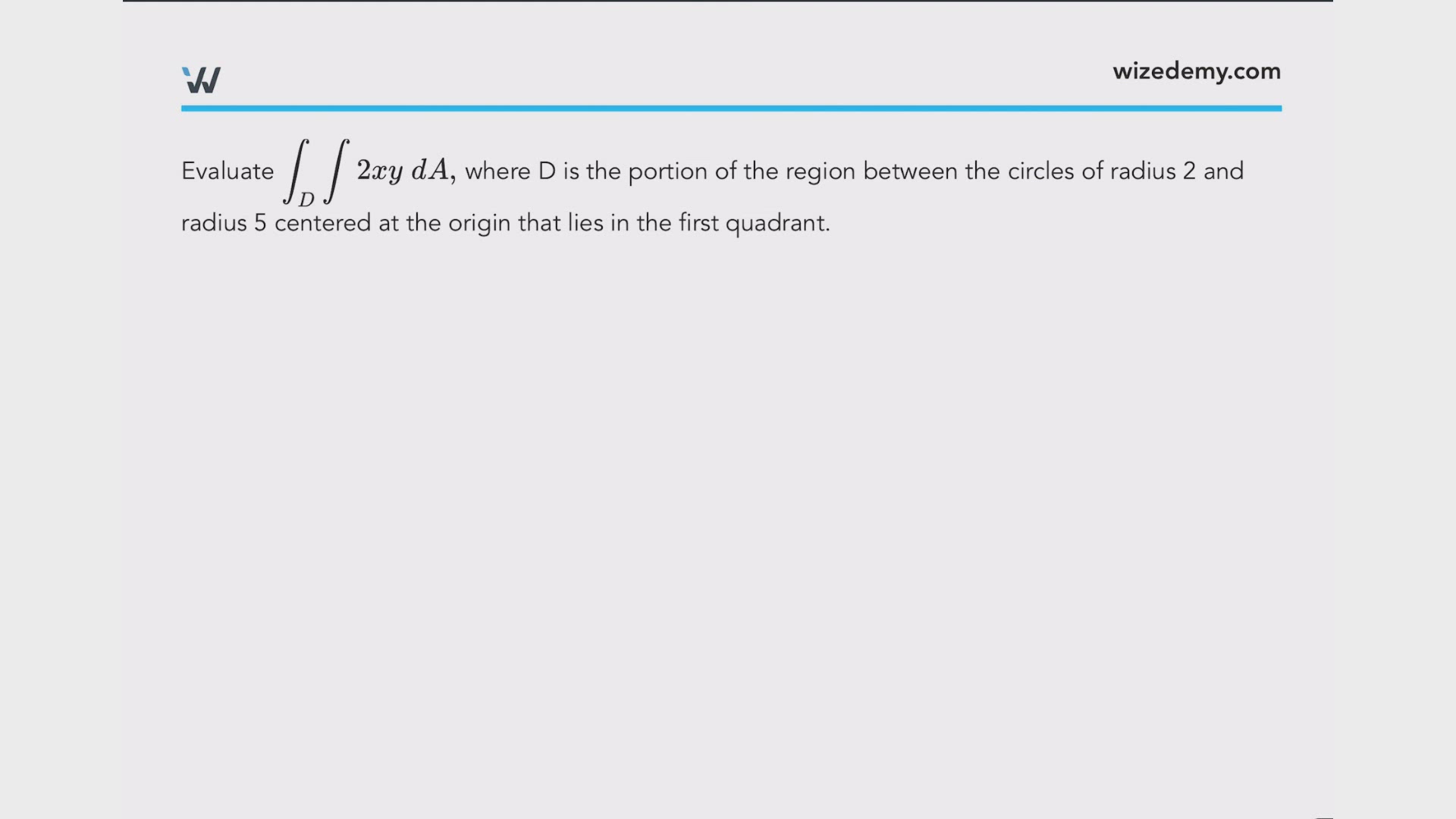
Evaluate where D is the portion of the region between the circles of radius 2 and radius 5 centered at the origin that lies in the first quadrant.
We can determine the domain, D, in terms of polar coordinates. So,
Then,
What is the volume of the region under the sphere above the plane and inside
Find where D is the lower half of