Wize University Organic Chemistry Textbook > The Basics (Lewis Structures, Bonding, VSEPR)
Bonding 2: Molecular (MO) Theory
Popular Courses
MCAT
General Course
DAT
General Course
Organic Chemistry
University Study Guides
Organic Chemistry
General Course
CHEM 233
University of British Columbia
CHEM 261
University of Alberta
Organic Chemistry
University Study Guides
CHEM 351
University of Calgary
CHEM 281
Queen's University
CHM 1321
University of Ottawa
CHEM 231
University of Victoria
CHEM 2OA3
McMaster University
CHEM 2223B
Western University
CHM 2120
University of Ottawa
CHEM 263
University of Alberta
CHEM 282
Queen's University
SC/CHEM 2020 3.00
York University
CHY 142
Toronto Metropolitan University
CHEM 353
University of Calgary
CHEM 2401
Dalhousie University
0:00 / 0:00
Molecular Orbital Theory
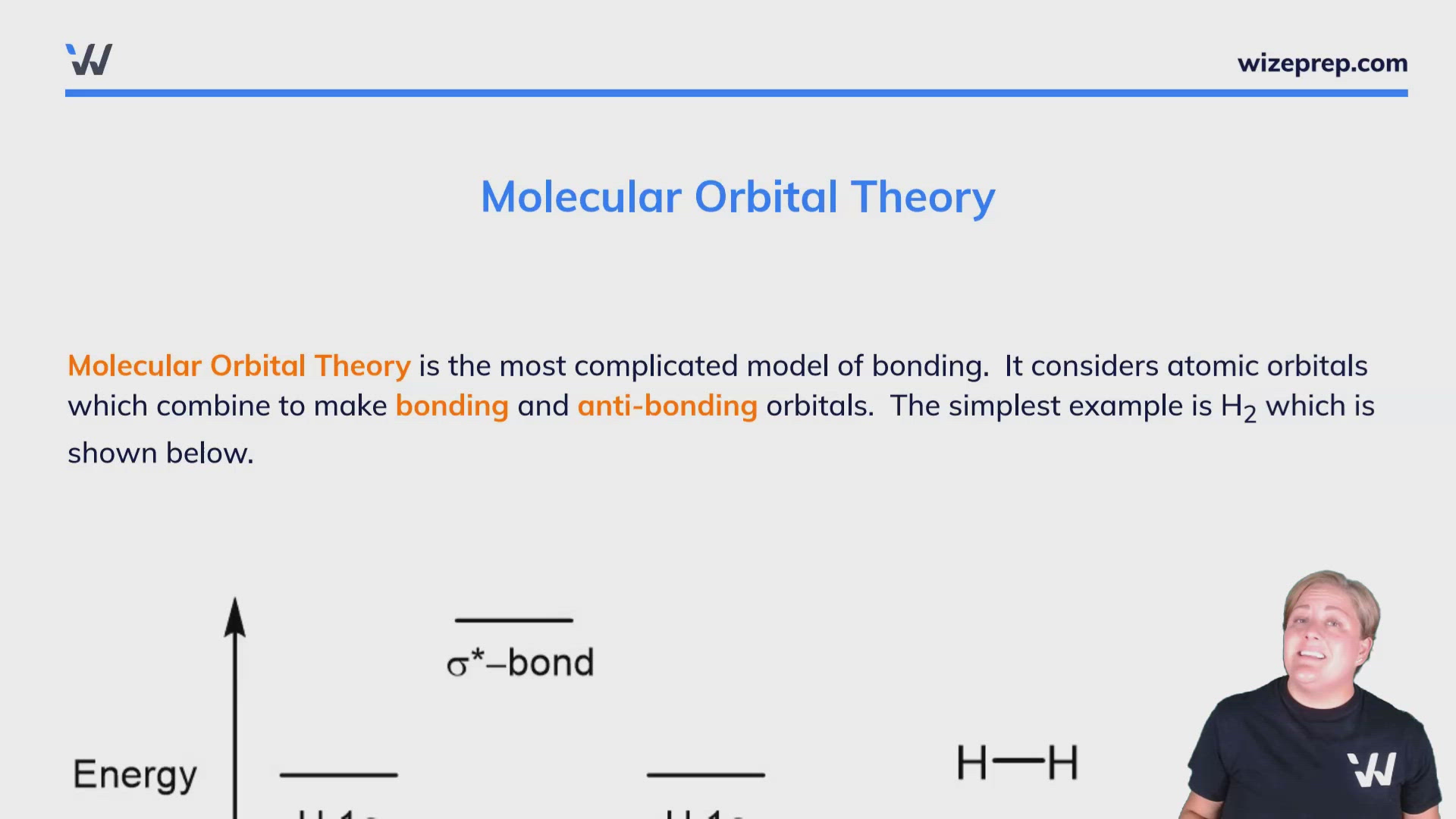
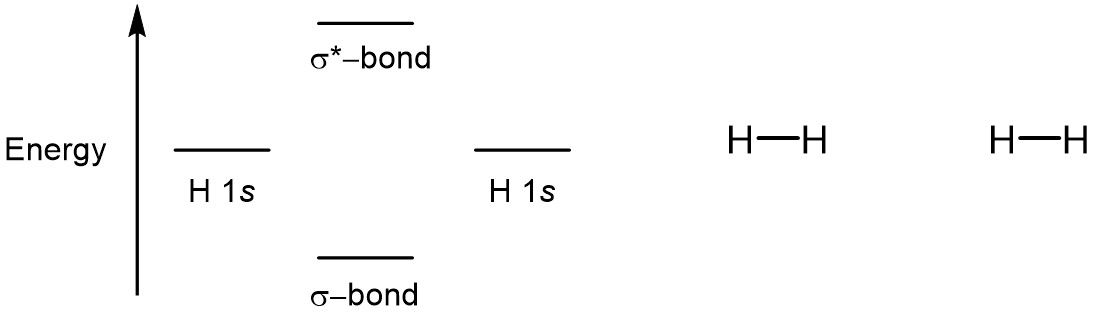
Molecular Orbital Theory is the most complicated model of bonding. It considers atomic orbitals which combine to make bonding and anti-bonding orbitals. The simplest example is H2 which is shown below.
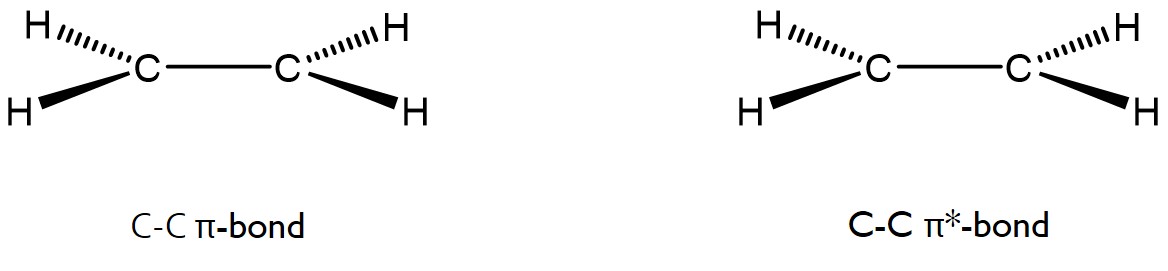
A more complicated example is ethene (C2H4) below. It has both a sigma bond between the carbon atoms (s/p hybrid orbitals) and a pi bond between the carbon atoms (p orbitals). Both of these bonds can be shown with bonding and anti-bonding combinations.

Wize Tip
Since Molecular Orbital Theory is so complicated it tends to not be used in a lot of organic chemistry. Having a superficial understanding of MO Theory is enough!