
Car Turning Around a Circular Section of Road
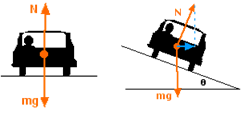
- If the road is flat, then the centripetal force is equal to the force of friction on the car.
- If there is no friction, there is no force that can supply the centripetal force required to make the car move in a circular path - there is no way that the car can turn!
- If the road is banked, the horizontal component of the normal force provides the centripetal force.
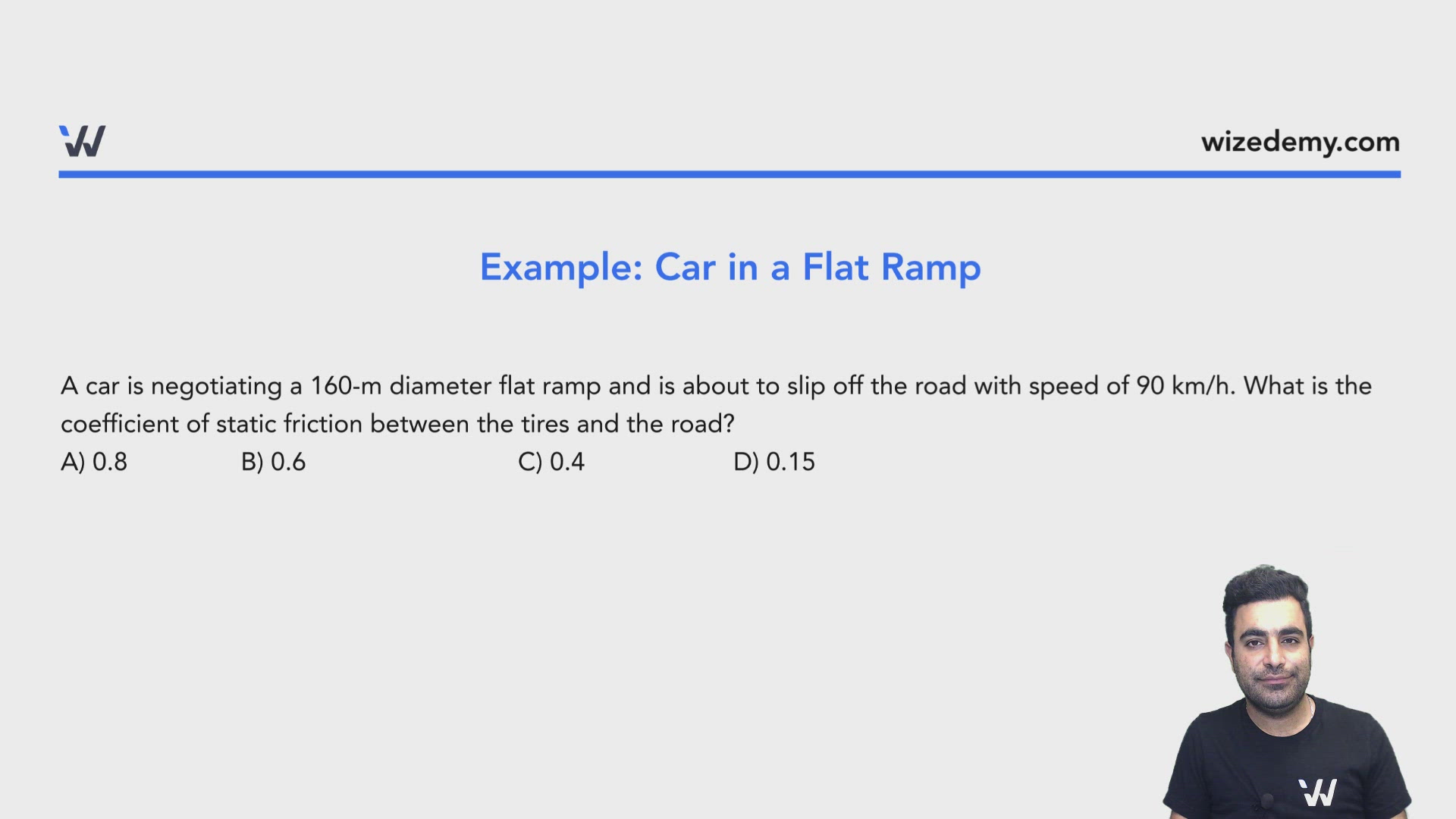
Example: Car in a Flat Ramp
A car is negotiating a m diameter flat ramp and is about to slip off the road with speed of km/h. What is the coefficient of static friction between the tires and the road?
A) B) C) D)
First, let's convert the speed:
The only force toward the centre of this circular path is the static friction between tires and the road.
Since the car is about to slip off, it means that we are talking about the maximum static friction (the car is on the verge of sliding).
So, the centripetal force is equal to maximum static friction:
Horizontal direction:
Vertical direction: since there is no motion along this direction
Combining the equations we get: