Popular Courses
MCAT
General Course
Intro to Physics
University Study Guides
Physics
General Course
PHYSICS 1A03
McMaster University
PHYS 115
Queen's University
PHYS 211
University of Calgary
PHYS 131
University of British Columbia
Intro to Physics
University Study Guides
PHYS*1080
University of Guelph
PHY 1321
University of Ottawa
PHYS 221
University of Calgary
PHYS-1400
University of Windsor
PHY 1331
University of Ottawa
PHY 1122
University of Ottawa
PHYS 142
McGill University
PHYC 1190
Dalhousie University
ENGG 212
University of Calgary
ENGG 212
University of Calgary
PHYS 1050
University of Manitoba
PHYS 101
Simon Fraser University
0:00 / 0:00
Viscosity
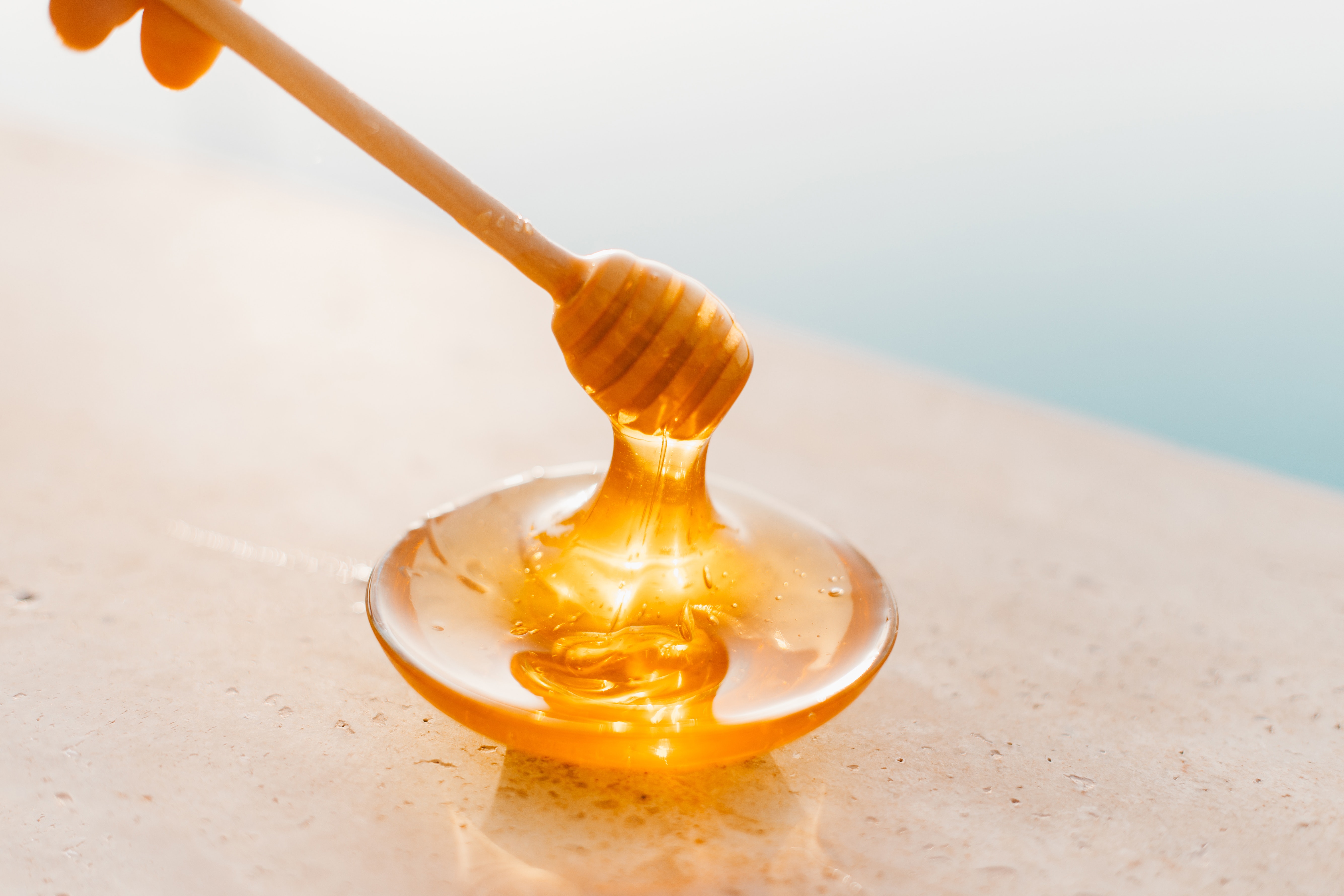
Viscosity is the internal friction and resistance of a fluid to flow. This comes from the attractive forces (cohesive) between molecules in our fluid. The more viscous, the thicker the fluid, and the more it clings to itself and the surfaces it is flowing on.
Watch Out!
Because of this friction, Bernoulli's equation cannot be used anymore.
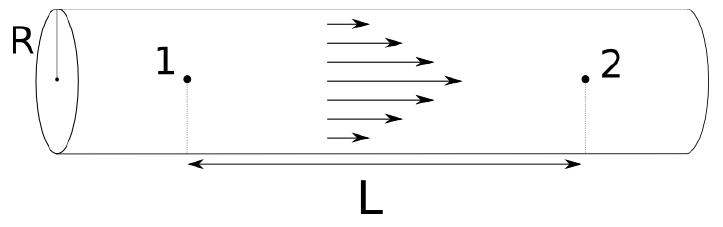
Flow of a viscous fluid in a horizontal cylindrical pipe:
A pressure gradient is required to overcome the friction.
Poiseuille's Law says that the flow rate of a fluid with viscosity constant from a pipe of length and radius is related to the pressure gradient between two ends of the pipe as:
Rearranging for the flow rate we have:
Here:
- is the viscosity constant, and its units are
- is the radius of the pipe
- is the flow rate
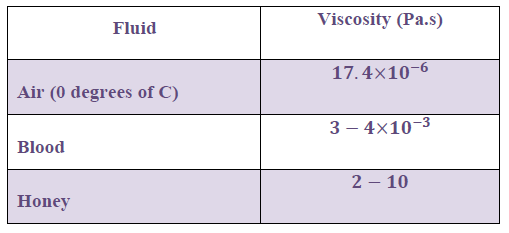
Below we have the viscosity constant of a few fluids in :
Practice: Viscosity
A tube of radius mm and length cm has a viscous fluid flowing through it at the rate of cm3/s . The viscosity is Pa s. What is the gauge pressure needed at one end to push the fluid out of the other end?