Wize University Physics Textbook (Master) > Fluid Mechanics
Surface Tension and Capillarity
Popular Courses
MCAT
General Course
Intro to Physics
University Study Guides
Physics
General Course
PHYSICS 1A03
McMaster University
PHYS 211
University of Calgary
PHYS 131
University of British Columbia
Intro to Physics
University Study Guides
PHYS*1080
University of Guelph
PHY 1321
University of Ottawa
PHYS 102A
University of Victoria
PHYS 221
University of Calgary
PHYS-1400
University of Windsor
PHY 1331
University of Ottawa
PHY 1122
University of Ottawa
PHYS 142
McGill University
PHYC 1190
Dalhousie University
ENGG 212
University of Calgary
ENGG 212
University of Calgary
PHYS 1050
University of Manitoba
PHYS 101
Simon Fraser University
0:00 / 0:00
Surface Tension and Capillarity

Molecules inside of a fluid can interact with each other and with other surfaces.
- Attractive force between molecules of the fluid are called cohesive forces.
- Forces between the fluid and some other object are called adhesive forces.
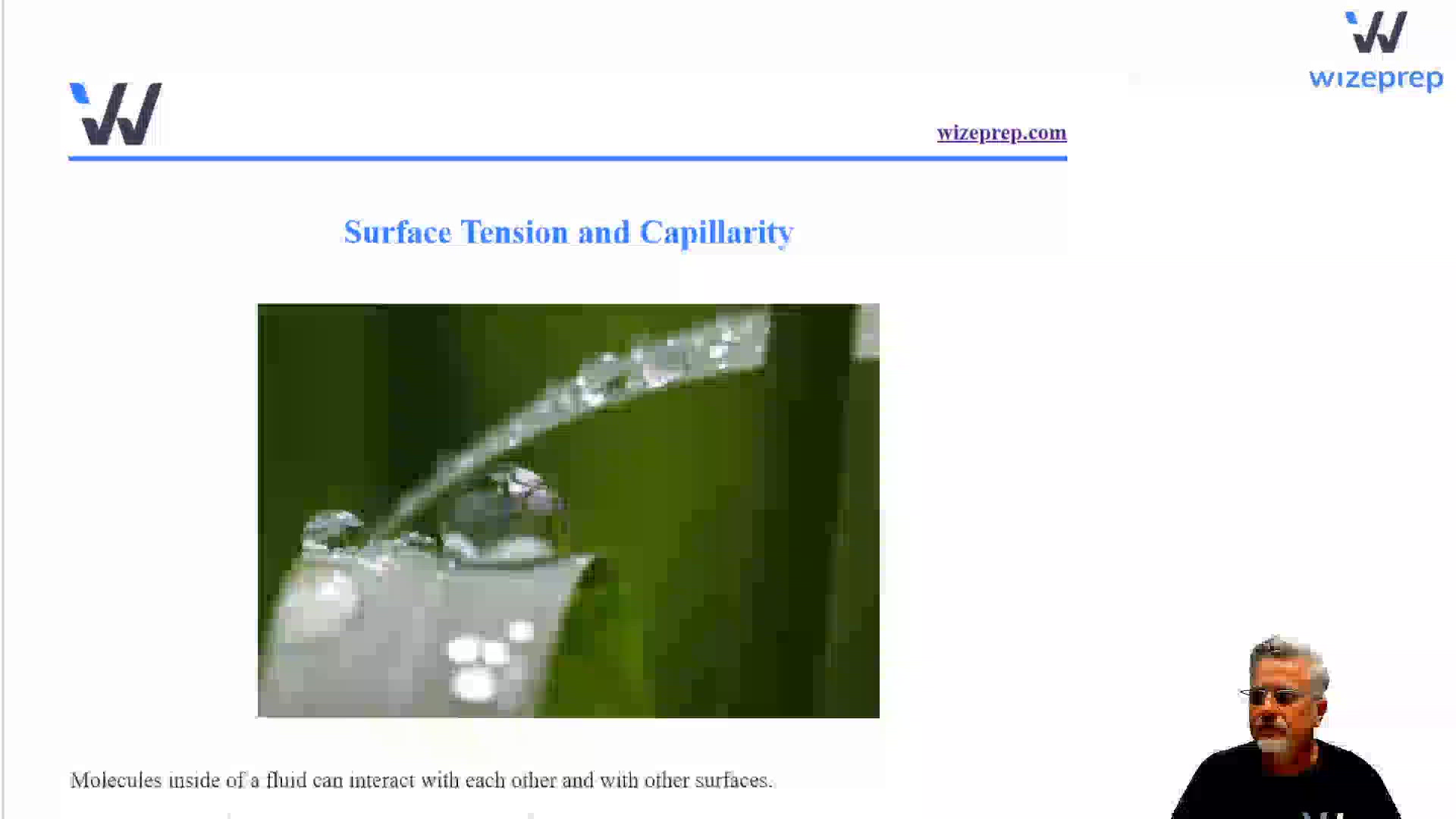
Surface tension comes from cohesive forces between the molecules of our fluid. At the surface of water the molecules are pulled inward by these forces, almost forming a "skin" around it. This is the reason water droplets form.
When we talk about fluids and other objects, we often talk about the balance of adhesive and cohesive forces.
- Adhesive forces will pull the liquid towards the surface of the channel.
- Cohesive forces will pull the liquid inward onto itself.
Capillary action is the tendency of fluids to be raised or suppressed in channels of small diameter.
Capillary ATTRACTION (LEFT image below) occurs when ADHESIVE forces are greater than the COHESIVE forces. An example would be when you prick your finger and use a small glass tube to check your sugar/glucose and the blood appears to be drawn or sucked-up into the tube. Another example is when you use painter's tape but the paint seeps under the tape.
Capillary REPULSION (RIGHT image below) occurs when COHESIVE forces are greater than the ADHESIVE forces. This is an interesting situation where the fluid level in the tube is LOWER than the fluid.

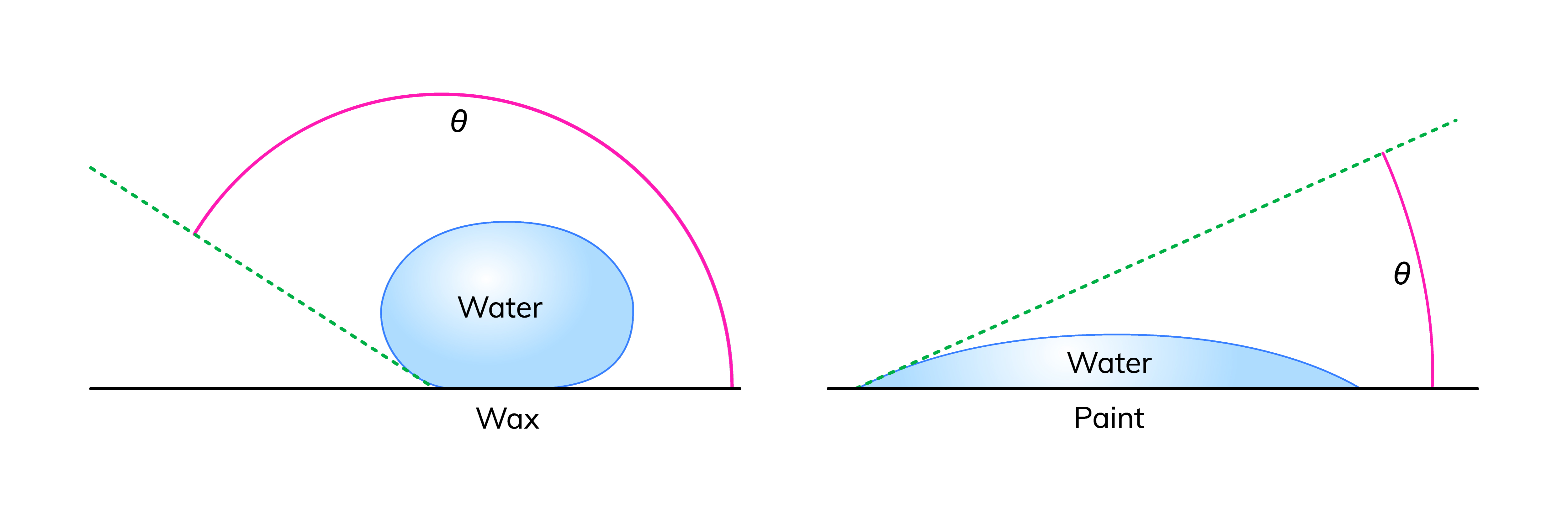
The contact angle is the the angle between the fluid surface and the surface of contact.