Wize University Physics Textbook (Master) > Magnetic Fields and Magnetic Force
Torque on a Circuit and Magnetic Dipoles
Popular Courses
PHYSICS 1202A/B
Western University
PHYSICS 1E03
McMaster University
PHYS 223
University of Calgary
APSC 112
Queen's University
PHYSICS 1402A/B
Western University
PHYS 205
Concordia University
PHYS 118
University of British Columbia
PHYS 142
McGill University
ENGG 212
University of Calgary
PHY132H1
University of Toronto
PHY132H1
University of Toronto
PHYS 102B
University of Victoria
PHYS-1300
University of Windsor
PHY 1121
University of Ottawa
PHY 1124
University of Ottawa
PHYS 121
University of Waterloo
PHYSICS 1102A/B
Western University
PHYS 227
University of Calgary
SC/PHYS 2020 3.00
York University
PHYSICS 1AA3
McMaster University
0:00 / 0:00
Torque on a Current-Carrying Wire
A curved wire that is placed in a magnetic field will experience a different force at each point along its length. In some conditions, this can result in the wire experiencing a torque even if the net force is zero.
- The torque on a loop of current is found with the following equation:
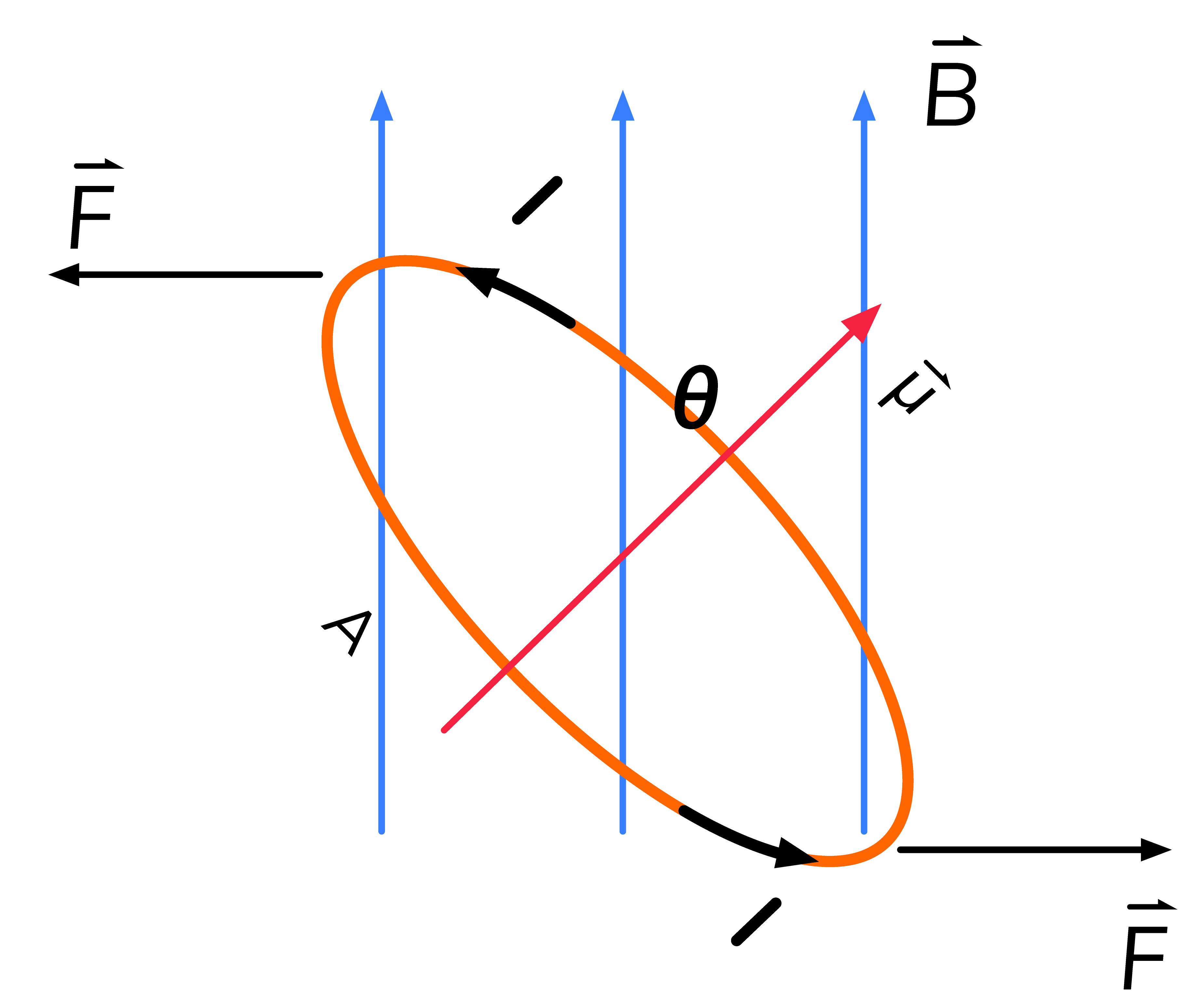
- We have introduced the magnetic dipole moment, :
Wize Concept
The direction of is found with the right-hand rule. If you curl your right-hand fingers in the direction of the current, then points in the direction of your thumb. This means that is perpendicular to the plane of the wire.
The right-hand rule is also used to find the direction of the torque. If you point your right-hand fingers in the direction of , and curl your fingers in the direction of , then your fingers are now curling in the direction of the torque.
- The magnitude of the torque on a current loop can be written as follows:
- The variable N represents the number of loops of current.
Wize Tip
The torque will act to align the magnetic moment direction with the magnetic field direction.
0:00 / 0:00
Example: Torque on a Rectangular Current Loop
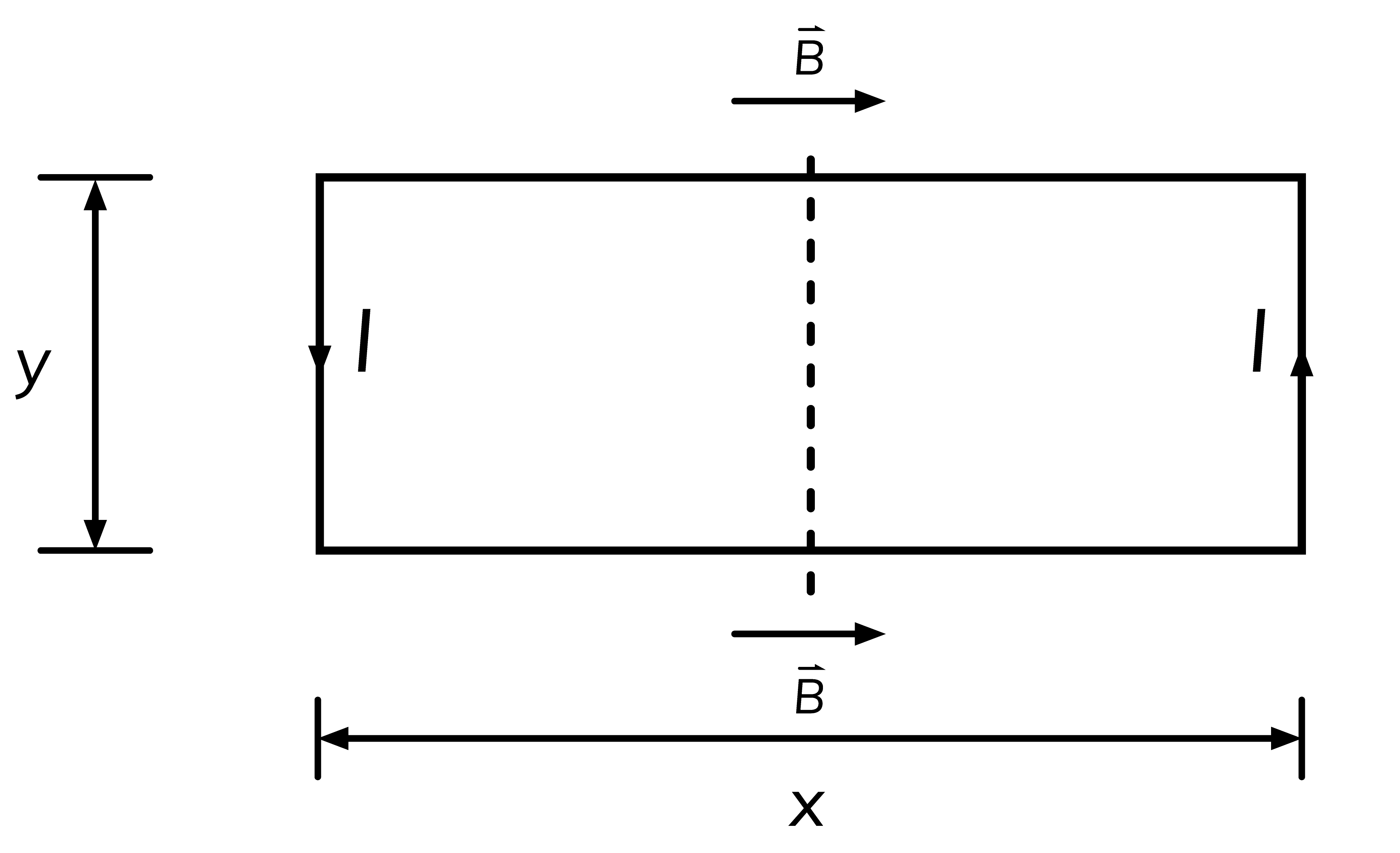
A rectangular current loop is shown below, with width and height . The current flows counter-clockwise and the magnetic field points to the right.
Find the net torque on the loop. Can you find the answer in two different ways?
There are two ways to approach this. Both are valid, but the first approach is fairly tedious, while the second approach uses the magnetic dipole moment to reach the same result much faster!
Approach 1:
Let's find the torque by finding the contribution from each length of the wire loop, . We know there is no magnetic force contribution from the top or bottom sides of the rectangle because the field and current are parallel/antiparallel ( because and ).
For the left part of the wire loop, we can use the right-hand rule to see that the force points out of the page with magnitude . For the right part of the loop, we can either use the right-hand rule and magnetic force formula to find a force that points into the page with magnitude , or we can simply write this down, because we know that the total force must be zero for a closed loop of current in a uniform magnetic field.
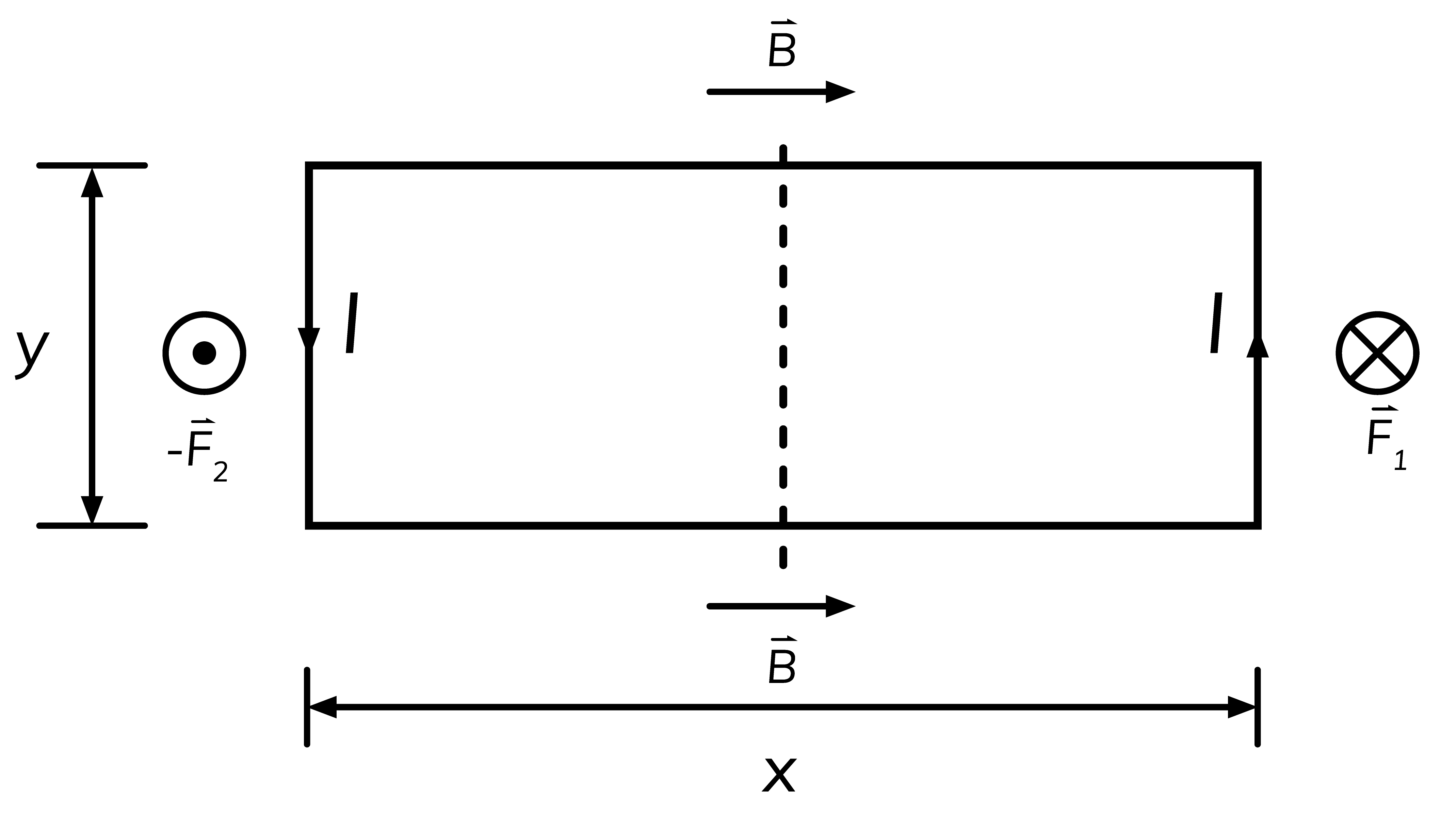
Now we add together the torque from each side of the wire. Note that we are using the point at the center of the rectangle as our reference point to measure . The angle between each magnetic force and vector is , so the sine term becomes 1.
For the direction of the torque, we can see (based on the directions of the forces) that the loop rotates such that the left part comes out of the page and the right part goes in to the page. We could also say this is counter-clockwise with respect to the positive y-axis if we define the positive y-axis as going up the page.
Approach 2:
We know the magnetic dipole moment points out of the page using the right-hand rule (curl your fingers counter-clockwise and check where your thumb is pointing). The magnitude is .
Using the formula for torque on a current loop (the angle between the field and dipole is and the sine term becomes 1).
The direction is such that the vector , which current points out of the page, wants to reach the direction of , which points to the right. This is equivalent to the direction found above.
That was much easier and got the same answer as above! This is why we introduced the magnetic dipole moment. It makes life easier!
Practice: Torque on a Circular Current Loop
A circular loop of radius 10.5 cm and 40 turns has a current of 2.50 A flowing through the coil. A magnetic field of strength 3.4 T acts at an angle of 35º to the normal of the plane of the loop. What is the magnitude of the net torque acting on the loop?