Wize University Physics Textbook (Master) > DC Circuits
Power and Brightness
Popular Courses
MCAT
General Course
PHYSICS 1202A/B
Western University
PHYSICS 1E03
McMaster University
PHYS*1300
University of Guelph
PHYS 223
University of Calgary
APSC 112
Queen's University
PHYSICS 1402A/B
Western University
PHYS 205
Concordia University
PHYS 110
University of Victoria
PHYS 118
University of British Columbia
PHYS 142
McGill University
ENGG 212
University of Calgary
PHY132H1
University of Toronto
PHY132H1
University of Toronto
PHYS-1300
University of Windsor
PHY 1121
University of Ottawa
PHYS 121
University of Waterloo
PHYSICS 1102A/B
Western University
PHYS 227
University of Calgary
SC/PHYS 2020 3.00
York University
0:00 / 0:00
Power and Brightness
Electric circuits consume energy (and expel it in the form of heat) when current flows through them. Due to conservation of energy, all energy that is provided by the power source (battery) is consumed by the loads (resistors) in the circuit.
The power () consumed by the circuit is equal to the energy used (), or work done () by the circuit, per unit time ():
The power dissipated by a resistor is directly proportional to the current () and voltage () across it, and is given by:
We can combine this with Ohm's law to get two other versions of the power formula:
Exam Tip
Use one version or the other depending on which variable is held constant:
- If the current is constant, use (e.g. for resistors in series).
- If the voltage is constant, use (e.g. for resistors in parallel).
Wize Concept
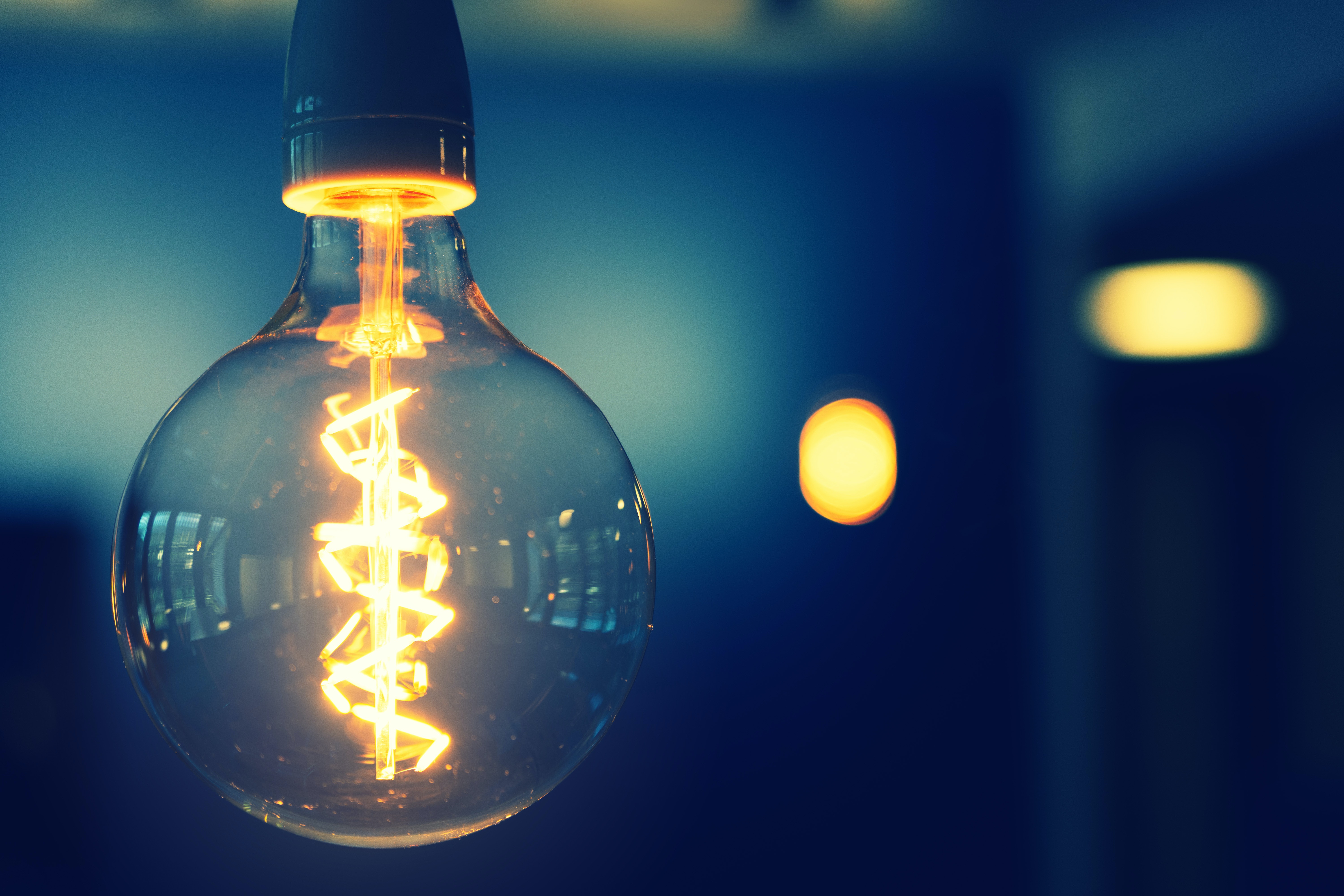
The brightness of a light bulb is directly proportional to the power dissipated by it.
0:00 / 0:00
Example: Lightbulbs in Series and Parallel
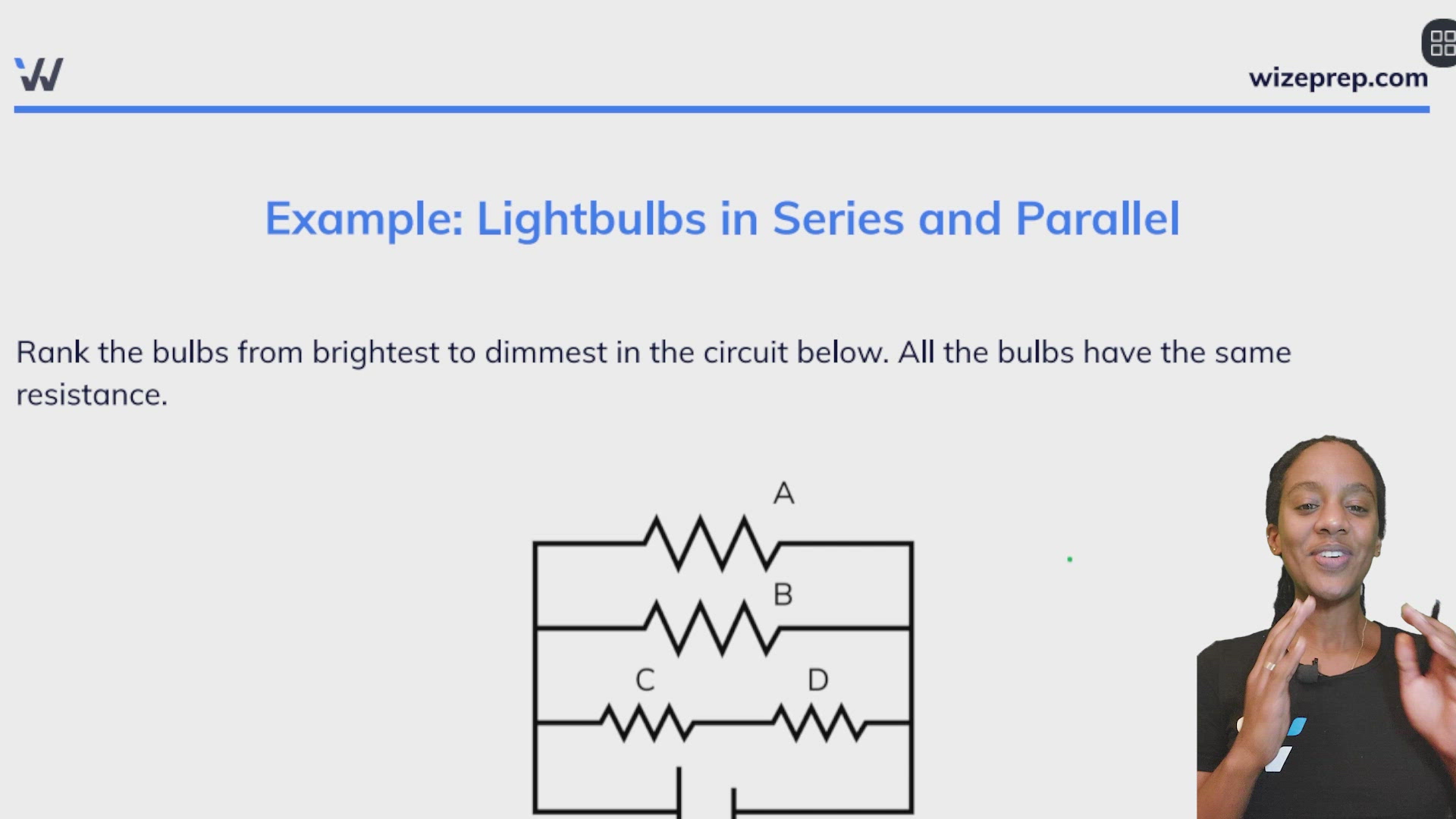
Rank the bulbs from brightest to dimmest in the circuit below. All the bulbs have the same resistance.
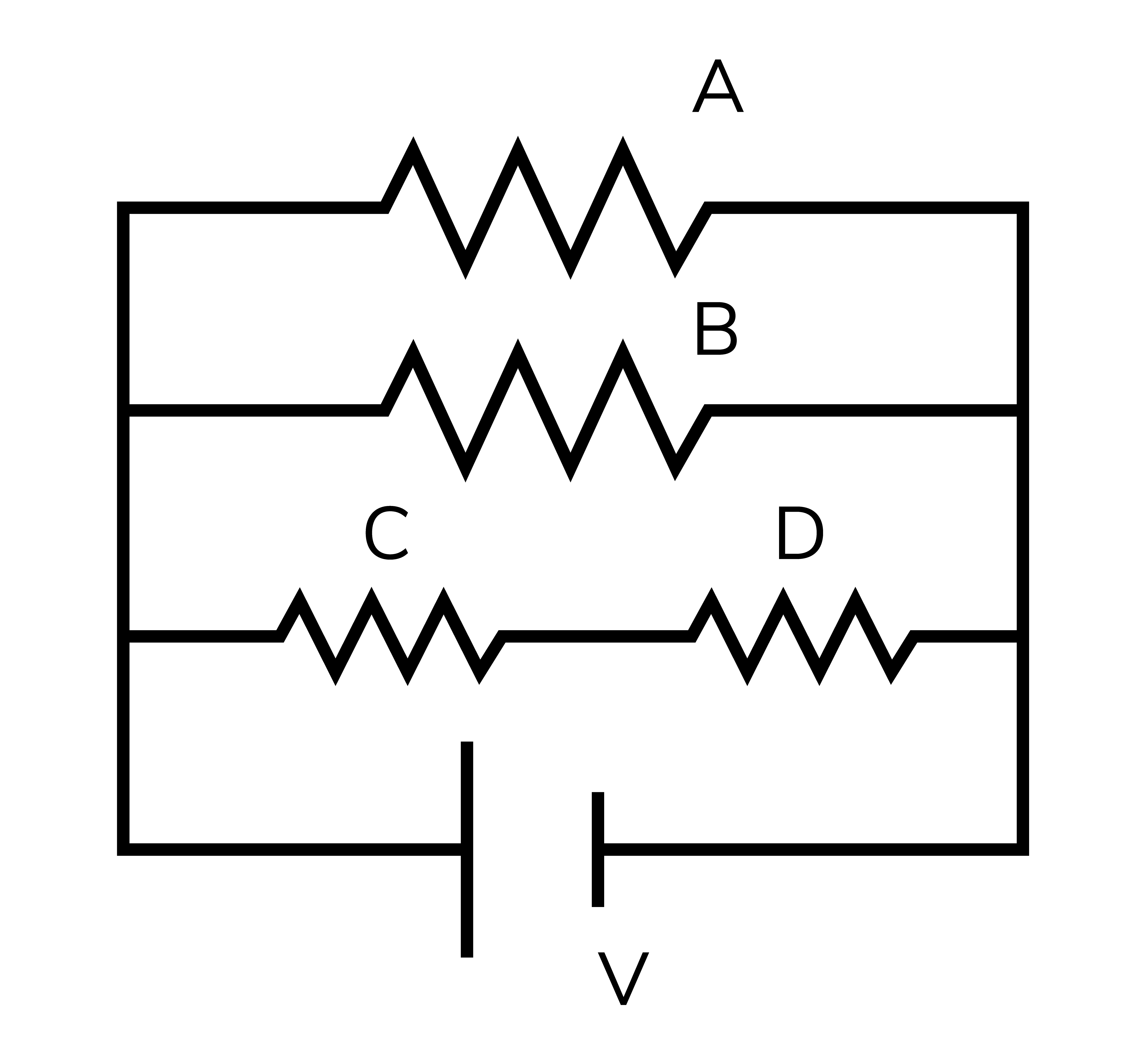
First, let's look at the total current through the circuit:
The voltage drops across the parallel elements are equal:
The equivalent resistance of the two series lightbulbs will be:
Now we can use Ohm's Law () to find the current through each lightbulb.
Lightbulb A:
Lightbulb B: (same as A)
Lightbulb C:
Lightbulb D: (same as C)
Note: Bulbs C and D are in series, so the current through both will be the same. But to find that current we've used the equivalent resistance (both resistors combined), and the voltage through that whole branch (which is the same as the battery voltage since the branch is in parallel with it), not the voltages through each.
Finally, we can use to compare the brightness (the larger the power, the brighter the lightbulb):
Lightbulb A:
Lightbulb B: (same as A)
Lightbulb C:
Lightbulb D: (same as C)
Therefore the power ranking is:

Mark Yourself Question
- Grab a piece of paper and try this problem yourself.
- When you're done, check the "I have answered this question" box below.
- View the solution and report whether you got it right or wrong.
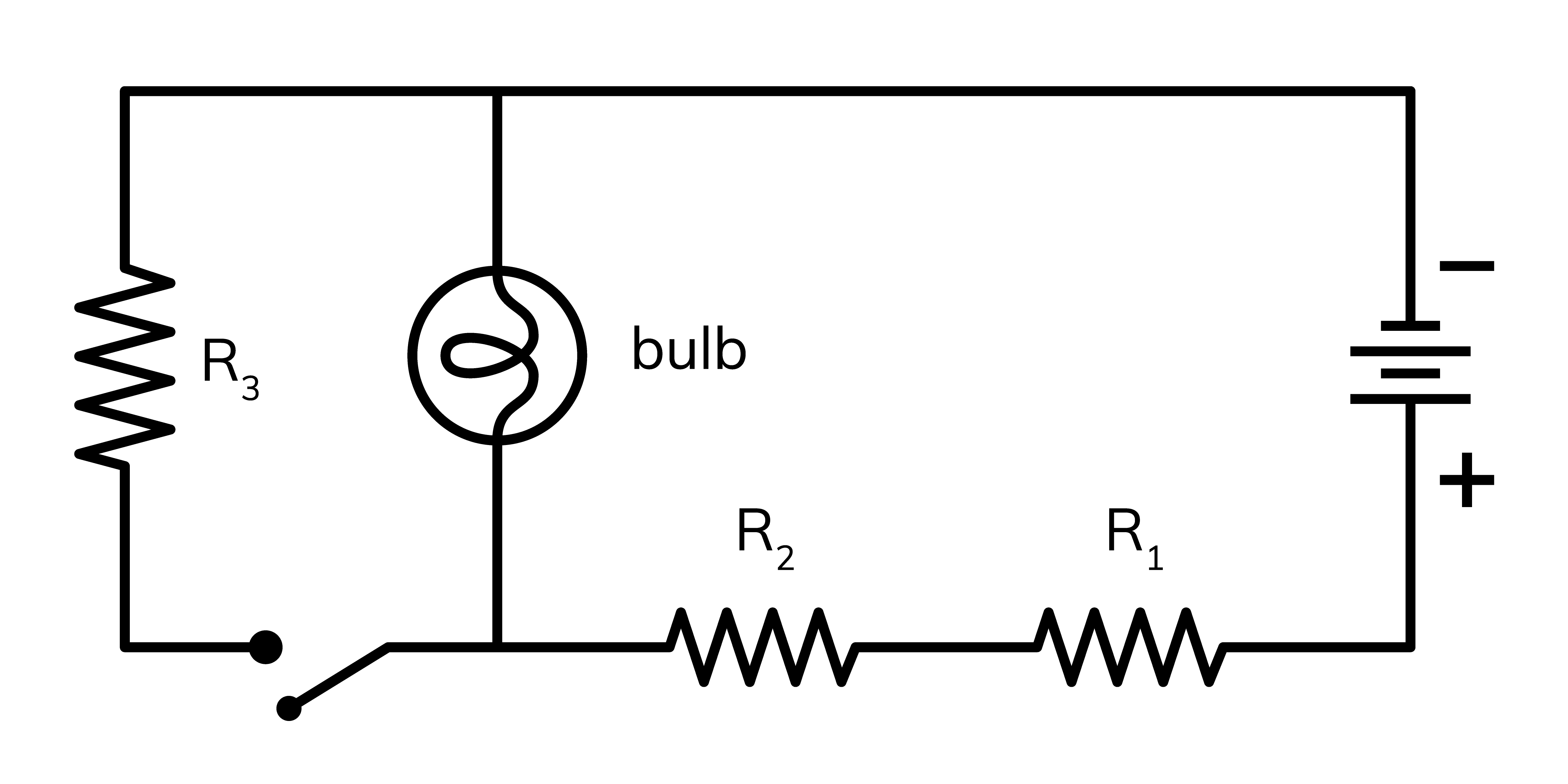
Practice: Lightbulb with Switch Open and Closed
A light bulb is connected in a circuit as shown below. Initially the switch is open. What happens to the brightness of the bulb and the potential difference across it after switch is closed?