Popular Courses
MCAT
General Course
PHYSICS 1201A/B
Western University
Intro to Physics
University Study Guides
Physics
General Course
PHYS 211
University of Calgary
PCS 211
Toronto Metropolitan University
PHYS 204
Concordia University
Intro to Physics
University Study Guides
PHYS 100
University of British Columbia
APSC 111
Queen's University
PHYS 102A
University of Victoria
PHYS 205
Concordia University
PHYS 221
University of Calgary
PCS 120
Toronto Metropolitan University
LE/PHYS 1800 3.00
York University
PHYS-1400
University of Windsor
PHYS 142
McGill University
PHYS 115
University of Waterloo
PHYC 1190
Dalhousie University
ENGG 212
University of Calgary
0:00 / 0:00
Thermal Stress and Strain
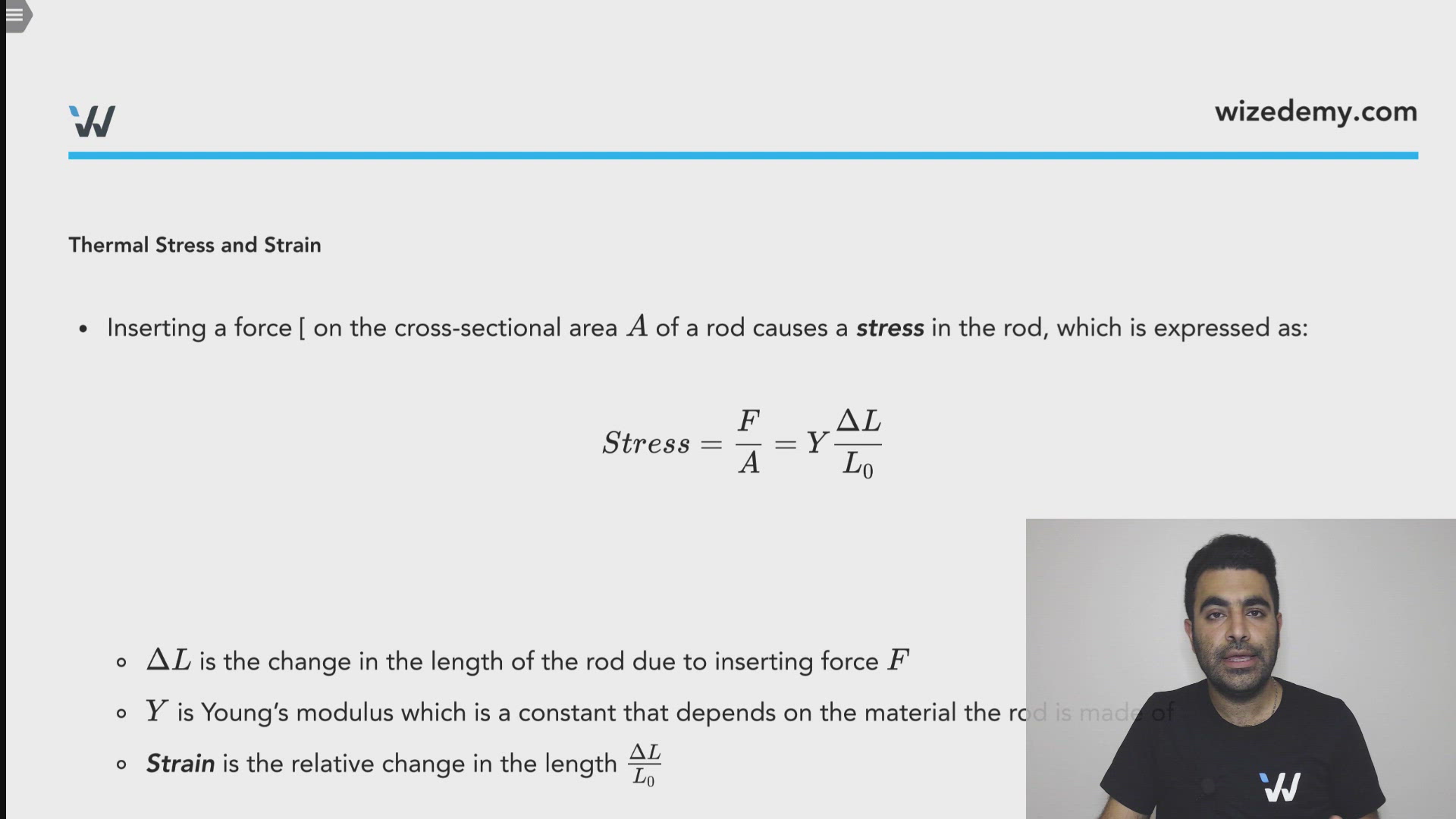
- Inserting a force [ on the cross-sectional area of a rod causes a stress in the rod, which is expressed as:
- is the change in the length of the rod due to inserting force
- is Young’s modulus which is a constant that depends on the material the rod is made of
- Strain is the relative change in the length
- The Young’s modulus of different material is shown in Table 3 below
Young’s Modulus of Different Materials
- Preventing the expansion or contraction of a rod due to change in its temperature causes a stress in the rod which is called thermal stress
- To calculate the thermal stress, we find the change in the length of the rod if it was free to expand or contract and find the stress needed to bring it back to its original length
- For a single rod fixed at both ends:
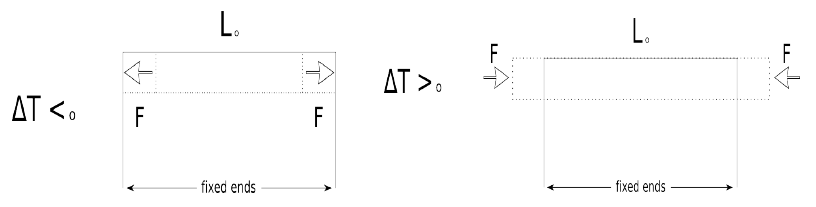
- The direction of is opposite to the change in the length
- The inward force is negative and the outward force is positive
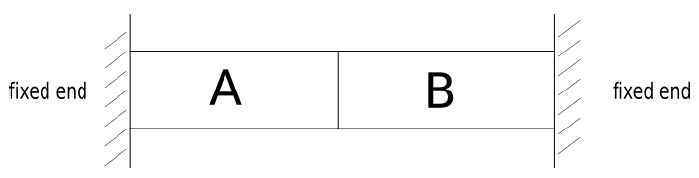
- For two rods in series and fixed at both ends:
0:00 / 0:00
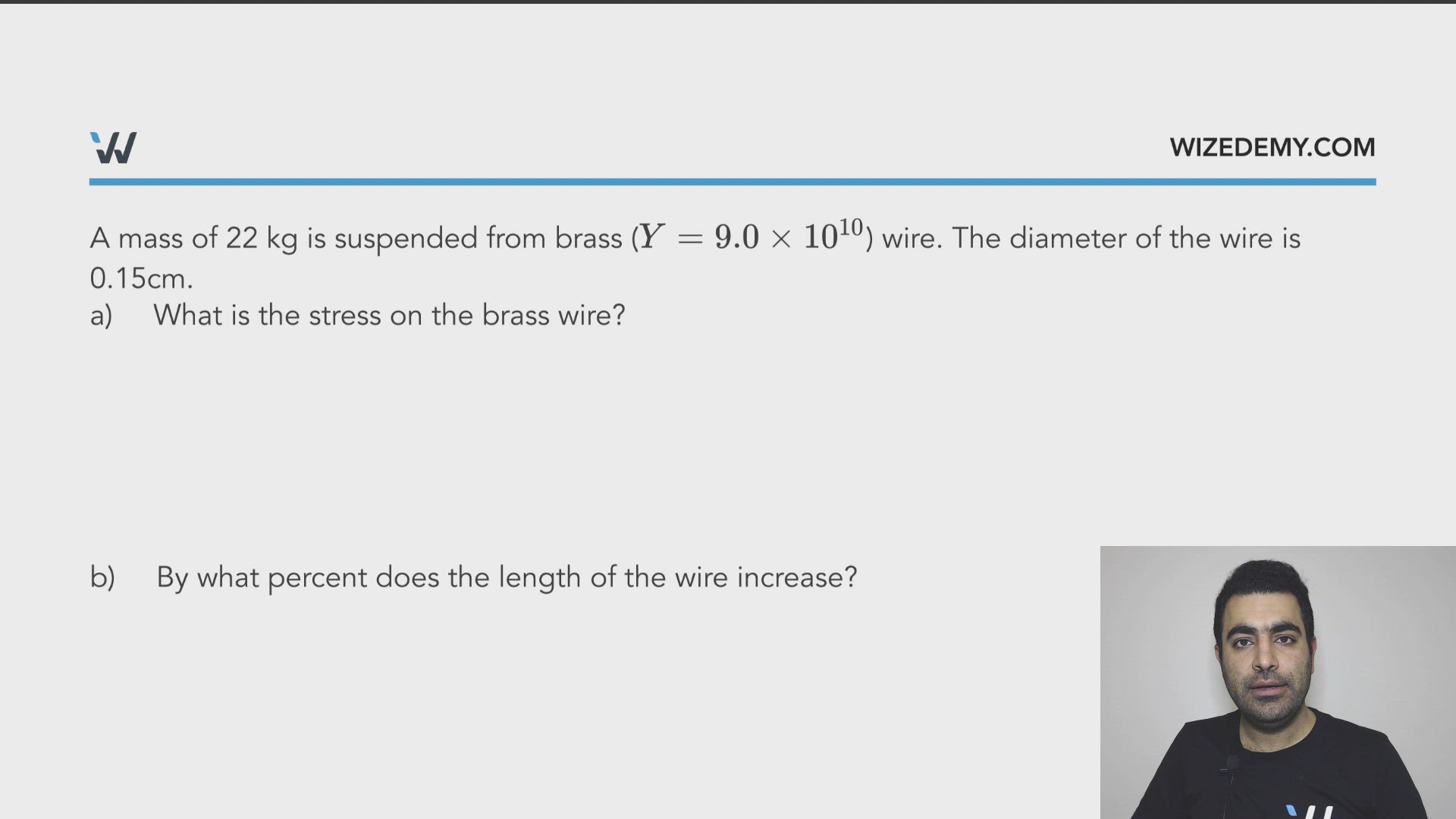
A mass of 22 kg is suspended from brass () wire. The diameter of the wire is 0.15cm.
a) What is the stress on the brass wire?
b) By what percent does the length of the wire increase?
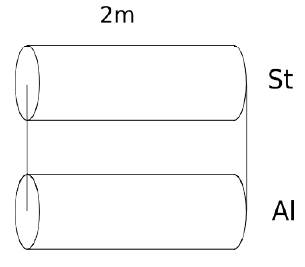
An aluminum rod is attached to a steel bar as shown in the figure below so that they expand or stretch together. The length of these bars is at and the cross-sectional area of both bars are the same. How much is the stress in each bar at ?