Wize University Statics Textbook (Master) > Force Vectors
Forces Cartesian Vector Form (2D)
Popular Courses
ENGG 130
University of Alberta
CIV100H1
University of Toronto
PCS 211
Toronto Metropolitan University
ENGG 202
University of Calgary
ENGSCI 1022A/B/Y
Western University
GNG 1105
University of Ottawa
PHYS 124
University of Alberta
APSC 111
Queen's University
PHYS 111
University of Waterloo
PCS 120
Toronto Metropolitan University
ENGR 242
Concordia University
PHYS 117
University of British Columbia
PHYC 1190
Dalhousie University
ENGG 212
University of Calgary
ENGR 141
University of Victoria
PHYS-1300
University of Windsor
PHY 1121
University of Ottawa
CE 221
Michigan State University
PHY 1124
University of Ottawa
PHYS 121
University of Waterloo
0:00 / 0:00
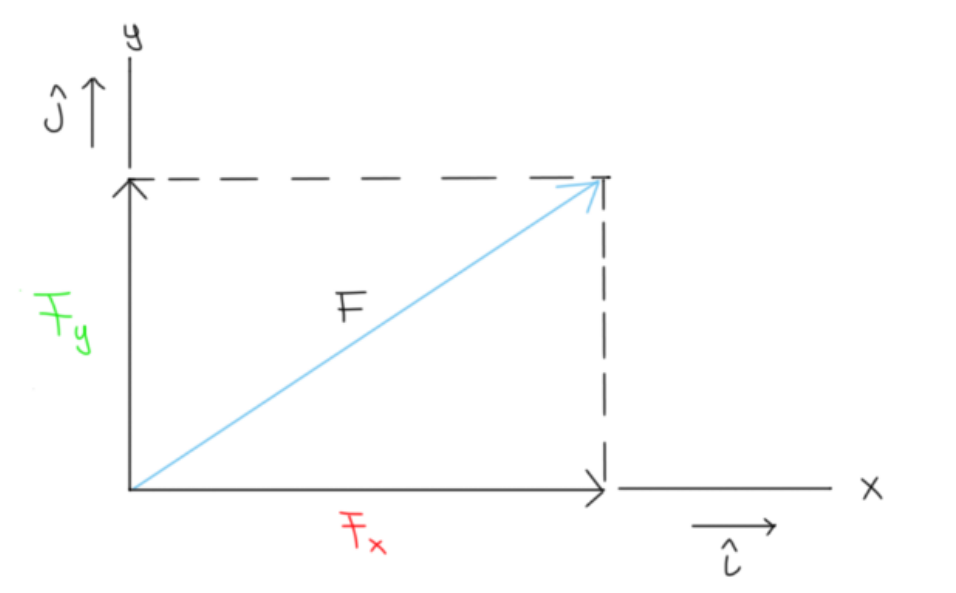
We can represent the x and y components of a force in terms of Cartesian unit vectors i and j. These are called unit vectors because they have a dimensionless magnitude of 1. They are used to assigned the directions along the x and y axes.
For a Force (F) below, the Cartesian vector for F is,
The resultant for co-planar forces (forces in the same plane) can be determine by using the Cartesian vector format. For the figure below, each for can be represented in its Cartesian vector,
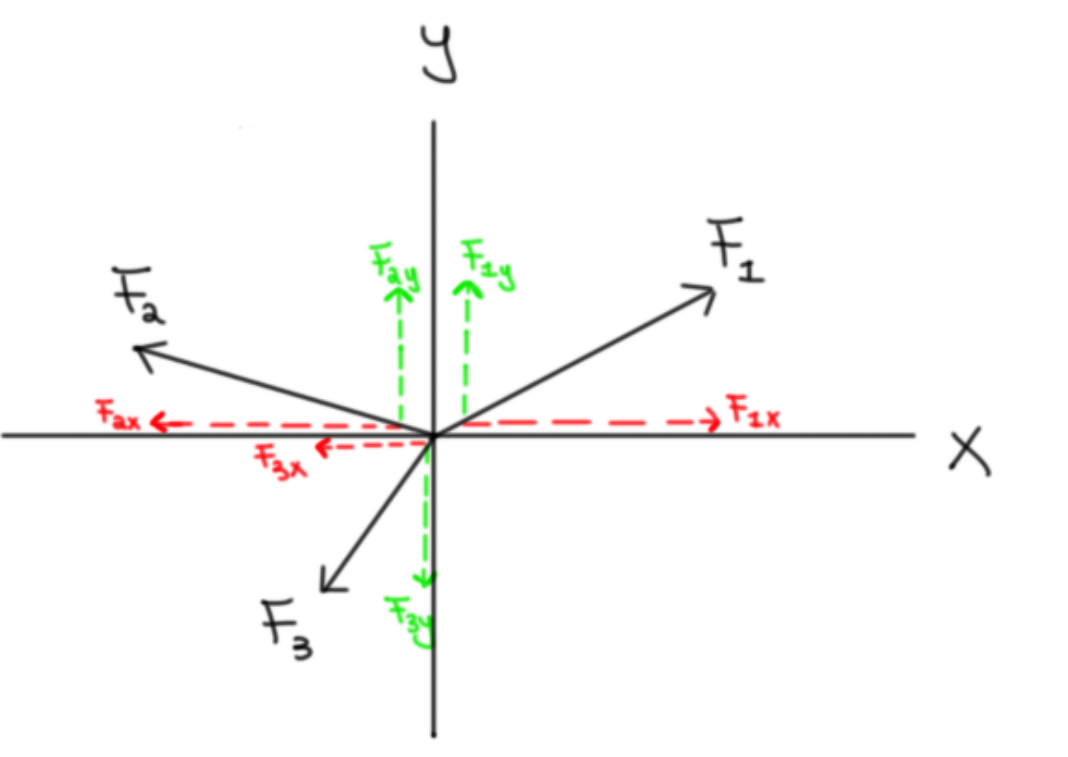
We combine the i and j components for each force to determine the vector resultant,
Therefore we can represent the resultant force for several co-planar forces by taking the sum of the x and y components for all the forces,
The magnitude of the resultant force is arrived at by using the following expression,
The direction of the resultant force is determined from trigonometry,
0:00 / 0:00
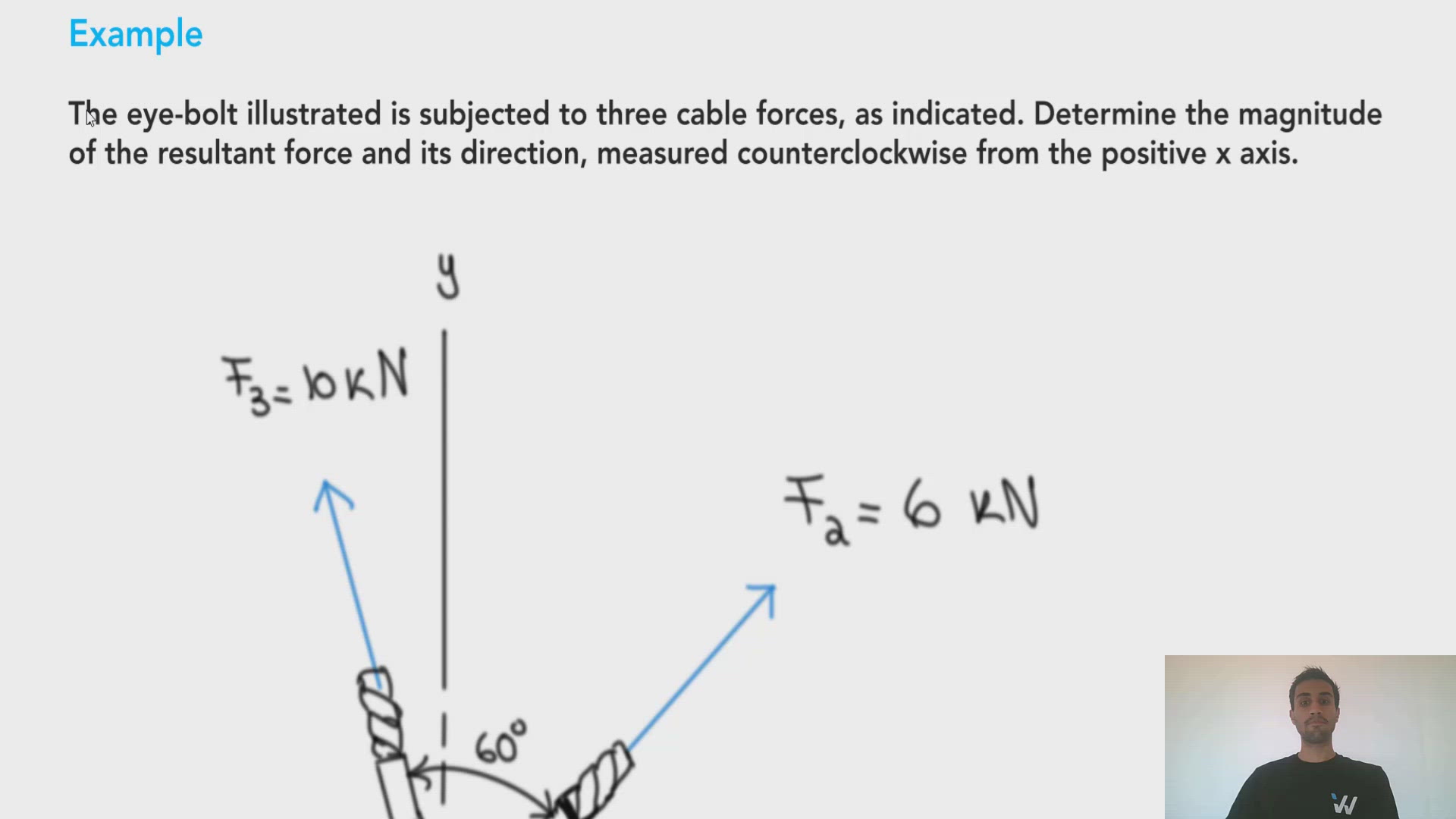
Example
The eye-bolt illustrated is subjected to three cable forces, as indicated. Determine the magnitude of the resultant force and its direction, measured counterclockwise from the positive x axis.
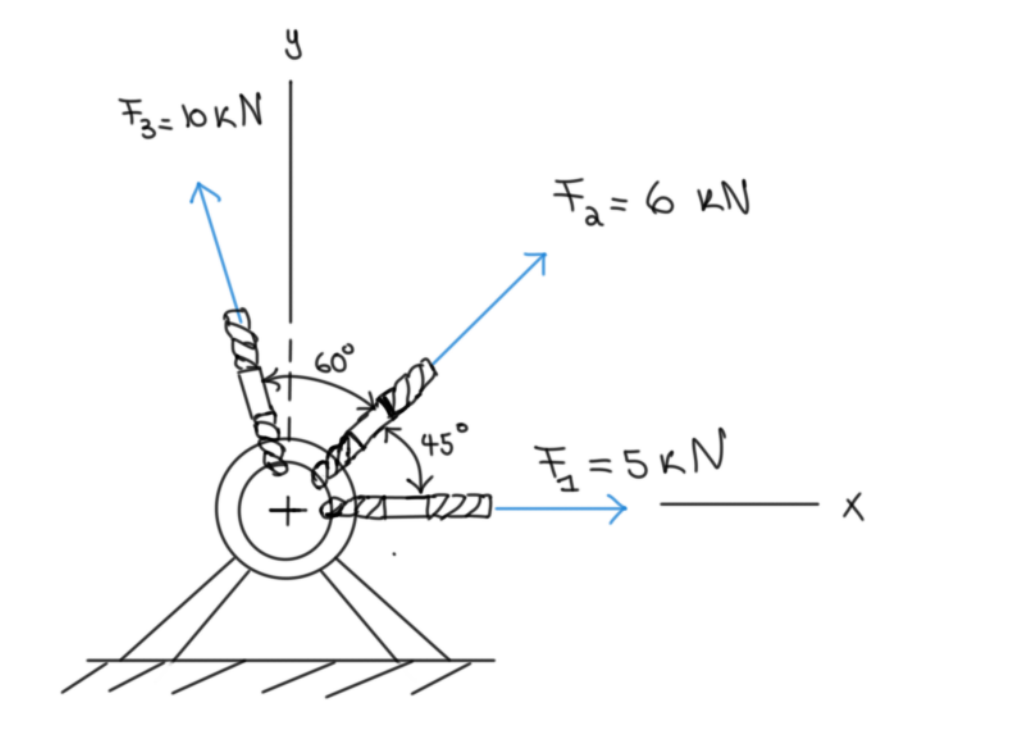
We will apply the following principles,
1) Sum the Cartesian force components along x and y axes,
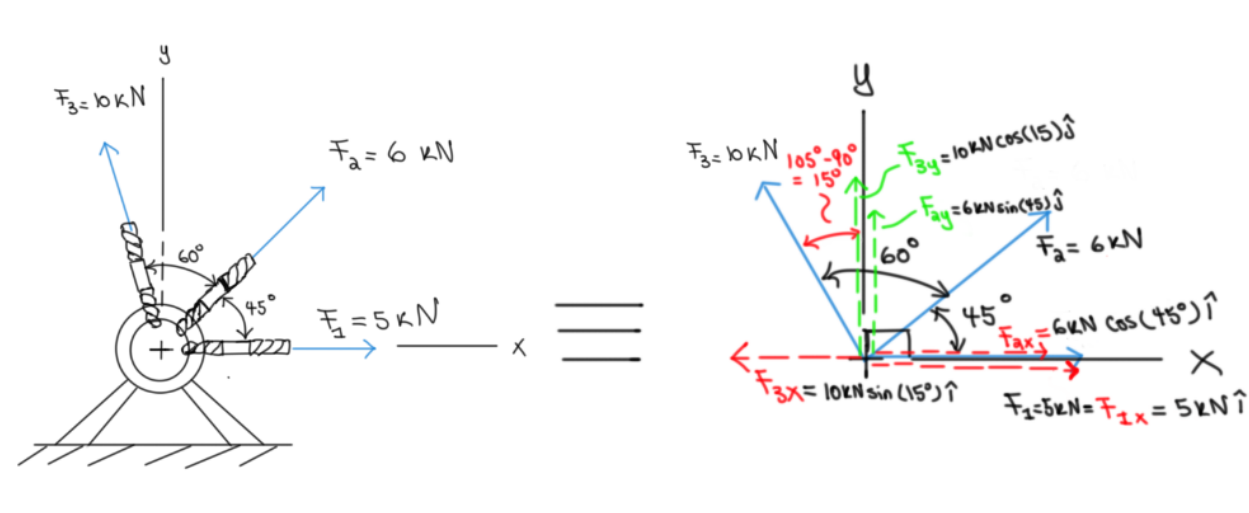
2) Magnitude ,
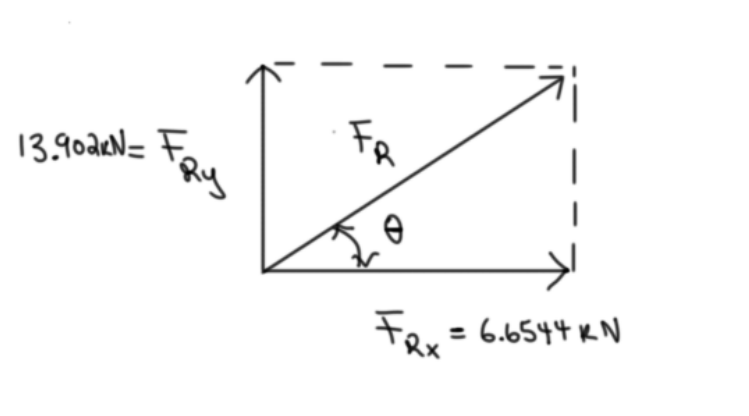
3) Directional angle for measured counterclockwise from the positive x axis,
Practice
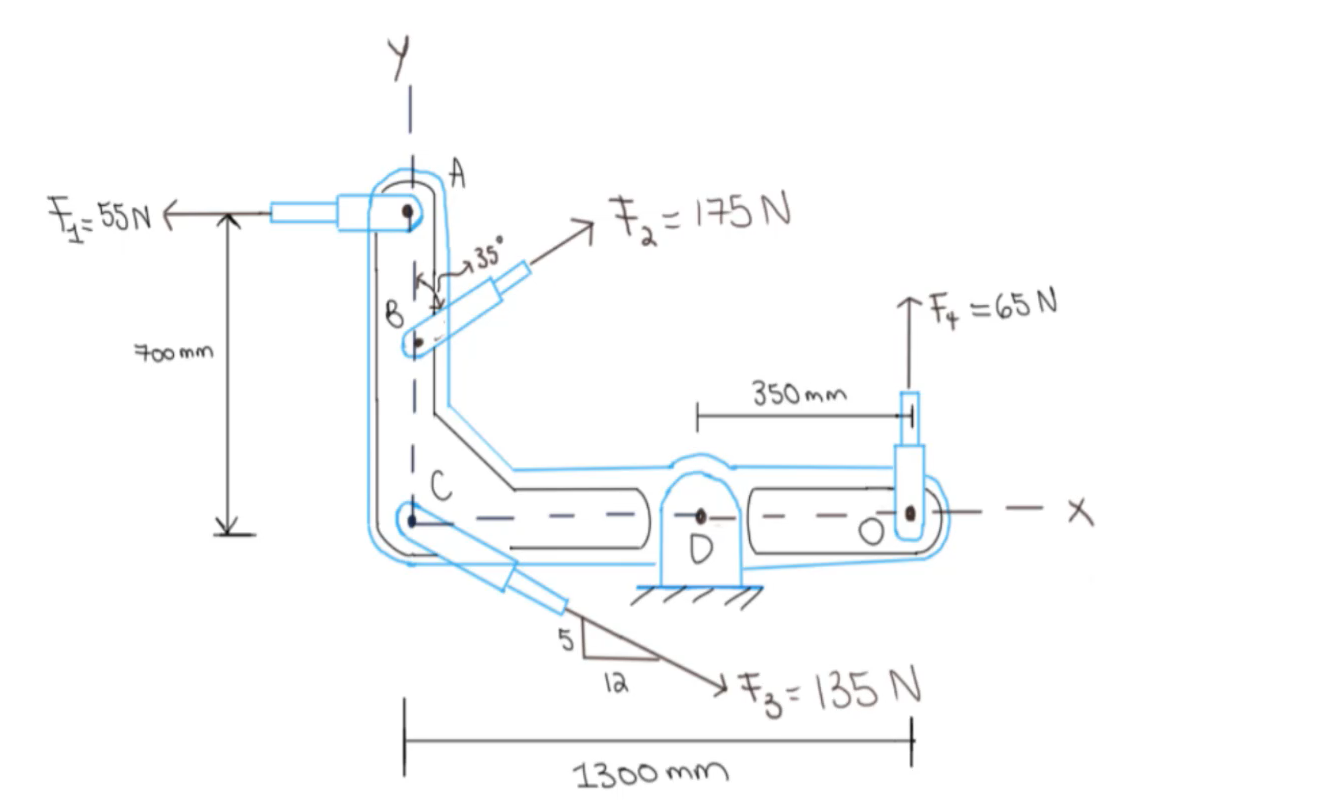
Determine the single resultant of the four forces applied to the bracket is and it's direction counterclockwise from the positive x-axis.

Mark Yourself Question
- Grab a piece of paper and try this problem yourself.
- When you're done, check the "I have answered this question" box below.
- View the solution and report whether you got it right or wrong.
Represent the following forces in Cartesian vector form.