Wize University Physiology Textbook > Cellular and Membrane Physiology
Faciliated Diffusion and Active Transport
Popular Courses
MCAT
General Course
Intro to Physiology
University Study Guides
PHYSIOL 1021
Western University
PHYS*1080
University of Guelph
PHYSIOL 2130
Western University
Intro to Physiology
University Study Guides
PSL300H1
University of Toronto
PHYSL 210
University of Alberta
PHGY 210
McGill University
PHGY 215
Queen's University
KNES 259
University of Calgary
PHGY 216
Queen's University
BIOL 273
University of Waterloo
BIOL 260
University of British Columbia
PHYSIOL 3120
Western University
KNES 260
University of Calgary
BIOL 116
Case Western Reserve University
PPT 301
University of North Dakota
ANAT 212
McGill University
HTHSCI 2FF3
McMaster University
0:00 / 0:00
There are two main types of carrier-mediated transport systems: (1) Facilitated Diffusion and (2) Active Transport. Mediated transport has 3 key characteristics: a) specificity, b) saturation and c) competition.
Several factors are important when it comes to how much solute flows through these systems:
- Number of transporters
- Solute concentration
- Affinity of the transporter for the molecule
- Rate of conformational change


0:00 / 0:00
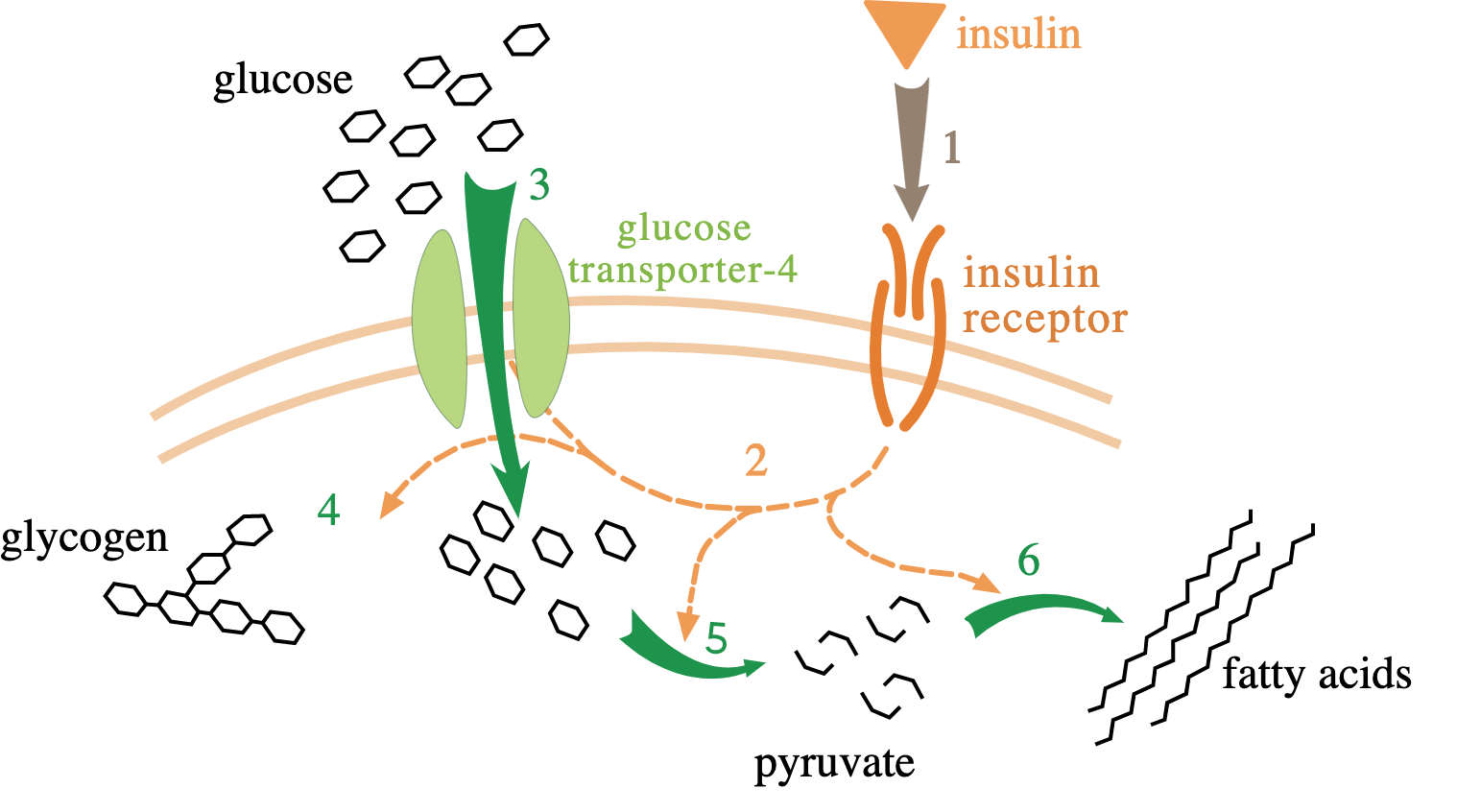
(1) Facilitated Diffusion
Involves a carrier or transporter protein that facilitates the movement of a molecule through the membrane.
- Requires a conformational change of the carrier upon binding, which then returns to its original configuration.
- Requires no energy as it occurs down the concentration gradient
- Example: GLUT4 transporter of glucose
(2) Active Transport
Also involves a carrier or transporter. There are two types: primary and secondary active transport.
- Can transport solutes against its concentration gradient
- Therefore, requires the input of energy
- When there's no energy available, this cannot occur
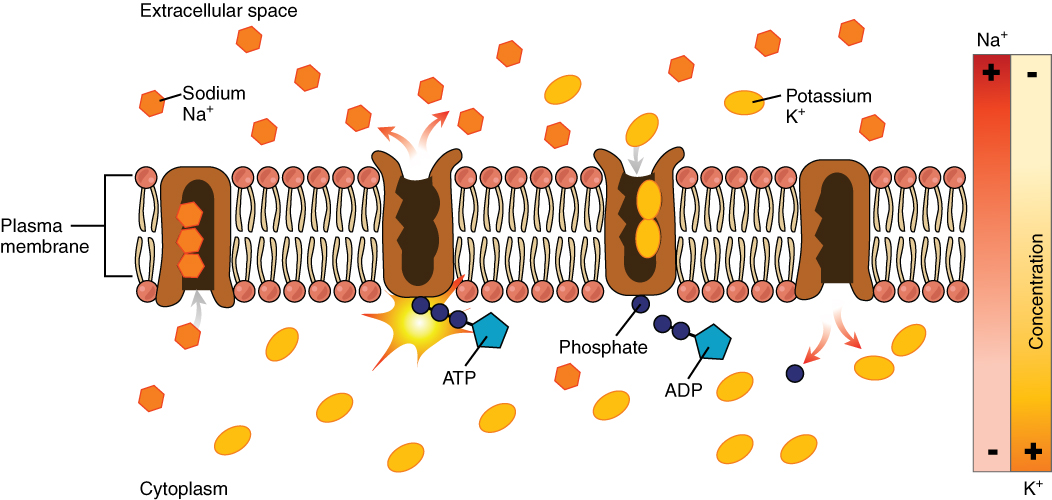
a) Primary Active Transport
- ATP is used as the source of energy
- The transporter/carrier itself is an ATPase enzyme
- Carrier takes a phosphate from ATP, changing its conformation
- Examples: Na+/K+ ATPase, Ca2+ ATPase, H+ ATPase, H+/K+ ATPase
b) Secondary Active Transport
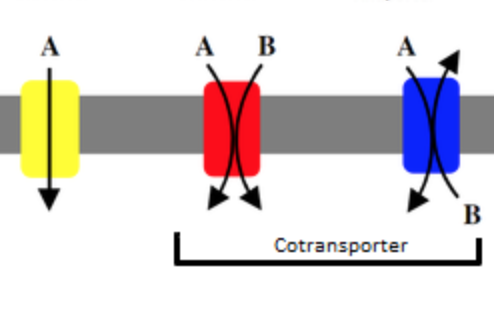
- Energy used is from the movement of one ion down its electrochemical gradient, while another ion moves up its gradient
- When both solutes move in the same direction, this is called cotransport (hitching a ride)
- When solutes move in opposite directions, this is called countertransport (club is at capacity)
- Examples:
- Cotransport: Na+/glucose cotransporter, Na+/amino acid cotransporter
- Countertransport: Na+/H+ exchanger, Cl-/HCO3-exchanger, Na+/Ca2+ exchanger
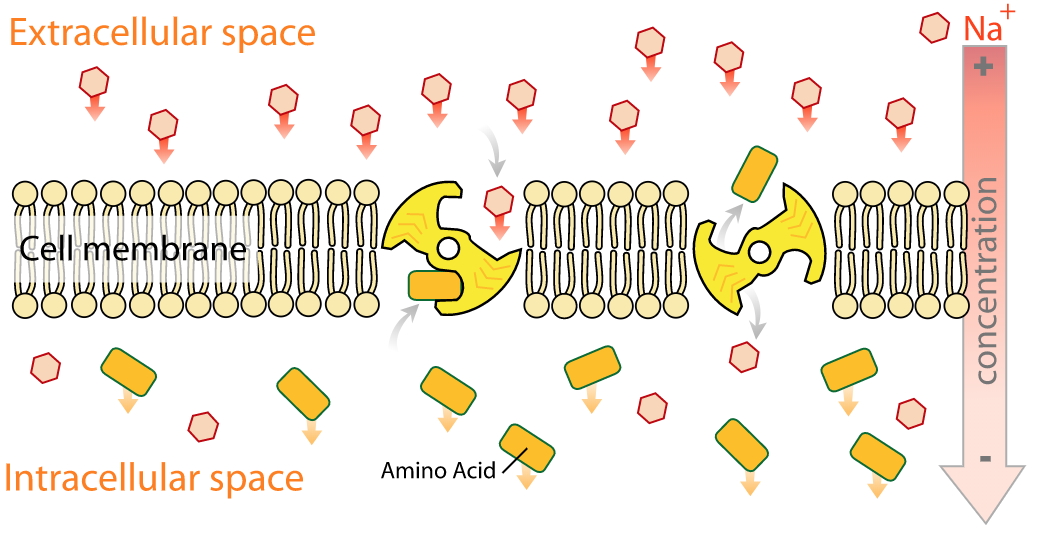
Summary
- Both require input of energy
- Both move solutes against their electrochemical gradients
- Primary active transport uses ATPases
- Secondary active transport uses another molecule that moves down its gradient
Imagine you have to design a carrier to transport molecule X into a cell against its concentration gradient (it cannot cross the membrane through the phospholipid bilayer or a channel). The cellular environment in question has low ATP but abundant levels of Na+ ions in the extracellular space. How would you design this carrier to transport this molecule? What kind of transport would this be? Do you know any examples of this type of transport?
To design this carrier, several things should be considered:
1) The molecule to be transported will go against its concentration gradient: this will require active transport
2) The cell is low on ATP, but has lots of Na+: the sodium gradient can be used as the energy to transport the molecule
3) Since Na+ is abundant extracellularly, it will be going into the cell: the carrier should be cotransporter
Therefore, designing a Na+/molecule X cotransporter would be a great solution to this problem. This carrier would be doing secondary active transport. Examples of this include the Na+/glucose or Na+/amino acid cotransporters.
Which of the following statement(s) are true regarding primary active transport?
Regarding facilitated diffusion, which of the following is FALSE?
Which of the following is TRUE regarding secondary active transport?