Wize University Physiology Textbook > Cellular and Membrane Physiology
Endocytosis and Exocytosis
Popular Courses
MCAT
General Course
Intro to Physiology
University Study Guides
PHYSIOL 1021
Western University
PHYSIOL 2130
Western University
Intro to Physiology
University Study Guides
PSL300H1
University of Toronto
PHYSL 210
University of Alberta
PHGY 210
McGill University
PHGY 215
Queen's University
KNES 259
University of Calgary
PHGY 216
Queen's University
BIOL 273
University of Waterloo
BIOL 260
University of British Columbia
PHYSIOL 3120
Western University
KNES 260
University of Calgary
BIOL 116
Case Western Reserve University
PPT 301
University of North Dakota
ANAT 212
McGill University
HTHSCI 2FF3
McMaster University
KNES 323
University of Calgary
Endocytosis and Exocytosis
A way for molecules to enter or exit the cell without requiring them to pass through the membrane structure. Both require energetic input and utilize the cell membrane.
A) Exocytosis
Membrane-bound intracellular vesicles merge with the cell membrane to expel its contents into the extracellular space.
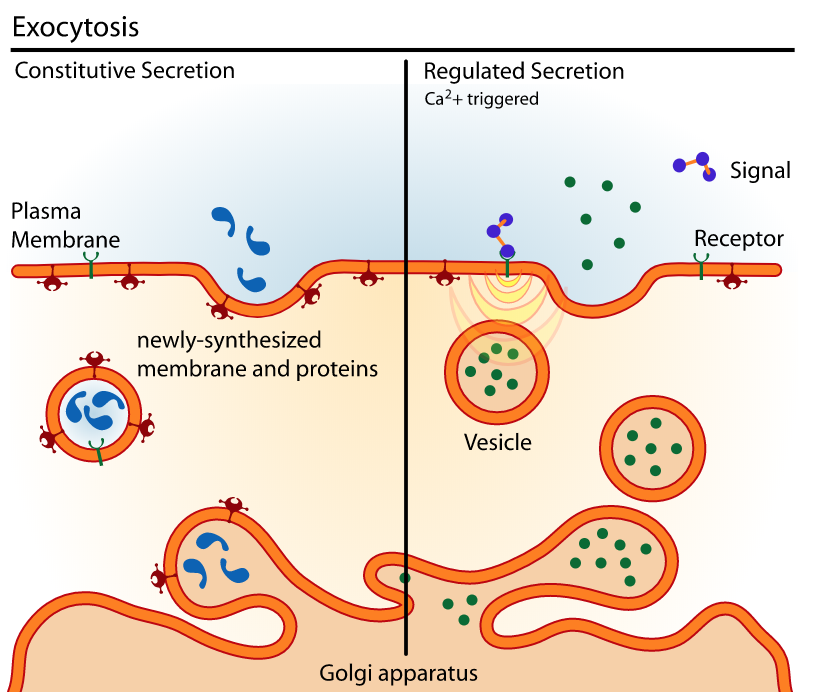
B) Endocytosis:
Can be thought of as the opposite of exocytosis. Membrane folds into the cell (invaginates) and pinch off to produce membrane-bound vesicles inside the cell containing extracellular components/fluids.

- Pinocytosis: fluid endocytosis ("cell drinking")
- Most cells can do this
- Phagocytosis: solid endocytosis ("cell eating")
- Cell engulfs bacteria, other cell debris from tissue death, etc.
- Pseudopodia ("sham feet") are created to surround material
- Usually specialized cells such as macrophages/other immune cells
- Receptor-mediated endocytosis: specific uptake triggered by receptor binding
- Clathrin-dependent
- Formation of a clathrin-coated vesicle
- Example: cholesterol binds to LDL receptor in liver and clathrin is recruited in cytoplasm and coats the vesicles from the inside
- Potocytosis: clathrin-independent
- Formation of tiny vesicles called caveolae that deliver their contents to cytosol
Which of the following statement(s) are false regarding phagocytosis?
Pinocytosis: