Wize University Physiology Textbook > Sensory Physiology
Auditory Modality
Popular Courses
MCAT
General Course
DAT
General Course
Intro to Physiology
University Study Guides
PHYSIOL 1021
Western University
PHYSIOL 2130
Western University
Intro to Physiology
University Study Guides
PSL300H1
University of Toronto
PHYSL 210
University of Alberta
PHGY 210
McGill University
PHGY 215
Queen's University
KNES 259
University of Calgary
PHGY 216
Queen's University
BIOL 273
University of Waterloo
BIOL 260
University of British Columbia
PHYSIOL 3120
Western University
KNES 260
University of Calgary
BIOL 116
Case Western Reserve University
PPT 301
University of North Dakota
ANAT 212
McGill University
HTHSCI 2FF3
McMaster University
0:00 / 0:00
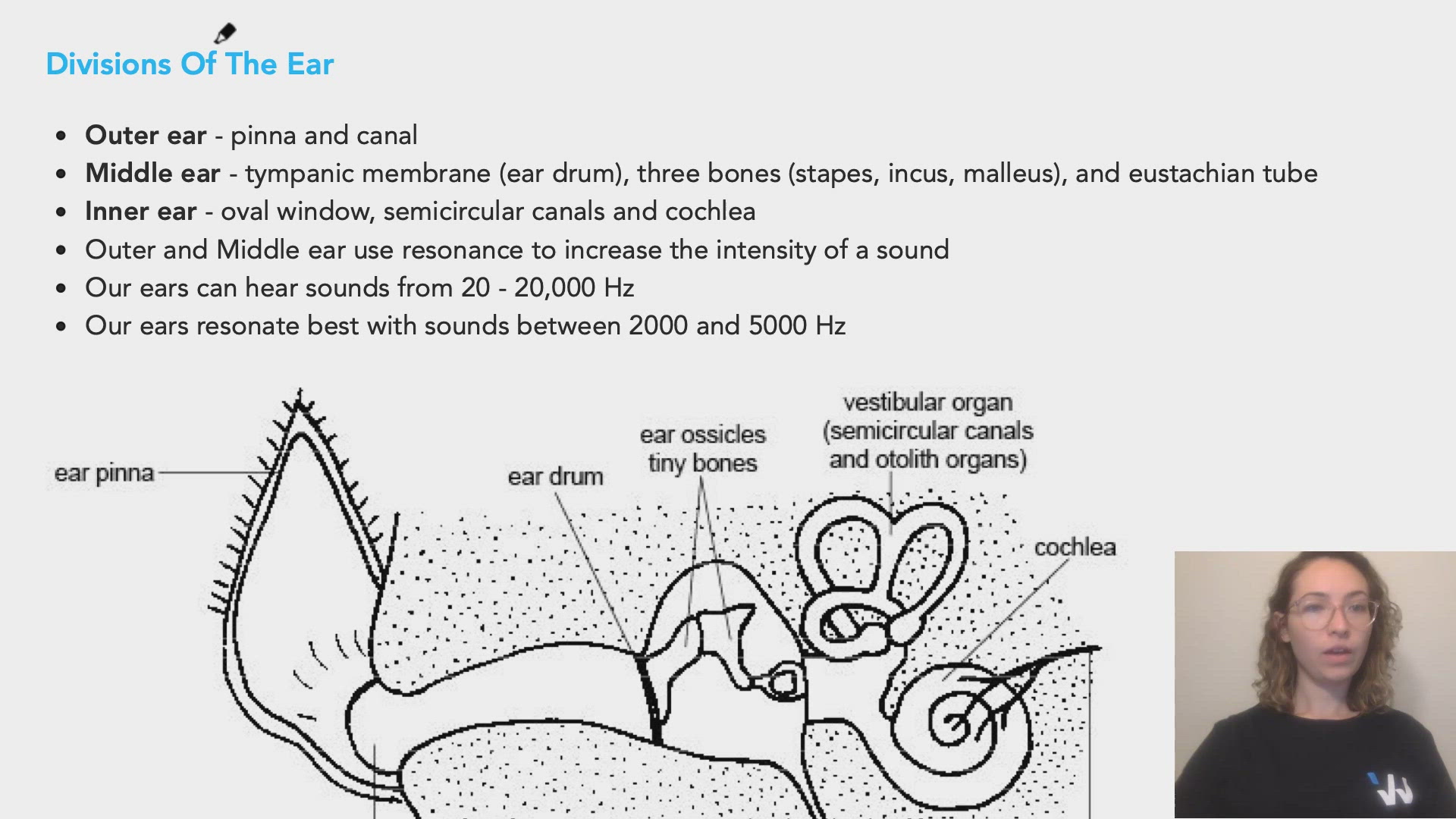
Divisions Of The Ear
- Outer ear - pinna and canal
- Middle ear - tympanic membrane (ear drum), three bones (stapes, incus, malleus), and eustachian tube
- Inner ear - oval window, semicircular canals and cochlea
- Outer and Middle ear use resonance to increase the intensity of a sound
- Our ears can hear sounds from 20 - 20,000 Hz
- Our ears resonate best with sounds between 2000 and 5000 Hz

commons.wikimedia.org
Outer Ear
- Responsible for protecting middle and inner ear
- Responsible for moving sound from the external environment to the middle ear.
Middle Ear
- Sound is amplified
- Bones convert air pressure changes (sound waves) to physical movement so it can move through the fluid in the cochlea
Inner Ear
- The cochlea
- The oval window and the round window are the two holes that lead into the cochlea from the middle ear.
0:00 / 0:00
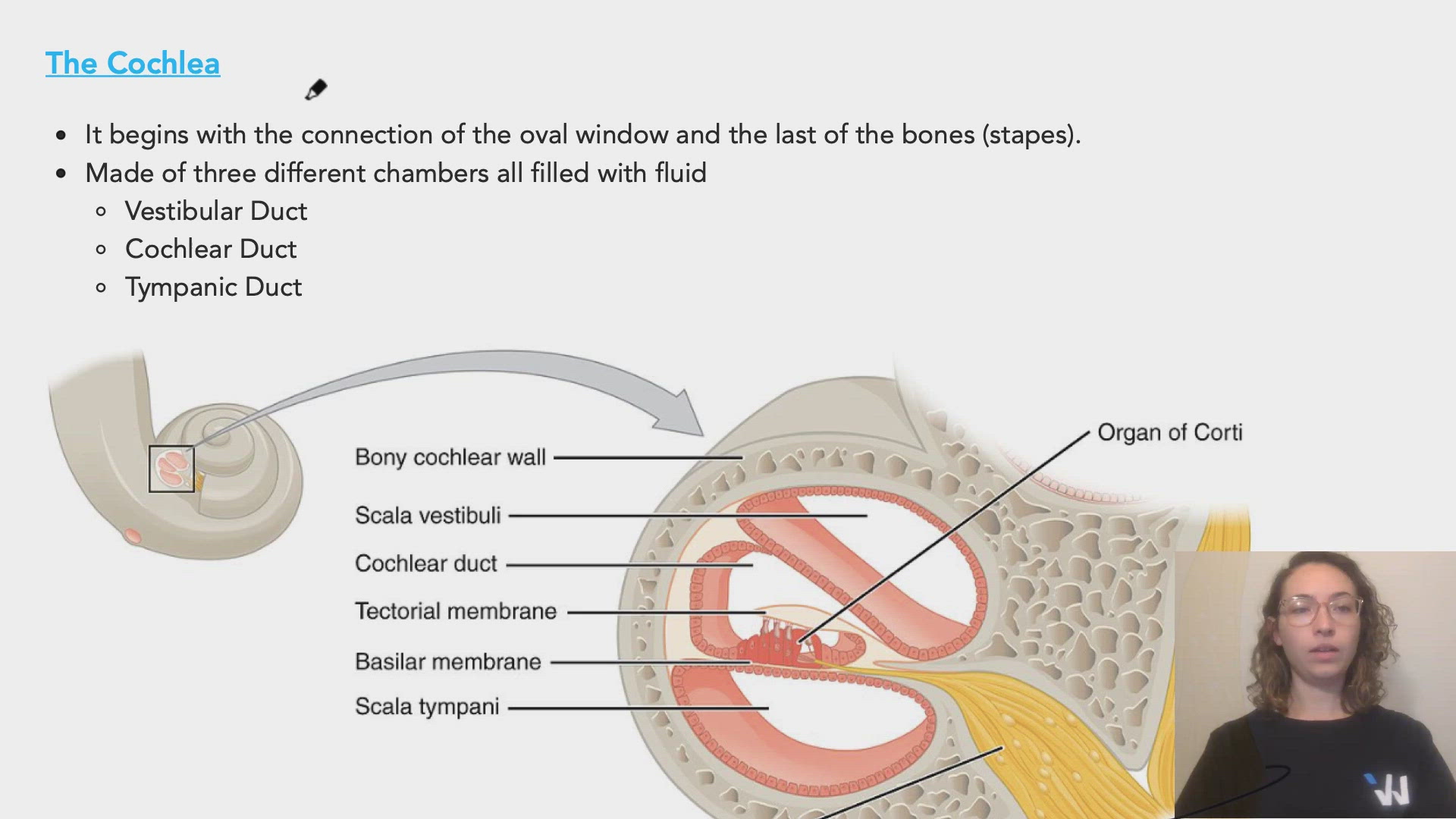
The Cochlea
- It begins with the connection of the oval window and the last of the bones (stapes).
- Made of three different chambers all filled with fluid
- Vestibular Duct
- Cochlear Duct
- Tympanic Duct

commons.wikimedia.org
The Basilar Membrane
- Shaped like a wedge
- The base (closes to the middle ear) is thin and stiff --> high frequencies
- The apex is wide and floppy --> low frequencies

commons.wikimedia.org
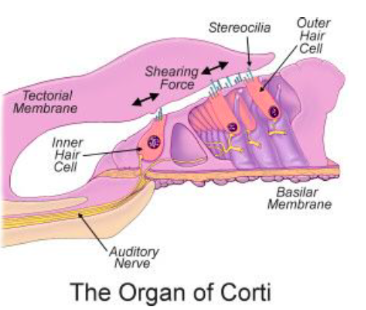
Organ of Corti
- Sits on the basilar membrane
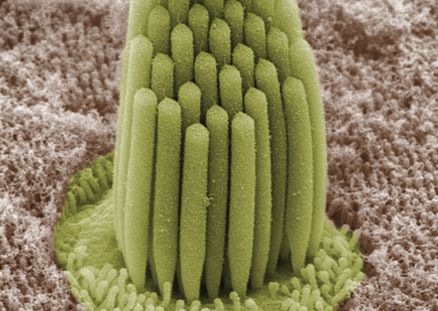
- Contains hair cells that respond to vibrations of the basilar membrane
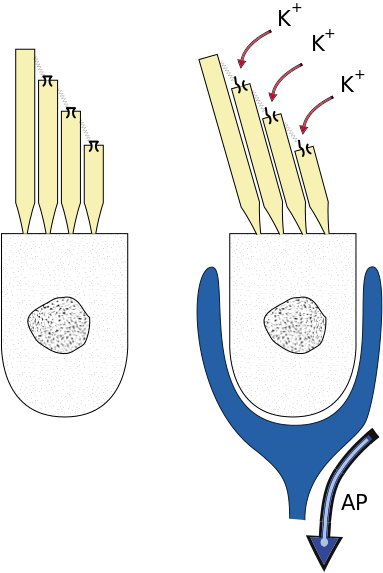
- Basilar membrane vibrates --> the stereocilia drag against the tectorial membrane (just above the hair cells).
- The hair cells have mechanoreceptors --> stretch causes the hair cells to depolarize (mechanotransduction)
- Ion channels in the stereocilia activate afferent neurons
- The hair cells are connected to nerves that come together to form the cochlear nerve

commons.wikimedia.org
0:00 / 0:00
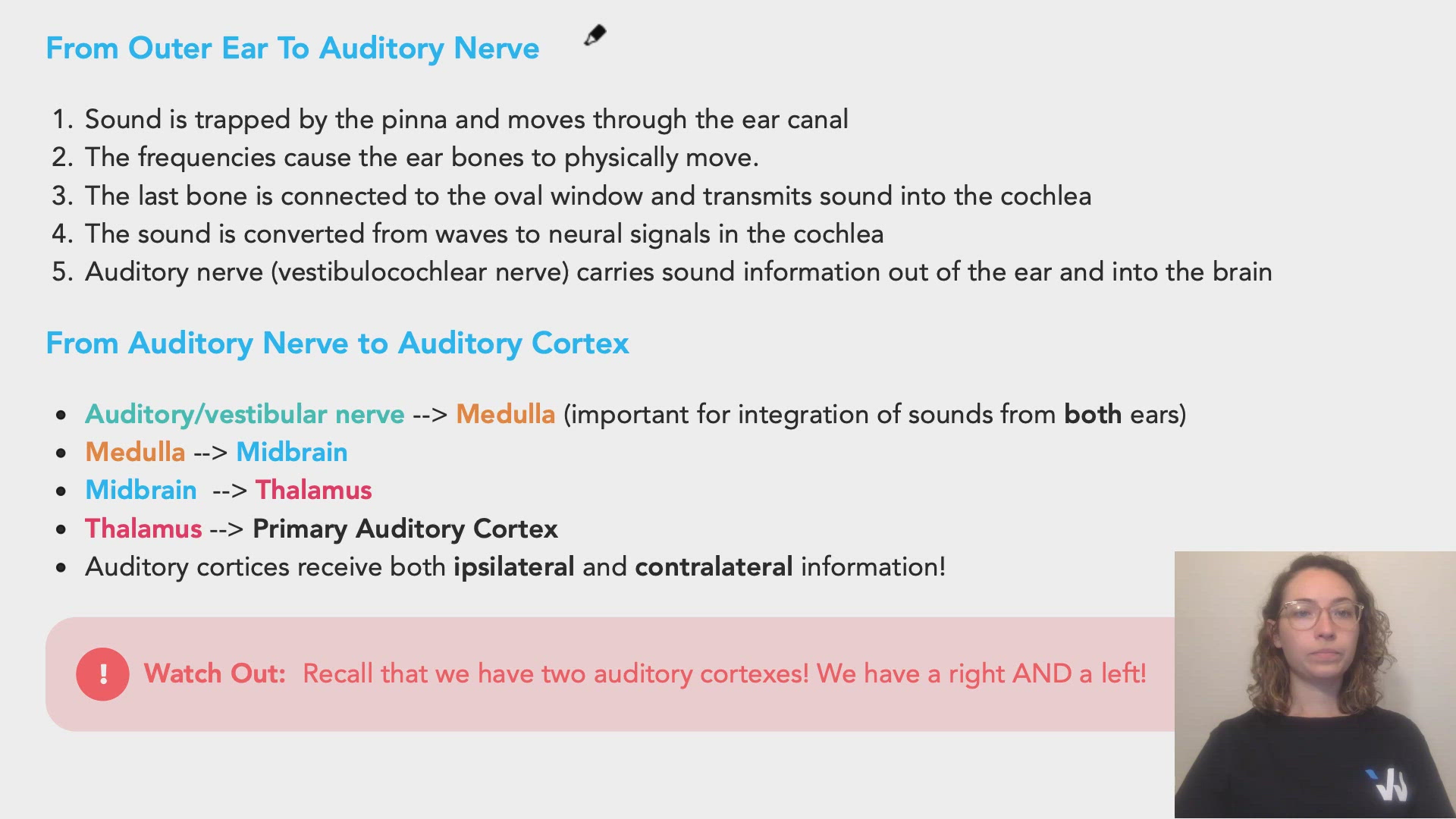
From Outer Ear To Auditory Nerve
- Sound is trapped by the pinna and moves through the ear canal
- The frequencies cause the ear bones to physically move.
- The last bone is connected to the oval window and transmits sound into the cochlea
- The sound is converted from waves to neural signals in the cochlea
- Auditory nerve (vestibulocochlear nerve) carries sound information out of the ear and into the brain
From Auditory Nerve to Auditory Cortex
- Auditory/vestibular nerve --> Medulla (important for integration of sounds from both ears)
- Medulla --> Midbrain
- Midbrain --> Thalamus
- Thalamus --> Primary Auditory Cortex
- Auditory cortices receive both ipsilateral and contralateral information!
Watch Out!
Recall that we have two auditory cortexes! We have a right AND a left!

0:00 / 0:00
Vestibular Organs
- Semicircular Canals --> detect angular acceleration
- Hair cells in the semicircular canal also have stereocilia
- They are connected to the cupula which can move when endolymph moves
- Utricle and Saccule --> detect linear acceleration
- Utricle - horizontal
- Saccule - vertical
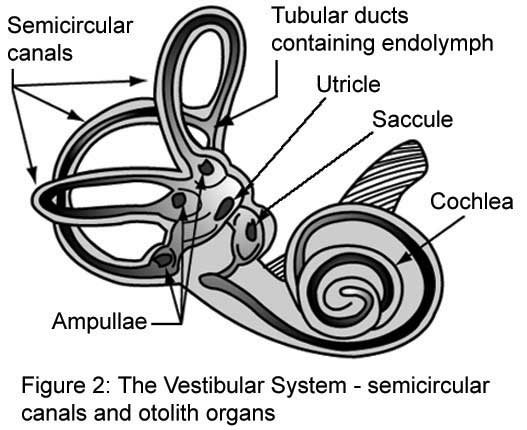
commons.wikipedia.org
0:00 / 0:00
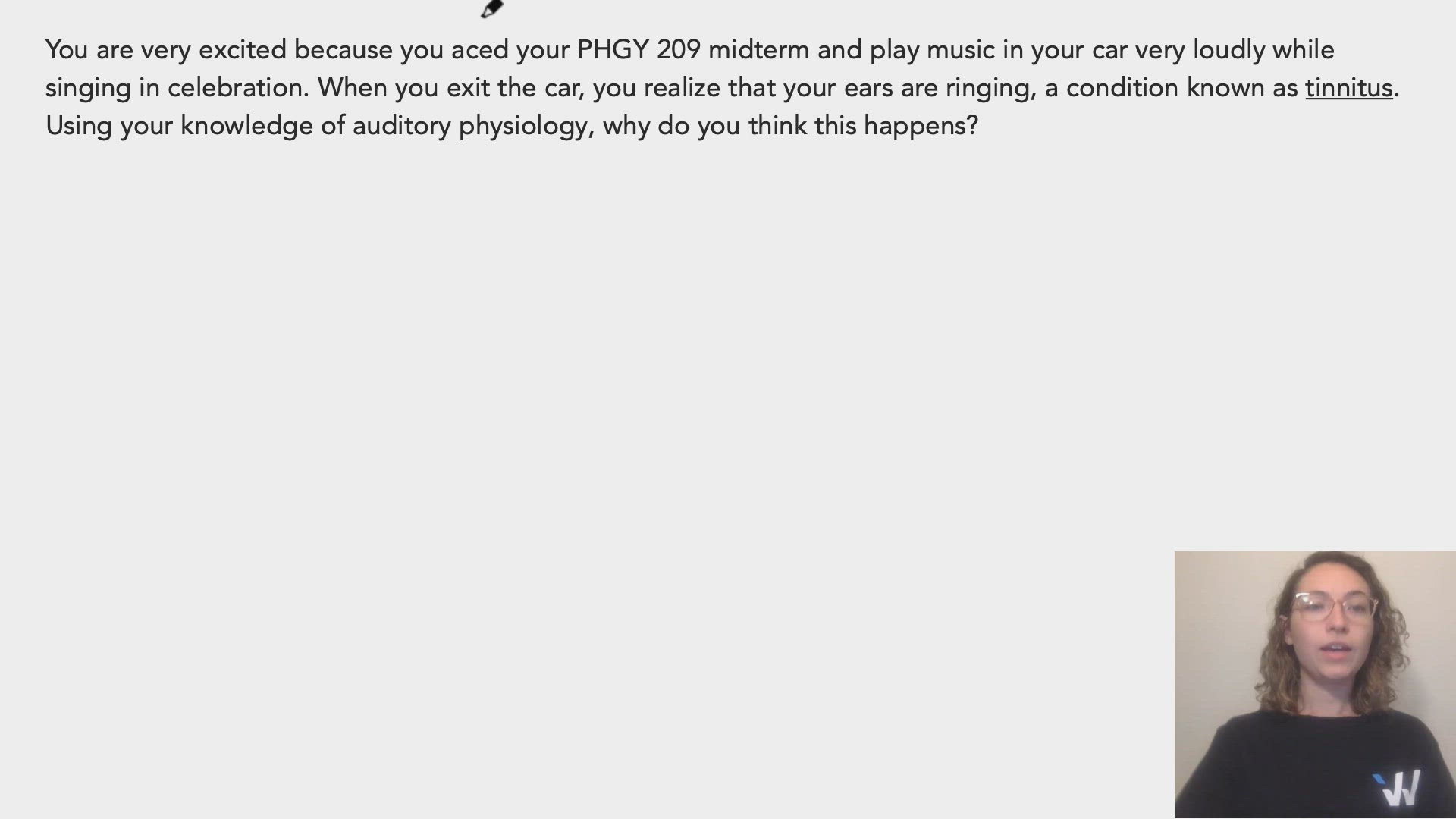
You are very excited because you aced your PHGY 209 midterm and play music in your car very loudly while singing in celebration. When you exit the car, you realize that your ears are ringing, a condition known as tinnitus. Using your knowledge of auditory physiology, why do you think this happens?
Tinnitus can occur for many reasons. For the purposes of your exam, keep in mind that a common cause is inner ear hair cell damage. Other causes include aging, earwax blockage, tumors, etc.
The hair cells:
- Respond to vibrations of the basilar membrane
- As it vibrates, the stereocilia drag against the tectorial membrane and cause the mechanoreceptors to depolarize
- Hair cells are connected to nerves that together form the cochlear nerve
0:00 / 0:00
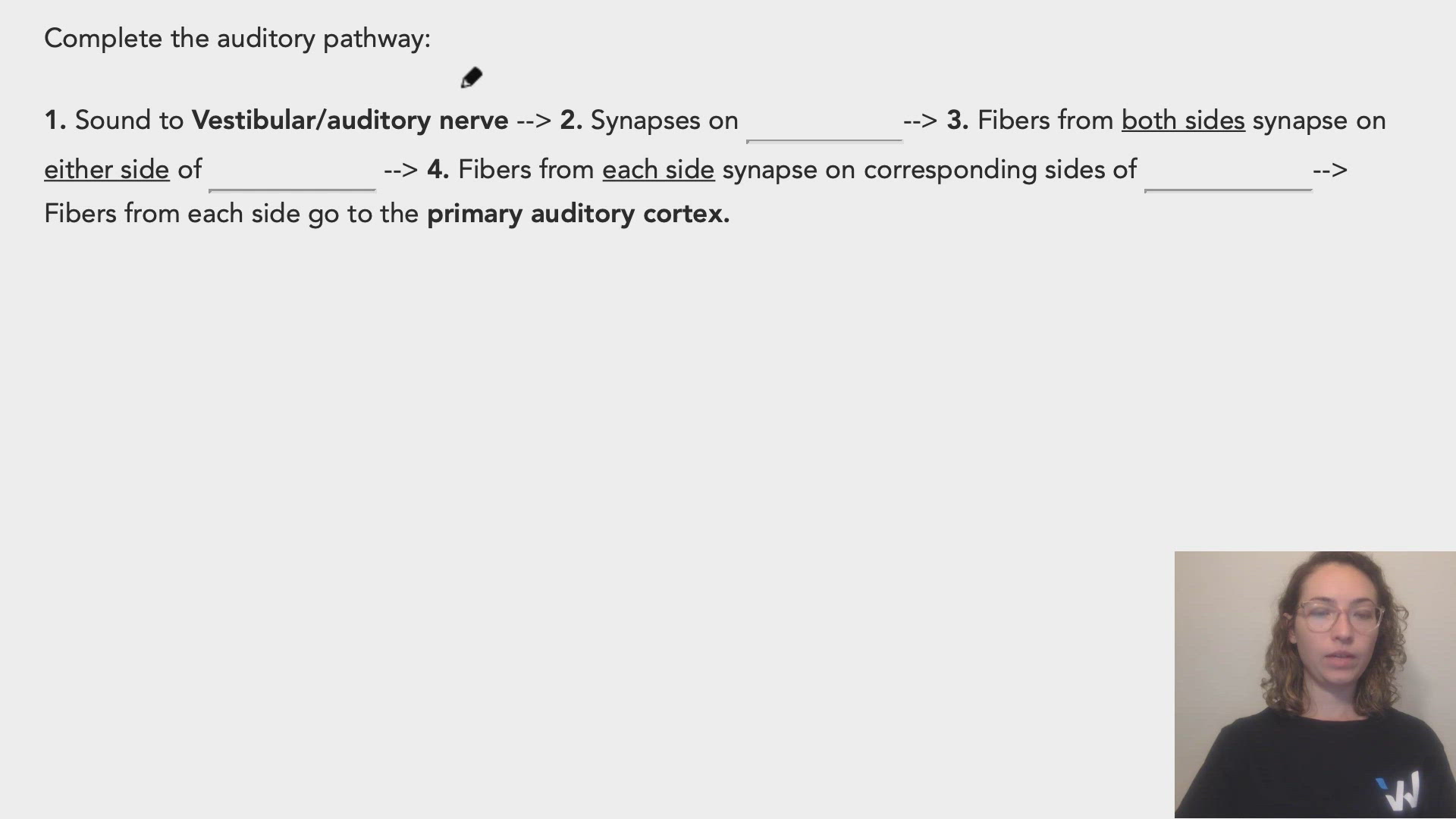
Complete the auditory pathway:
1. Sound to Vestibular/auditory nerve --> 2. Synapses on
medulla
--> 3. Fibers from both sides synapse on either side of midbrain
--> 4. Fibers from each side synapse on corresponding sides of thalamus
--> Fibers from each side go to the primary auditory cortex.Which of the following is incorrect?
Identify the correct statements: