Wize University Psychology Textbook > Neuroscience
The Forebrain - Subcortical Structures
Popular Courses
MCAT
General Course
Psychology
University Study Guides
PSYC 100
Queen's University
PSYCH 1000
Western University
PSYCH 104
University of Alberta
PSYCHOL 1002A/B
Western University
Psychology
University Study Guides
PSYC*1000
University of Guelph
PSYCH 1XX3
McMaster University
PSYC 100
McGill University
PSY100H1
University of Toronto
PSYC 101
University of British Columbia
HH/PSYC 1010 6.00
York University
PSYC 200
University of Calgary
PSYC 100B
Queen's University
PSYC 100A
University of Victoria
PSYC 200
Concordia University
PSYC 1004
Virginia Tech
PSYCH 100
Pennsylvania State University
PSC 001
University of California - Davis
0:00 / 0:00
The Forebrain - Subcortical Structures
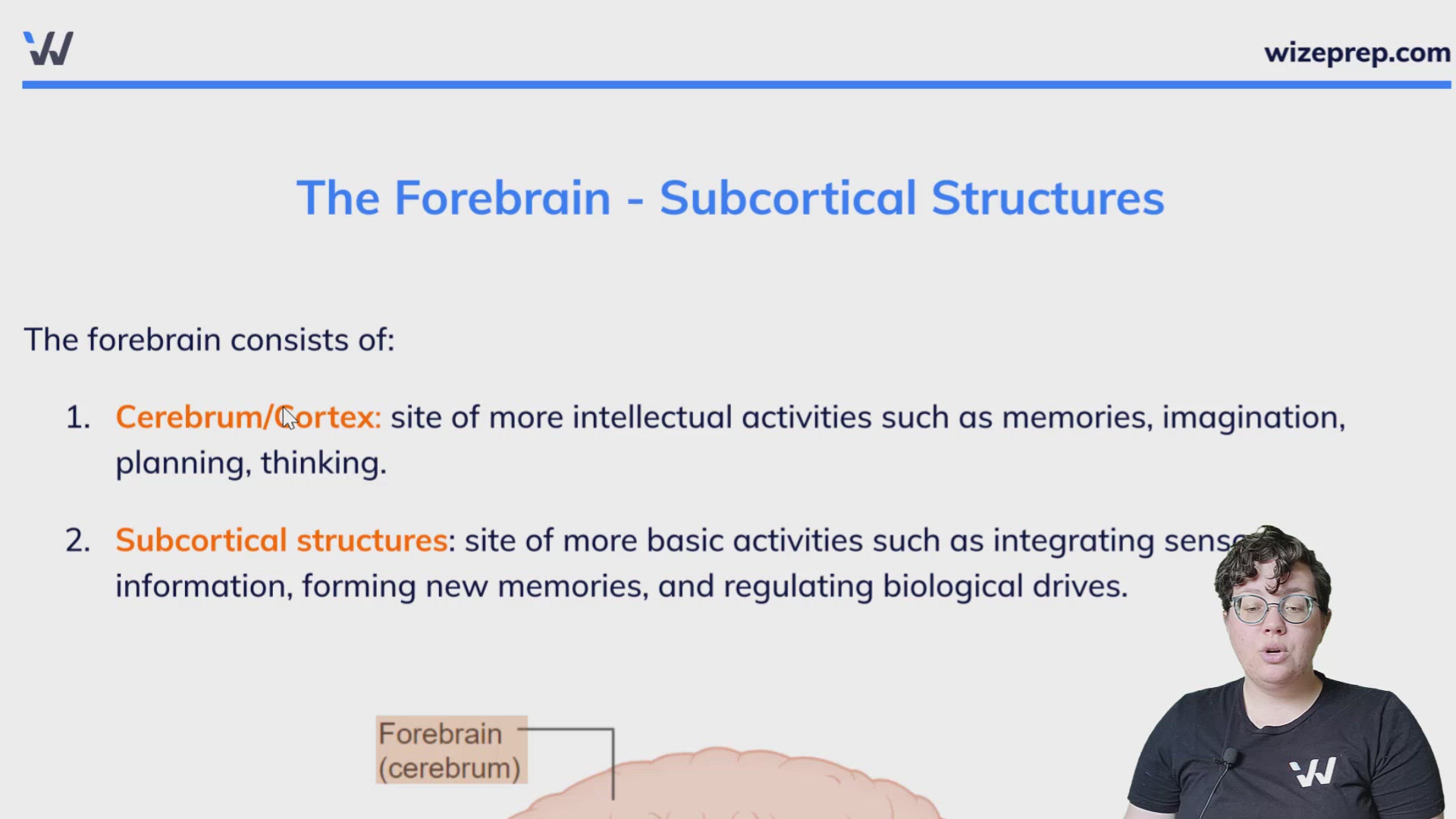
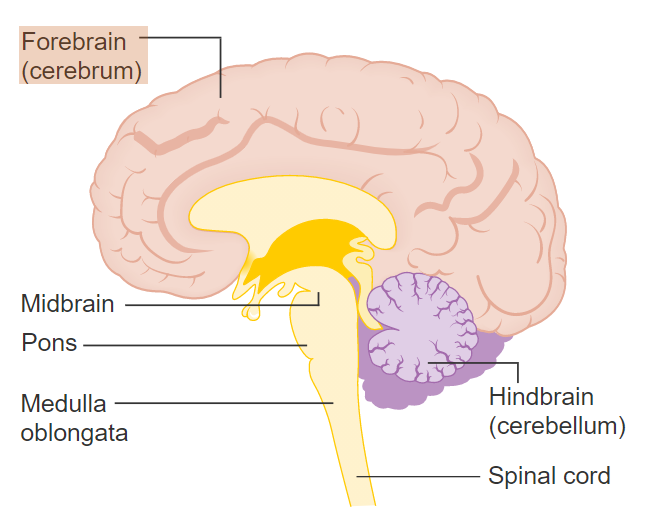
The forebrain consists of:
- Cerebrum/Cortex: site of more intellectual activities such as memories, imagination, planning, thinking.
- Subcortical structures: site of more basic activities such as integrating sensory information, forming new memories, and regulating biological drives.
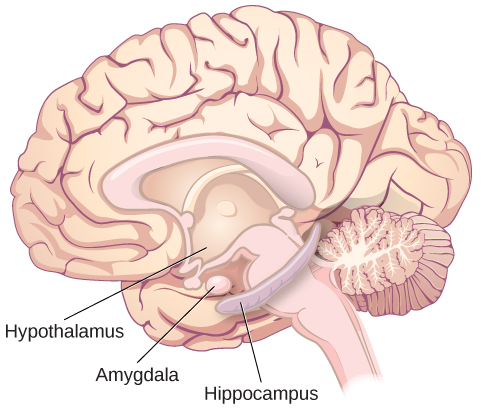
Thalamus - relay station for sensory information (except smell!).
Hypothalamus - regulation of biological drives and control of autonomic nervous system
Amygdala - basic emotional responses (fear, happiness, etc.), emotional learning, aggressiveness
Hippocampus - formation of new memories
Practice: The Forebrain - Subcortical Structures
Match the subcortical structures to their functions
A.
relay of sensory information
B.
emotion
C.
regulation of basic biological drives
D.
creation of new explicit memories
hippocampus
hypothalamus
thalamus
amygdala