Popular Courses
MCAT
General Course
Psychology
University Study Guides
PSYC 100
Queen's University
Psychology
University Study Guides
PSYC*1000
University of Guelph
PSYCHOL 1003A/B
Western University
PSYC 101
University of British Columbia
HH/PSYC 1010 6.00
York University
PSYC 200
University of Calgary
PSYC 102
University of British Columbia
PSYC 100B
Queen's University
PSYC 100A
University of Victoria
PSYC 200
Concordia University
PSYCH 100
Pennsylvania State University
PSC 001
University of California - Davis
PSY 2012
University of Florida
PSY 101
Michigan State University
PSYCH10
University of California - Los Angeles
PSY 101
San Diego State University
PSC 001Y
University of California - Davis
0:00 / 0:00
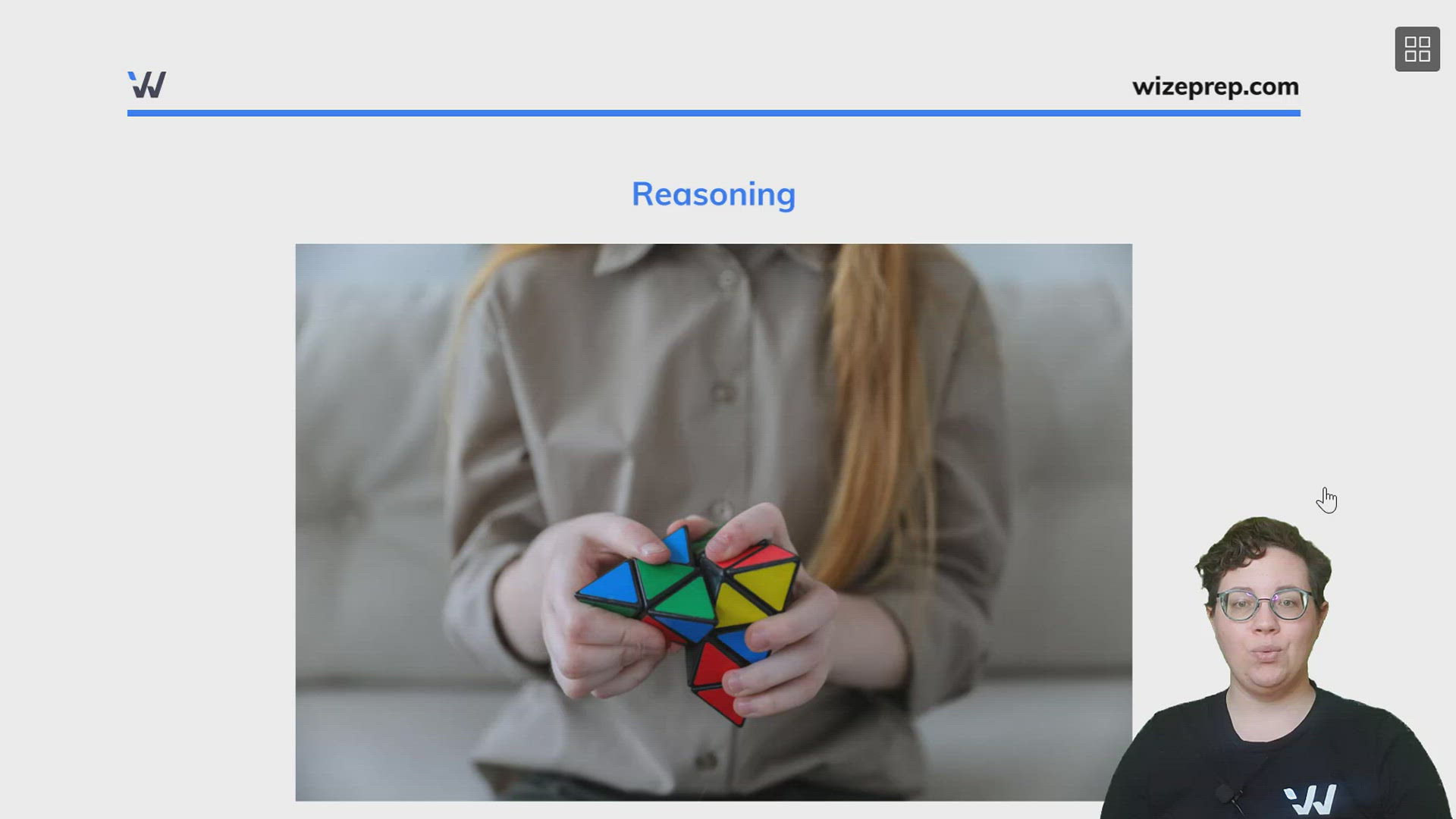
Reasoning

Reasoning - organizing information and beliefs into a series of steps in order to reach conclusions
Belief bias - our judgments about conclusions depend more on how believable the conclusions are than whether they are logically valid
Illusory truth effect - repeated exposure to a statement increases the likelihood that we will judge it to be truthful
Deductive reasoning - reasoning from general principles to a conclusion about a specific case
- Basis of math and formal logic
- Conclusion cannot be false if the factual statements (premises) are true
- Example - the sun is a star, the sun has planets, therefore some stars have planets
Inductive reasoning - start with specific facts and try to develop a general principle
- Used to discover general principles from combined observations
- Leads to probabilities rather than absolute truths
- Example - studying the traffic patterns to be able to predict when to leave for class
Deductive reasoning is reasoning from ______________ while inductive reasoning is reasoning from _______________.