Wize University Psychology Textbook > Development
Prenatal Development & The Prenatal Environment
Popular Courses
MCAT
General Course
Psychology
University Study Guides
Psychology
University Study Guides
PSYC*1000
University of Guelph
PSYCH 1XX3
McMaster University
PSY100H1
University of Toronto
PSYCHOL 1003A/B
Western University
HH/PSYC 1010 6.00
York University
PSYC 102
University of British Columbia
PSYC 201
University of Calgary
PSYC 200
Concordia University
PSYC 1004
Virginia Tech
PSYCH 100
Pennsylvania State University
PSC 001
University of California - Davis
PSY 2012
University of Florida
PSY 101
Michigan State University
PSYCH10
University of California - Los Angeles
PSY 101
San Diego State University
PSC 001Y
University of California - Davis
PSY 101
University of Arizona
0:00 / 0:00
Prenatal Development & The Prenatal Environment
Prenatal Stage - from fertilization to birth. Fertilization typically occurs 1-2 days after intercourse, but can be as much as 5 days later
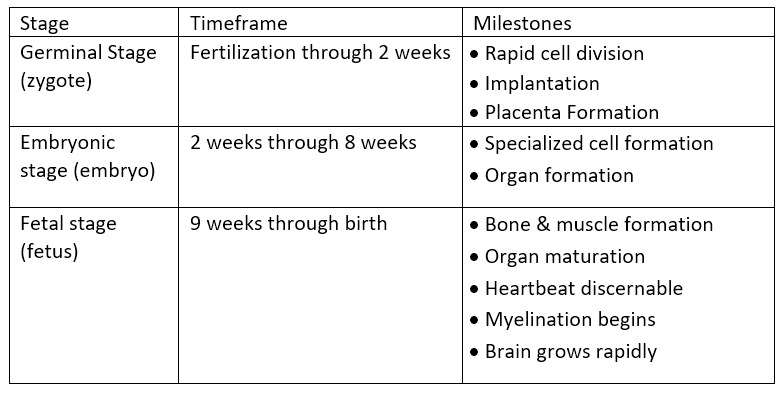
Fetal organ development begins with female reproductive organs.
Around week 6-8, testis determining factor gene (TDF) on the Y chromosome triggers the development of male reproductive organs in embryos with XY chromosomes.
Testes secrete androgens that continue the development of male reproductive organs in the embryo and then fetus. If the androgen level is not high enough in the prenatal critical period, female reproductive organ development continues
Factors that affect prenatal development
- Teratogens-agents such as drugs and viruses that can harm an embryo or fetus. Embryos are more vulnerable than fetuses
- Tobacco use - prenatal exposure to maternal smoking and/or second hand smoke associated with risk of miscarriage, stillbirth, infant death, microcephaly, risk of respiratory infections, and low birth weight
- Fetal alcohol syndrome (FAS) - congenital problems associated with excessive alcohol consumption during pregnancy; microcephaly, attentional and perceptual deficits, irritability, impulsivity, delayed social, mental, and motor development. Even casual alcohol use can cause harm to fetus, including motor and IQ impairment.
- Maternal Illness - although the placenta provides a protective screening, some infectious agents and effects of environmental toxins cannot be held back.
- Rubella - blindness, deafness, heart defects, intellectual disability
- Syphilis - 25% of fetuses of people with untreated syphilis die
- HIV - if untreated, 25% are born infected with HIV
- Maternal drug use - risk of withdrawal symptoms after birth, impaired cognitive functioning, motor development, and attentional control deficits
- Maternal Nutrition - lack of key nutrients increases risk for physical and mental illnesses in child
Practice: Prenatal Development & The Prenatal Environment
An infant is born blind, deaf, with a heart defect and an intellectual disability. The infant was likely exposed to which teratogen as a fetus?