Wize University Psychology Textbook > Development
Infant Motor Development
Popular Courses
MCAT
General Course
Psychology
University Study Guides
Psychology
University Study Guides
PSYC*1000
University of Guelph
PSYCH 1XX3
McMaster University
PSY100H1
University of Toronto
PSYCHOL 1003A/B
Western University
HH/PSYC 1010 6.00
York University
PSYC 102
University of British Columbia
PSYC 201
University of Calgary
PSYC 200
Concordia University
PSYC 1004
Virginia Tech
PSYCH 100
Pennsylvania State University
PSC 001
University of California - Davis
PSY 2012
University of Florida
PSY 101
Michigan State University
PSYCH10
University of California - Los Angeles
PSC 001Y
University of California - Davis
PSY 101
San Diego State University
PSY 101
University of Arizona
0:00 / 0:00
Infant Motor Development

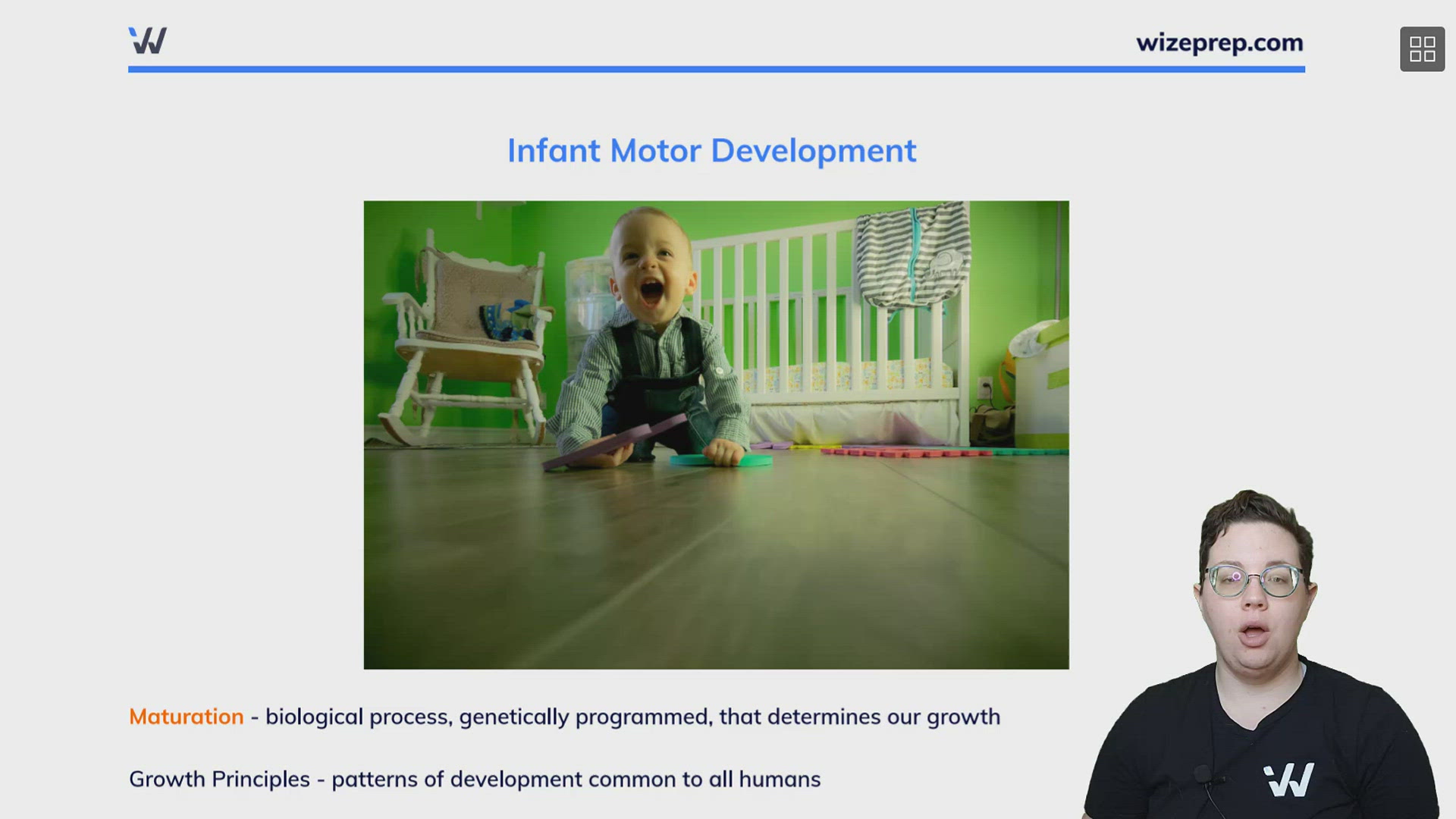
Maturation - biological process, genetically programmed, that determines our growth
Growth Principles - patterns of development common to all humans
- Cephalocaudal principle - development proceeds from head to feet. Infants have huge heads because growth is first concentrated on the head before moving down the body
- Proximodistal principle - development begins in the core of the body and moves to extremities. Fetuses first develop arms, then hands, then fingers. Newborns can control their shoulders, but not their hands.
Motor reflexes - motor responses that are triggered by specific sensory input (i.e., not learned)
- Rooting reflex - infants move their mouths towards anything that touches their cheek
- Sucking reflex - infants suck on anything that enters their mouth
Development norms - the median age at which a particular behavior is expected
- Development depends on incentives, body weight, muscular development, level of activity
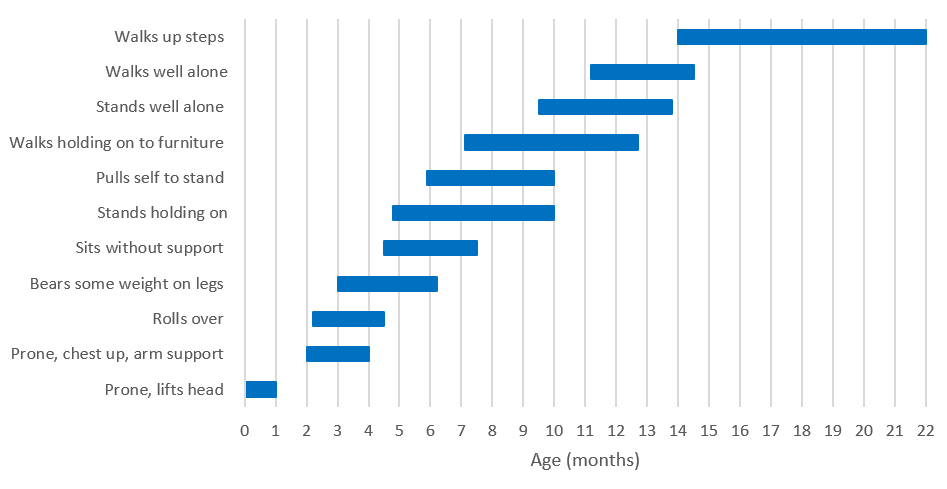
Motor development can vary with cultural differences - in cultures where rapid motor development is encouraged, children progress faster
Practice: Infant Motor Development
The cephalocaudal trend in the motor development of children can be described simply as a;