Wize University Psychology Textbook > Psychological Disorders
Risks of Labelling
Popular Courses
Psychology
University Study Guides
Psychology
University Study Guides
PSYCH 1XX3
McMaster University
PSY100H1
University of Toronto
PSYCHOL 1003A/B
Western University
HH/PSYC 1010 6.00
York University
PSYC 201
University of Calgary
PSYC 200
Concordia University
PSYCH 100
Pennsylvania State University
PSC 001
University of California - Davis
PSY 2012
University of Florida
PSY 101
Michigan State University
PSYCH10
University of California - Los Angeles
PSY 101
San Diego State University
PSC 001Y
University of California - Davis
PSY 101
University of Arizona
PSYC 1001
University of Cincinnati
PSY 200
North Carolina State University
PSY 101
Arizona State University - Tempe
PSY-P 101
Indiana University - Bloomington
0:00 / 0:00
Risks of Labelling

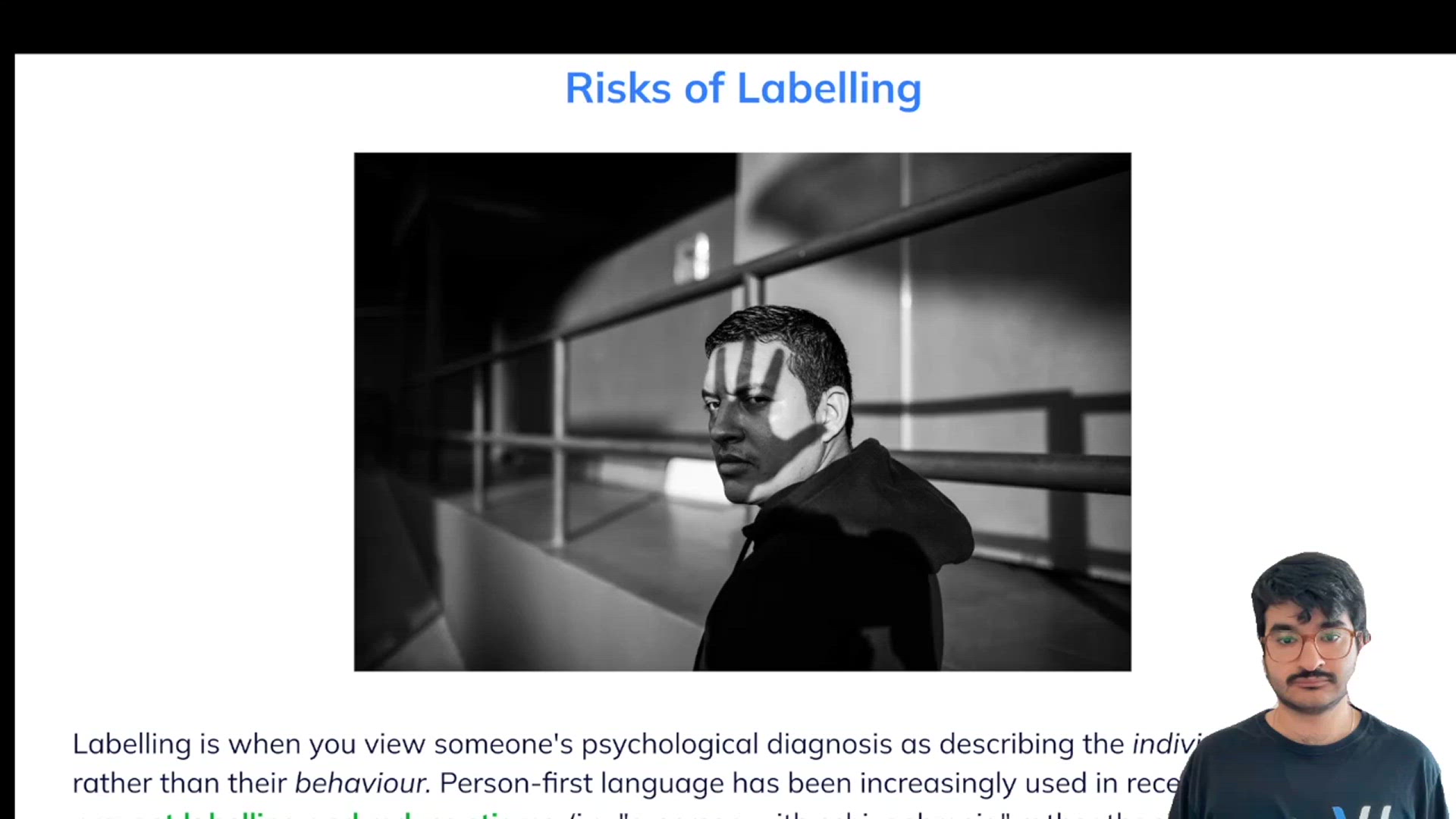
Labelling is when you view someone's psychological diagnosis as describing the individual themselves rather than their behaviour. Person-first language has been increasingly used in recent years to prevent labelling and reduce stigma (i.e. "a person with schizophrenia" rather than "a schizophrenic").
Labelling can also create a self-fulfilling prophecy, where the individual may internalize and magnify the symptoms and behaviour associated with the label. For example, a person who receives a diagnosis of Major Depressive Disorder may become even more discouraged to seek additional help and may isolate themselves further from their social network.
Labelling can also have legal consequences. Defendants who receive a psychiatric diagnosis during their trial may be found "not criminally responsible due to mental disorder" (NCRMD) in Canada or "not guilty by reason of insanity" (NGRI) in the United States. Individuals who have extremely severe disorders may be found "not competent to stand trial".