Protein Purification Techniques
Centrifugation: Size Separation
Proteins vary in MASS but not much in DENSITY.
- Differential Centrifugation - First step in most protein purification because it is used to separate soluble proteins from cell organelles. The organelles (heavy) form a pellet at the bottom, and the less dense soluble proteins can be collected from the supernatant.
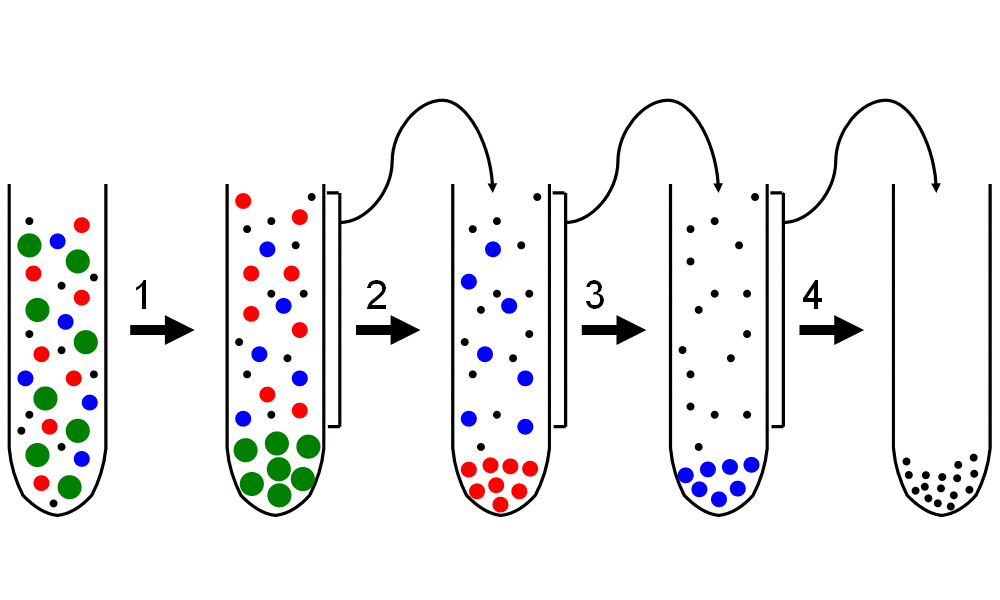
- Rate-Zonal Centrifugation - Proteins are separated through a density gradient (usually a sucrose gradient) and form discrete "zones/fractions" which can be isolated.
- Note: Rate-zonal centrifugation is good for separating proteins from one another but not reliable for determining the mass of these proteins.


Liquid Chromatography: Size, Electric Charge, and Affinity Separation
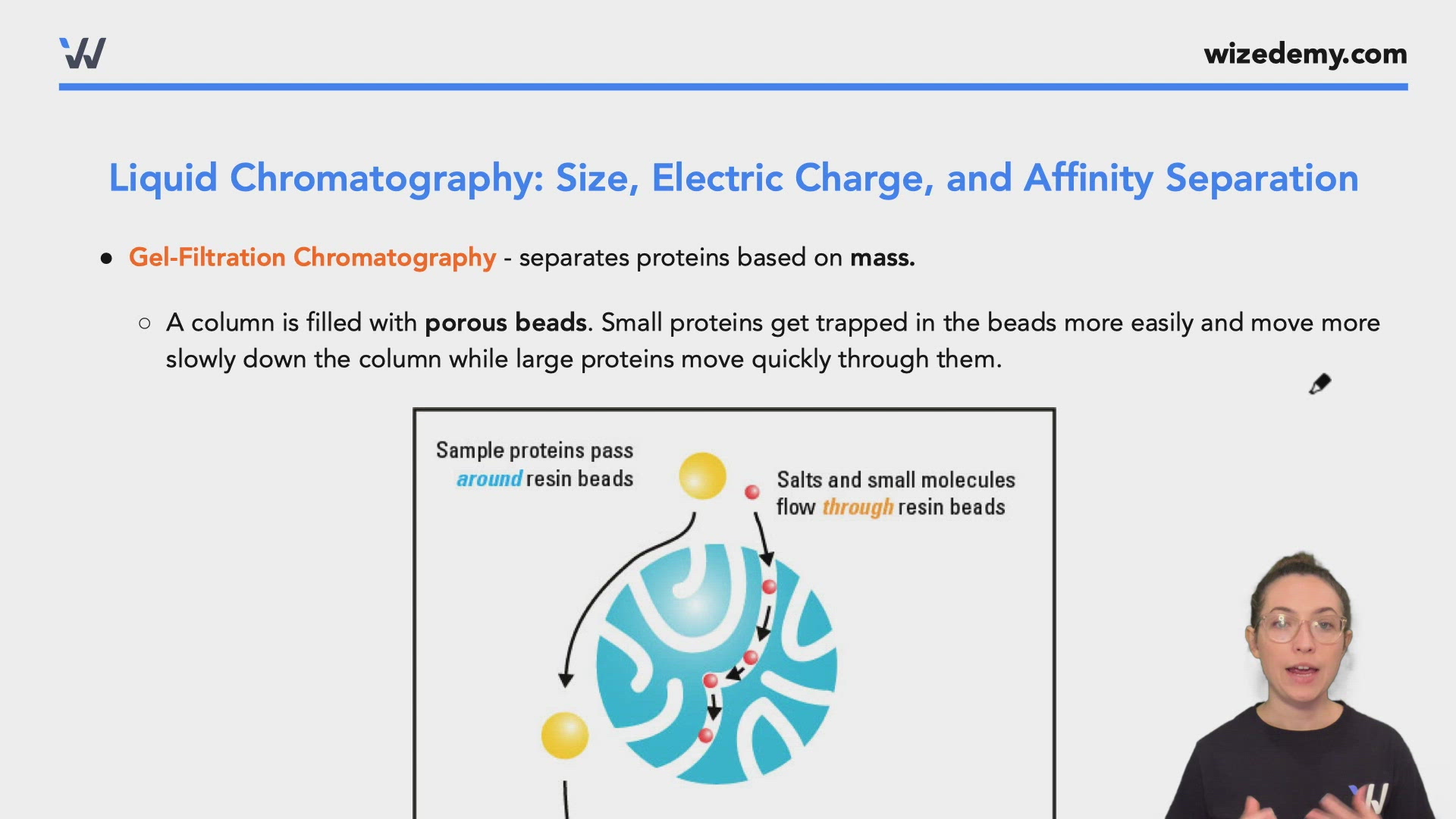
- Gel-Filtration Chromatography - separates proteins based on mass.
- A column is filled with porous beads. Small proteins get trapped in the beads more easily and move more slowly down the column while large proteins move quickly through them.


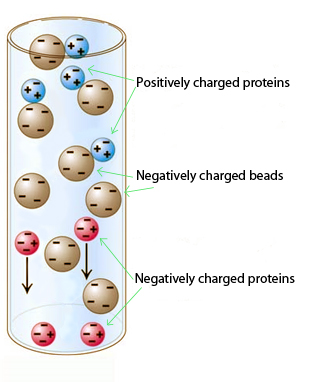
- Ion-Exchange Chromatography - separates proteins based on charge.
- A column is filled with charged beads (either negatively (anion) or positively charged (cation)).
- If the beads are positively charged, acidic (negatively charged) proteins will stick to them.
- If the beads are negatively charged, basic (positively charged) proteins will stick to them.
- A highly concentrated salt solution is then used to elute the proteins off of the beads (because the salt ions are more negatively charged than the proteins).
- Proteins with low/neutral charges are eluted first and more highly charged proteins are eluted last.
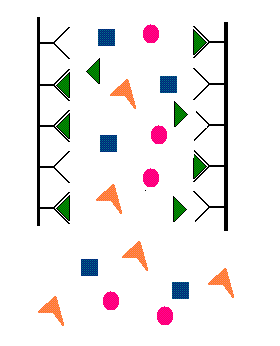
- Affinity Chromatography - separates proteins based on affinity for certain antibodies.
- A column is filled with beads attached to a specific ligand or antibody.
- Only proteins that bind to that specific ligand or antibody will get trapped on the column.