Wize University Biology Textbook > Lab Techniques for Biology
Protein Characterization
Popular Courses
MCAT
General Course
Biology
General Course
General Biology
University Study Guides
DAT
General Course
Grade 12 Biology
Canada High School
High School Biology
US High School
BIOL 200
McGill University
General Biology
University Study Guides
BIOL 200
University of British Columbia
BIOL 112
McGill University
BIO230H1
University of Toronto
BIOL 1201
Western University
BIOL 202
McGill University
BIOL 1P91
Brock University
BIOL 1020
University of Manitoba
BIOL 331
University of Calgary
BIOA01H3
University of Toronto
BIOL 1105
Virginia Tech
BISC 102
Simon Fraser University
BI110
Wilfrid Laurier University
0:00 / 0:00
Protein Detection Techniques
Once researchers think they have purified a specific protein, they need to detect the presence of that protein.
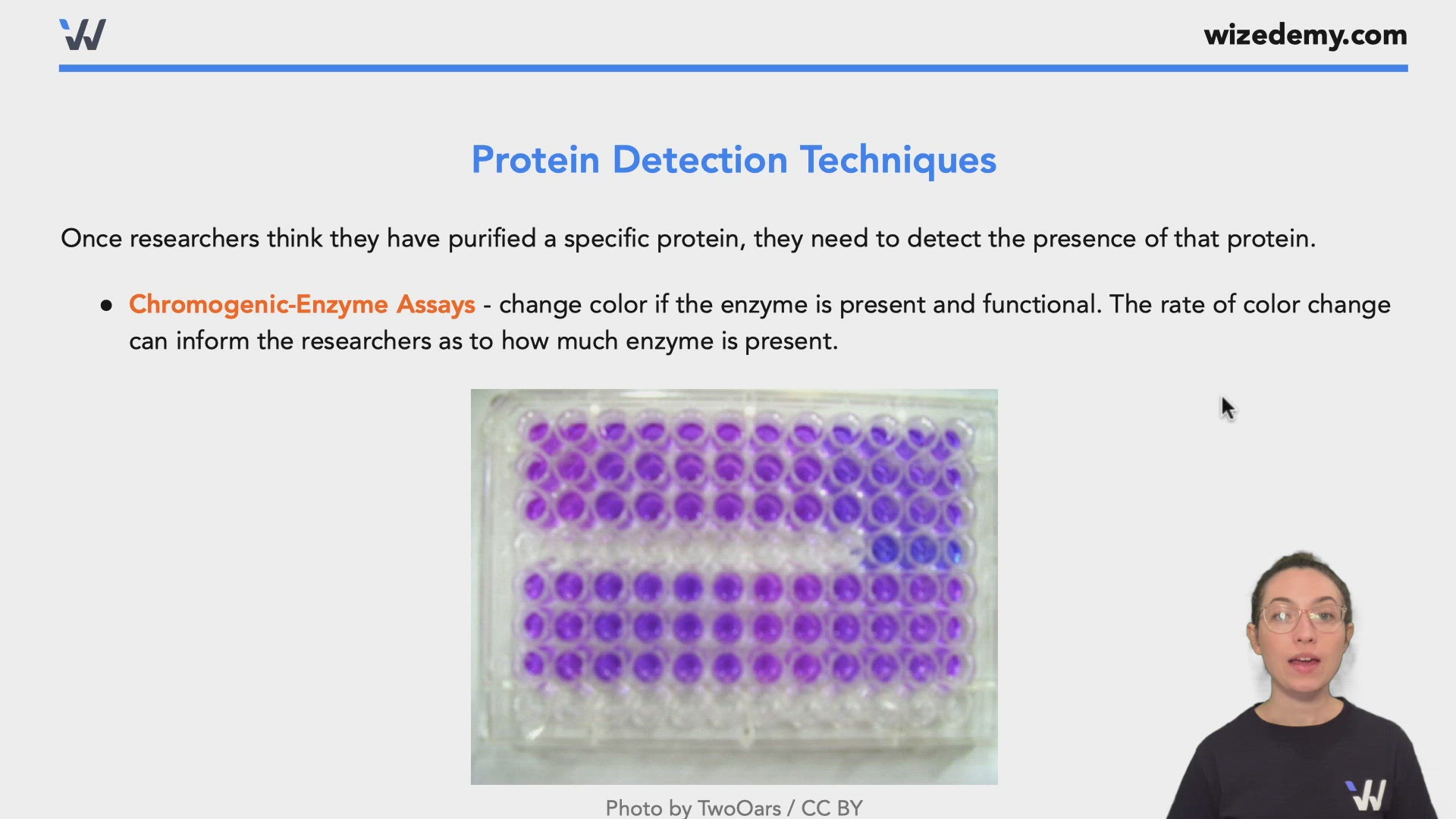
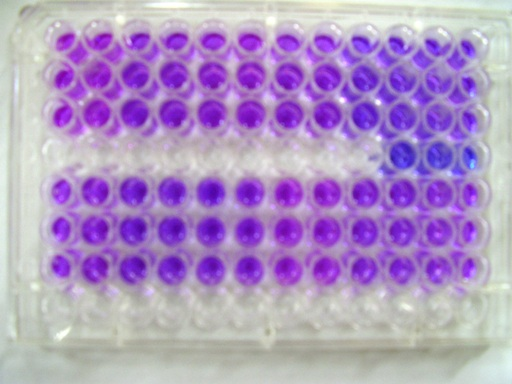
- Chromogenic-Enzyme Assays - change color if the enzyme is present and functional. The rate of color change can inform the researchers as to how much enzyme is present.
- Antibody Assays - an antibody labelled with an enzyme, fluorescent molecule, or radioactive isotope can be used to bind to the protein. The amount of protein in a sample can be detected based on how many antibodies are detected.

- GFP-tagging - Green Fluorescent Protein (GFP) can be used to tag a protein. When the protein is expressed by the cell, GFP, which is fused to the protein, will also "light up" allowing researchers to determine where and how much protein is present.
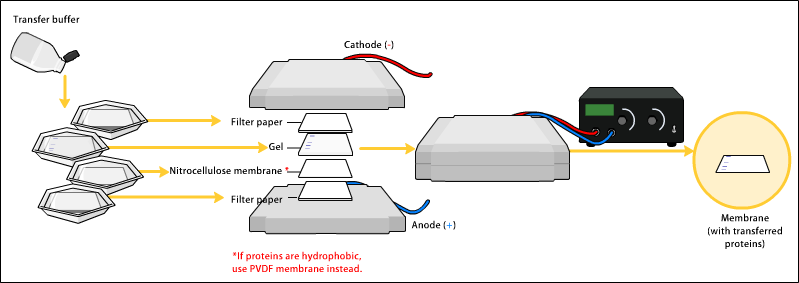
- Western Blotting/ Immunoblotting - combines gel electrophoresis with protein detection.
- Proteins are run on an SDS-PAGE gel.
- Protein are detected using a primary antibody.
- The primary antibody is detected using a secondary antibody that is conjugated to an enzyme or fluorescent molecule.
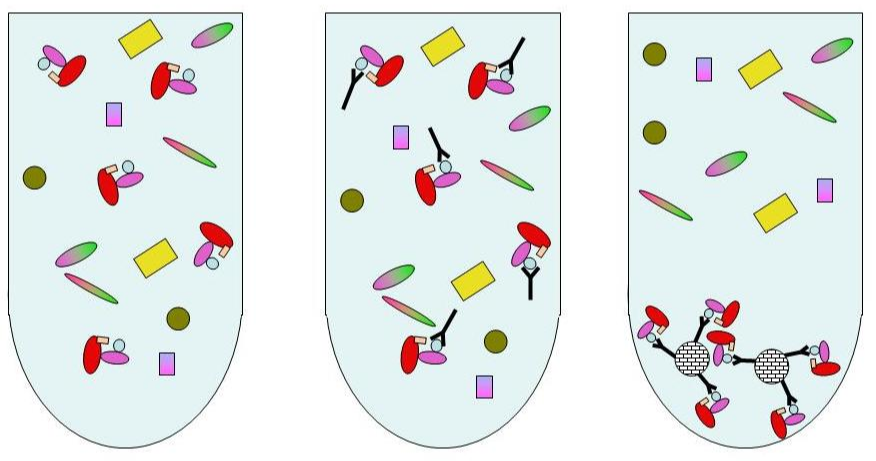
- Immunoprecipitation (IP) - Used to detect protein in a mixture of proteins using antibody specificity.
- An antibody is given time to bind to the specific protein of interest that it recognizes.
- An agent that recognizes the antibody is then added to the mixture, which causes the antibody + protein to precipitate out of the solution.
0:00 / 0:00
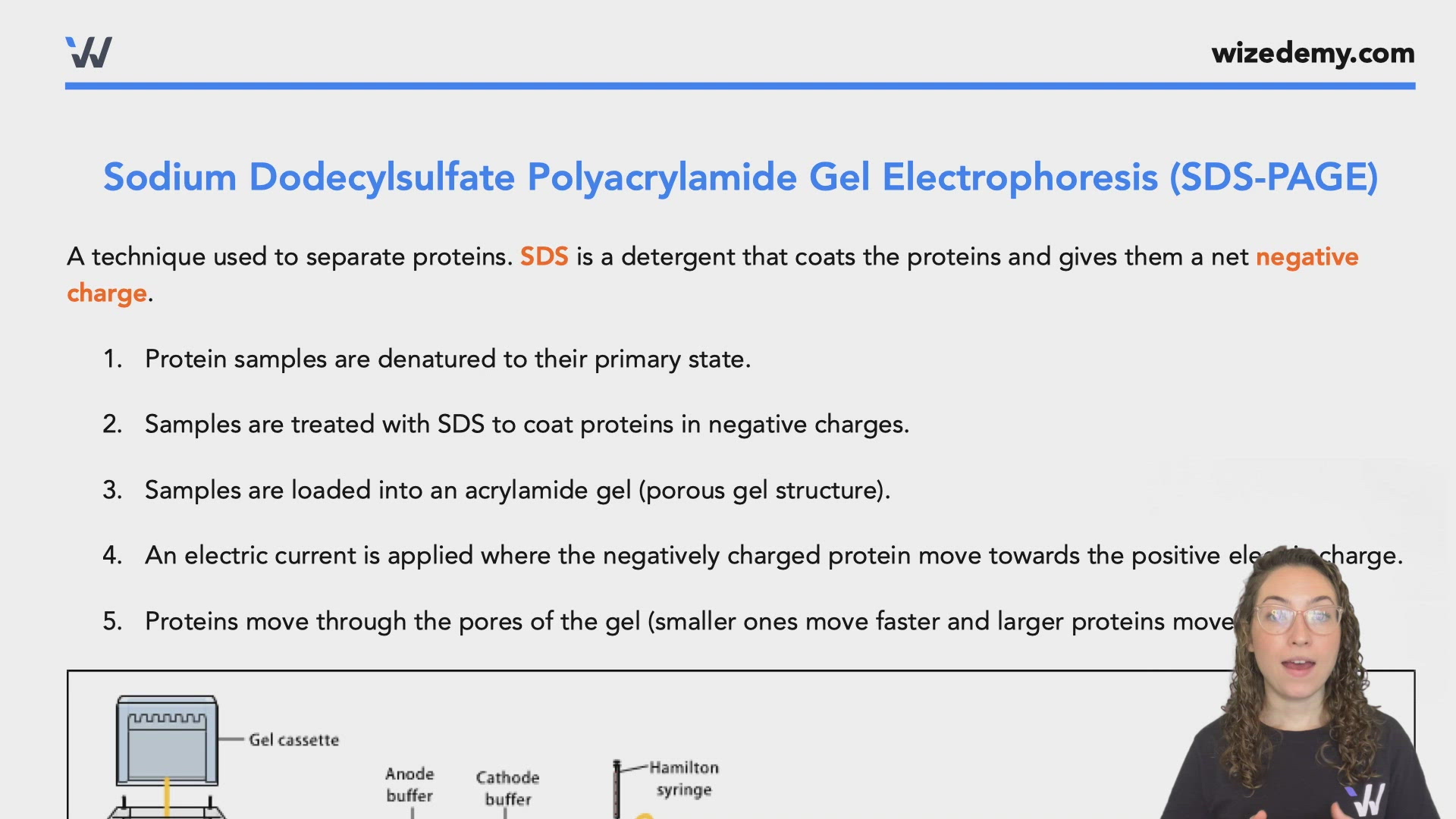
Sodium Dodecylsulfate Polyacrylamide Gel Electrophoresis (SDS-PAGE)
A technique used to separate proteins. SDS is a detergent that coats the proteins and gives them a net negative charge.
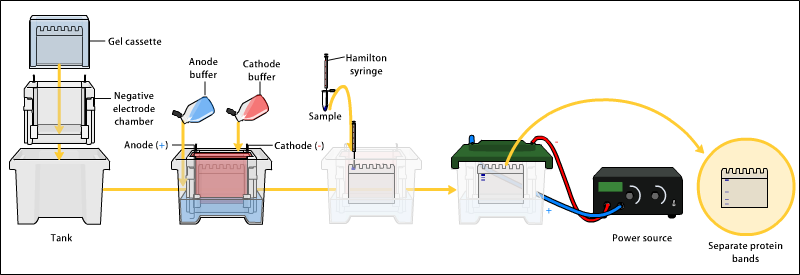
- Protein samples are denatured to their primary state.
- Samples are treated with SDS to coat proteins in negative charges.
- Samples are loaded into an acrylamide gel (porous gel structure).
- An electric current is applied where the negatively charged protein move towards the positive electric charge.
- Proteins move through the pores of the gel (smaller ones move faster and larger proteins move slower).
Results:
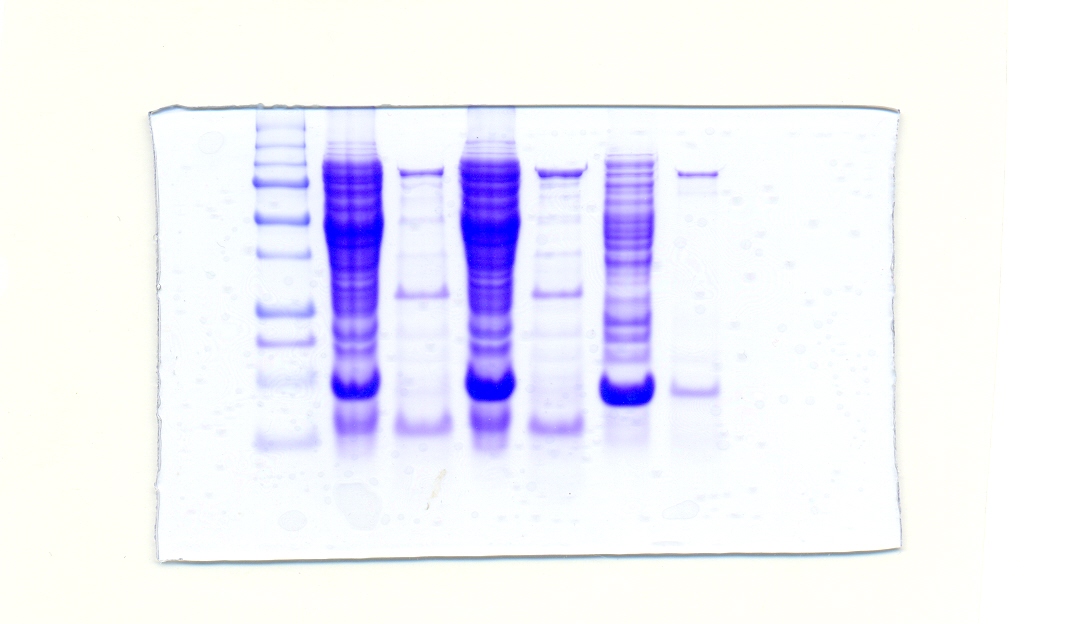
Can you tell which proteins are larger and which are more concentrated?
Bands closer to the bottom of the gel represent smaller proteins which migrated faster through the cell. Bands that are relatively thicker represented more concentrated proteins than light, thin bands.
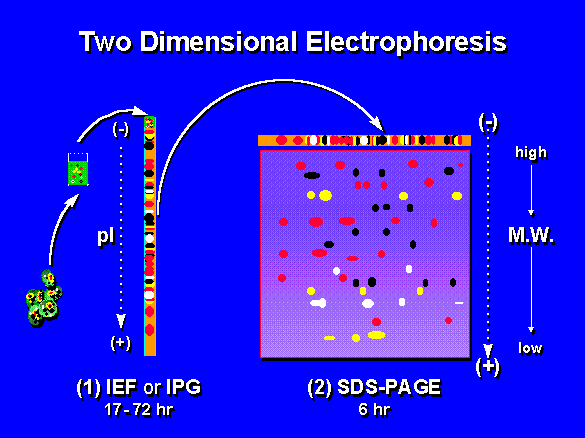
Two-Dimensional Gel Electrophoresis
First separates proteins based on charge and then based on mass.
- Isoelectric Focusing (IEF): A protein placed in a pH gradient will migrate through an electric field based on its net electric charge until it reaches its isoelectric point (PI) (i.e. the point where the protein's net charge is zero).
- SDS-PAGE: The IEF gel is placed lengthwise across an SDS-PAGE gel to separate the proteins based on size.
0:00 / 0:00
Mass Spectrometry (MS)
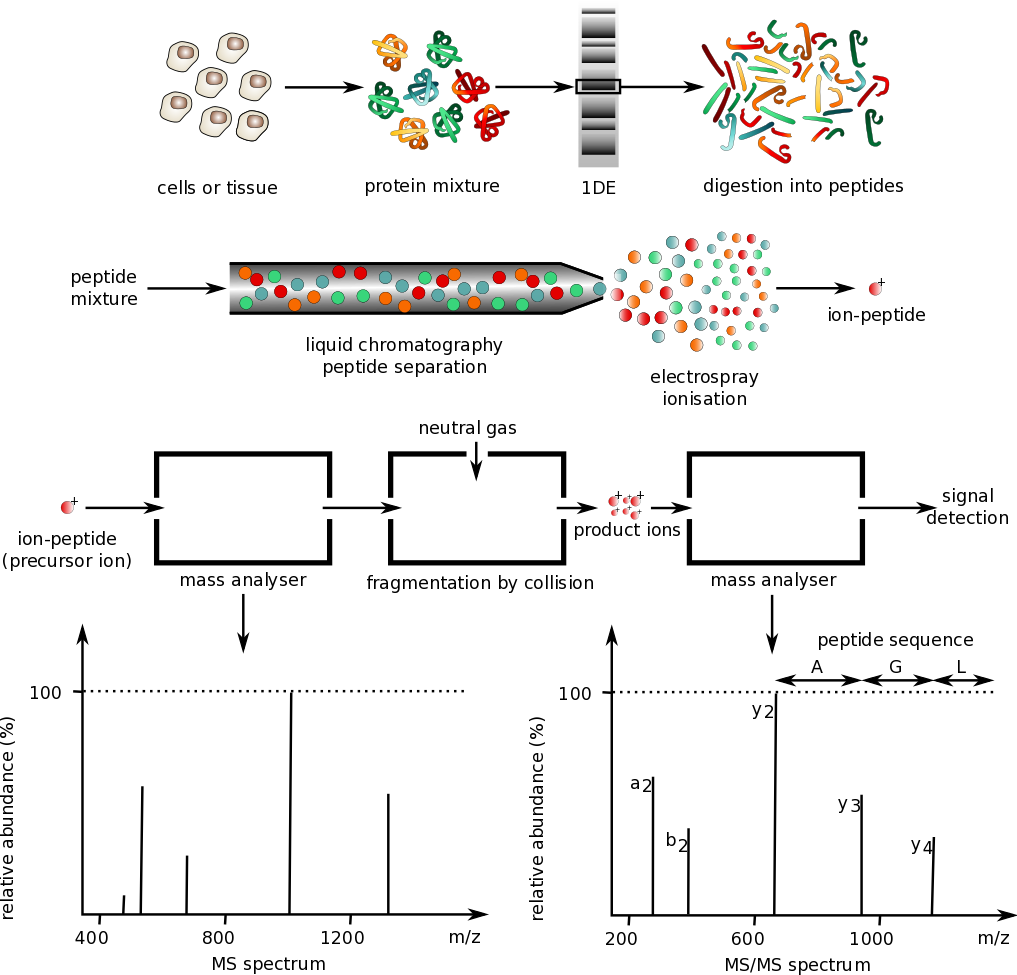
Allows you to detect the mass:charge (m/z) ratio of a protein.
- Mass spec analyzers contain:
- 1) An ion source to ionize proteins (MALDI or electrospray);
- 2) Mass analyzer which separates proteins based on their m/z ratio (TOF or ion traps);
- 3) Strike detector which tells the relative abundance of each ion;
- 4) Computerized data system to acquire, store and process data.
- Mass spec is highly sensitive (can detect down to 1x10-15 mol of certain proteins) and can easily distinguish between two very similar proteins.
- Mass spec gives researchers a RELATIVE amount of protein, not an absolute amount.
Practice: Detecting Proteins
You are working in a research lab studying a novel protein called WIZE. You have two versions of the protein, WIZE-14, which has incorporated light nitrogen, N14 and WIZE-15, which has incorporated heavy nitrogen, N15. Otherwise, they are exactly the same with the same folding structure and biological activity. One morning, you come into the lab and realize that you accidentally forgot to label your tubes last night. Whoops! What is the best technique to determine which tube has WIZE-14 and which tube has WIZE-15?