Wize University Biology Textbook > Lab Techniques for Biology
Agarose Gel Electrophoresis
Popular Courses
MCAT
General Course
AP Biology Exam Prep Course
AP Exam Prep
Biology
General Course
General Biology
University Study Guides
BIOLOGY 1002B
Western University
BIOL 102
Queen's University
Grade 12 Biology
Canada High School
DAT
General Course
High School Biology
US High School
General Biology
University Study Guides
SC/BIOL 1000 3.00
York University
BIOL 311
University of Calgary
BIOL 112
McGill University
HMB265H1
University of Toronto
BIOL 1010
Dalhousie University
BIO230H1
University of Toronto
BIOL 1201
Western University
BISC 101
Simon Fraser University
BIOL 202
McGill University
BIOL 1P91
Brock University
0:00 / 0:00
(Agarose) Gel Electrophoresis
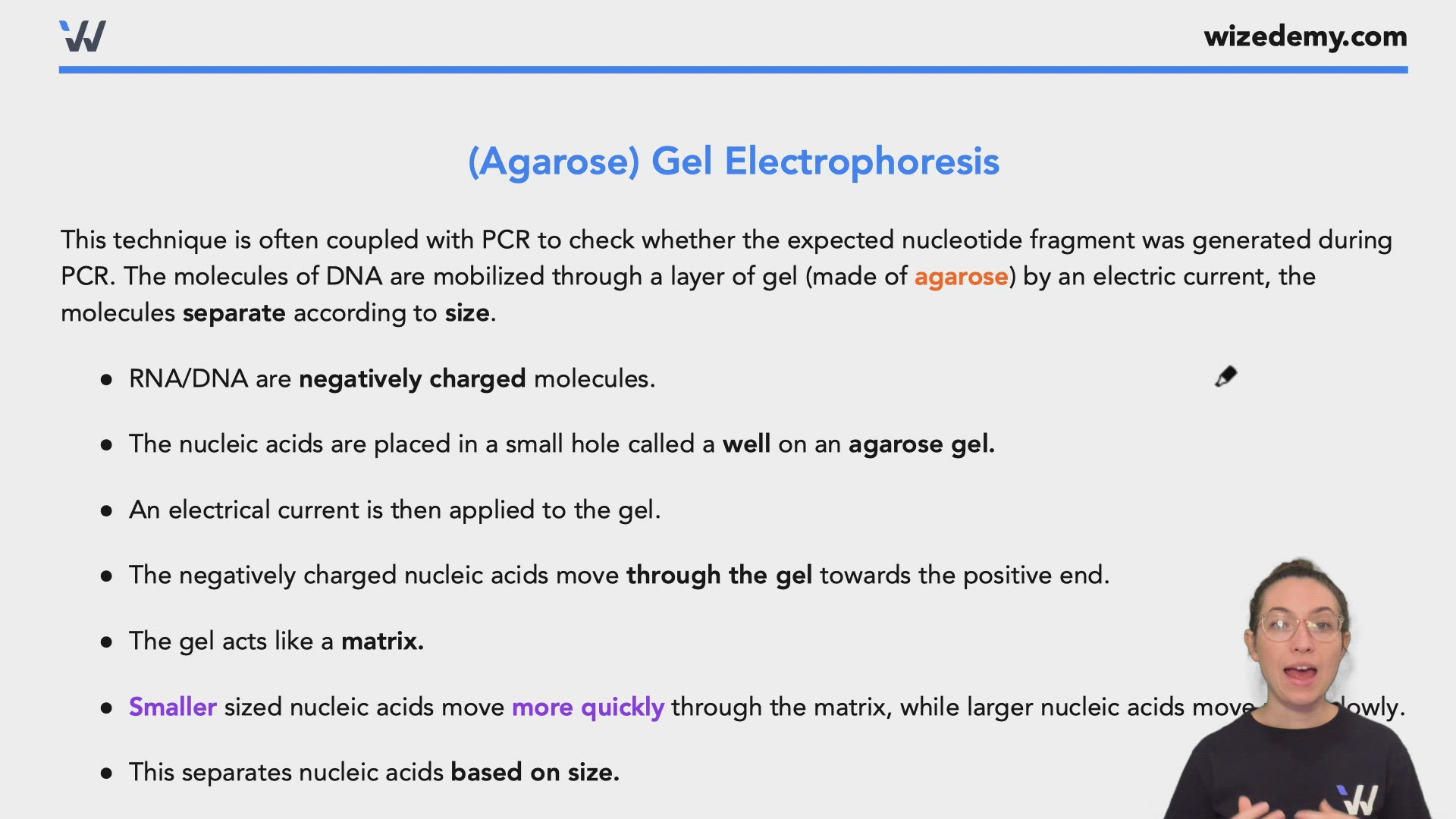
This technique is often coupled with PCR to check whether the expected nucleotide fragment was generated during PCR. The molecules of DNA are mobilized through a layer of gel (made of agarose) by an electric current, the molecules separate according to size.
- RNA/DNA are negatively charged molecules.
- The nucleic acids are placed in a small hole called a well on an agarose gel.
- An electrical current is then applied to the gel.
- The negatively charged nucleic acids move through the gel towards the positive end.
- The gel acts like a matrix.
- Smaller sized nucleic acids move more quickly through the matrix, while larger nucleic acids move more slowly.
- This separates nucleic acids based on size.
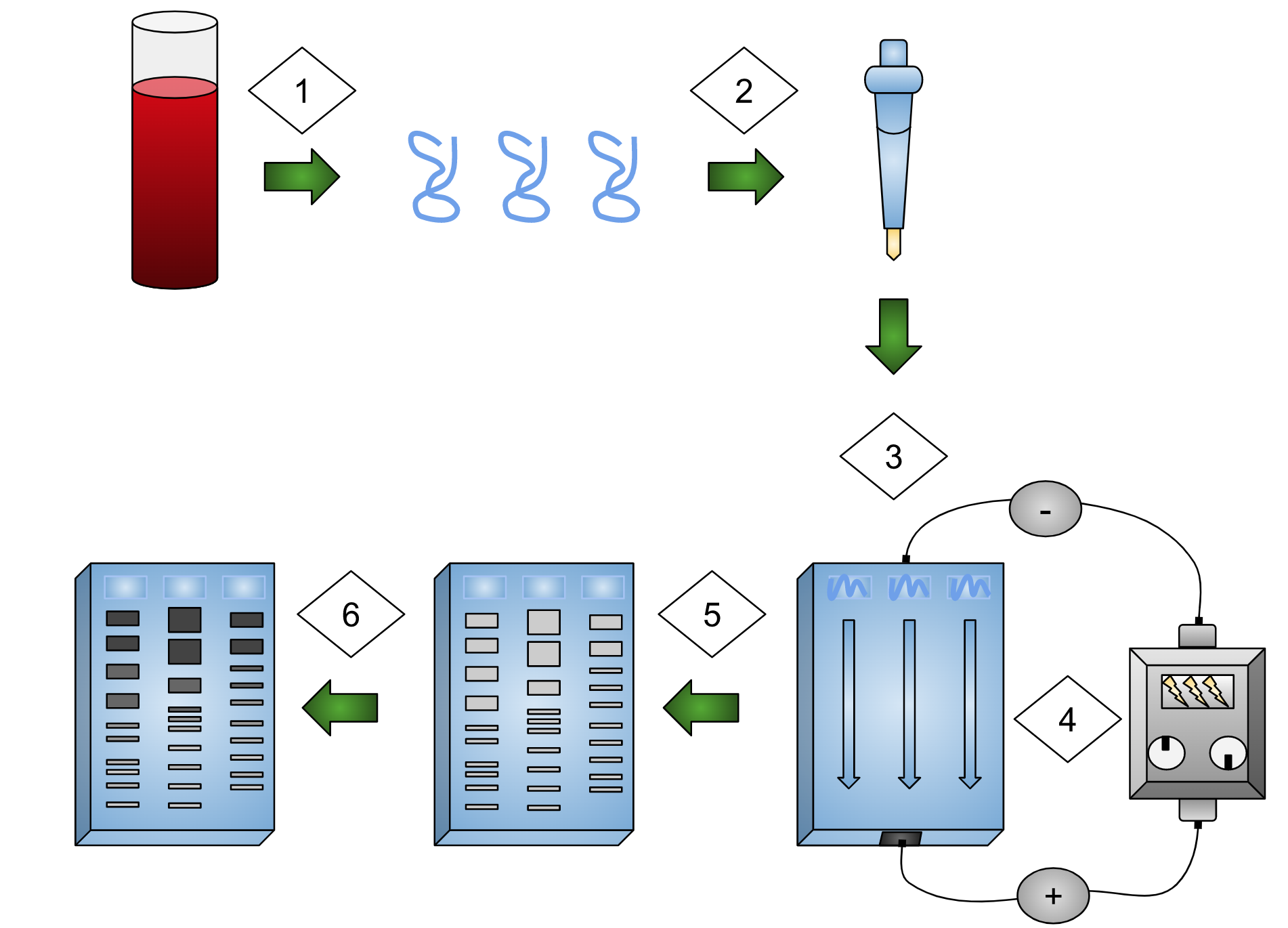
- A DNA ladder (standard sample) is usually used so that the size of the DNA molecules produced by the PCR can be measured/compared.
- Below is how a 600 base pair (bp) fragment produced by PCR would look like on gel electrophoresis.
