Wize University Biology Textbook > Cellular Respiration

Pyruvate Processing [Oxidation] [short]

Create a free account to get started

Unlock full course notes by signing up

  • Video lessons taught by top educators
  • Practice questions with guided solutions
  • Written review notes for reference
  • Expert answers anytime from course tutors

Pyruvate Processing

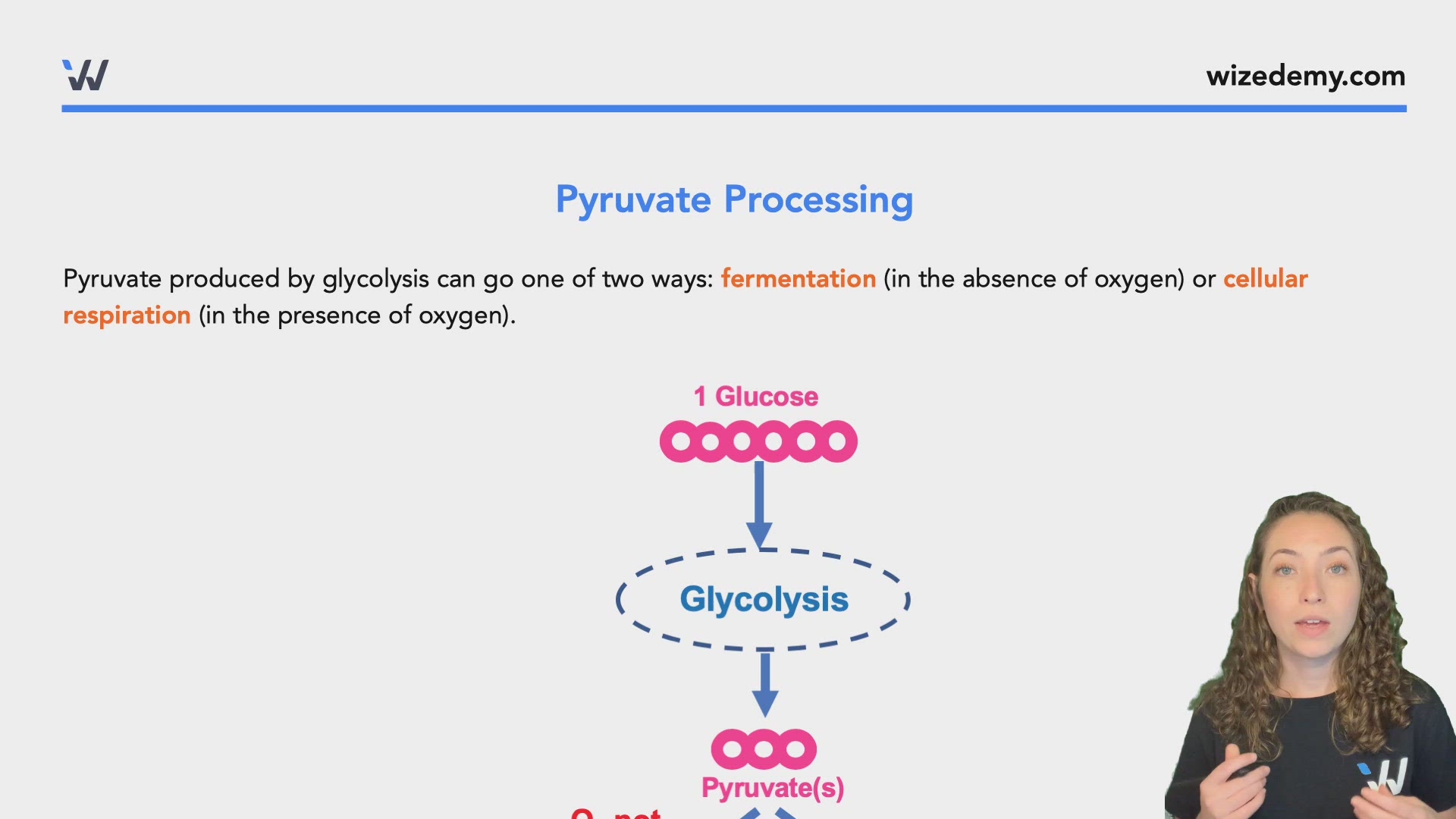
Pyruvate produced by glycolysis can go one of two ways: fermentation (in the absence of oxygen) or cellular respiration (in the presence of oxygen).


Image illustrating Pyruvate Processing


Pyruvate Processing or Oxidation

In eukaryotes, cellular respiration occurs in the mitochondrial matrix. Pyruvate is transported into the mitochondrial matrix and is converted to acetyl-CoA. In prokaryotes, it remains in cytosol.

  • Pyruvate is converted to acetyl-CoA by pyruvate dehydrogenase.
  • The reaction produces 1 NADH and therefore 2 NADH per molecule of glucose.
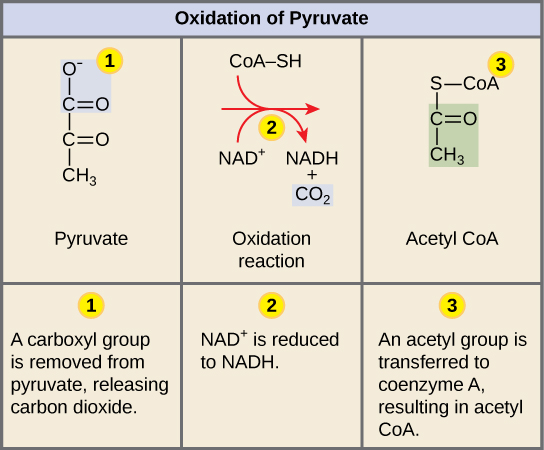

Image illustrating Pyruvate Processing

Photo by CNX OpenStax / CC BY


Balance after Glycolysis + Pyruvate Processing

After glycolysis and pyruvate processing, acetyl-CoA produced is ready to enter the Citric Acid or Krebs cycle (stage 3).

Image illustrating Pyruvate Processing


Practice: Addition of CoA

When does coenzyme A (coA) become attached to pyruvate?

Choose an answer

Create a free account to get started

Unlock full course notes by signing up

  • Video lessons taught by top educators
  • Practice questions with guided solutions
  • Written review notes for reference
  • Expert answers anytime from course tutors