Wize High School Grade 11 Biology Textbook > Biodiversity & Ecosystem Health
Human Impacts to Biodiversity
0:00 / 0:00
Disturbances
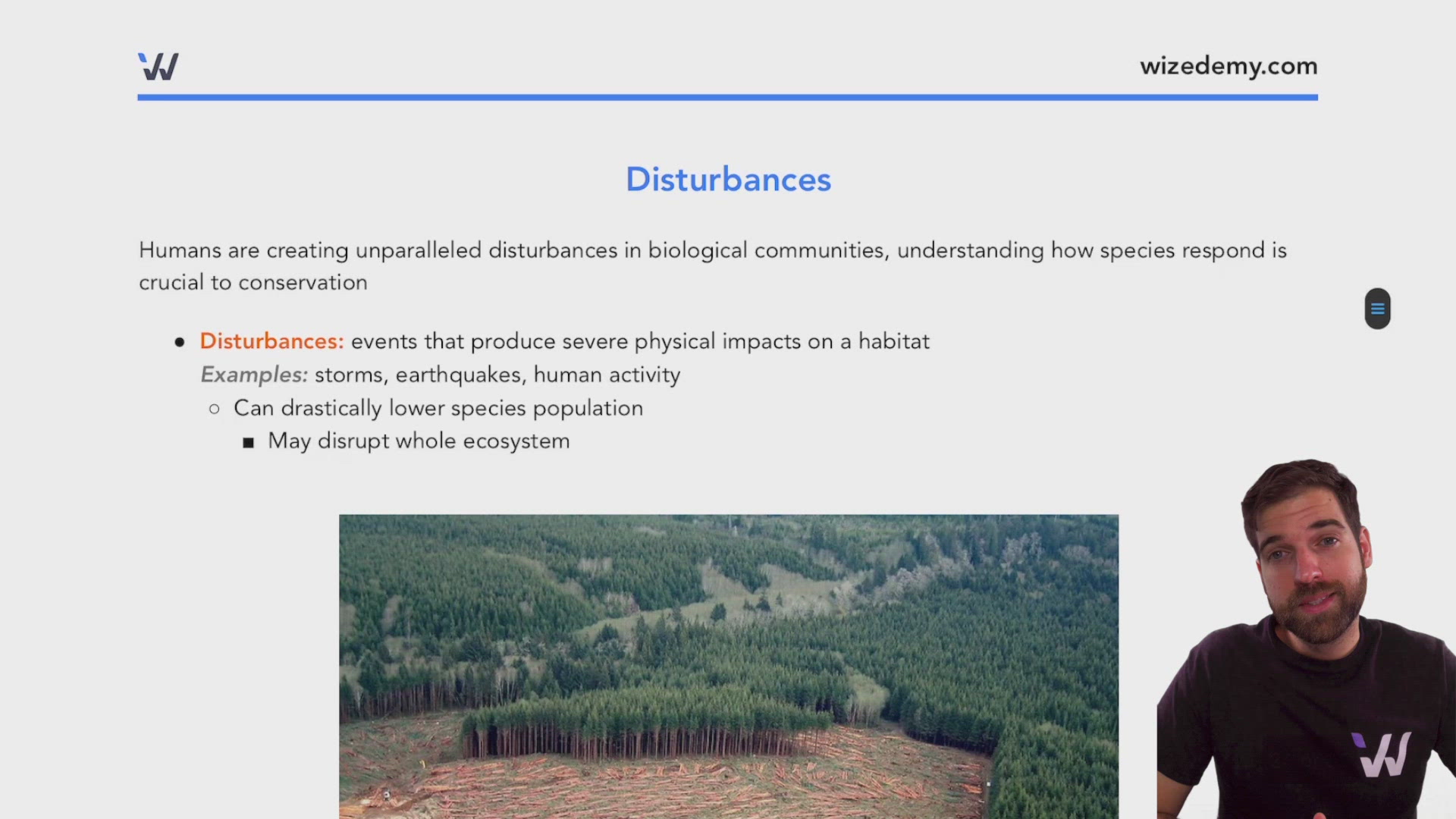
Humans are creating unparalleled disturbances in biological communities, understanding how species respond is crucial to conservation
- Disturbances: events that produce severe physical impacts on a habitat Examples: storms, earthquakes, human activity
- Can drastically lower species population
- May disrupt whole ecosystem
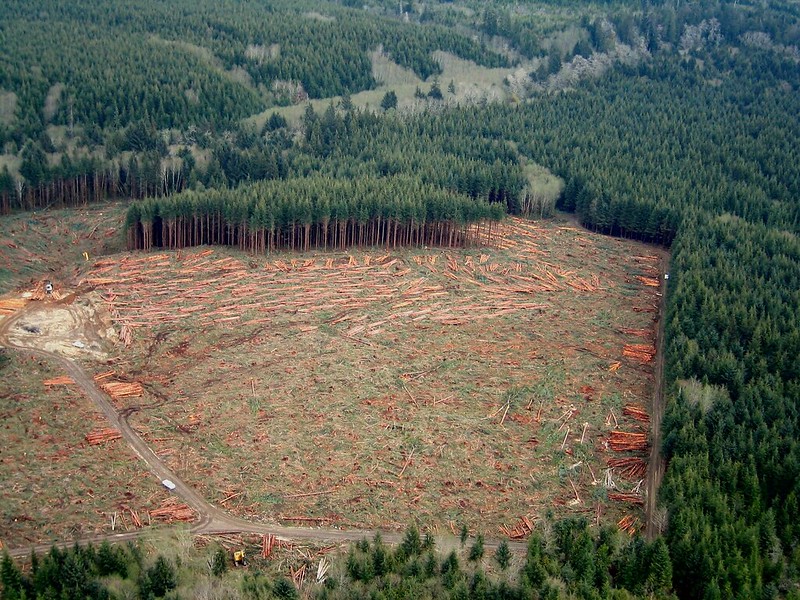
- Pulse disturbances: Short term, immediate disturbances
- Windstorms
- Floods
- Wave activity
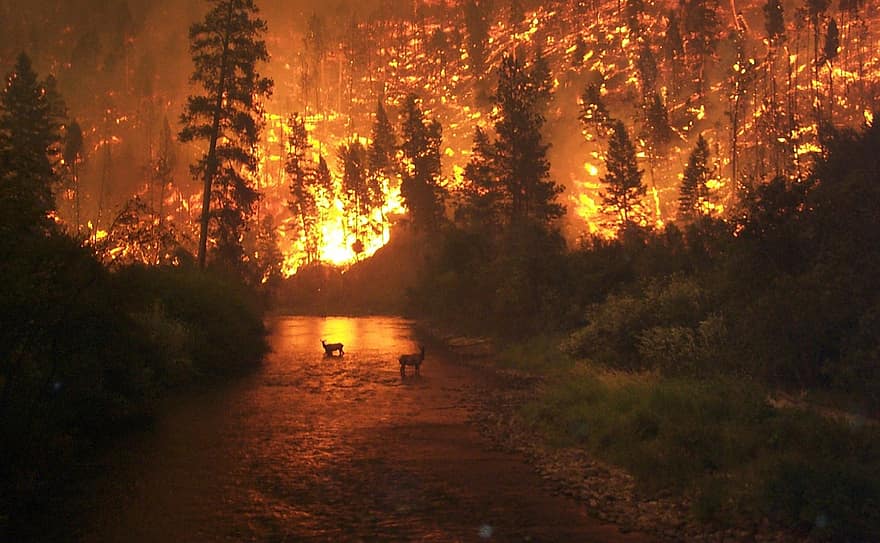
- Fire
- Sudden increase in the number of herbivores in the habitat Example: locust
- Disease outbreaks
- Introduction of invasive species.
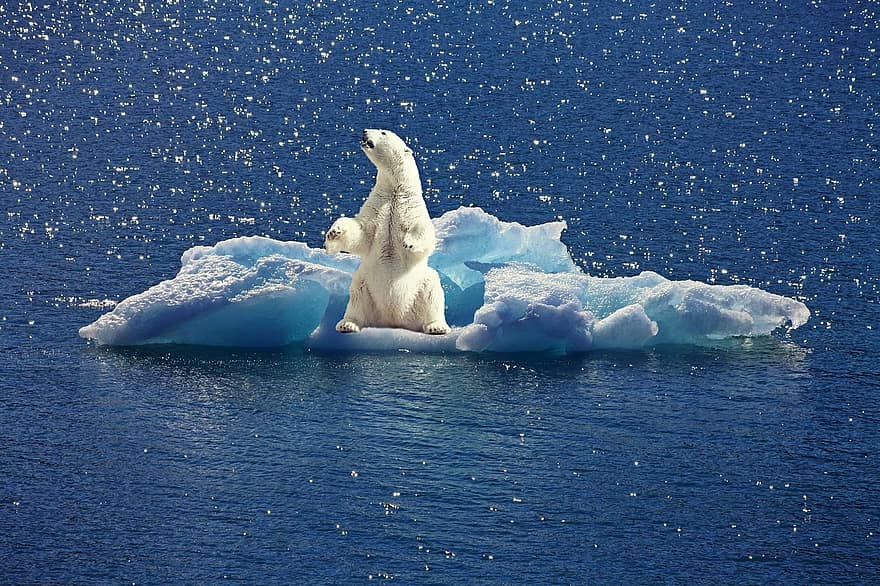
- Press disturbances: Long term, persistent disturbances
- Climate changes
- Geological processes Examples: mountain formation, continental movement, change in river flow
- Extinction of prey or mutualist
- Disturbance Regime: the type, frequency, and the severity of the disturbance
- Succession: how the community responds to the new habitat created by the disturbance
- Primary succession: when all life was wiped out Example: glacier melts and exposes bare rock for the first time
- "Starting from scratch"
- Secondary succession: when only some life was wiped out Example: Fire burns forest, but leaves the soil and seeds intact
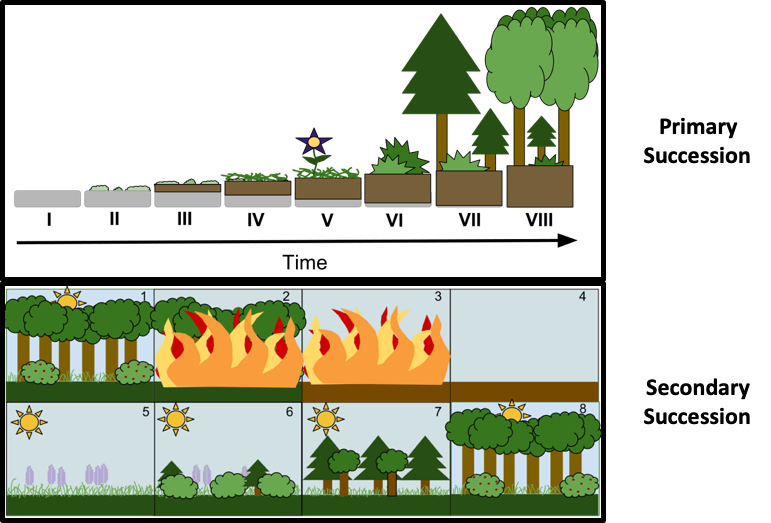
- Pioneer species: first organisms to re-colonize after disturbance
- Species with high environmental tolerance
- First - Lichens
- Second - Annual plants and grasses
- Third - larger plants, insects, small mammals, birds
- Climax Community: when the ecosystem reaches equilibrium
- Not much change in species ("settles")
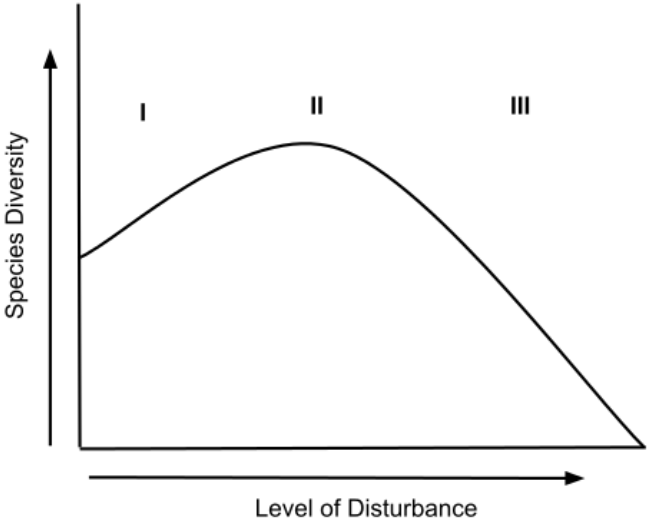
- intermediate disturbance hypothesis (IDH): intermediate levels of disturbance supports the greatest diversity
- At high levels of disturbance all species are at risk of going extinct
- At intermediate disturbance, species that thrive at both early and late successional stages can both exist
- At low levels of disturbance, diversity decreases because competitive exclusion increases
0:00 / 0:00
Agriculture & Biodiversity
Agriculture, or farming, has been practiced by humans for thousands of years and these farms feed almost the entire planet. The threats of climate change are forcing farmers, scientists and governments to rethink large-scale farming practices.
Monoculture Farming
Wize Concept
Monoculture = growing a single crop, plant or livestock animal in a field or farming area
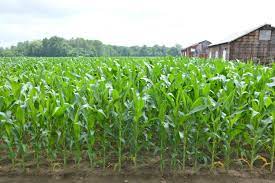
Example: Corn is a common crop grown in monoculture in North America (CC BY-SA 3.0)
- All plants are genetically similar or identical
- Causes decreased soil quality
- Farmers need to use pesticides and herbicides frequently
- Pest species are a growing problem
- Pests = insects or "weed" plants that harm crop plants and decrease crop yields
- Example: The Irish Potato Famine was caused by monoculture grown potatoes that were killed by a pest fungus
Monoculture & Climate Change
- Pest species thrive in higher temperatures
- Accelerated development and reproduction
- Reduced need for cold/freeze tolerance or avoidance
- Increased pest species range into Northern regions
- Pesticides have decreased effectiveness at higher temperatures causing farmers to increase the rate of pesticide use
- More frequent usage selects for pesticide resistance
- Scientists have been, and are currently, working on genetically engineered crops to withstand high pesticide use and concentrations
Monoculture Forest Farming
- Logging companies plant the same species of tree in a large region for future clear-cutting
- All trees are the same age, so decreases diversity of wildlife and microbes
- Decreases soil quality
Polyculture Farming
Wize Concept
Polyculture = growing multiple crops, plants or livestock animals in a field or farming area
- Increased diversity of species decreases reliance on pesticides
- Different plant species have varying pest defence mechanisms
- More resilient to disturbance
- Provides biological control
- Have higher crop yields than monoculture farming
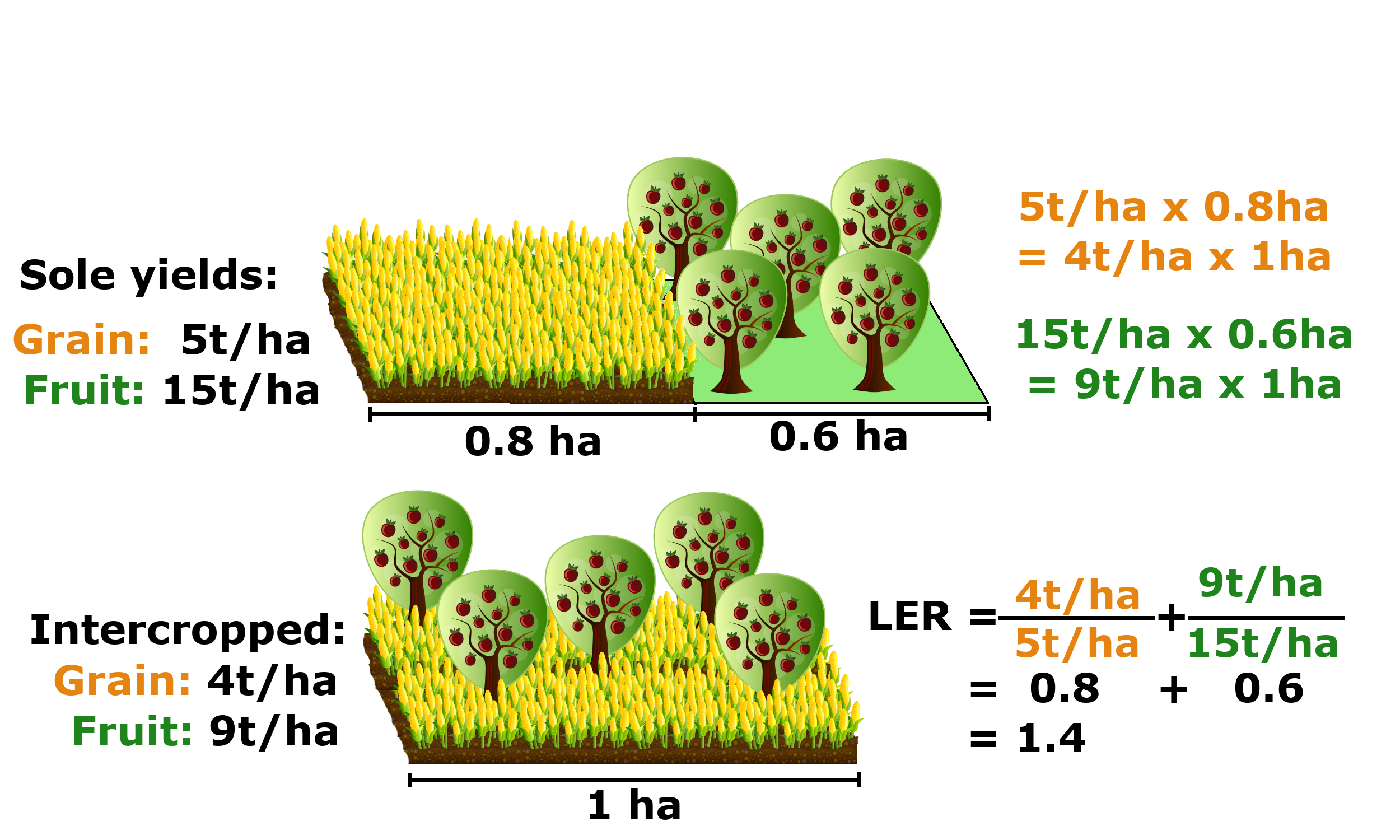
Example: a polyculture of grain crops and fruit trees produces 1.4x as much crop yield as a monoculture of the same plants (CC-BY-SA 4.0)
0:00 / 0:00
Human Travel and Living & Biodiversity
Human activities like traveling in cars, boats and on planes as well as how humans choose to live is all contributing to decreased biodiversity and human-induced global extinction of wildlife.
Habitat Loss
- Habitat loss is the process where a habitat becomes unable to support its historically native species
- Habitat Destruction
- When none of the native species can be supported by the current land usage or land quality
- Causes: deforestation, bottom trawling of the ocean floor, filling in wetlands for urbanization, mining of fossil fuels, flooding for dam building
- Habitat Degradation
- When some habitat is of quality enough to support some native species, however many or most species are not supported
- Causes: invasive species, urban sprawl, overfishing, over-logging, pollution, climate change
- Habitat Fragmentation
- When the historical range of a species is interrupted by human activities causing habitats and populations to become smaller and more isolated
- Causes: building highways and roads, urbanization, urban sprawl, invasive species, waterway diversion
Wize Concept
Habitat loss is driven by Land Use Change
Land Use Change = the process of changing the historical usage of a land for human purposes
Purposes are usually economic or urbanization
Solutions to Habitat Loss
- Habitat Degradation/Destruction
- Strict regulations for logging, fishing and hunting
- Stopping or reversing climate change
- Culling invasive species
- Investing in sustainable urbanization planning
- Educating local communities about sustainable practices and the importance of the biodiversity in their region
- Habitat Fragmentation
- Protect natural lands
- Wildlife corridors
- A strip or area of natural habitat connecting wild populations otherwise disconnected due to farming, roads or dams
- Sufficient buffer zones must be considered to be successful
- Particularly important for large mammals with wide species ranges
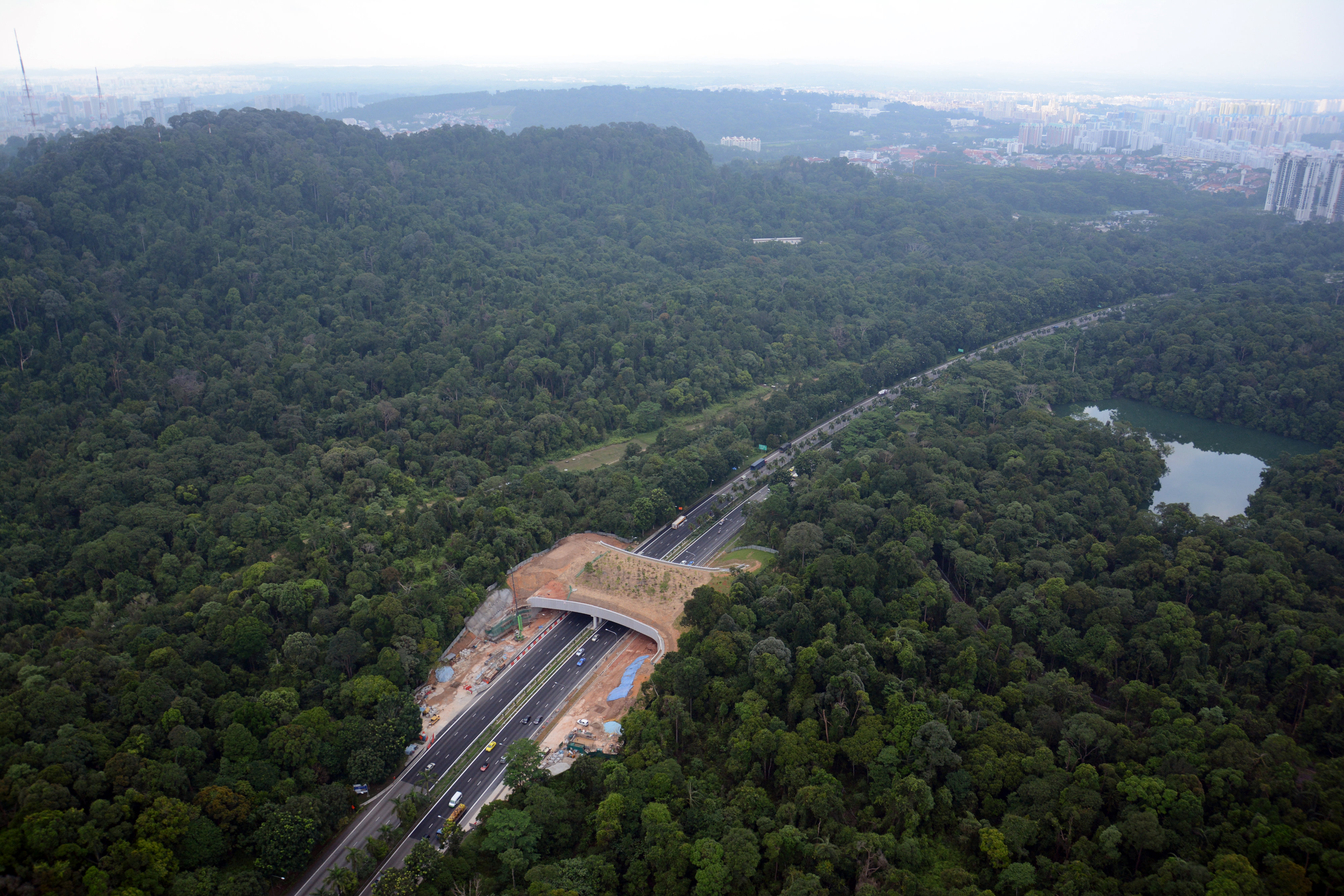
Example: Wildlife overpass in Singapore (CC BY 4.0)
0:00 / 0:00
Example: Building a Highway
You have been commissioned by the government to plan the building of a new highway to connect two major cities over hundreds of kilometres. Before building can begin you need to provide a report to Natural Resources Canada, Environment and Climate Change Canada and Transportation Canada. In this report you need to outline the negative impacts this new highway will have on the wildlife of the region and ways in which your design will decrease these impacts.
Negative Impacts:
- Habitat Fragmentation - the road will disconnect the habitat of large mammals and other species that move throughout the region
- Habitat Degradation
- the building of the road will cause trees to be cut down and the road itself to go through the region degrading the quality of the space
- Cars will now be going through the area threatening the species as they cross the road and bringing lots of new human noises
Strategies to Decrease Impacts:
- The highway will be single lanes in each direction until approaching the major cities, where lanes will increase to 2 before 3 to decrease the barrier width
- Highway underpasses will be constructed every 25 km and highway overpasses every 75 km
- After construction, native grasses, flowers and short trees will be planted between the lanes and on either side of the highway to provide a buffer zone
Practice: Succession
True or False: Secondary succession is defined as when organisms repopulate an area where all life has been wiped out
Practice: Wildlife Corridors
The purpose of wildlife corridors is to:
Practice: Agriculture
Which of the following diagrams depicting crop organization would you predict to have the highest biological control?