Popular Courses
Find My Course
0:00 / 0:00
Pulldown Assays
- Requires antibodies specific to proteins of interest
- Protein specific antibodies are bound to beads
- cells are broken open and incubated with beads
- beads are washed to remove non-interacting proteins
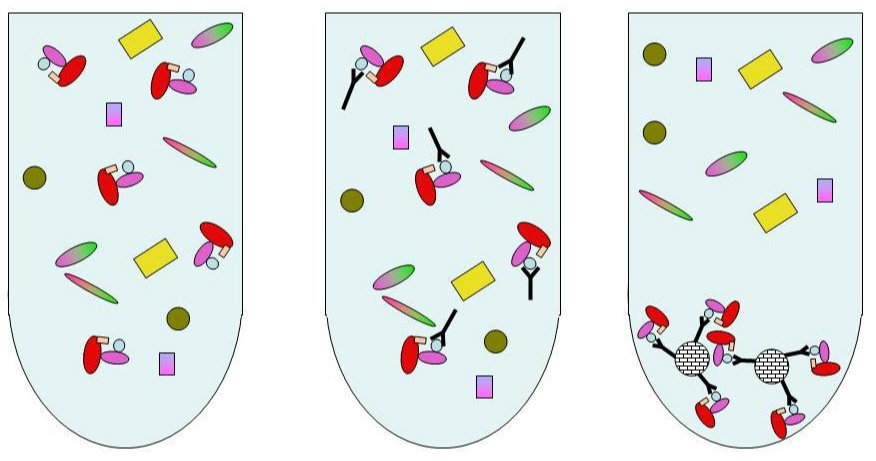
"Immunoprecipitation" by Itayba licensed by CC BY 3.0
- After isolating your antibody specific protein, run a western blot using antibodies specific for potential interaction proteins.
- You can also run mass spectrometery to identify unknown proteins
Cross-linking
- Protein complex can be analyzed via cross-linking
- shows inter- and intra- molecular organization based on location
- Cross-linking is the formation of covalent bonds between molecules
- Primary amines
- Carboxyles
- Carbonyls
- Sulfhydryls
- Formaldyhyde is often used as a non-specific chemical cross-linker
- Cross-linkers can also have affinity tags such as biotin (streptavidin affinity chromatography)
- Spacers can be incorperated into cross-linkers to provide flexibility in range of interaction
- Purification and uses:
- Purification tags
- SDS-PAGE
- Western blots
- Mass spectrometery
- X-ray crystallography
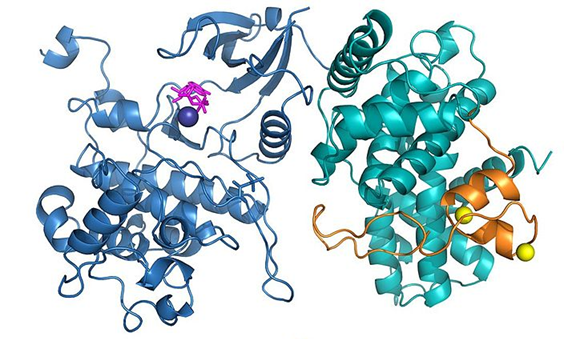
https://en.wikipedia.org/wiki/File:HIV_Tat_P-TEFb_structure.jpg. David H. Price. Creative Commons Attribution-ShareAlike 3.0 License.
0:00 / 0:00
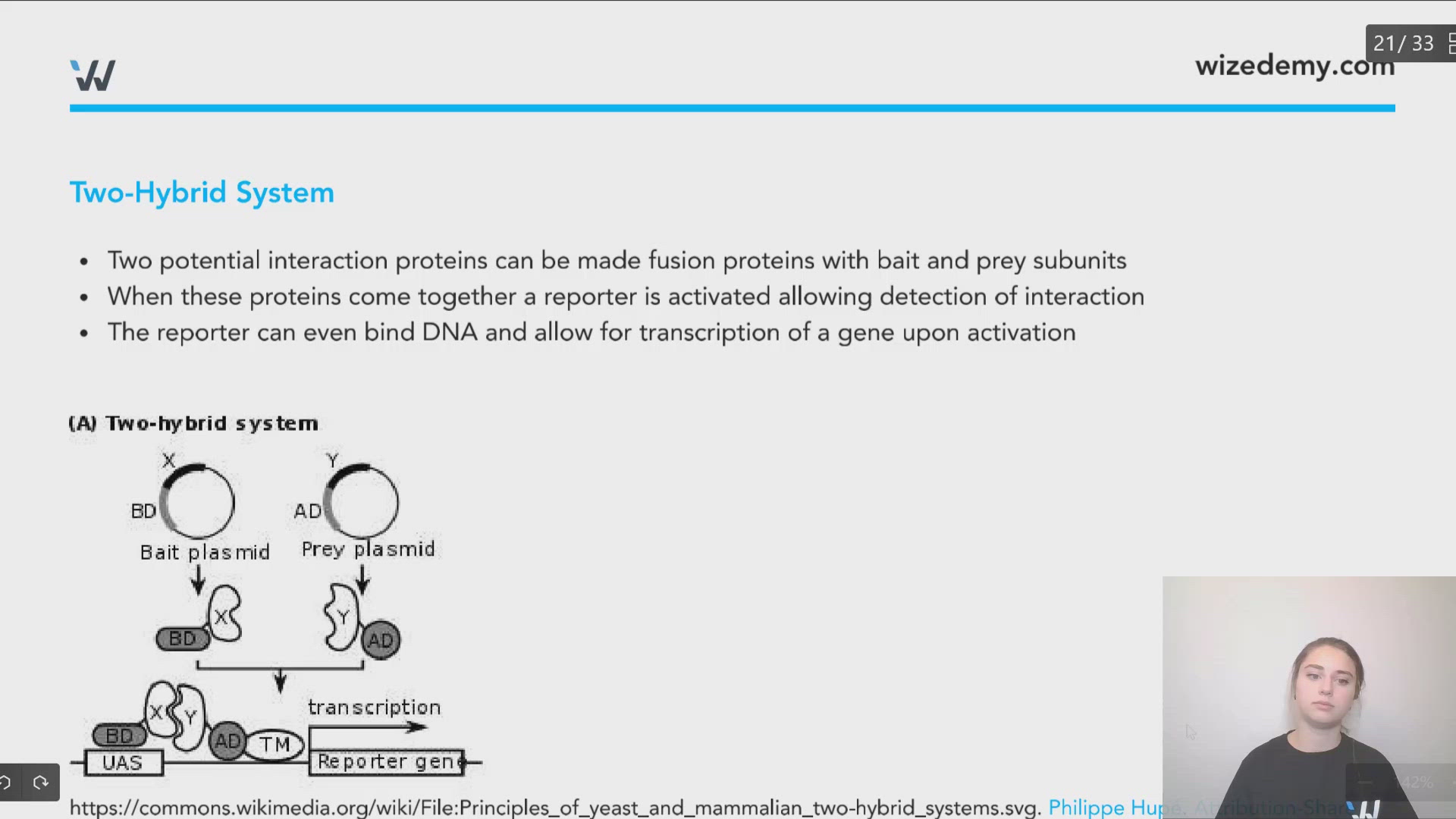
Two-Hybrid System
- Two potential interaction proteins can be made fusion proteins with bait and prey subunits
- When these proteins come together a reporter is activated allowing detection of interaction
- The reporter can even bind DNA and allow for transcription of a gene upon activation
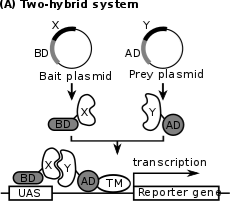
https://commons.wikimedia.org/wiki/File:Principles_of_yeast_and_mammalian_two-hybrid_systems.svg. Philippe Hupé. Attribution-Share Alike 3.0 Unported license.
BioID
- Allows for protein interactions to be observed through a biotinylation assay
- BirA is fused onto a protein of interest and will biotinylate any interacting proteins (within 10 nm)
- The results can then be monitored via western blot or mass spec
Fluorescence Based Assays
FRET:
- Fluorescence/Förster Resonance Energy Transfer
- A donor fluorophore emits light that excites a close acceptor fluorophore
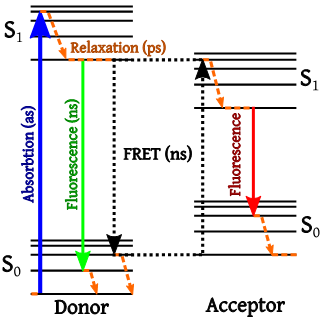
https://en.m.wikipedia.org/wiki/File:FRET_Jablonski_diagram.svg. Alex M Mooney. Creative Commons Attribution-Share Alike 3.0 Unported license.
BRET:
- Bioluminescence Resonance Energy Transfer
- A enzyme reaction results in the donor producing light
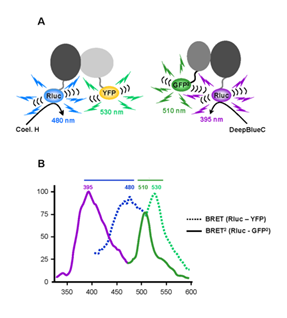
https://fr.wikipedia.org/wiki/Fichier:La_technologie_BRET.png. Maurel Damien. 3.0 (non transposée), 2.5 Générique, 2.0 Générique et 1.0 Générique.
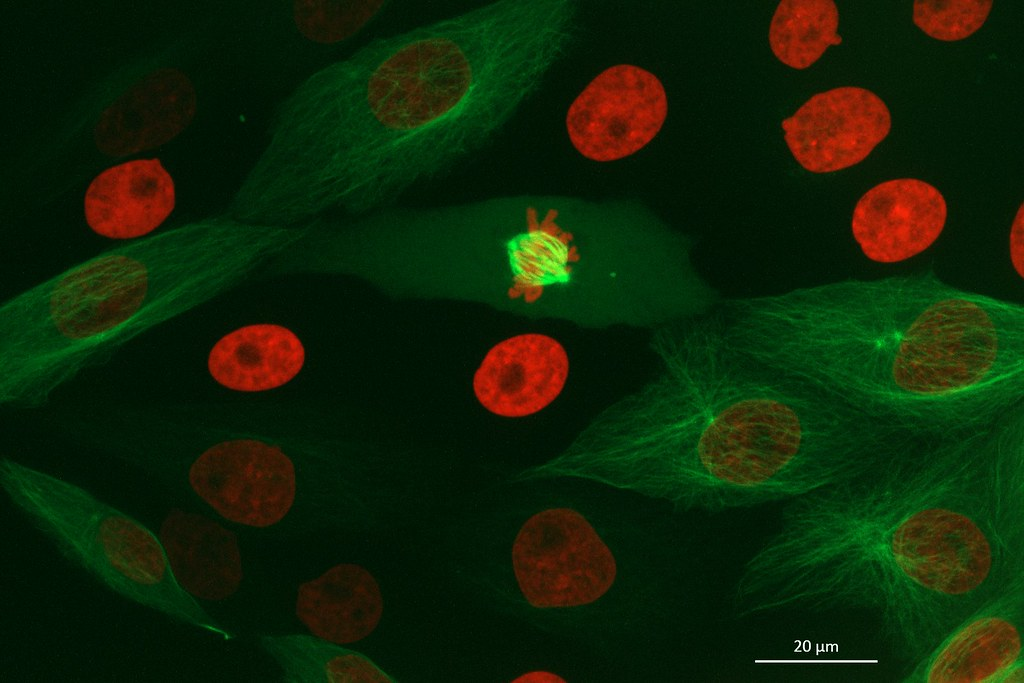
Fluorescence Microscopy:
- Can be used to analyze FRET and BRET assays
- Can also be used to co-localize proteins that have been fluorescently tagged
- Can show cellular localizatin, but is not a way of identifying interactions
0:00 / 0:00
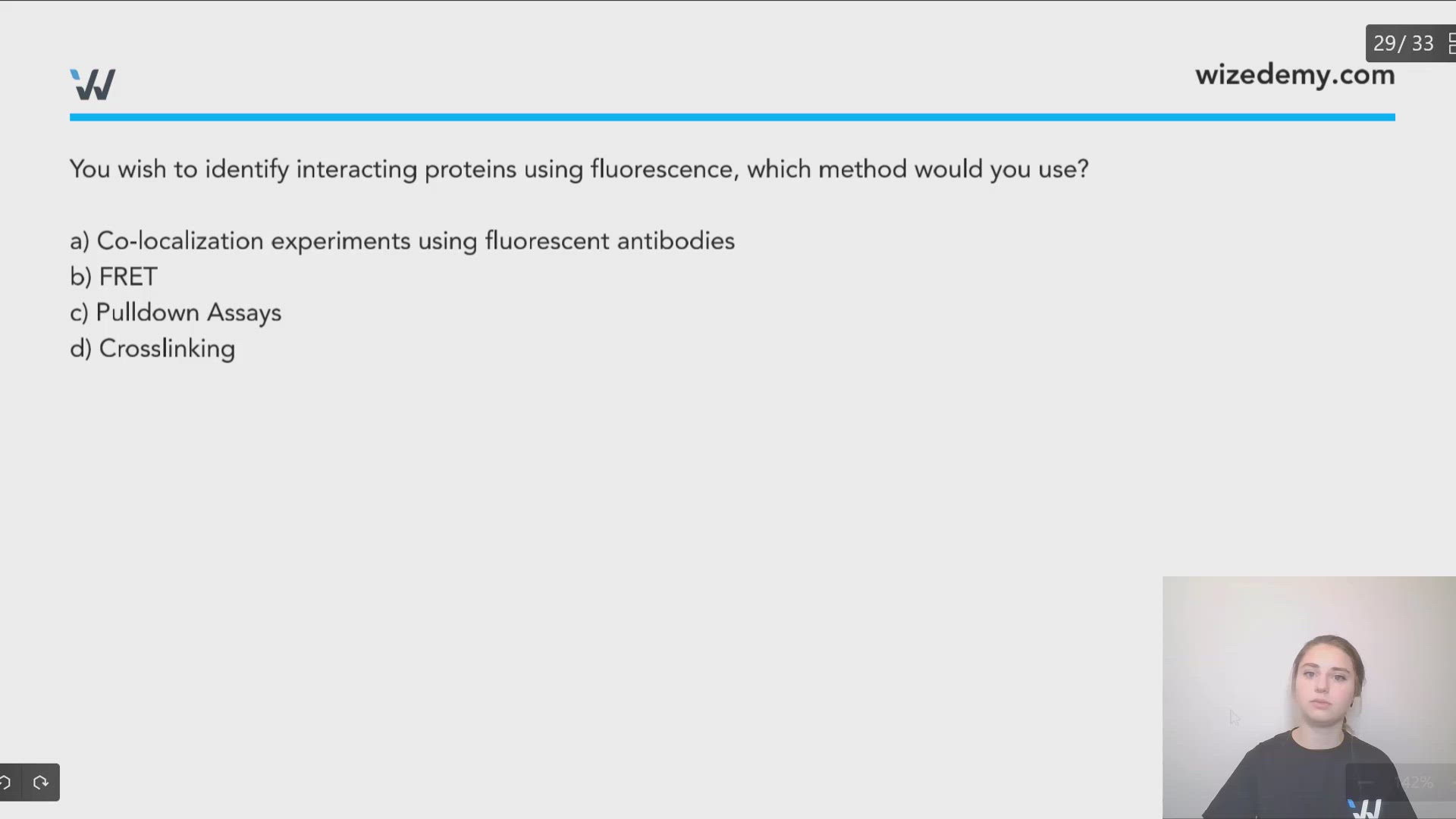
You wish to identify interacting proteins using fluorescence, which method would you use?
a) Co-localization experiments using fluorescent antibodies
b) FRET
c) Pulldown Assays
d) Crosslinking
b) FRET