Wize University Biochemistry Textbook > Genetic Engineering of Proteins
Basics of Genetic engineering
0:00 / 0:00
Genetic Engineering
- Allows us to identify the role of every amino acid in a protein
- Used to study protein structure and function
- Eg. Directed mutatgenesis
- Common applications: over expressing proteins in genetically manipulated bacterial "factories" to produce high quantities of desired protein
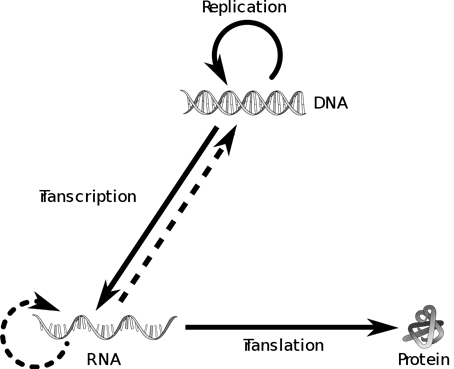
https://commons.wikimedia.org/wiki/File:Central_dogma_of_molecular_biology.svg. Philippe Hupé. This file is licensed under the Creative Commons Attribution-Share Alike 3.0 Unported license.
0:00 / 0:00
Genetic manipulation
Select genes can be input ("cloned") into plasmids either in their native form or manipulated/mutated form for genetic manipulation or protein analysis
Cloning
- Genes can be cloned from any genomic DNA
- These genes may be manipulated
- There are 4 steps in protein cloning
- Clone the gene from cDNA or mRNA or in prokaryotes, genomic DNA
- Insert the cloned gene into an expression vector (plasmid)
- Insert this plasmid construct into an expression host (bacteria, typically E. coli)
- The bacteria will grow the protein for isolation
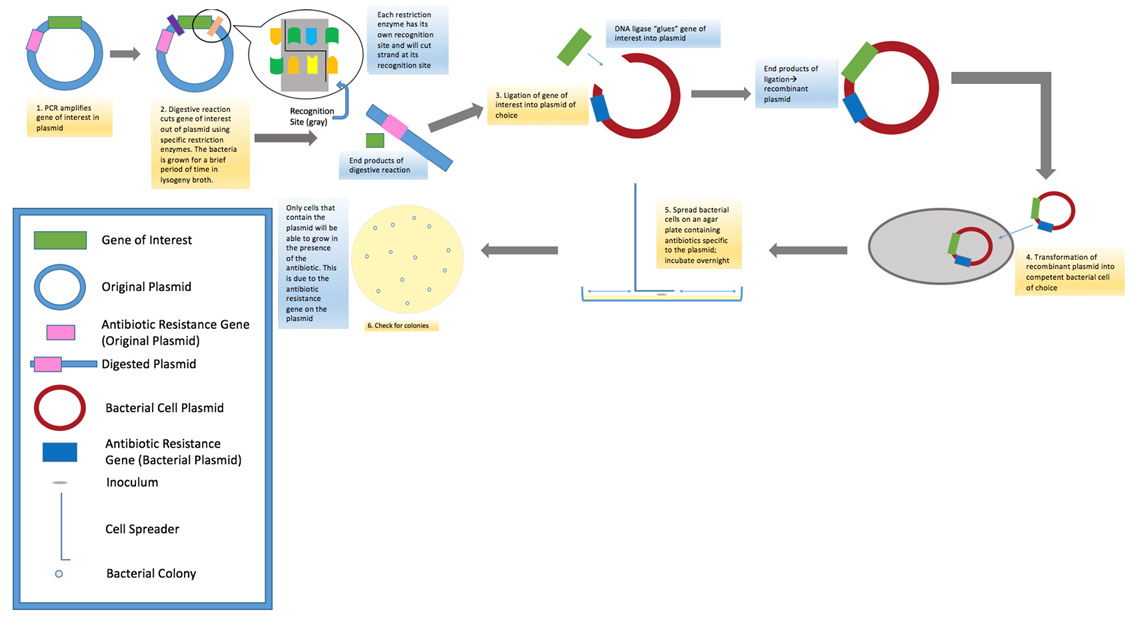
https://commons.wikimedia.org/wiki/File:Steps_of_Molecular_Cloning.png. Alexpicardal97. This file is licensed under the Creative Commons Attribution-Share Alike 4.0 International license.
0:00 / 0:00
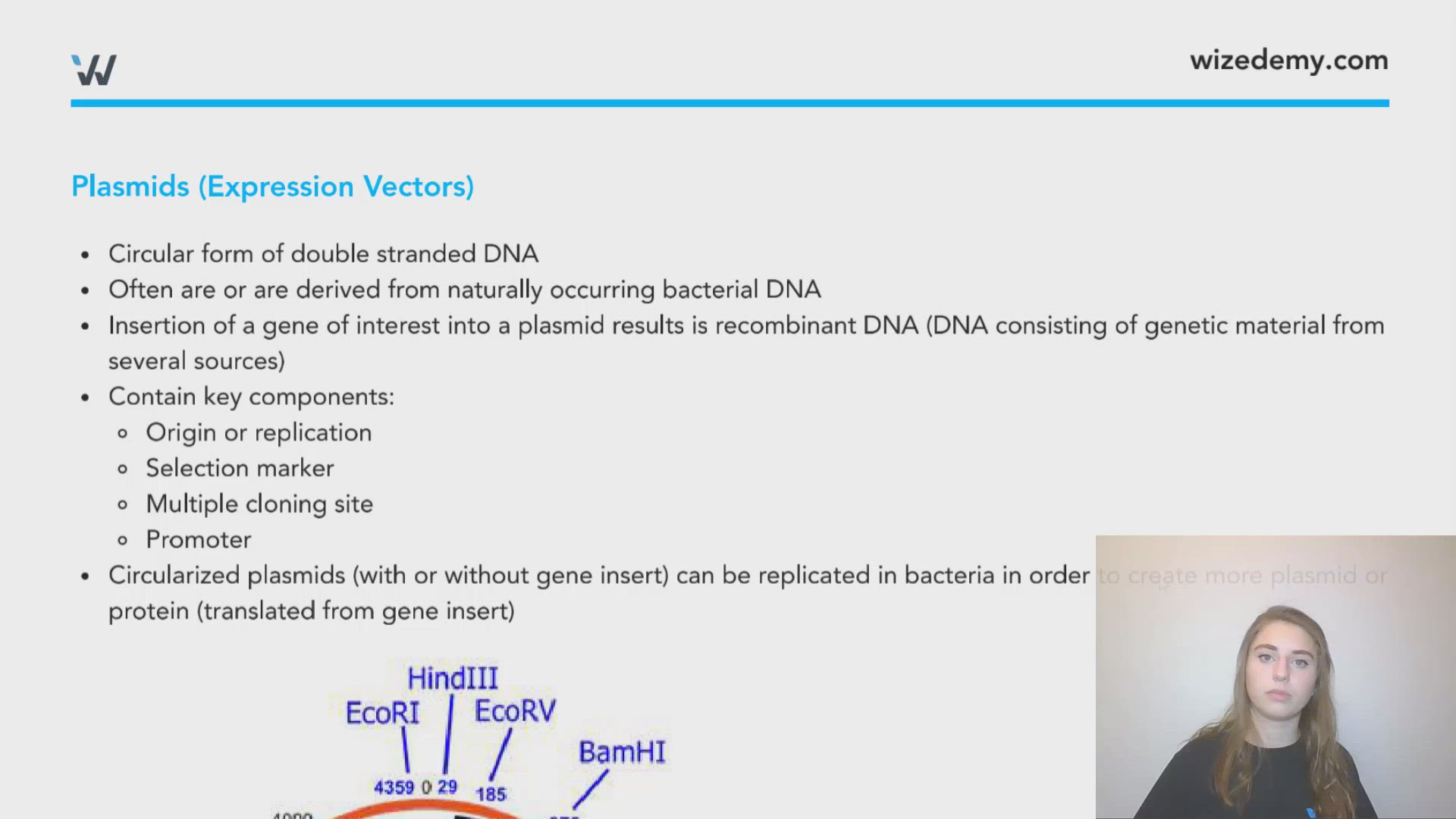
Plasmids (Expression Vectors)
- Circular form of double stranded DNA
- Often are or are derived from naturally occurring bacterial DNA
- Insertion of a gene of interest into a plasmid results is recombinant DNA (DNA consisting of genetic material from several sources)
- Contain key components:
- Origin or replication
- Selection marker
- Multiple cloning site
- Promoter
- Circularized plasmids (with or without gene insert) can be replicated in bacteria in order to create more plasmid or protein (translated from gene insert)
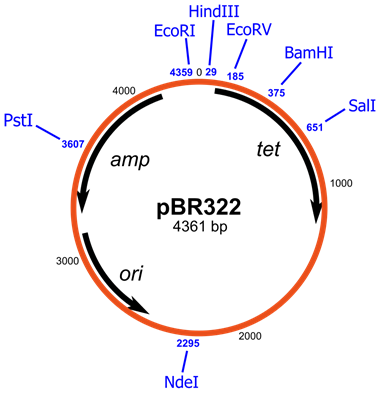
https://commons.wikimedia.org/wiki/File:PBR322.svg. This file is ineligible for copyright and therefore in the public domain because it consists entirely of information that is common property and contains no original authorship.
0:00 / 0:00
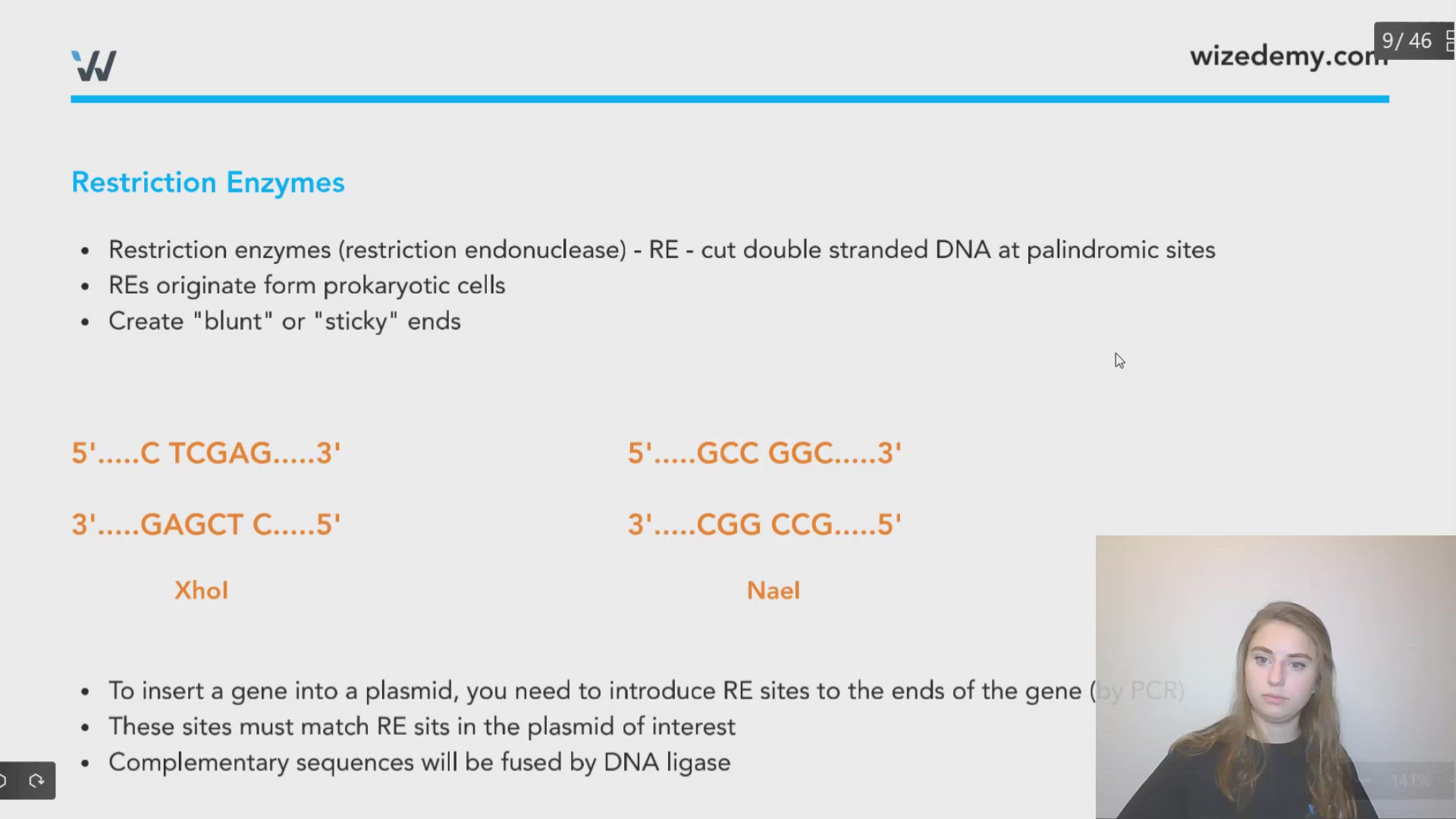
Restriction Enzymes
- Restriction enzymes (restriction endonuclease) - RE - cut double stranded DNA at palindromic sites
- REs originate form prokaryotic cells
- Create "blunt" or "sticky" ends
5'.....C TCGAG.....3' 5'.....GCC GGC.....3'
3'.....GAGCT C.....5' 3'.....CGG CCG.....5'
XhoI NaeI
- To insert a gene into a plasmid, you need to introduce RE sites to the ends of the gene (by PCR)
- These sites must match RE sits in the plasmid of interest
- Complementary sequences will be fused by DNA ligase

https://commons.wikimedia.org/wiki/File:Figure_17_01_06.png. This figure was adapted from CNX OpenStax's image licensed under the Creative Commons Attribution 4.0 International license.
0:00 / 0:00
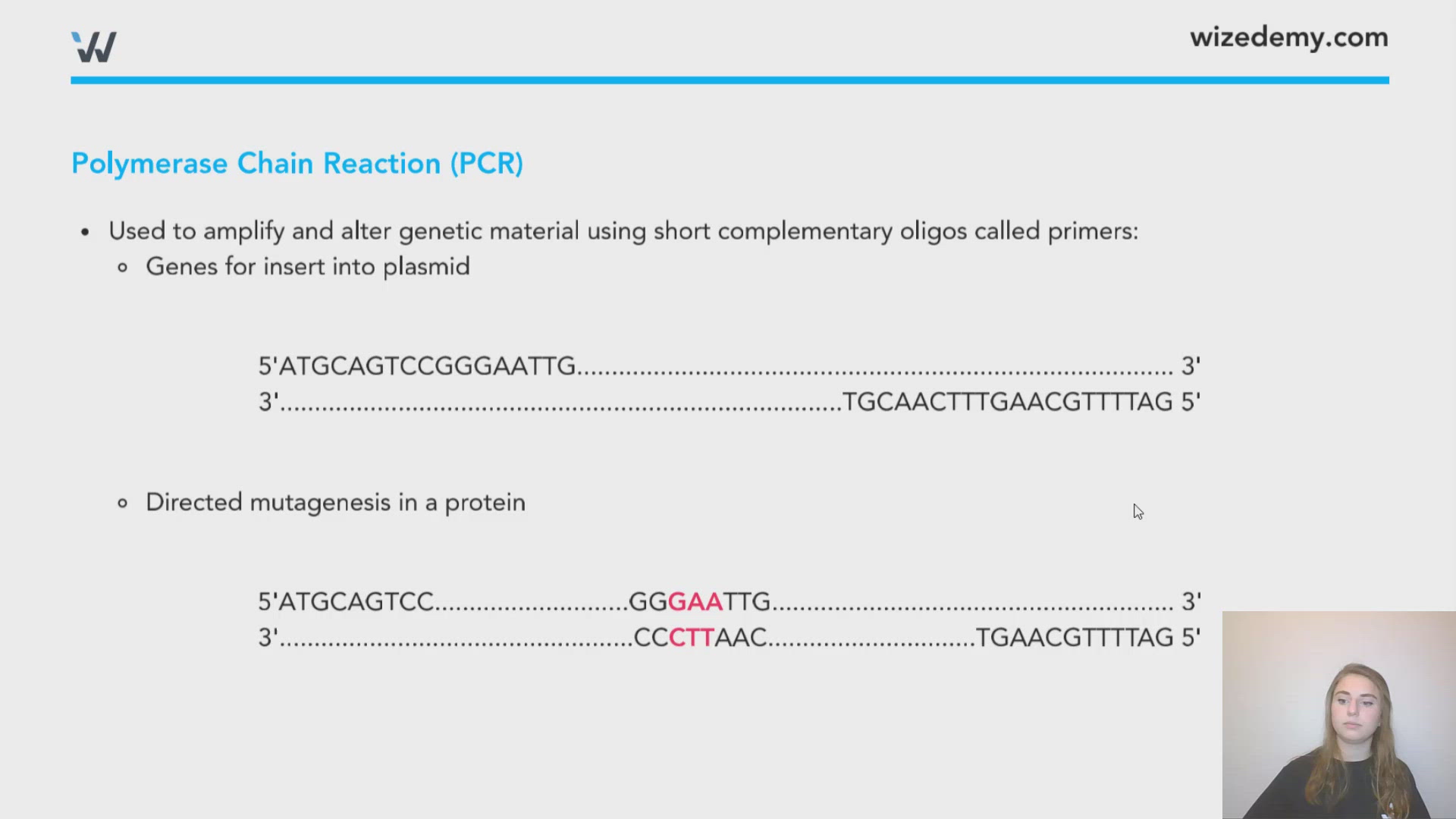
Polymerase Chain Reaction (PCR)
- Used to amplify and alter genetic material using short complementary oligos called primers:
- Genes for insert into plasmid
5'ATGCAGTCCGGGAATTG...................................................................................... 3'
3'.................................................................................TGCAACTTTGAACGTTTTAG 5'
- Directed mutagenesis in a protein
5'ATGCAGTCC............................GGGAATTG.......................................................... 3'
3'...................................................CCCTTAAC..............................TGAACGTTTTAG 5'
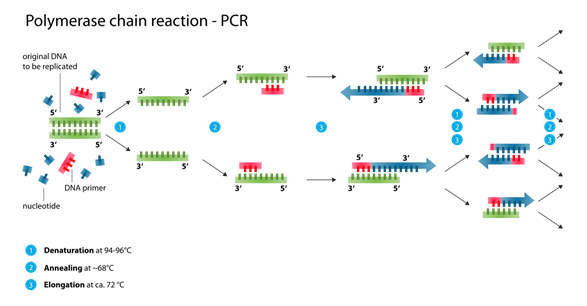
Steps in a PCR
- Denaturation: double-stranded DNA is separated at high temperatures
- Annealing: Primers bind to their complementary DNA at primer specific temperatures
- Elongation: nucleotide bases are added onto the ends of primers by thermostable DNA polymerase.
- Repeat for a designated number of cycles, each one doubling the number of genes present
https://commons.wikimedia.org/wiki/File:Polymerase_chain_reaction.svg. Enzoklop. This file is licensed under the Creative Commons Attribution-Share Alike 3.0 Unported license.
0:00 / 0:00
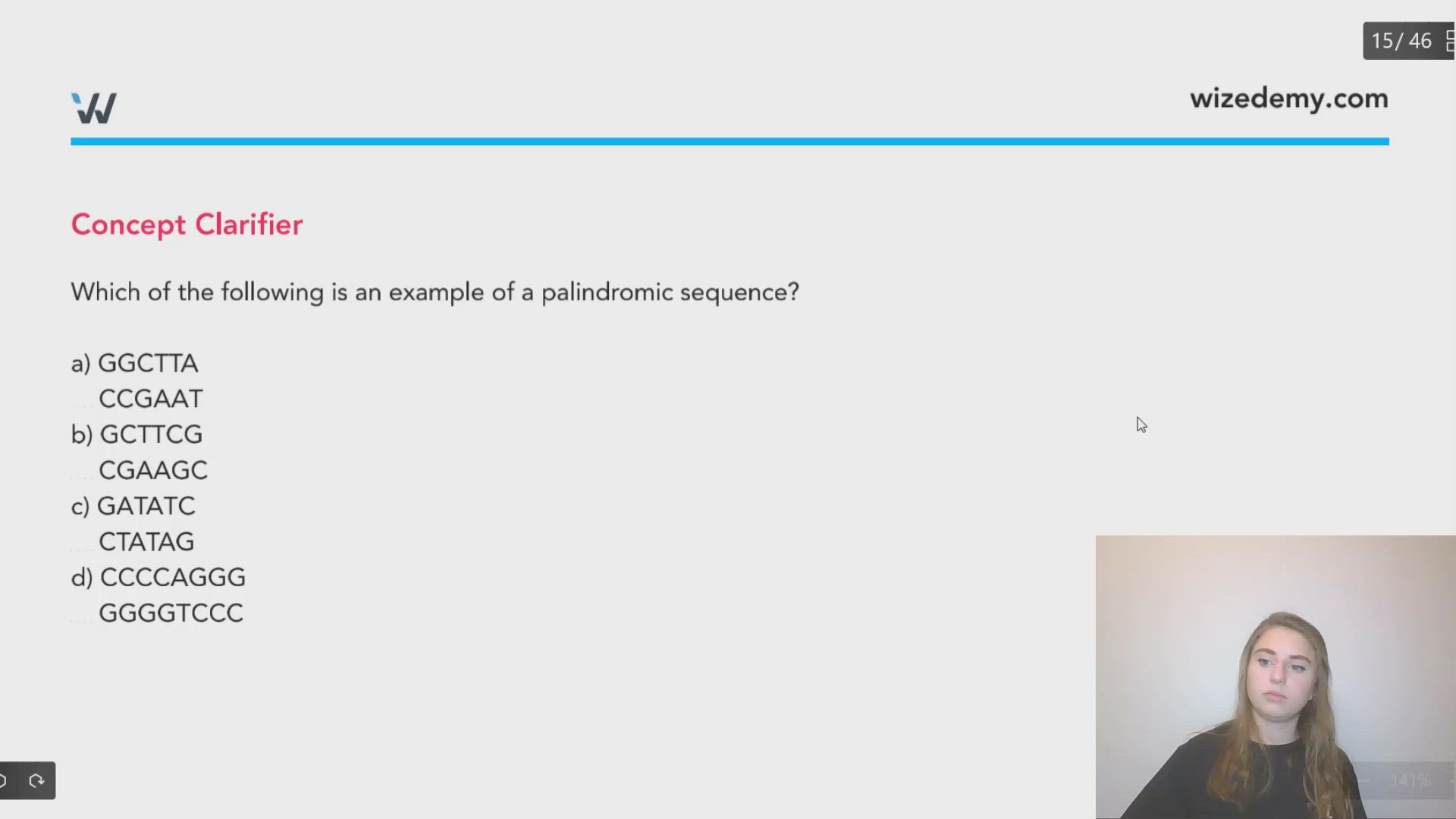
Which of the following is an example of a palindromic sequence?
a) GGCTTA
CCGAAT
b) GCTTCG
CGAAGC
c) GATATC
CTATAG
d) CCCCAGGG
GGGGTCCC
c) To be palindromic a sequence has to have the same order of amino acids from 5' -> 3' in both strands
0:00 / 0:00
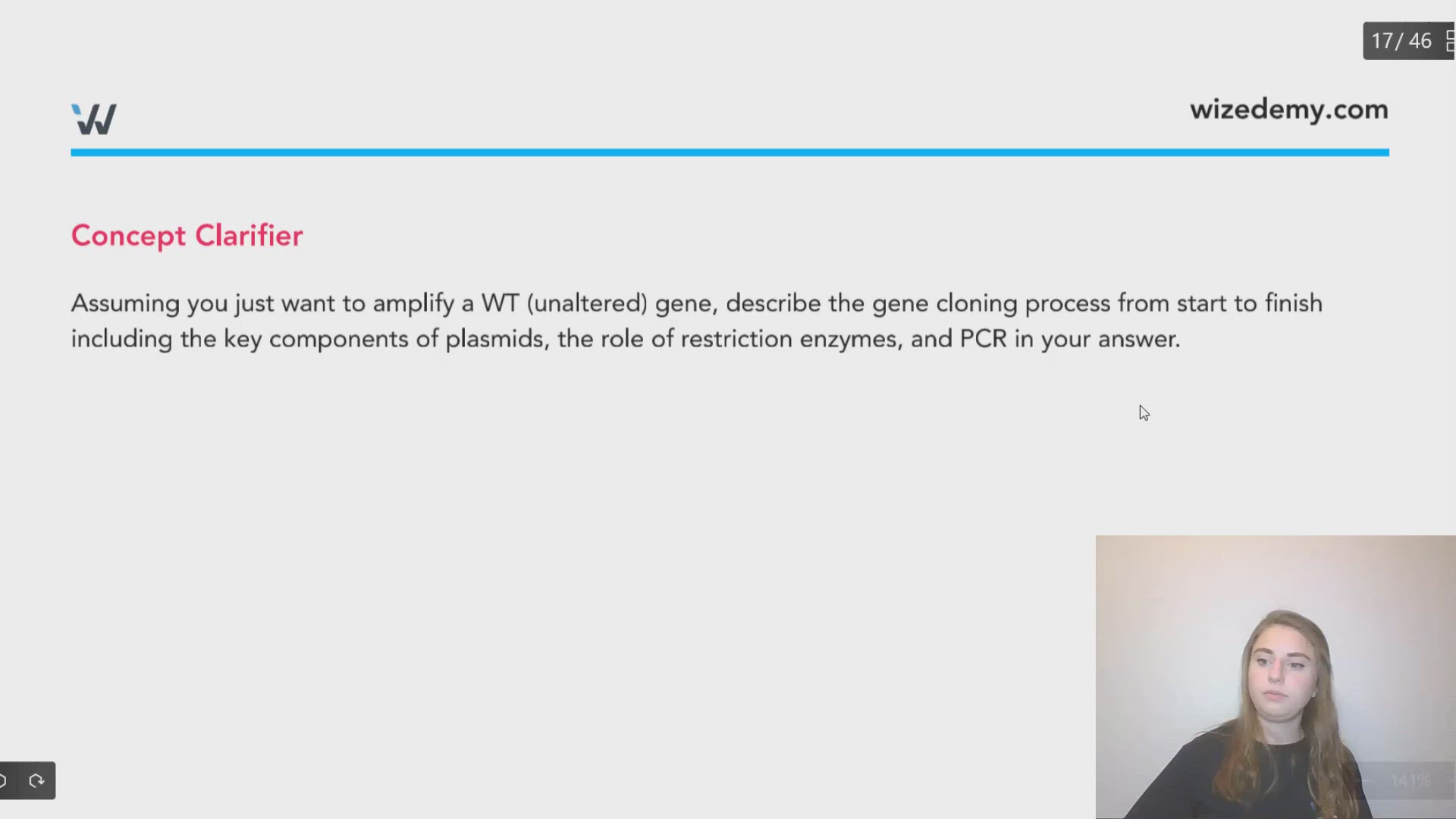
Assuming you just want to amplify a WT (unaltered) gene, describe the gene cloning process from start to finish including the key components of plasmids, the role of restriction enzymes, and PCR in your answer.
A gene cloning workflow looks like:
- Identify the gene you wish to clone
- Chose the plasmid you wish to work with and select the restriction enzyme cut sites you will use when inserting the gene into the multiple cloning site
- Create primers for PCR amplification of the gene that are both complementary to the gene and contain the selected RE cut sites added on to the ends
- Perform PCR to amplify the gene from genomic DNA (prokaryotic) or cDNA (eukaryotic)
- Digest both the plasmid and the PCR product to create complementary "sticky" or "blunt" ends
- Ligate the gene into the plasmid using DNA ligase
- The plasmid should contain an origin of replication (where DNA replication is initiated leading to the creation of more copies of the plasmid), a promoter (where RNA polymerase binds allowing for the transcription and translation of the protein of interest), and a selection marker (allows for the bacterial expression host to be selected for via antibiotics)
- The complete plasmid is then transformed into a bacterial expression host where the protein will be amplified and await extraction and purification
What is NOT a common feature found in in every plasmid?